Kingy said:
Tau.Neutrino said:
Kingy said:I’m not expecting that it will continue to be usable as a space station, but the amount of metals, material, and content could be used for new ventures.
Those figures are from an accountant who is just looking at future expenses.
Spacex is not far from being able to boost enough fuel into orbit to fill those requirements, and we now have Ion thrusters that could gradually boost it into a higher orbit over a longer period of time using less fuel.
We even have solar sails available that could assist.
All three of those options are not quite ready yet, but they could soon be able to turn the ISS into a future source of resources that are already in orbit.
There is the problem of cost.
Who will pay for it.
How to reuse / recycle fatigued materials.
How to integrate newer systems with older ones.
How to make it safe for extended use beyond its designed lifetime.
Older hatch compatibility with newer ones.
Cost does not seem to be a problem, as hundreds of billions of dollars were spent building it and no-one asked about the cost then.
The taxpayers as usual.
It’s many times easier to re-use something that is already in orbit, than to build a replacement and launch it.
No-one is asking for it to be safe, but there is tons of useful materials that can be recycled into something else that is safe.
Hatches don’t matter if it is already a vacuum. It’s just useful resources for future missions.
Chucking billions of dollars of taxpayers money into the ocean because it’s cheaper than saving it for future missions is not very helpful for future taxpayers.
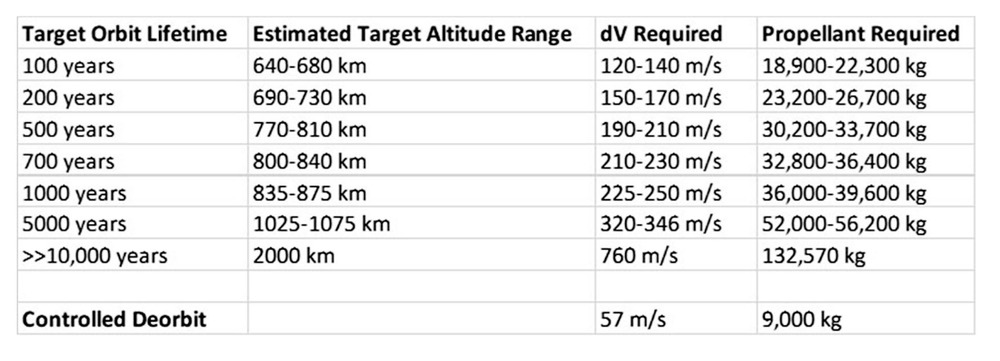
Yes in the sense of materials wasted it would be better to reuse them somehow.
A solar smelter in space might be one way to reuse metals.
could a solar smelter work in space
Google AI
Yes, a solar smelter in space could work from a strict physics standpoint, but it faces massive practical and economic hurdles.
How It Would Work
• Concentrated Solar Thermal Energy: Instead of using solar panels to make electricity, a space smelter would use large curved mirrors or heliostats to focus direct, unfiltered sunlight onto a single focal point.
• Extreme Heat in a Vacuum: Without an atmosphere to diffuse light or absorb heat, concentrated orbital sunlight can easily reach temperatures above 3,000°C—more than enough to melt iron, aluminum, or silicate rocks.
• No Oxygen/Gravity Advantages: Smelting in a vacuum prevents unwanted chemical oxidation with air, and microgravity could allow for unique foam-metal or alloy casting processes without settling or convection currents.
Major Challenges
• The Launch Cost Barrier: Lifting heavy raw ores or massive smelting apparatuses out of Earth’s gravity well is currently too expensive to make commercial space manufacturing profitable.
• Thermal Management: While gathering heat is easy in direct sunlight, getting rid of waste heat in a vacuum is notoriously difficult because there is no air to cool things down via convection; everything relies on slow thermal radiation.
• The Need for Extraterrestrial Materials: For a space smelter to make economic sense, it would have to process asteroidal or lunar regolith rather than materials launched from Earth.
Explore:
• Using lunar in-situ resource utilization (ISRU) to feed the smelter
• How radiative cooling works in the vacuum of space
• Comparing solar thermal smelting to electric arc furnaces powered by space solar panels