party_pants said:
captain_spalding said:
Ian said:
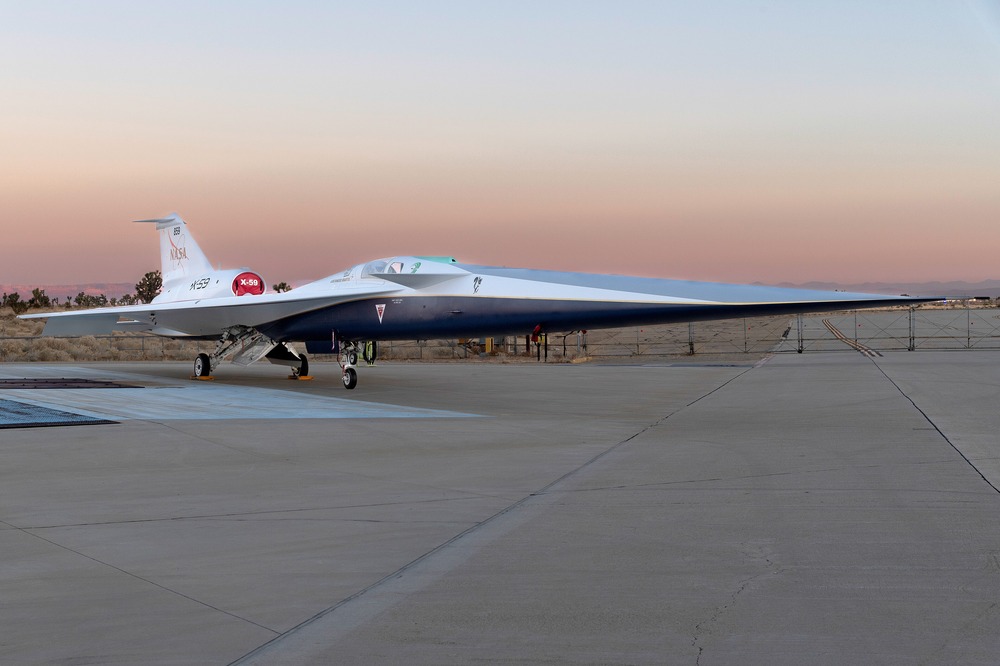
Talking of odd planes..
NASA’s X-59 quiet supersonic research aircraft sits on the ramp at Lockheed Martin Skunk Works in Palmdale, California during sunrise, shortly after completion of painting. With its unique design, including a 38-foot-long nose, the X-59 was built to demonstrate the ability to fly supersonic, or faster than the speed of sound, while reducing the typically loud sonic boom produced by aircraft at such speeds to a quieter sonic “thump”. The X-59 is the centerpiece of NASA’s Quesst mission, which seeks to solve one of the major barriers to supersonic flight over land, currently banned in the United States, by making sonic booms quieter.
Is it likely to have commercial application?
I understood that one reason for getting rid of Concordes was that the new economics of airline operation meant that their small passenger capacity rendered them unaffordable to operate.
So, unless you can get something like a Boeing 777 to go faster than sound, who’s going to be interested?
Absolutely. The thing that got the Concorde banned in many places was noise. Both the sonic boom and the engines at full roar around airports. If the sonic boom problem gets resolved down to an acceptable level it would be a big improvement. Countries might lift the ban on supersonic flights over their territory if the aircraft meets certain defined and measurable noise limits. The engine noise around airports is a separate issue and needs the engine manufacturers to come up with a solution.
If both of these get resolved I think there is great scope for a new fleet of supersonic passenger aircraft. Maybe not the general mass market to begin with but the private or VIP segment of the market for sure. There’d be a demand to do long haul routes over oceans faster, particularly for business travel.
Having experienced regular sonic booms in 1965 in England, I well and truly understand why breaking the sound barrier was banned except for well away from populations. They really are extremely loud.