From The Gherk on Facebook…
Okay. So apparently plague is back on the bingo card.
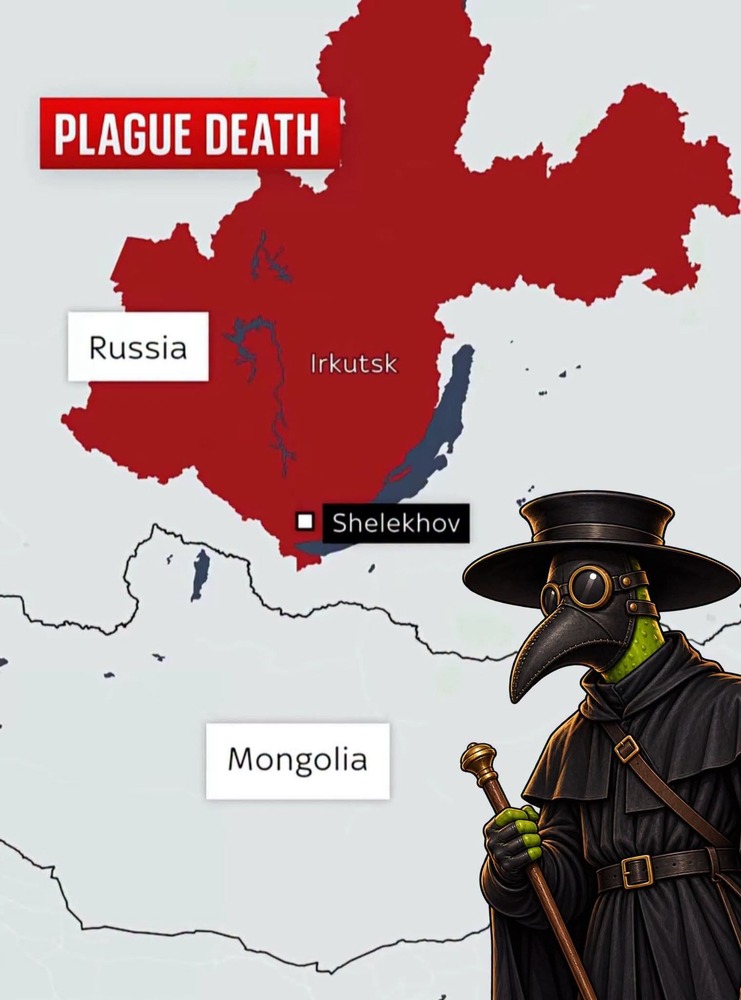
A 28-year-old worker at the Irkutsk Anti-Plague Research Institute in Siberia has died after developing severe pneumonia. There are reports she may have been exposed to Yersinia pestis, the bacterium that causes plague, possibly after a laboratory accident involving a test tube. Russian authorities say there is no confirmed evidence of a lab accident and are describing her death as pneumonia of unknown origin. Around 200 people have been quarantined or placed under “medical observation” while investigators work out exactly what happened.
Thankfully, this has happened in Russia, a country internationally renowned for its relaxed, open and transparent communication around sensitive state matters.
So I’m sure we’ll have a crystal-clear timeline any minute now.
The reassuring bit is that plague in 2026 is not plague in 1348. It’s bacterial. We know what causes it. We have antibiotics. Bubonic plague usually spreads through infected fleas or animals and does not readily spread person-to-person. Pneumonic plague is the nasty one because it can spread via respiratory particles, symptoms can appear very quickly, and untreated cases can become fatal within a day or two. Early treatment, however, is highly effective.
So this is not “start digging mass graves behind Bunnings” time, just yet.
What it is is exactly the kind of situation where good international disease surveillance matters.
You know. Those boring global health networks, laboratories, epidemiologists, rapid-response teams and information-sharing systems that everyone loves calling wasteful right up until someone in Siberia drops dead after working in a plague institute.
Good thing global health initiatives haven’t experienced funding cuts, geopolitical hostility, governments withholding information, or countries deciding that international cooperation is for “gLoBaLiStS”
I feel reassured.
The WHO currently assesses the public-health risk as low while investigations continue, and there are no confirmed additional plague cases at this stage.
So for now: concerning, probably contained, and still carrying an enormous WE DON’T KNOW YET sign.
Which means this is also the traditional moment when Rumble University and your cousin’s Telegram channel begins its work.
Before anyone asks… ivermectin is not your plague plan.
It’s bacteria.
We have antibiotics.
Please leave the horse paste for the horses.