Date: 10/12/2019 23:35:25
From: Tau.Neutrino
ID: 1472154
Subject: Rain forest regeneration

Is there a science commission that looks at what everything takes to recover ?

Rain forest regeneration takes 65 years to get a new foothold, and depending on the rainforest, up to 4000 years to fully recover.

Good news on rain forests: they bounce back strong, storing more carbon than thought
http://theconversation.com/good-news-on-rain-forests-they-bounce-back-strong-storing-more-carbon-than-thought-49189

How long does it take a rainforest to regenerate?
https://www.newscientist.com/article/dn14112-how-long-does-it-take-a-rainforest-to-regenerate/

Tropical rainforests are regrowing. Now what?
https://www.reuters.com/article/us-rainforests/tropical-rainforests-are-regrowing-now-what-idUSTRE50B5CY20090112

plants
trees
species attraction
Reply Quote

Date: 10/12/2019 23:39:36
From: Michael V
ID: 1472157
Subject: re: Rain forest regeneration

Michael V said:


Tau.Neutrino said:

Michael V said:

When the rainforest here is chopped down, it never grows back, because the self-compost layer is washed away by rain. The fire on the southern portion of K’gari (Fraser Island) has now burnt about 10% of the island. The rainforests burnt there are unlikely to ever return.

sad

From what I have read, areas can be rebuilt.

http://theconversation.com/good-news-on-rain-forests-they-bounce-back-strong-storing-more-carbon-than-thought-49189

Unfortunately that is unlikely to apply on K’gari, because it is >97% silica sand, not tropical clays. Areas of the island that were logged or strip-mined (before the National Park was proclaimed) have never recovered. Areas that were accidentally burnt in prehistory remain as “Sand Blows”.

The Carlo Sand Blow, which ends about a 700 metres from us was named by Cook in 1770. It is an area of bare sand 200 metres above sea level, about 600 metres by 250 metres.

(c&p from chat)

Reply Quote

Date: 10/12/2019 23:41:38
From: Tau.Neutrino
ID: 1472159
Subject: re: Rain forest regeneration

Michael V said:


Michael V said:

Tau.Neutrino said:

From what I have read, areas can be rebuilt.

http://theconversation.com/good-news-on-rain-forests-they-bounce-back-strong-storing-more-carbon-than-thought-49189

Unfortunately that is unlikely to apply on K’gari, because it is >97% silica sand, not tropical clays. Areas of the island that were logged or strip-mined (before the National Park was proclaimed) have never recovered. Areas that were accidentally burnt in prehistory remain as “Sand Blows”.

The Carlo Sand Blow, which ends about a 700 metres from us was named by Cook in 1770. It is an area of bare sand 200 metres above sea level, about 600 metres by 250 metres.

(c&p from chat)

ok, so some areas are very sensitive or chemically unique ?

Reply Quote

Date: 10/12/2019 23:48:25
From: Tau.Neutrino
ID: 1472160
Subject: re: Rain forest regeneration

Michael V said:


Michael V said:

Tau.Neutrino said:

From what I have read, areas can be rebuilt.

http://theconversation.com/good-news-on-rain-forests-they-bounce-back-strong-storing-more-carbon-than-thought-49189

Unfortunately that is unlikely to apply on K’gari, because it is >97% silica sand, not tropical clays. Areas of the island that were logged or strip-mined (before the National Park was proclaimed) have never recovered. Areas that were accidentally burnt in prehistory remain as “Sand Blows”.

The Carlo Sand Blow, which ends about a 700 metres from us was named by Cook in 1770. It is an area of bare sand 200 metres above sea level, about 600 metres by 250 metres.

(c&p from chat)

I think everyone should be taught science and ecology.

What is troubling me is the lack of information a lot of people have, including politicians.

Myself included, I’m not a politician.

The amount of information is overwhelming to a lot of people.

Reply Quote

Date: 10/12/2019 23:50:34
From: Tau.Neutrino
ID: 1472161
Subject: re: Rain forest regeneration

>>>Unfortunately that is unlikely to apply on K’gari, because it is >97% silica sand, not tropical clays. Areas of the island that were logged or strip-mined (before the National Park was proclaimed) have never recovered. Areas that were accidentally burnt in prehistory remain as “Sand Blows”.

The Carlo Sand Blow, which ends about a 700 metres from us was named by Cook in 1770. It is an area of bare sand 200 metres above sea level, about 600 metres by 250 metres.

===

That would be hard science, recreating that and other similar eco disasters.

Reply Quote

Date: 10/12/2019 23:53:57
From: Michael V
ID: 1472162
Subject: re: Rain forest regeneration

Tau.Neutrino said:


Michael V said:

Michael V said:

Unfortunately that is unlikely to apply on K’gari, because it is >97% silica sand, not tropical clays. Areas of the island that were logged or strip-mined (before the National Park was proclaimed) have never recovered. Areas that were accidentally burnt in prehistory remain as “Sand Blows”.

The Carlo Sand Blow, which ends about a 700 metres from us was named by Cook in 1770. It is an area of bare sand 200 metres above sea level, about 600 metres by 250 metres.

(c&p from chat)

ok, so some areas are very sensitive or chemically unique ?

In a soil sense it is unusual. The soil is described in the literature as a “giant E horizon”, although that is inconsistent with the Australian naming of soils. It consists of very fine grained silica sand, no clay (so no nutrient retention) and a very small proportion (1-3%) of very fine-grained organic matter. There are two types of organic matter – black, and yellow. The black is mainly plant matter, and the yellow is insect carapace remnants.

Reply Quote

Date: 10/12/2019 23:58:27
From: Michael V
ID: 1472163
Subject: re: Rain forest regeneration

Tau.Neutrino said:


>>>Unfortunately that is unlikely to apply on K’gari, because it is >97% silica sand, not tropical clays. Areas of the island that were logged or strip-mined (before the National Park was proclaimed) have never recovered. Areas that were accidentally burnt in prehistory remain as “Sand Blows”.

The Carlo Sand Blow, which ends about a 700 metres from us was named by Cook in 1770. It is an area of bare sand 200 metres above sea level, about 600 metres by 250 metres.

===

That would be hard science, recreating that and other similar eco disasters.

A lot of experimental work was done after the explosion of Mt St.Helens in the US in 1980. Interestingly, the areas not fiddled with – the control areas – were the quickest to recover, with spiders being the earliest colonisers!

Reply Quote

Date: 11/12/2019 01:50:31
From: PermeateFree
ID: 1472188
Subject: re: Rain forest regeneration

Michael V said:


Tau.Neutrino said:

>>>Unfortunately that is unlikely to apply on K’gari, because it is >97% silica sand, not tropical clays. Areas of the island that were logged or strip-mined (before the National Park was proclaimed) have never recovered. Areas that were accidentally burnt in prehistory remain as “Sand Blows”.

The Carlo Sand Blow, which ends about a 700 metres from us was named by Cook in 1770. It is an area of bare sand 200 metres above sea level, about 600 metres by 250 metres.

===

That would be hard science, recreating that and other similar eco disasters.

A lot of experimental work was done after the explosion of Mt St.Helens in the US in 1980. Interestingly, the areas not fiddled with – the control areas – were the quickest to recover, with spiders being the earliest colonisers!

Most importantly and no matter what you do, you don’t get rainforest without lots of rain.

Reply Quote

Date: 11/12/2019 02:40:50
From: Tau.Neutrino
ID: 1472189
Subject: re: Rain forest regeneration

PermeateFree said:


Michael V said:

Tau.Neutrino said:

>>>Unfortunately that is unlikely to apply on K’gari, because it is >97% silica sand, not tropical clays. Areas of the island that were logged or strip-mined (before the National Park was proclaimed) have never recovered. Areas that were accidentally burnt in prehistory remain as “Sand Blows”.

The Carlo Sand Blow, which ends about a 700 metres from us was named by Cook in 1770. It is an area of bare sand 200 metres above sea level, about 600 metres by 250 metres.

===

That would be hard science, recreating that and other similar eco disasters.

A lot of experimental work was done after the explosion of Mt St.Helens in the US in 1980. Interestingly, the areas not fiddled with – the control areas – were the quickest to recover, with spiders being the earliest colonisers!

Most importantly and no matter what you do, you don’t get rainforest without lots of rain.

Global warming is chaning rain patterns making it more difficult.

Reply Quote

Date: 11/12/2019 02:43:19
From: PermeateFree
ID: 1472190
Subject: re: Rain forest regeneration

Tau.Neutrino said:


PermeateFree said:

Michael V said:

A lot of experimental work was done after the explosion of Mt St.Helens in the US in 1980. Interestingly, the areas not fiddled with – the control areas – were the quickest to recover, with spiders being the earliest colonisers!

Most importantly and no matter what you do, you don’t get rainforest without lots of rain.

Global warming is chaning rain patterns making it more difficult.

Which is why we are going to lose more rainforest.

Reply Quote

Date: 11/12/2019 06:26:56
From: roughbarked
ID: 1472192
Subject: re: Rain forest regeneration

PermeateFree said:


Michael V said:

Tau.Neutrino said:

>>>Unfortunately that is unlikely to apply on K’gari, because it is >97% silica sand, not tropical clays. Areas of the island that were logged or strip-mined (before the National Park was proclaimed) have never recovered. Areas that were accidentally burnt in prehistory remain as “Sand Blows”.

The Carlo Sand Blow, which ends about a 700 metres from us was named by Cook in 1770. It is an area of bare sand 200 metres above sea level, about 600 metres by 250 metres.

===

That would be hard science, recreating that and other similar eco disasters.

A lot of experimental work was done after the explosion of Mt St.Helens in the US in 1980. Interestingly, the areas not fiddled with – the control areas – were the quickest to recover, with spiders being the earliest colonisers!

Most importantly and no matter what you do, you don’t get rainforest without lots of rain.

Lots and lots. You also don’t get rainforest without lots and lots of nutrients.

Reply Quote

Date: 11/12/2019 07:02:34
From: roughbarked
ID: 1472194
Subject: re: Rain forest regeneration

Michael V said:


Michael V said:

Tau.Neutrino said:

From what I have read, areas can be rebuilt.

http://theconversation.com/good-news-on-rain-forests-they-bounce-back-strong-storing-more-carbon-than-thought-49189

Unfortunately that is unlikely to apply on K’gari, because it is >97% silica sand, not tropical clays. Areas of the island that were logged or strip-mined (before the National Park was proclaimed) have never recovered. Areas that were accidentally burnt in prehistory remain as “Sand Blows”.

The Carlo Sand Blow, which ends about a 700 metres from us was named by Cook in 1770. It is an area of bare sand 200 metres above sea level, about 600 metres by 250 metres.

(c&p from chat)

The geology under forests is mostly going to be problematic in regard to rapid re-establishment of forest without the support normally supplied by the accumulation of thousands of years of forest debris that usually disappears along with catastrophic fires, droughts, erosion, bulldozers.

Reply Quote

Date: 11/12/2019 08:38:52
From: buffy
ID: 1472206
Subject: re: Rain forest regeneration

Michael V said:


Tau.Neutrino said:

>>>Unfortunately that is unlikely to apply on K’gari, because it is >97% silica sand, not tropical clays. Areas of the island that were logged or strip-mined (before the National Park was proclaimed) have never recovered. Areas that were accidentally burnt in prehistory remain as “Sand Blows”.

The Carlo Sand Blow, which ends about a 700 metres from us was named by Cook in 1770. It is an area of bare sand 200 metres above sea level, about 600 metres by 250 metres.

===

That would be hard science, recreating that and other similar eco disasters.

A lot of experimental work was done after the explosion of Mt St.Helens in the US in 1980. Interestingly, the areas not fiddled with – the control areas – were the quickest to recover, with spiders being the earliest colonisers!

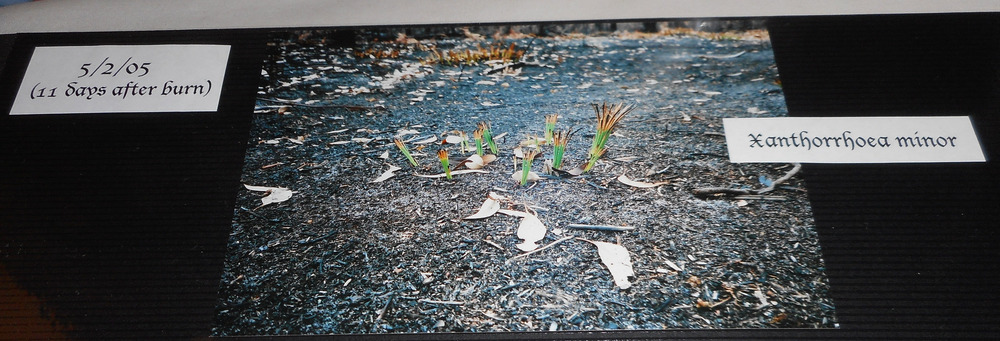
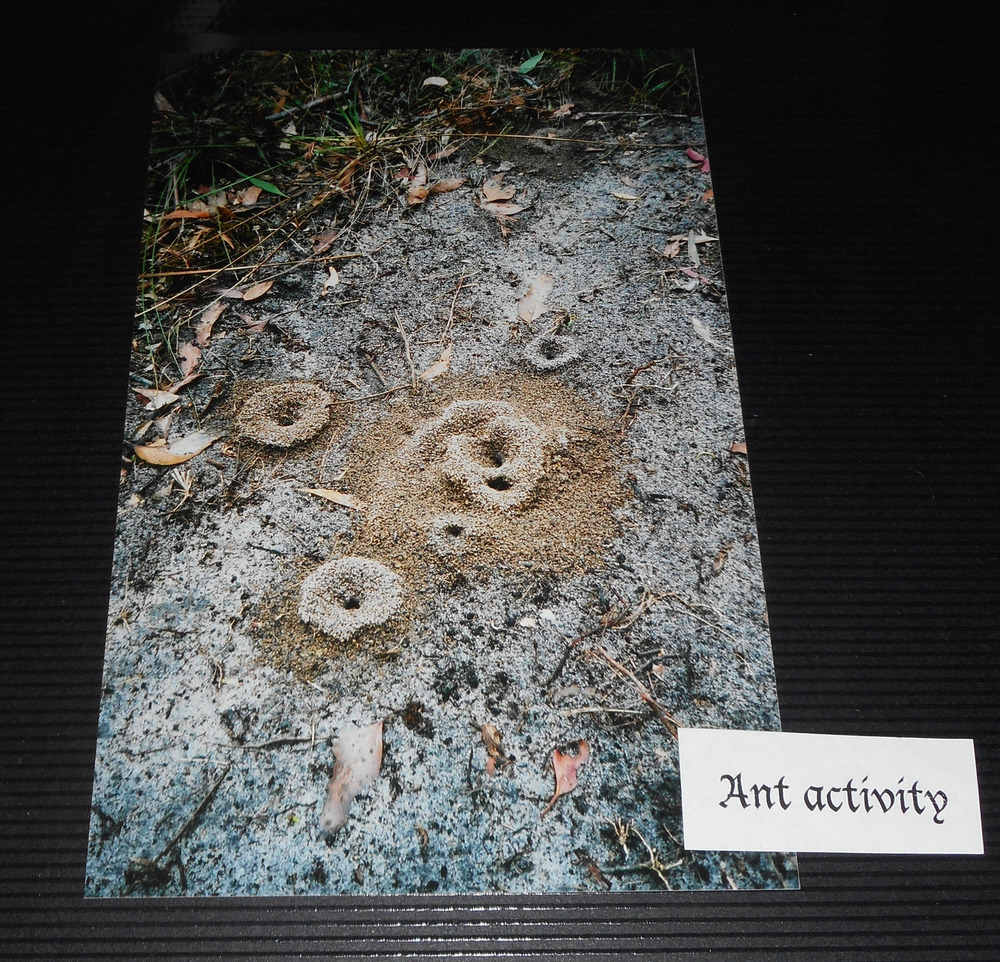
At our bush block at Digby (which is sclerophyl and heath) much of the soil is sand. It was sand dunes in dinosaur times. Anyway, after the fire, the ants come out first.

And the Xanthorrhoea was amazing and incredible in its regeneration. This picture is 11 days after the fire, and it was a hot fire. (The ant picture is from the same day, although the ants came to the surface the day after)

(Sorry about picture quality, it was pre-digital, so I photographed my photo album record)

Reply Quote