Date: 7/07/2020 10:47:12
From: The Rev Dodgson
ID: 1585082
Subject: Some Paradoxes

Today my learning was so surprising I thought it deserved its own thread.

Firstly I learned that a fact that is surprising but indisputably true is called a veridical paradox. An example is the fact that if you select 23 people at random, the probability that it will include at least one pair with a birthday on the same day of the year is just over 50%, which seems very high.

That wasn’t the surprising bit.

I then went to TATE to read more on veridical paradoxes, and discovered that in their main paradox article the only mention of the Epimenides paradox was a link to another article at the end.

Since the Epimenides paradox (a statement that this statement is untrue) was as far as I know the first statement of the type of paradox that cannot be resolved within conventional logical assumptions, it seems to me a little paradoxical that TATE should not give it a mention in their main paradox article.
Reply Quote

Date: 7/07/2020 10:50:36
From: roughbarked
ID: 1585084
Subject: re: Some Paradoxes

The Rev Dodgson said:


Today my learning was so surprising I thought it deserved its own thread.

Firstly I learned that a fact that is surprising but indisputably true is called a veridical paradox. An example is the fact that if you select 23 people at random, the probability that it will include at least one pair with a birthday on the same day of the year is just over 50%, which seems very high.

That wasn’t the surprising bit.

I then went to TATE to read more on veridical paradoxes, and discovered that in their main paradox article the only mention of the Epimenides paradox was a link to another article at the end.

Since the Epimenides paradox (a statement that this statement is untrue) was as far as I know the first statement of the type of paradox that cannot be resolved within conventional logical assumptions, it seems to me a little paradoxical that TATE should not give it a mention in their main paradox article.

Enlightening.

Reply Quote

Date: 7/07/2020 10:55:52
From: mollwollfumble
ID: 1585087
Subject: re: Some Paradoxes

The Rev Dodgson said:


Today my learning was so surprising I thought it deserved its own thread.

Firstly I learned that a fact that is surprising but indisputably true is called a veridical paradox. An example is the fact that if you select 23 people at random, the probability that it will include at least one pair with a birthday on the same day of the year is just over 50%, which seems very high.

That wasn’t the surprising bit.

I then went to TATE to read more on veridical paradoxes, and discovered that in their main paradox article the only mention of the Epimenides paradox was a link to another article at the end.

Since the Epimenides paradox (a statement that this statement is untrue) was as far as I know the first statement of the type of paradox that cannot be resolved within conventional logical assumptions, it seems to me a little paradoxical that TATE should not give it a mention in their main paradox article.

> Since the Epimenides paradox (a statement that this statement is untrue) was as far as I know the first statement of the type of paradox that cannot be resolved within conventional logical assumptions, it seems to me a little paradoxical that TATE should not give it a mention in their main paradox article.

The Epimenides paradox doesn’t lead to any further understanding (except for Bertrand Russell’s Barber’s paradox, Godel’s theorem, Hofsteader’s book, and the Lotka-Volterra equations). I can see why they left it off, I wouldn’t, but I can see why they would.

Reply Quote

Date: 7/07/2020 10:59:55
From: The Rev Dodgson
ID: 1585090
Subject: re: Some Paradoxes

mollwollfumble said:


The Rev Dodgson said:

Today my learning was so surprising I thought it deserved its own thread.

Firstly I learned that a fact that is surprising but indisputably true is called a veridical paradox. An example is the fact that if you select 23 people at random, the probability that it will include at least one pair with a birthday on the same day of the year is just over 50%, which seems very high.

That wasn’t the surprising bit.

I then went to TATE to read more on veridical paradoxes, and discovered that in their main paradox article the only mention of the Epimenides paradox was a link to another article at the end.

Since the Epimenides paradox (a statement that this statement is untrue) was as far as I know the first statement of the type of paradox that cannot be resolved within conventional logical assumptions, it seems to me a little paradoxical that TATE should not give it a mention in their main paradox article.

> Since the Epimenides paradox (a statement that this statement is untrue) was as far as I know the first statement of the type of paradox that cannot be resolved within conventional logical assumptions, it seems to me a little paradoxical that TATE should not give it a mention in their main paradox article.

The Epimenides paradox doesn’t lead to any further understanding (except for Bertrand Russell’s Barber’s paradox, Godel’s theorem, Hofsteader’s book, and the Lotka-Volterra equations). I can see why they left it off, I wouldn’t, but I can see why they would.

Well Russell’s paradox is quite different to the Barber’s paradox (which is easily resolvable), but Epimenides paradox does indeed lead to Russell’s Paradox, which leads to Godel’s theorem, and Hofstadter’s book, any one of which would make it well worthy of a mention.

Reply Quote

Date: 7/07/2020 11:09:22
From: mollwollfumble
ID: 1585093
Subject: re: Some Paradoxes

The Rev Dodgson said:


mollwollfumble said:

The Rev Dodgson said:

Today my learning was so surprising I thought it deserved its own thread.

Firstly I learned that a fact that is surprising but indisputably true is called a veridical paradox. An example is the fact that if you select 23 people at random, the probability that it will include at least one pair with a birthday on the same day of the year is just over 50%, which seems very high.

That wasn’t the surprising bit.

I then went to TATE to read more on veridical paradoxes, and discovered that in their main paradox article the only mention of the Epimenides paradox was a link to another article at the end.

Since the Epimenides paradox (a statement that this statement is untrue) was as far as I know the first statement of the type of paradox that cannot be resolved within conventional logical assumptions, it seems to me a little paradoxical that TATE should not give it a mention in their main paradox article.

> Since the Epimenides paradox (a statement that this statement is untrue) was as far as I know the first statement of the type of paradox that cannot be resolved within conventional logical assumptions, it seems to me a little paradoxical that TATE should not give it a mention in their main paradox article.

The Epimenides paradox doesn’t lead to any further understanding (except for Bertrand Russell’s Barber’s paradox, Godel’s theorem, Hofsteader’s book, and the Lotka-Volterra equations). I can see why they left it off, I wouldn’t, but I can see why they would.

Well Russell’s paradox is quite different to the Barber’s paradox (which is easily resolvable), but Epimenides paradox does indeed lead to Russell’s Paradox, which leads to Godel’s theorem, and Hofstadter’s book, any one of which would make it well worthy of a mention.

Agree, for eggheads like us. Presumably the TATE is after a less erudite audience.

Reply Quote

Date: 7/07/2020 14:54:21
From: dv
ID: 1585185
Subject: re: Some Paradoxes

The Rev Dodgson said:


Today my learning was so surprising I thought it deserved its own thread.

Firstly I learned that a fact that is surprising but indisputably true is called a veridical paradox. An example is the fact that if you select 23 people at random, the probability that it will include at least one pair with a birthday on the same day of the year is just over 50%, which seems very high.

That wasn’t the surprising bit.

I then went to TATE to read more on veridical paradoxes, and discovered that in their main paradox article the only mention of the Epimenides paradox was a link to another article at the end.

Since the Epimenides paradox (a statement that this statement is untrue) was as far as I know the first statement of the type of paradox that cannot be resolved within conventional logical assumptions, it seems to me a little paradoxical that TATE should not give it a mention in their main paradox article.

So edit it

Reply Quote

Date: 7/07/2020 14:57:43
From: The Rev Dodgson
ID: 1585189
Subject: re: Some Paradoxes

dv said:


The Rev Dodgson said:

Today my learning was so surprising I thought it deserved its own thread.

Firstly I learned that a fact that is surprising but indisputably true is called a veridical paradox. An example is the fact that if you select 23 people at random, the probability that it will include at least one pair with a birthday on the same day of the year is just over 50%, which seems very high.

That wasn’t the surprising bit.

I then went to TATE to read more on veridical paradoxes, and discovered that in their main paradox article the only mention of the Epimenides paradox was a link to another article at the end.

Since the Epimenides paradox (a statement that this statement is untrue) was as far as I know the first statement of the type of paradox that cannot be resolved within conventional logical assumptions, it seems to me a little paradoxical that TATE should not give it a mention in their main paradox article.

So edit it

I waste far too much time on the Internet already, without getting involved in that sort of thing :)

Reply Quote

Date: 7/07/2020 16:25:41
From: gaghalfrunt
ID: 1585231
Subject: re: Some Paradoxes

“Firstly I learned that a fact that is surprising but indisputably true is called a veridical paradox. An example is the fact that if you select 23 people at random, the probability that it will include at least one pair with a birthday on the same day of the year is just over 50%, which seems very high.”

Seems more like a statistical surprise than a paradox. In fact I see nothing paradoxical about the factoid presented.

Reply Quote

Date: 7/07/2020 16:38:15
From: The Rev Dodgson
ID: 1585236
Subject: re: Some Paradoxes

gaghalfrunt said:


“Firstly I learned that a fact that is surprising but indisputably true is called a veridical paradox. An example is the fact that if you select 23 people at random, the probability that it will include at least one pair with a birthday on the same day of the year is just over 50%, which seems very high.”

Seems more like a statistical surprise than a paradox. In fact I see nothing paradoxical about the factoid presented.


Well it depends how you define a “paradox”.

Some (including me) would say that there is no such thing as a “true paradox” since if something appears to defy the rules of logic, but is nonetheless demonstrably true there must be something wrong with the rules of logic, or something wrong with the demonstration that it is true,

And if all paradoxes are only apparent paradoxes then it just becomes a matter of degree.

Reply Quote

Date: 7/07/2020 16:53:03
From: SCIENCE
ID: 1585243
Subject: re: Some Paradoxes

apparadoxes

Reply Quote

Date: 7/07/2020 17:03:28
From: The Rev Dodgson
ID: 1585249
Subject: re: Some Paradoxes

SCIENCE said:

apparadoxes

https://en.wikipedia.org/wiki/Malcolm_de_Chazal

(hadn’t heard of him before)

Reply Quote

Date: 7/07/2020 17:13:35
From: Cymek
ID: 1585253
Subject: re: Some Paradoxes

If twin doctors went back in time and killed themselves before they became doctors that would be a pairofdocs paradox

Reply Quote

Date: 7/07/2020 17:18:55
From: SCIENCE
ID: 1585254
Subject: re: Some Paradoxes

The Rev Dodgson said:


SCIENCE said:

apparadoxes

https://en.wikipedia.org/wiki/Malcolm_de_Chazal

(hadn’t heard of him before)

bloody engineers

Reply Quote

Date: 7/07/2020 17:20:25
From: sibeen
ID: 1585256
Subject: re: Some Paradoxes

SCIENCE said:


The Rev Dodgson said:

SCIENCE said:

apparadoxes

https://en.wikipedia.org/wiki/Malcolm_de_Chazal

(hadn’t heard of him before)

bloody engineers

I, too, had never heard of him.

Reply Quote

Date: 7/07/2020 17:20:54
From: SCIENCE
ID: 1585257
Subject: re: Some Paradoxes

anyway we prefer the statistical ones like https://en.wikipedia.org/wiki/Simpson%27s_paradox

Reply Quote

Date: 7/07/2020 17:23:32
From: The Rev Dodgson
ID: 1585258
Subject: re: Some Paradoxes

sibeen said:


SCIENCE said:

The Rev Dodgson said:

https://en.wikipedia.org/wiki/Malcolm_de_Chazal

(hadn’t heard of him before)

bloody engineers

I, too, had never heard of him.

Don’t encourage him.

Reply Quote

Date: 7/07/2020 17:25:42
From: The Rev Dodgson
ID: 1585260
Subject: re: Some Paradoxes

SCIENCE said:


anyway we prefer the statistical ones like https://en.wikipedia.org/wiki/Simpson%27s_paradox

I’d never heard of that one either :)

Reply Quote

Date: 7/07/2020 17:28:24
From: Cymek
ID: 1585261
Subject: re: Some Paradoxes

The Rev Dodgson said:


SCIENCE said:

anyway we prefer the statistical ones like https://en.wikipedia.org/wiki/Simpson%27s_paradox

I’d never heard of that one either :)

It’s more common name is carbon blob from sector 7G

Reply Quote

Date: 7/07/2020 17:43:49
From: SCIENCE
ID: 1585267
Subject: re: Some Paradoxes

The Rev Dodgson said:


SCIENCE said:

anyway we prefer the statistical ones like https://en.wikipedia.org/wiki/Simpson%27s_paradox

I’d never heard of that one either :)

well one nice thing about stuff like that is that it skirts around the discussion about define a “paradox” and “true paradox”, it’s a way of setting up all the right conditions but ending up with something wrong, and neither logic nor the demonstration is wrong

but then you may argue that “paradox” in that sense is actually “irony”, which maybe it is

Reply Quote

Date: 7/07/2020 17:47:36
From: The Rev Dodgson
ID: 1585270
Subject: re: Some Paradoxes

SCIENCE said:


The Rev Dodgson said:

SCIENCE said:

anyway we prefer the statistical ones like https://en.wikipedia.org/wiki/Simpson%27s_paradox

I’d never heard of that one either :)

well one nice thing about stuff like that is that it skirts around the discussion about define a “paradox” and “true paradox”, it’s a way of setting up all the right conditions but ending up with something wrong, and neither logic nor the demonstration is wrong

but then you may argue that “paradox” in that sense is actually “irony”, which maybe it is

“but ending up with something wrong, and neither logic nor the demonstration is wrong”

???

But the logic is flawed, isn’t it?

Reply Quote

Date: 9/07/2020 15:12:13
From: Spiny Norman
ID: 1586622
Subject: re: Some Paradoxes

Reply Quote

Date: 9/07/2020 15:35:55
From: Bubblecar
ID: 1586639
Subject: re: Some Paradoxes

The ultimate ontological status of formal logic still seems somewhat hazy – cognitive or objective, both, or other? You be the judge.

Reply Quote

Date: 9/07/2020 15:43:56
From: The Rev Dodgson
ID: 1586645
Subject: re: Some Paradoxes

Bubblecar said:


The ultimate ontological status of formal logic still seems somewhat hazy – cognitive or objective, both, or other? You be the judge.

But should I judge it cognitively or objectively?

Reply Quote

Date: 9/07/2020 15:47:43
From: Bubblecar
ID: 1586649
Subject: re: Some Paradoxes

The Rev Dodgson said:


Bubblecar said:

The ultimate ontological status of formal logic still seems somewhat hazy – cognitive or objective, both, or other? You be the judge.

But should I judge it cognitively or objectively?

Don’t ask me. Do Gödel’s incompleteness theorems mean anything outside of the human mind?

Reply Quote

Date: 9/07/2020 15:52:59
From: The Rev Dodgson
ID: 1586652
Subject: re: Some Paradoxes

Bubblecar said:


The Rev Dodgson said:

Bubblecar said:

The ultimate ontological status of formal logic still seems somewhat hazy – cognitive or objective, both, or other? You be the judge.

But should I judge it cognitively or objectively?

Don’t ask me. Do Gödel’s incompleteness theorems mean anything outside of the human mind?

I don’t know.

But does anything that exists outside of the human mind mean anything to those who live inside a human mind?

Reply Quote

Date: 9/07/2020 16:01:40
From: Bubblecar
ID: 1586663
Subject: re: Some Paradoxes

The Rev Dodgson said:


Bubblecar said:

The Rev Dodgson said:

But should I judge it cognitively or objectively?

Don’t ask me. Do Gödel’s incompleteness theorems mean anything outside of the human mind?

I don’t know.

But does anything that exists outside of the human mind mean anything to those who live inside a human mind?

Well there’s a fairly significant intersection set.

Reply Quote

Date: 9/07/2020 16:02:48
From: SCIENCE
ID: 1586665
Subject: re: Some Paradoxes

Bubblecar said:


The Rev Dodgson said:

Bubblecar said:

Don’t ask me. Do Gödel’s incompleteness theorems mean anything outside of the human mind?

I don’t know.

But does anything that exists outside of the human mind mean anything to those who live inside a human mind?

Well there’s a fairly significant intersection set.

prove it

Reply Quote

Date: 9/07/2020 16:07:06
From: Bubblecar
ID: 1586669
Subject: re: Some Paradoxes

SCIENCE said:


Bubblecar said:

The Rev Dodgson said:

I don’t know.

But does anything that exists outside of the human mind mean anything to those who live inside a human mind?

Well there’s a fairly significant intersection set.

prove it

I’ll leave that to the statistics.

https://www.worldometers.info/coronavirus/

Reply Quote

Date: 9/07/2020 16:07:24
From: SCIENCE
ID: 1586670
Subject: re: Some Paradoxes

Bubblecar said:


SCIENCE said:

Bubblecar said:

Well there’s a fairly significant intersection set.

prove it

I’ll leave that to the statistics.

https://www.worldometers.info/coronavirus/

oh Godel

Reply Quote

Date: 9/07/2020 16:12:42
From: Bubblecar
ID: 1586673
Subject: re: Some Paradoxes

SCIENCE said:


Bubblecar said:

SCIENCE said:

prove it

I’ll leave that to the statistics.

https://www.worldometers.info/coronavirus/

oh Godel

Can you refer us to any phenomena that demonstrate his theorems, apart from the theorems themselves?

Reply Quote

Date: 9/07/2020 16:38:20
From: The Rev Dodgson
ID: 1586688
Subject: re: Some Paradoxes

Bubblecar said:


The Rev Dodgson said:

Bubblecar said:

Don’t ask me. Do Gödel’s incompleteness theorems mean anything outside of the human mind?

I don’t know.

But does anything that exists outside of the human mind mean anything to those who live inside a human mind?

Well there’s a fairly significant intersection set.

Hmmm.

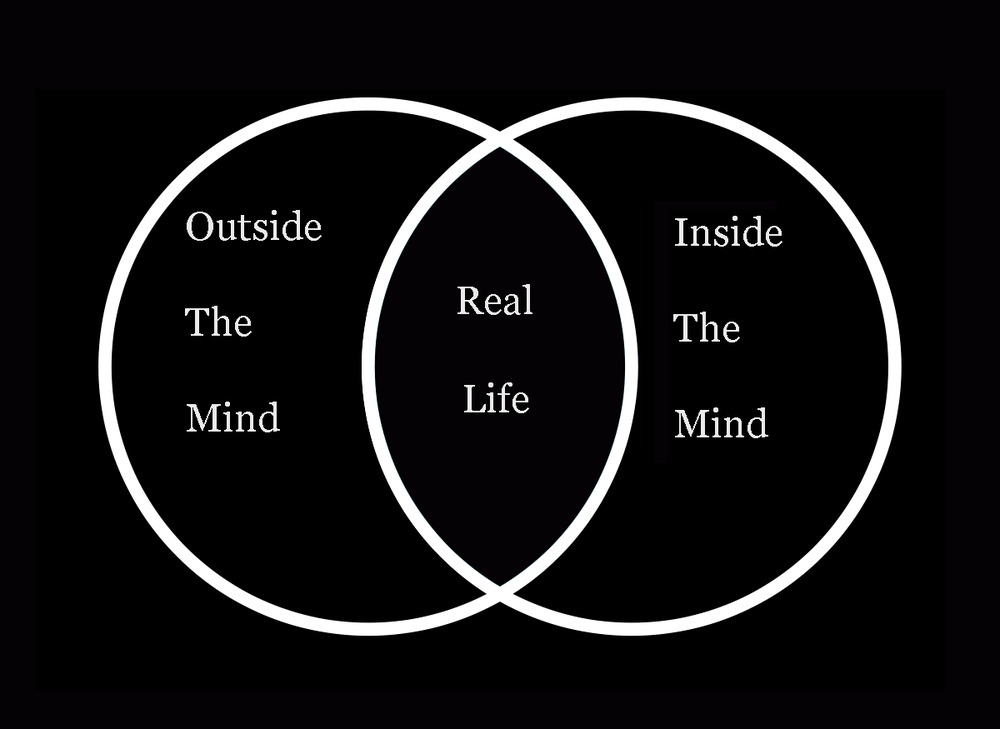
Outside, Inside
The Real The
Mind, Life, Mind

I shall have to think about these things.

Reply Quote

Date: 9/07/2020 16:43:00
From: The Rev Dodgson
ID: 1586691
Subject: re: Some Paradoxes

Bubblecar said:


SCIENCE said:

Bubblecar said:

I’ll leave that to the statistics.

https://www.worldometers.info/coronavirus/

oh Godel

Can you refer us to any phenomena that demonstrate his theorems, apart from the theorems themselves?

I take some comfort from the fact that Godel himself was not sure if his theorems had any great significance.

Although no-one seems to talk about that much these days.

Reply Quote

Date: 9/07/2020 18:12:07
From: SCIENCE
ID: 1586722
Subject: re: Some Paradoxes

we thought it was just a suggestion that mathematics was imperfect

and in practice it is an implication that pure rationalism is inadequate even for its own ends

but happy to see a proof of otherwise

Reply Quote

Date: 10/07/2020 15:14:12
From: SCIENCE
ID: 1587414
Subject: re: Some Paradoxes

and think of all the fun we could have had if it was actually about sum paradoxes

Reply Quote

Date: 10/07/2020 15:14:49
From: roughbarked
ID: 1587416
Subject: re: Some Paradoxes

SCIENCE said:


and think of all the fun we could have had if it was actually about sum paradoxes

totally.

Reply Quote