Huge volcanic eruptions 233 million years ago pumped carbon dioxide, methane and water vapour into the atmosphere. This series of violent explosions, on what we now know as the west coast of Canada, led to massive global warming. Our new research has revealed that this was a planet-changing mass extinction event that killed off many of the dominant tetrapods and heralded the dawn of the dinosaurs.
Geologists and palaeontologists agree on a roster of five such events, of which the end-Cretaceous mass extinction was the last. So our new discovery of a previously unknown mass extinction might seem unexpected. And yet this event, termed the Carnian Pluvial Episode (CPE), seems to have killed as many species as the giant asteroid did. Ecosystems on land and sea were profoundly changed, as the planet got warmer and drier.
On land, this triggered profound changes in plants and herbivores. In turn, with the decline of the dominant plant-eating tetrapods, such as rhynchosaurs and dicynodonts, the dinosaurs were given their chance.
The dinosaurs had originated some 15 million years earlier and our new study shows that, as a result of the CPE, they expanded rapidly in the subsequent 10 million to 15 million years and became the dominant species in the terrestrial ecosystems. The CPE triggered the “age of the dinosaurs” which lasted for a further 165 million years.
It wasn’t only the dinosaurs that were given a foothold. Many modern tetrapod groups, such as turtles, lizards, crocodiles and mammals date back to this newly discovered time of revolution.
The jigsaw pieces started falling into place when an episode of about 1 million years of humid climates was recognised throughout the UK and parts of Europe by geologists Mike Simms and Alastair Ruffell. Then geologist Jacopo dal Corso spotted a coincidence in timing of the CPE with the peak of eruptions of the Wrangellia basalts.
Wrangellia is a term geologists give to a narrow tectonic plate that is attached to the west coast of the North American continent, north of Vancouver and Seattle.
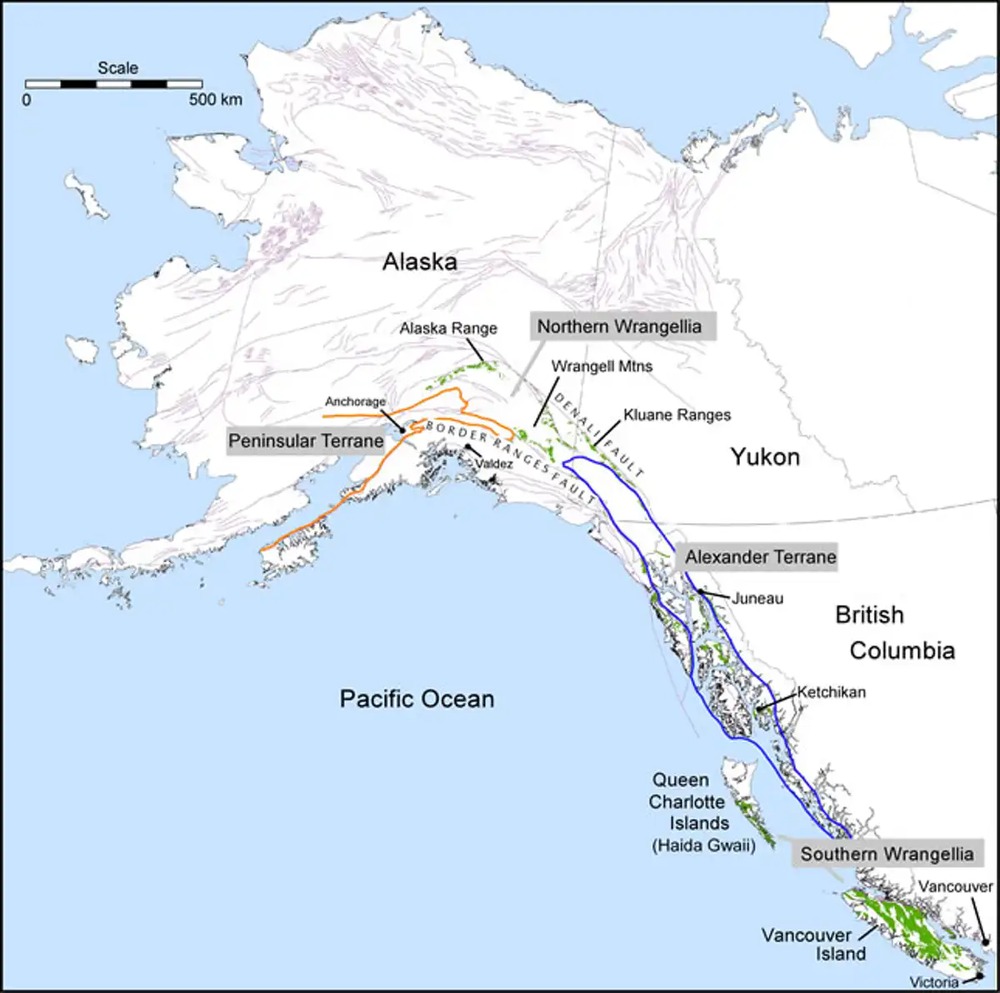
Finally, in a review of the evidence from Triassic-aged rocks, the signature of the CPE was detected – not only in Europe, but also in South America, North America, Australia and Asia. This was far from being a Europe-only event. It was global.
The massive Wrangellia eruptions pumped carbon dioxide, methane and water vapour into the atmosphere, leading to global warming and an increase in rainfall worldwide. There were as many as five pulses of eruptions associated with warming peaks from 233 million years ago. The eruptions led to acid rain as the volcanic gases mixed with rainwater to shower the Earth in dilute acid. Shallow oceans also became acidified.
The sharp warming drove plants and animals from the tropics and the acid rain killed plants on land, while ocean acidification attacked all marine organisms with carbonate skeletons. This stripped away the surfaces of the oceans and the land. Life may have begun to recover, but when the eruptions ceased, temperatures remained high while the tropical rainfall ceased. This is what caused the subsequent drying of the land on which the dinosaurs flourished.
Before the CPE, the main source of carbonate in the oceans came from microbial ecosystems, such as limestone-dominated mud mounds, on continental shelves. But after the CPE, it was driven by coral reefs and plankton, where new groups of micro-organisms, such as dinoflagellates, appeared and bloomed. This profound switch in fundamental chemical cycles in the oceans marked the beginning of modern marine ecosystems.
https://theconversation.com/newly-discovered-mass-extinction-event-triggered-the-dawn-of-the-dinosaurs-146248