Date: 21/11/2020 18:08:21
From: mollwollfumble
ID: 1653072
Subject: Two quick questions
Reply Quote

Date: 21/11/2020 18:12:53
From: buffy
ID: 1653074
Subject: re: Two quick questions

mollwollfumble said:

  • What is the finest ever woven/knitted fabric? eg. has anyone woven a fabric using threads a micron in diameter?

  • What is the best plastic for food fibre? eg. for adding texture to lab-grown meat or for recycling astronaut poo?

I would imagine it would be the spider web fabric, for a natural fibre.

Reply Quote

Date: 21/11/2020 18:13:31
From: buffy
ID: 1653075
Subject: re: Two quick questions

https://www.wired.com/2009/09/spider-silk/

It’s rather beautiful.

Reply Quote

Date: 21/11/2020 19:24:02
From: captain_spalding
ID: 1653089
Subject: re: Two quick questions

buffy said:


https://www.wired.com/2009/09/spider-silk/

It’s rather beautiful.

Oh, i have my chausetteur make all of my socks out of that…

Reply Quote

Date: 22/11/2020 03:36:44
From: mollwollfumble
ID: 1653327
Subject: re: Two quick questions

buffy said:


https://www.wired.com/2009/09/spider-silk/

It’s rather beautiful.

Oh, that is beautiful.

There are nylon mesh sieves down to 20 microns.
But 1 denier (eg. silk) has a diameter of about 10 microns.
And microfibre fibre cloths have smaller diameters than that. But aren’t woven the way I want, and fibres are split into triangles.
A silk claiming a thread count of 750 translates to 40 micron spacing.

There’s got to be something better than that.

https://www.labopolis.com/en/product/nylon-mesh-test-sieve/ has nylon mesh sieves down to 5 microns.

Damnit – I thought I had a news article about the finest textile – got to the bottom and it said “happy April fools day”. https://bedtimesmagazine.com/2017/04/malouf-4k-ultra-tc-sheet-set/

—-

As for plastics as food fibre, I was thinking PVC because it isn’t biodegradable and because of its chewy texture. And because it can easily be made really thin. Perhaps the best stiffener for meat from cell culture and space food sticks. But it may lose or because of that low strength as a recyclable food fibre.

Reply Quote

Date: 22/11/2020 07:28:28
From: roughbarked
ID: 1653342
Subject: re: Two quick questions

mollwollfumble said:


buffy said:

https://www.wired.com/2009/09/spider-silk/

It’s rather beautiful.

Oh, that is beautiful.

There are nylon mesh sieves down to 20 microns.
But 1 denier (eg. silk) has a diameter of about 10 microns.
And microfibre fibre cloths have smaller diameters than that. But aren’t woven the way I want, and fibres are split into triangles.
A silk claiming a thread count of 750 translates to 40 micron spacing.

There’s got to be something better than that.

https://www.labopolis.com/en/product/nylon-mesh-test-sieve/ has nylon mesh sieves down to 5 microns.

Damnit – I thought I had a news article about the finest textile – got to the bottom and it said “happy April fools day”. https://bedtimesmagazine.com/2017/04/malouf-4k-ultra-tc-sheet-set/

—-

As for plastics as food fibre, I was thinking PVC because it isn’t biodegradable and because of its chewy texture. And because it can easily be made really thin. Perhaps the best stiffener for meat from cell culture and space food sticks. But it may lose or because of that low strength as a recyclable food fibre.

How many questions ?

Reply Quote

Date: 22/11/2020 09:57:27
From: mollwollfumble
ID: 1653405
Subject: re: Two quick questions

> Nylon sieve with a 5 micron aperture.

Going through the maths/geometry, a 5 micron hole in a woven textile can theoretically only be achieved with a fibre diameter of 20 microns or less. No difficulty there.

roughbarked said:


mollwollfumble said:

buffy said:

https://www.wired.com/2009/09/spider-silk/

It’s rather beautiful.

Oh, that is beautiful.

There are nylon mesh sieves down to 20 microns.
But 1 denier (eg. silk) has a diameter of about 10 microns.
And microfibre fibre cloths have smaller diameters than that. But aren’t woven the way I want, and fibres are split into triangles.
A silk claiming a thread count of 750 translates to 40 micron spacing.

There’s got to be something better than that.

https://www.labopolis.com/en/product/nylon-mesh-test-sieve/ has nylon mesh sieves down to 5 microns.

Damnit – I thought I had a news article about the finest textile – got to the bottom and it said “happy April fools day”. https://bedtimesmagazine.com/2017/04/malouf-4k-ultra-tc-sheet-set/

—-

As for plastics as food fibre, I was thinking PVC because it isn’t biodegradable and because of its chewy texture. And because it can easily be made really thin. Perhaps the best stiffener for meat from cell culture and space food sticks. But it may lose or because of that low strength as a recyclable food fibre.

How many questions ?

2

mollwollfumble said:

  • What is the finest ever woven/knitted fabric? eg. has anyone woven a fabric using threads a micron in diameter?

  • What is the best plastic for food fibre? eg. for adding texture to lab-grown meat or for recycling astronaut poo?

https://sci-hub.st/https://iopscience.iop.org/article/10.1088/0957-4484/7/3/009/pdf

“Introduction to nanofibres

“Nanometre diameter fibres of polymer, produced by electrospinning, produce long polymer fibres with diameters in the range of 40–2000 nm.

40 nm is a relatively small fibre diameter.
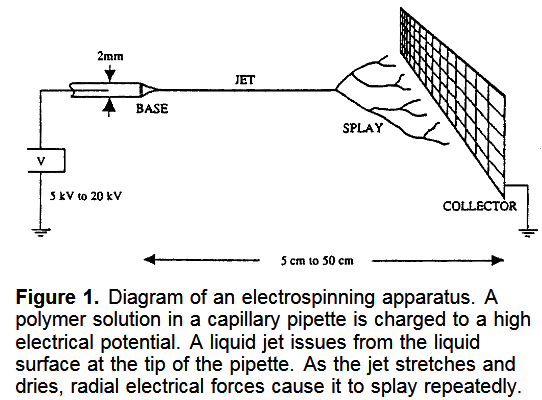
“The fibres were cylindrical with a diameters of around 300 nm. The diameter of the jet near the base was estimated to be about 10 μm. Evaporation of the solvent from a 10 μm diameter jet of the 4% solution would leave a fibre with a diameter of about 2μm. To produce the 300 nm fibres observed, the drying jet both splayed and stretched as it approached the collector.”

Now what’s needed is a weaving machine that can handle sub-micron fibre diameters.

Reply Quote

Date: 23/11/2020 17:20:01
From: Ogmog
ID: 1654109
Subject: re: Two quick questions

mollwollfumble said:


> Nylon sieve with a 5 micron aperture.

Going through the maths/geometry, a 5 micron hole in a woven textile can theoretically only be achieved with a fibre diameter of 20 microns or less. No difficulty there.

roughbarked said:


mollwollfumble said:

How many questions ?

2

mollwollfumble said:

  • What is the finest ever woven/knitted fabric? eg. has anyone woven a fabric using threads a micron in diameter?

  • What is the best plastic for food fibre? eg. for adding texture to lab-grown meat or for recycling astronaut poo?

https://sci-hub.st/https://iopscience.iop.org/article/10.1088/0957-4484/7/3/009/pdf

“Introduction to nanofibres

“Nanometre diameter fibres of polymer, produced by electrospinning, produce long polymer fibres with diameters in the range of 40–2000 nm.

40 nm is a relatively small fibre diameter.

“The fibres were cylindrical with a diameters of around 300 nm. The diameter of the jet near the base was estimated to be about 10 μm. Evaporation of the solvent from a 10 μm diameter jet of the 4% solution would leave a fibre with a diameter of about 2μm. To produce the 300 nm fibres observed, the drying jet both splayed and stretched as it approached the collector.”

Now what’s needed is a weaving machine that can handle sub-micron fibre diameters.

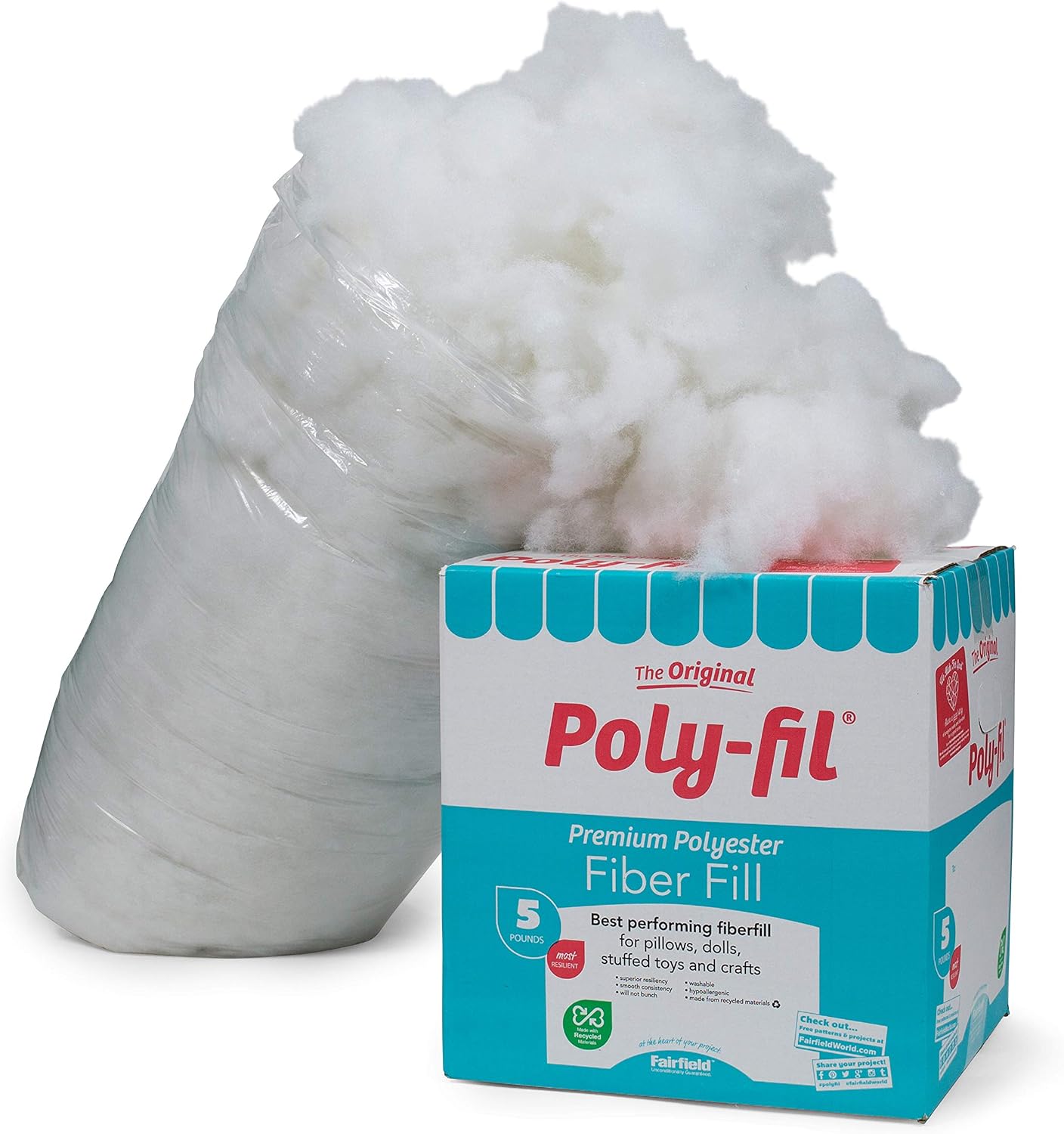
The manufacturing process sounds similar to a filler that came as a packing
cushion to protect breakable items being shipped by mail several years ago.

I was so intrigued by this super fluff that I’d seen in a factory setting 30 years
earlier as free floating fluff bourne on the air. I remember thinking how potentially
dangerous it could be if breathed in…
…so when I saw it used in larger more robust clumps as packing I looked it up.

Being a heat blown polyester I’m not sure it had the integrity to be spun into thread
that could possibly be woven..
..then again, even actual cotton fibers presents a problem when airborne..
Reply Quote

Date: 23/11/2020 22:29:58
From: mollwollfumble
ID: 1654267
Subject: re: Two quick questions

Ogmog said:


mollwollfumble said:

mollwollfumble said:
  • What is the finest ever woven/knitted fabric? eg. has anyone woven a fabric using threads a micron in diameter?

  • What is the best plastic for food fibre? eg. for adding texture to lab-grown meat or for recycling astronaut poo?

https://sci-hub.st/https://iopscience.iop.org/article/10.1088/0957-4484/7/3/009/pdf

“Introduction to nanofibres

“Nanometre diameter fibres of polymer, produced by electrospinning, produce long polymer fibres with diameters in the range of 40–2000 nm.

40 nm is a relatively small fibre diameter.

“The fibres were cylindrical with a diameters of around 300 nm. The diameter of the jet near the base was estimated to be about 10 μm. Evaporation of the solvent from a 10 μm diameter jet of the 4% solution would leave a fibre with a diameter of about 2μm. To produce the 300 nm fibres observed, the drying jet both splayed and stretched as it approached the collector.”

Now what’s needed is a weaving machine that can handle sub-micron fibre diameters.

The manufacturing process sounds similar to a filler that came as a packing
cushion to protect breakable items being shipped by mail several years ago.

I was so intrigued by this super fluff that I’d seen in a factory setting 30 years
earlier as free floating fluff bourne on the air. I remember thinking how potentially
dangerous it could be if breathed in…
…so when I saw it used in larger more robust clumps as packing I looked it up.

Being a heat blown polyester I’m not sure it had the integrity to be spun into thread
that could possibly be woven..
..then again, even actual cotton fibers presents a problem when airborne..


Thanks for that. I haven’t found anything on mr google about it other than a lot of people selling it, a blank wikipedia page, and a scam site.

> Now what’s needed is a weaving machine that can handle sub-micron fibre diameters.

Not getting anywhere with finding that either. First time I’ve struck a paywall in the Chinese language.
http://en.cnki.com.cn/Article_en/CJFDTotal-XBFZ200404025.htm

“Making use of nanotechnology in spinning and weaving new product development
MENG Jia-guang, WANG Xiu
Nanotechnology is one of high-new technology in international, which need be making efforts development in 21st century. The development situation of nanotechnology, the characteristics of nanomaterial, usage current situation of nanotechnology are introduced. On the foundation ,the making use of nanomaterial in spinning and weaving industry is analyzed.”

The following is similar, knitted carbon nanotubes. https://sci-hub.st/https://doi.org/10.1039/C9TA01474H

“With their impressive properties such as high mechanical strength, high electrical and thermal conductivities, good corrosion and oxidation resistance, and excellent structural flexibility, carbon nanotube (CNT) fibers hold great promise for developing multifunctional fabrics. However, the preparation of such fabrics containing only CNT fibers through mature textile technologies in a fully automatic way remains a big challenge.

“Here, for the first time, we report the automatic fabrication of CNT fiber fabrics. This is achieved through knitting yarns composed of CNT fibers that are produced from a floating catalyst chemical vapor deposition based process using an automatic weft knitting machine. The resulting all-CNT fiber fabrics are flexible, light weight, mechanically strong, and electrically and thermally conductive.

“The promising applications of such multifunctional fabrics are demonstrated by using them as fast-responding electrothermal heaters and as high-performance fabric electrodes in flexible supercapacitors. We expect that this study will pave a new way for the use of CNT fibers in real-world applications.”

“The constituent CNTs were mainly few-walled (2-7 walls) with diameters ranging from 5 to10 nm. We found that, the force they could tolerate was too small to be compatible with the standard weaving/knitting methods.”

Darn.

“yarns twisted from 5 fibers had a moderately dense structure with a diameter of 65 to 100 μm”.

Nah, way too big. Silk threads have a diameter of 5 to 10 μm.

Reply Quote

Date: 24/11/2020 15:50:06
From: Ogmog
ID: 1654606
Subject: re: Two quick questions

you’re asking to marry modern technology with ancient biology

Golden Spider Silk Cape
Exploring The Wondrous Fabric

Milking a Spider
Richard Hammond’s Invisible Worlds | Earth Lab

Reply Quote

Date: 24/11/2020 15:56:25
From: Ogmog
ID: 1654607
Subject: re: Two quick questions

buffy said:


https://www.wired.com/2009/09/spider-silk/

It’s rather beautiful.

How was it made?
Golden spider silk

Reply Quote