Date: 15/03/2021 14:26:43
From: PermeateFree
ID: 1710547
Subject: Bone pit may be site of "earliest-known indiscriminate mass killing"


The mass grave contains the skeletons of 41 people, approximately half of them male and half female
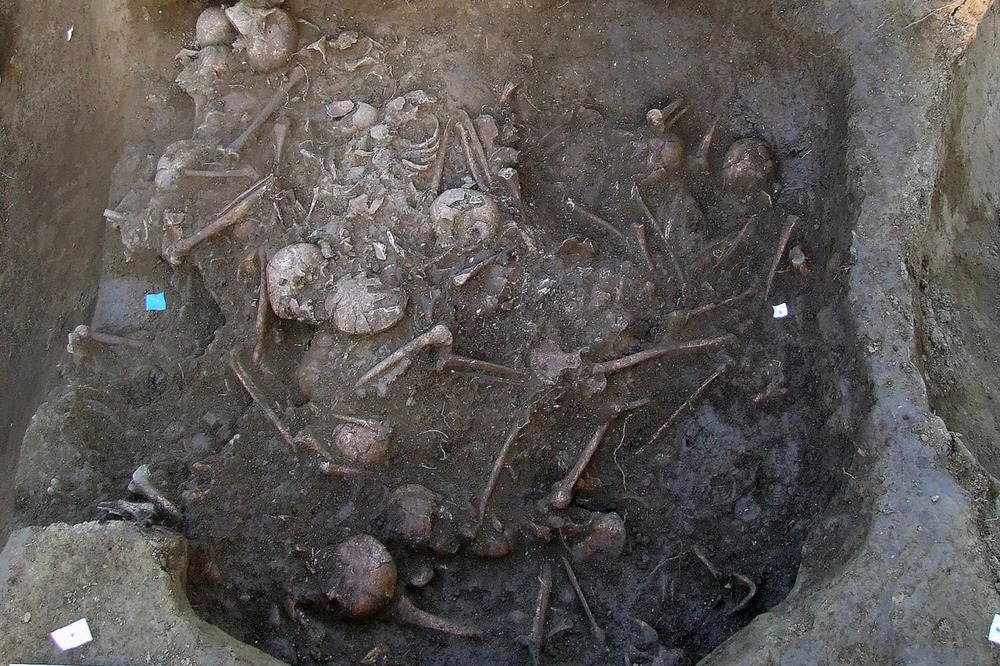
In case there was ever any doubt … atrocities are nothing new. Scientists have recently determined that piled human remains unearthed in what is now Potočani, Croatia, represent the earliest-known indiscriminate mass killing.

First discovered when a garage was being constructed on the site in 2007, the 6,200 year-old mass grave contains the skeletons of 41 individuals.

Buried all at one time in a very haphazard fashion, the bones are from males and females, who are believed to have been part of a small pastoralist community in the area. Analysis of the remains began in 2012, culminating in a paper published this week in the journal PLOS ONE.

Because both men and women are represented (in approximately a half-and-half ratio), the researchers state that the deaths couldn’t have been the result of “inter-male” fighting, as was the norm in battles of the time. Additionally, DNA analysis showed that 70 percent of the individuals weren’t closely related to any of the others, suggesting that the deaths weren’t associated with a feud between two or more families.
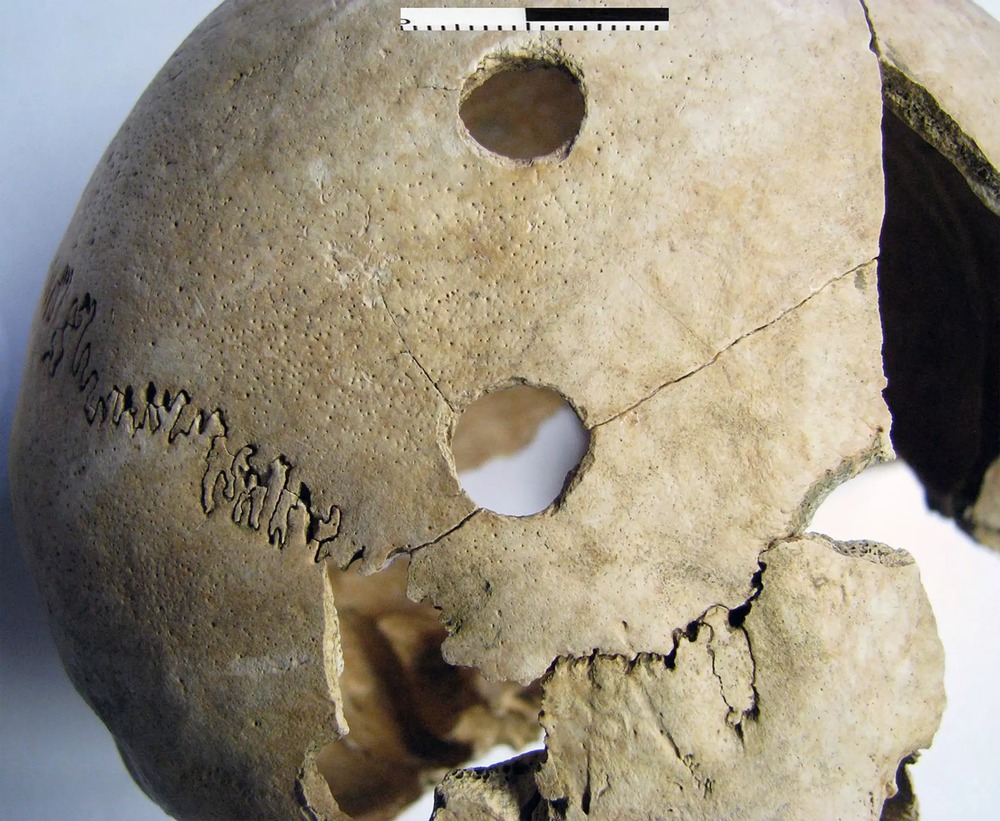
Thirteen of the skeletons exhibit cranial injuries, while the cause of death in the others is unclear. This discrepancy could have been due to the fact that the majority of the people were killed by means that left no evidence, such as strangulation or stabbing in soft-tissue areas.

So, why were they slaughtered? The scientists believe that climate change may have resulted in a loss of resources, causing one larger community to attack another that was smaller.

“These factors tend to disrupt human lifeways, and groups sometimes try to take over others’ territories and resources,” says the University of Washington’s Prof. James Ahern. “Increases in population size cause groups to overextend their local resources and require expansion into other areas. Both climate change and population increase tend to cause social disruption and violent acts, such as what happened at Potočani, that become more common as groups come into conflict with each other.”

https://newatlas.com/science/earliest-known-indiscriminate-mass-killing/

Reply Quote

Date: 15/03/2021 14:29:17
From: Cymek
ID: 1710550
Subject: re: Bone pit may be site of "earliest-known indiscriminate mass killing"

I think there is something in that for all of us

Reply Quote

Date: 15/03/2021 16:07:53
From: mollwollfumble
ID: 1710616
Subject: re: Bone pit may be site of "earliest-known indiscriminate mass killing"

> The mass grave contains the skeletons of 41 people, approximately half of them male and half female. In case there was ever any doubt … atrocities are nothing new. Scientists have recently determined that piled human remains unearthed in what is now Potočani, Croatia, represent the earliest-known indiscriminate mass killing. First discovered when a garage was being constructed on the site in 2007, the 6,200 year-old mass grave contains the skeletons of 41 individuals.

Surprising that it’s that recent, or perhaps not.

From wikipedia:
“Mesopotamia is the site of the earliest developments of the Neolithic Revolution from around 10,000 BCE, with civilizations developing from 6,500 years ago”.

So what we’re seeing here is the origin of civilization. Prior to that, the victims of mass killing would have just been left to rot on the ground. Burying your enemies takes a lot of effort, the sort of effort that requires an understanding of disease and spare labour to do such a task.

It could be a sign of the origins of land ownership. No point in burying people on no-mans land.

Reply Quote

Date: 15/03/2021 16:09:41
From: Cymek
ID: 1710619
Subject: re: Bone pit may be site of "earliest-known indiscriminate mass killing"

mollwollfumble said:


> The mass grave contains the skeletons of 41 people, approximately half of them male and half female. In case there was ever any doubt … atrocities are nothing new. Scientists have recently determined that piled human remains unearthed in what is now Potočani, Croatia, represent the earliest-known indiscriminate mass killing. First discovered when a garage was being constructed on the site in 2007, the 6,200 year-old mass grave contains the skeletons of 41 individuals.

Surprising that it’s that recent, or perhaps not.

From wikipedia:
“Mesopotamia is the site of the earliest developments of the Neolithic Revolution from around 10,000 BCE, with civilizations developing from 6,500 years ago”.

So what we’re seeing here is the origin of civilization. Prior to that, the victims of mass killing would have just been left to rot on the ground. Burying your enemies takes a lot of effort, the sort of effort that requires an understanding of disease and spare labour to do such a task.

It could be a sign of the origins of land ownership. No point in burying people on no-mans land.

Means to alleviate smell of corpses if people lived close by perhaps

Reply Quote

Date: 15/03/2021 16:19:03
From: SCIENCE
ID: 1710623
Subject: re: Bone pit may be site of "earliest-known indiscriminate mass killing"

Cymek said:


mollwollfumble said:

> The mass grave contains the skeletons of 41 people, approximately half of them male and half female. In case there was ever any doubt … atrocities are nothing new. Scientists have recently determined that piled human remains unearthed in what is now Potočani, Croatia, represent the earliest-known indiscriminate mass killing. First discovered when a garage was being constructed on the site in 2007, the 6,200 year-old mass grave contains the skeletons of 41 individuals.

Surprising that it’s that recent, or perhaps not.

From wikipedia:
“Mesopotamia is the site of the earliest developments of the Neolithic Revolution from around 10,000 BCE, with civilizations developing from 6,500 years ago”.

So what we’re seeing here is the origin of civilization. Prior to that, the victims of mass killing would have just been left to rot on the ground. Burying your enemies takes a lot of effort, the sort of effort that requires an understanding of disease and spare labour to do such a task.

It could be a sign of the origins of land ownership. No point in burying people on no-mans land.

Means to alleviate smell of corpses if people lived close by perhaps

The history of all hitherto existing civilisation is the history of occupational struggles.

Reply Quote