Date: 2/03/2022 16:06:01
From: PermeateFree
ID: 1854933
Subject: The real cost of Salmon farming

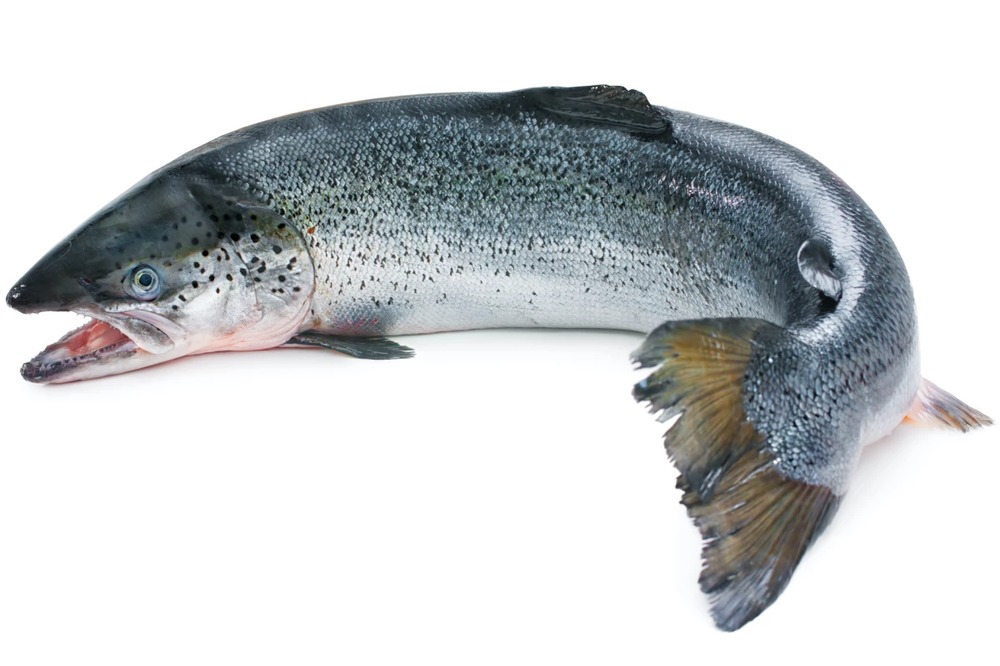
One of the great ironies of salmon farming lies in the fact that even though the salmon themselves aren’t wild-caught, their feed is partially made up of smaller fish that are. According to new research, it would be ecologically better if we just ate those feed fish ourselves.

The study was conducted by scientists from the University of Cambridge, utilizing data from the production of farmed salmon in Scotland for the year 2014. In a nutshell, the researchers wanted to compare the volume of wild-caught feed fish to the volume of farmed salmon that was harvested.

It was found that in 2014, 460,000 tonnes (507,063 tons) of wild-caught fish were used to produce 179,000 tonnes (197,313 tons) of salmon. Furthermore, 76 percent of the wild-caught fish were species that are commonly eaten by humans, such as anchovies and sardines.

Extrapolating those figures to a global scale, the scientists estimate that if people were to eat the wild-caught fish which are currently used in salmon feed, almost 4 million tons (3.6 million tonnes) of fish that are presently caught could be left in the sea each year. At the same time, a greater volume of fish would become available as a human food source.

“Allowing salmonid production to expand further via its current approach will place exceptional stress on global fish stocks already at their limit,” said the authors of a paper on the research. “Our results suggest that limiting the volume of wild-caught fish used to produce farmed salmon feed may relieve pressure on wild fish stocks while increasing supply of nutritious wild fish for human consumption.”

https://newatlas.com/environment/salmon-feed-wild-fish-human-consumption/
Reply Quote

Date: 2/03/2022 16:08:43
From: sarahs mum
ID: 1854934
Subject: re: The real cost of Salmon farming

PermeateFree said:


One of the great ironies of salmon farming lies in the fact that even though the salmon themselves aren’t wild-caught, their feed is partially made up of smaller fish that are. According to new research, it would be ecologically better if we just ate those feed fish ourselves.

The study was conducted by scientists from the University of Cambridge, utilizing data from the production of farmed salmon in Scotland for the year 2014. In a nutshell, the researchers wanted to compare the volume of wild-caught feed fish to the volume of farmed salmon that was harvested.

It was found that in 2014, 460,000 tonnes (507,063 tons) of wild-caught fish were used to produce 179,000 tonnes (197,313 tons) of salmon. Furthermore, 76 percent of the wild-caught fish were species that are commonly eaten by humans, such as anchovies and sardines.

Extrapolating those figures to a global scale, the scientists estimate that if people were to eat the wild-caught fish which are currently used in salmon feed, almost 4 million tons (3.6 million tonnes) of fish that are presently caught could be left in the sea each year. At the same time, a greater volume of fish would become available as a human food source.

“Allowing salmonid production to expand further via its current approach will place exceptional stress on global fish stocks already at their limit,” said the authors of a paper on the research. “Our results suggest that limiting the volume of wild-caught fish used to produce farmed salmon feed may relieve pressure on wild fish stocks while increasing supply of nutritious wild fish for human consumption.”

https://newatlas.com/environment/salmon-feed-wild-fish-human-consumption/
just quantifying what we already knew.

add to this the cost of destroyed environment.

Reply Quote

Date: 2/03/2022 16:15:24
From: Michael V
ID: 1854940
Subject: re: The real cost of Salmon farming

sarahs mum said:


PermeateFree said:

One of the great ironies of salmon farming lies in the fact that even though the salmon themselves aren’t wild-caught, their feed is partially made up of smaller fish that are. According to new research, it would be ecologically better if we just ate those feed fish ourselves.

The study was conducted by scientists from the University of Cambridge, utilizing data from the production of farmed salmon in Scotland for the year 2014. In a nutshell, the researchers wanted to compare the volume of wild-caught feed fish to the volume of farmed salmon that was harvested.

It was found that in 2014, 460,000 tonnes (507,063 tons) of wild-caught fish were used to produce 179,000 tonnes (197,313 tons) of salmon. Furthermore, 76 percent of the wild-caught fish were species that are commonly eaten by humans, such as anchovies and sardines.

Extrapolating those figures to a global scale, the scientists estimate that if people were to eat the wild-caught fish which are currently used in salmon feed, almost 4 million tons (3.6 million tonnes) of fish that are presently caught could be left in the sea each year. At the same time, a greater volume of fish would become available as a human food source.

“Allowing salmonid production to expand further via its current approach will place exceptional stress on global fish stocks already at their limit,” said the authors of a paper on the research. “Our results suggest that limiting the volume of wild-caught fish used to produce farmed salmon feed may relieve pressure on wild fish stocks while increasing supply of nutritious wild fish for human consumption.”

https://newatlas.com/environment/salmon-feed-wild-fish-human-consumption/
just quantifying what we already knew.

add to this the cost of destroyed environment.

nods

Reply Quote

Date: 2/03/2022 16:17:13
From: PermeateFree
ID: 1854942
Subject: re: The real cost of Salmon farming

sarahs mum said:


PermeateFree said:

One of the great ironies of salmon farming lies in the fact that even though the salmon themselves aren’t wild-caught, their feed is partially made up of smaller fish that are. According to new research, it would be ecologically better if we just ate those feed fish ourselves.

The study was conducted by scientists from the University of Cambridge, utilizing data from the production of farmed salmon in Scotland for the year 2014. In a nutshell, the researchers wanted to compare the volume of wild-caught feed fish to the volume of farmed salmon that was harvested.

It was found that in 2014, 460,000 tonnes (507,063 tons) of wild-caught fish were used to produce 179,000 tonnes (197,313 tons) of salmon. Furthermore, 76 percent of the wild-caught fish were species that are commonly eaten by humans, such as anchovies and sardines.

Extrapolating those figures to a global scale, the scientists estimate that if people were to eat the wild-caught fish which are currently used in salmon feed, almost 4 million tons (3.6 million tonnes) of fish that are presently caught could be left in the sea each year. At the same time, a greater volume of fish would become available as a human food source.

“Allowing salmonid production to expand further via its current approach will place exceptional stress on global fish stocks already at their limit,” said the authors of a paper on the research. “Our results suggest that limiting the volume of wild-caught fish used to produce farmed salmon feed may relieve pressure on wild fish stocks while increasing supply of nutritious wild fish for human consumption.”

https://newatlas.com/environment/salmon-feed-wild-fish-human-consumption/

just quantifying what we already knew.

add to this the cost of destroyed environment.

I was just illustrating our self-serving attitude to the way we live and at the same time thinking how clever we are.

Reply Quote

Date: 2/03/2022 16:30:39
From: Cymek
ID: 1854947
Subject: re: The real cost of Salmon farming

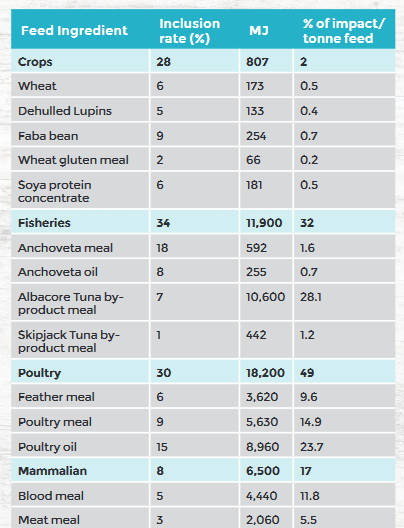
Can they eat waste meat

Reply Quote

Date: 2/03/2022 16:42:35
From: SCIENCE
ID: 1854953
Subject: re: The real cost of Salmon farming

Cymek said:


Can they eat waste meat

we also support pork as food

Reply Quote

Date: 2/03/2022 16:51:40
From: sarahs mum
ID: 1854956
Subject: re: The real cost of Salmon farming

Cymek said:


Can they eat waste meat

https://d3n8a8pro7vhmx.cloudfront.net/marine/pages/2066/attachments/original/1535502384/Transparency_and_Sustainability-Tasmanian_Salmon_Aquafeed_%281%29.pdf?1535502384

Reply Quote

Date: 2/03/2022 17:05:24
From: PermeateFree
ID: 1854958
Subject: re: The real cost of Salmon farming

sarahs mum said:


Cymek said:

Can they eat waste meat

https://d3n8a8pro7vhmx.cloudfront.net/marine/pages/2066/attachments/original/1535502384/Transparency_and_Sustainability-Tasmanian_Salmon_Aquafeed_%281%29.pdf?1535502384

Also from above link:
Consumers need to know if they are
buying wild or farmed salmon.

Knowing that Atlantic salmon farmed
in Tasmania is fed on mammal abattoir
by-products, a practice banned in EU
countries, is a public health issue.

Knowing that IUCN-listed wild fish
species are used in Tasmanian farmed
salmon feed will help consumers make
an informed sustainable seafood choice.

Knowing that trace amounts of GMO
are permitted in salmon feeds without
the companies having to declare it is
information consumers have a right to.

(GMO = genetically modified organism)

Reply Quote

Date: 2/03/2022 17:07:29
From: Cymek
ID: 1854959
Subject: re: The real cost of Salmon farming

PermeateFree said:


sarahs mum said:

Cymek said:

Can they eat waste meat

https://d3n8a8pro7vhmx.cloudfront.net/marine/pages/2066/attachments/original/1535502384/Transparency_and_Sustainability-Tasmanian_Salmon_Aquafeed_%281%29.pdf?1535502384

Also from above link:
Consumers need to know if they are
buying wild or farmed salmon.

Knowing that Atlantic salmon farmed
in Tasmania is fed on mammal abattoir
by-products, a practice banned in EU
countries, is a public health issue.

Knowing that IUCN-listed wild fish
species are used in Tasmanian farmed
salmon feed will help consumers make
an informed sustainable seafood choice.

Knowing that trace amounts of GMO
are permitted in salmon feeds without
the companies having to declare it is
information consumers have a right to.

(GMO = genetically modified organism)

So even using a meat waste product won’t help
Really need to stop eating meat don’t we

Reply Quote

Date: 2/03/2022 17:08:09
From: sarahs mum
ID: 1854960
Subject: re: The real cost of Salmon farming

PermeateFree said:


sarahs mum said:

Cymek said:

Can they eat waste meat

https://d3n8a8pro7vhmx.cloudfront.net/marine/pages/2066/attachments/original/1535502384/Transparency_and_Sustainability-Tasmanian_Salmon_Aquafeed_%281%29.pdf?1535502384

Also from above link:
Consumers need to know if they are
buying wild or farmed salmon.

Knowing that Atlantic salmon farmed
in Tasmania is fed on mammal abattoir
by-products, a practice banned in EU
countries, is a public health issue.

Knowing that IUCN-listed wild fish
species are used in Tasmanian farmed
salmon feed will help consumers make
an informed sustainable seafood choice.

Knowing that trace amounts of GMO
are permitted in salmon feeds without
the companies having to declare it is
information consumers have a right to.

(GMO = genetically modified organism)

I believe you can’t grow GMOs in Tassie but you can import such.

Reply Quote

Date: 2/03/2022 17:22:26
From: PermeateFree
ID: 1854961
Subject: re: The real cost of Salmon farming

PermeateFree said:


sarahs mum said:

Cymek said:

Can they eat waste meat

https://d3n8a8pro7vhmx.cloudfront.net/marine/pages/2066/attachments/original/1535502384/Transparency_and_Sustainability-Tasmanian_Salmon_Aquafeed_%281%29.pdf?1535502384

Also from above link:
Consumers need to know if they are
buying wild or farmed salmon.

Knowing that Atlantic salmon farmed
in Tasmania is fed on mammal abattoir
by-products, a practice banned in EU
countries, is a public health issue.

Knowing that IUCN-listed wild fish
species are used in Tasmanian farmed
salmon feed will help consumers make
an informed sustainable seafood choice.

Knowing that trace amounts of GMO
are permitted in salmon feeds without
the companies having to declare it is
information consumers have a right to.

(GMO = genetically modified organism)

Another highly featured point in the above link, is knowing the country of origin of the products used in the manufacture of fish meal. Sounds like you don’t really know what you are eating with Tasmanian Salmon. Still not to worry, as someone is making good money. :)

Reply Quote

Date: 2/03/2022 17:25:36
From: sarahs mum
ID: 1854962
Subject: re: The real cost of Salmon farming

PermeateFree said:


PermeateFree said:

sarahs mum said:

https://d3n8a8pro7vhmx.cloudfront.net/marine/pages/2066/attachments/original/1535502384/Transparency_and_Sustainability-Tasmanian_Salmon_Aquafeed_%281%29.pdf?1535502384

Also from above link:
Consumers need to know if they are
buying wild or farmed salmon.

Knowing that Atlantic salmon farmed
in Tasmania is fed on mammal abattoir
by-products, a practice banned in EU
countries, is a public health issue.

Knowing that IUCN-listed wild fish
species are used in Tasmanian farmed
salmon feed will help consumers make
an informed sustainable seafood choice.

Knowing that trace amounts of GMO
are permitted in salmon feeds without
the companies having to declare it is
information consumers have a right to.

(GMO = genetically modified organism)

Another highly featured point in the above link, is knowing the country of origin of the products used in the manufacture of fish meal. Sounds like you don’t really know what you are eating with Tasmanian Salmon. Still not to worry, as someone is making good money. :)

Personally I don’t want to eat fish out of Macquarie Harbour but there is no way of knowing.

There is a tie to the mackerel fishery. don’t know all of it.

At the moment they are trying to expand into the area around three hummock island in bass strait. Much protests.

Reply Quote

Date: 2/03/2022 17:39:41
From: Arts
ID: 1854969
Subject: re: The real cost of Salmon farming

Cymek said:


PermeateFree said:

sarahs mum said:

https://d3n8a8pro7vhmx.cloudfront.net/marine/pages/2066/attachments/original/1535502384/Transparency_and_Sustainability-Tasmanian_Salmon_Aquafeed_%281%29.pdf?1535502384

Also from above link:
Consumers need to know if they are
buying wild or farmed salmon.

Knowing that Atlantic salmon farmed
in Tasmania is fed on mammal abattoir
by-products, a practice banned in EU
countries, is a public health issue.

Knowing that IUCN-listed wild fish
species are used in Tasmanian farmed
salmon feed will help consumers make
an informed sustainable seafood choice.

Knowing that trace amounts of GMO
are permitted in salmon feeds without
the companies having to declare it is
information consumers have a right to.

(GMO = genetically modified organism)

So even using a meat waste product won’t help
Really need to stop eating meat don’t we

no, we just need to be a bit more sustainable and less profit driven in our farming practices… but that is probably never going to happen, because the people at the top need to be able to get their ivory back scratchers

Reply Quote

Date: 2/03/2022 17:54:32
From: mollwollfumble
ID: 1854981
Subject: re: The real cost of Salmon farming

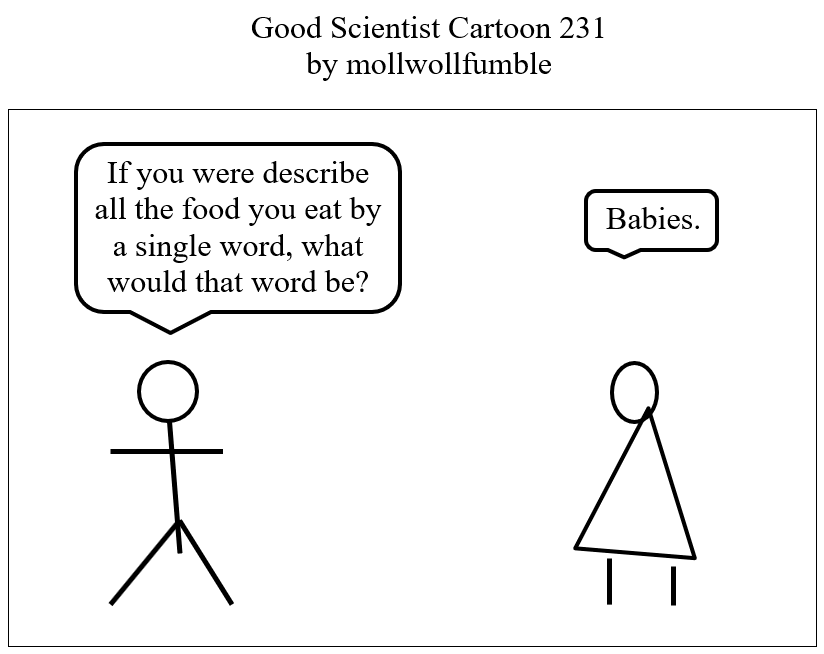
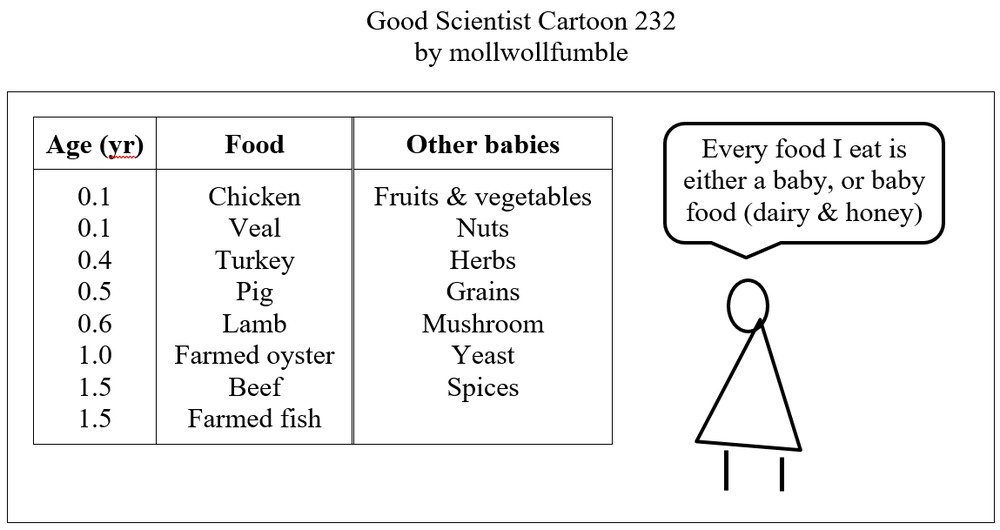
Slightly off topic, but relevant.

If you want to talk food morality, keep the following in mind.

Reply Quote

Date: 3/03/2022 06:07:19
From: roughbarked
ID: 1855174
Subject: re: The real cost of Salmon farming

Cymek said:


PermeateFree said:

sarahs mum said:

https://d3n8a8pro7vhmx.cloudfront.net/marine/pages/2066/attachments/original/1535502384/Transparency_and_Sustainability-Tasmanian_Salmon_Aquafeed_%281%29.pdf?1535502384

Also from above link:
Consumers need to know if they are
buying wild or farmed salmon.

Knowing that Atlantic salmon farmed
in Tasmania is fed on mammal abattoir
by-products, a practice banned in EU
countries, is a public health issue.

Knowing that IUCN-listed wild fish
species are used in Tasmanian farmed
salmon feed will help consumers make
an informed sustainable seafood choice.

Knowing that trace amounts of GMO
are permitted in salmon feeds without
the companies having to declare it is
information consumers have a right to.

(GMO = genetically modified organism)

So even using a meat waste product won’t help
Really need to stop eating meat don’t we

Gave it up half a century ago.

Reply Quote

Date: 3/03/2022 13:06:41
From: Ogmog
ID: 1855288
Subject: re: The real cost of Salmon farming

Soylant Green Is People

Reply Quote

Date: 3/03/2022 13:11:03
From: furious
ID: 1855290
Subject: re: The real cost of Salmon farming

Ogmog said:

Soylant Green Is People

I think, by now, most people know that…

Reply Quote

Date: 3/03/2022 13:11:53
From: Cymek
ID: 1855291
Subject: re: The real cost of Salmon farming

We should genetically engineer the human race to live off sunlight instead of food, few hours in the sun and you are good to go

Reply Quote

Date: 3/03/2022 13:13:41
From: Cymek
ID: 1855293
Subject: re: The real cost of Salmon farming

furious said:


Ogmog said:

Soylant Green Is People

I think, by now, most people know that…

“I can’t believe it’s not soylant green is people” is the new one for todays society

Reply Quote

Date: 3/03/2022 13:32:40
From: Ogmog
ID: 1855299
Subject: re: The real cost of Salmon farming

I began giving up seafood when it began smelling less like fish and
more like opening the bonnet of a vehicle and taking a deep breath
I swore of entirely following the Fukushima fuk up

My friends don’t “get it” that you can’t treat oil spills, toxic dispersants
and released radioactivity as if it can be swept under the proverbial rug

circulating ocean currents

Reply Quote

Date: 3/03/2022 13:36:21
From: Ogmog
ID: 1855300
Subject: re: The real cost of Salmon farming

Cymek said:


furious said:

Ogmog said:

Soylant Green Is People

I think, by now, most people know that…

“I can’t believe it’s not soylant green is people” is the new one for todays society

well
it would also
solve the population crisis

Reply Quote