Date: 8/05/2022 12:49:59
From: party_pants
ID: 1880965
Subject: Population Density & Class Structure

Do societies with higher population densities have stricter social/class structures?

Intuitively, I would seem to think so. but I haven’t traveled much, nor have I ever lived abroad for any length of time, so have no great experience to know if this is true or not. What says the forum, do you reckon this is broadly true, or are there so many exceptions that it makes it hard to draw any firm rule?

Reply Quote

Date: 8/05/2022 13:05:45
From: transition
ID: 1880969
Subject: re: Population Density & Class Structure

>Do societies with higher population densities have stricter social/class structures?

probably that entire proposition centres around the definition etc of stricter and how it’s applied, anyway I anticipate you mean tighter, same difficulty applies

perhaps a very difficult thing to measure, given considerable part of social status operates in the dimension of illusion, and it is illusion that largely gives it its power

Reply Quote

Date: 8/05/2022 13:17:14
From: Tamb
ID: 1880972
Subject: re: Population Density & Class Structure

transition said:


>Do societies with higher population densities have stricter social/class structures?

probably that entire proposition centres around the definition etc of stricter and how it’s applied, anyway I anticipate you mean tighter, same difficulty applies

perhaps a very difficult thing to measure, given considerable part of social status operates in the dimension of illusion, and it is illusion that largely gives it its power


Densely packed societies seem to have more tolerance & are accepting of reduced personal space.

Reply Quote

Date: 8/05/2022 13:43:55
From: mollwollfumble
ID: 1880980
Subject: re: Population Density & Class Structure

party_pants said:


Do societies with higher population densities have stricter social/class structures?

Intuitively, I would seem to think so. but I haven’t traveled much, nor have I ever lived abroad for any length of time, so have no great experience to know if this is true or not. What says the forum, do you reckon this is broadly true, or are there so many exceptions that it makes it hard to draw any firm rule?

> Do societies with higher population densities have stricter social/class structures?

I wouldn’t say so.

India has the strongest class structure, which I think is more to do with its age and former tribalism than its population density. India is tremendously racially diverse, with strong strictures against intermarriage between classes. These class structures in India go back perhaps as far as 1500 BC.

Malaysia has a class structure, organised along racial lines, with Chinese dominating native Malays.

Bali has a caste system, perhaps the strongest outside the Indian region.

The class structure of feudal England (1066 to 1660) to was necessary to break out of the dark ages. A little bit hung on afterwards.

The class structure of Italy, typified by the Medici family (1230 to 1767) in Venice resulted in the personal wealth necessary to bring clear glass and hence scientific progress to the world.

Japan had a strong class system during the Edo period from 1603 to 1868.

“In 1392, with the foundation of the Confucian Joseon dynasty, Korea systemised its own native class system”. This lasted until 1894.

“The class systems of eastern Nigeria and southern Cameroon are derived from indigenous religious beliefs and discriminate against the “Osus” people.

“For centuries, through the modern times, the majority regarded Cagots who lived primarily in the Basque region of France and Spain as an inferior caste, the untouchables. While they had the same skin color and religion as the majority, in the churches they had to use segregated doors, drink from segregated fonts, and receive communion on the end of long wooden spoons. It was a closed social system, chances of social mobility non-existent”.

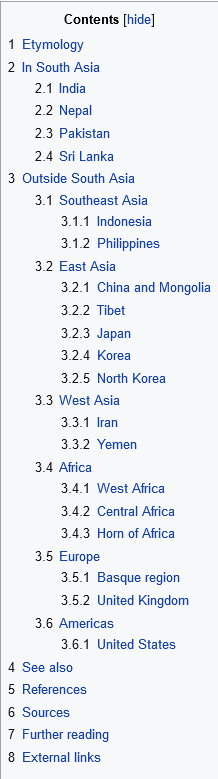
Looking up “Caste” on wikipedia gives:
Reply Quote

Date: 8/05/2022 14:10:19
From: party_pants
ID: 1880989
Subject: re: Population Density & Class Structure

mollwollfumble said:


party_pants said:

Do societies with higher population densities have stricter social/class structures?

Intuitively, I would seem to think so. but I haven’t traveled much, nor have I ever lived abroad for any length of time, so have no great experience to know if this is true or not. What says the forum, do you reckon this is broadly true, or are there so many exceptions that it makes it hard to draw any firm rule?

> Do societies with higher population densities have stricter social/class structures?

I wouldn’t say so.

India has the strongest class structure, which I think is more to do with its age and former tribalism than its population density. India is tremendously racially diverse, with strong strictures against intermarriage between classes. These class structures in India go back perhaps as far as 1500 BC.

Malaysia has a class structure, organised along racial lines, with Chinese dominating native Malays.

Bali has a caste system, perhaps the strongest outside the Indian region.

The class structure of feudal England (1066 to 1660) to was necessary to break out of the dark ages. A little bit hung on afterwards.

The class structure of Italy, typified by the Medici family (1230 to 1767) in Venice resulted in the personal wealth necessary to bring clear glass and hence scientific progress to the world.

Japan had a strong class system during the Edo period from 1603 to 1868.

“In 1392, with the foundation of the Confucian Joseon dynasty, Korea systemised its own native class system”. This lasted until 1894.

“The class systems of eastern Nigeria and southern Cameroon are derived from indigenous religious beliefs and discriminate against the “Osus” people.

“For centuries, through the modern times, the majority regarded Cagots who lived primarily in the Basque region of France and Spain as an inferior caste, the untouchables. While they had the same skin color and religion as the majority, in the churches they had to use segregated doors, drink from segregated fonts, and receive communion on the end of long wooden spoons. It was a closed social system, chances of social mobility non-existent”.

So by “I don’t think so” you mean “yes”, given the examples quoted.

India, Malaysia, Indonesia, England, Western Europe (incl France, Italy, Spain), Japan, Korea, Nigeria and Cameroon… all seem to correlate with areas of high population density.

Also from Wikipedia:

Reply Quote

Date: 8/05/2022 17:39:20
From: dv
ID: 1881074
Subject: re: Population Density & Class Structure

Countries with strict social class structures have poor social mobility.

The top of this table includes a pretty good mix of high, medium, and low population density. Germany has pretty high density, Sweden pretty low.

Similarly, some of the poorly ranked countries have low population density (Russia, Saudi Arabia) and others have high population density (Bangladesh, Indonesia).

So basically … no.

https://en.wikipedia.org/wiki/Global_Social_Mobility_Index

Reply Quote

Date: 8/05/2022 18:17:48
From: Bubblecar
ID: 1881090
Subject: re: Population Density & Class Structure

There’s an anthropological context in which it’s broadly true, when comparing the first city states with the less densely populated societies of the time and earlier.

The cities involved more specialised division of work categories and more hierarchical structure.

Reply Quote