I occasionally come up with what I call “ridiculous thoughts”.
These are ideas that can be disproved in a couple of minutes, a day at most.
This is one such idea. Can you disprove it?
I was playing around with Zeno’s paradox of the arrow.
“Zeno gave us the paradox of the arrow. In this paradox, an arrow must jump from one point in space to another point in space. It can’t jump instantaneously because then its speed would be infinite, so it must stop at each point in space for a time period. The arrow is not moving during that time period so must have a speed of zero. In other words, the arrow cannot move at all.”
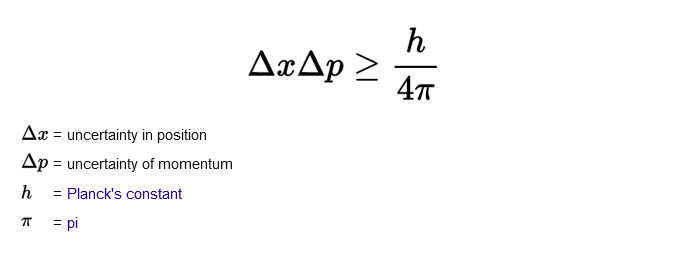
and I noticed how the Heisenberg uncertainty principle popped out of it.
“If we know the precise position of a particle then we have no knowledge of its velocity, and if we know the precise velocity of a particle then we have no knowledge of its position”.
You can see how Heisenberg uncertainty principle solves the paradox of the arrow. In the paradox of the arrow, we know the precise location of the particle but, by the Heisenberg uncertainty principle, rather than knowing that its speed is zero at that point, we have no knowledge of its velocity, and so the arrow can continue moving.
Can you feed some numbers into this?
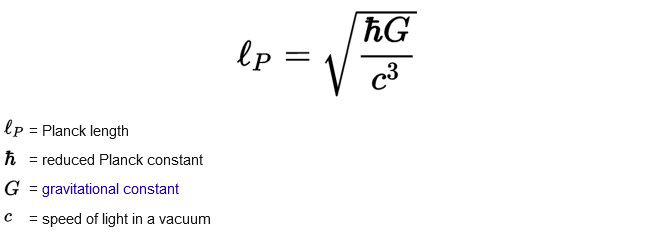
If space is quantised at the length of the Planck length. And if velocity is uncertain within the range imposed by the speed of light. Then what is the mass of the arrow (or other particle in place of arrow)?
Do we get a mass similar to the mass of an arrow, or Planck mass (2.17645×10⁻⁸ kg), or the mass of the electron/muon/tau, or the approximate mass of a neutrino, or the mass given by the momentum of light divided by its velocity?
The idea here is that we may find a new TOE in which classical mechanics is equivalent to a quantum mechanics in which the Planck length has been shrunk to zero.