Date: 11/02/2026 16:18:18
From: Bubblecar
ID: 2359533
Subject: International Day of Women and Girls in Science, 11 February

Today. Although there are many more women in science these days than when I was a boy, there are still various scientific fields in which women remain rare.

From the United Nations site:

https://www.un.org/en/observances/women-and-girls-in-science-day

Reply Quote

Date: 11/02/2026 16:35:45
From: Bubblecar
ID: 2359534
Subject: re: International Day of Women and Girls in Science, 11 February

The 10 best unsung female scientists

Reply Quote

Date: 11/02/2026 17:52:41
From: SCIENCE
ID: 2359555
Subject: re: International Day of Women and Girls in Science, 11 February

thanks

Reply Quote

Date: 11/02/2026 20:55:41
From: The Rev Dodgson
ID: 2359627
Subject: re: International Day of Women and Girls in Science, 11 February

Bubblecar said:


The 10 best unsung female scientists

Hadn’t heard of any of those, so if there was any singing, it didn’t reach my ears.

Reply Quote

Date: 11/02/2026 21:08:55
From: dv
ID: 2359632
Subject: re: International Day of Women and Girls in Science, 11 February

The Rev Dodgson said:


Bubblecar said:

The 10 best unsung female scientists

Hadn’t heard of any of those, so if there was any singing, it didn’t reach my ears.

I’m always singing Inge Lehmann, very famous in my field

Reply Quote

Date: 11/02/2026 21:13:31
From: ChrispenEvan
ID: 2359634
Subject: re: International Day of Women and Girls in Science, 11 February

The Rev Dodgson said:


Bubblecar said:

The 10 best unsung female scientists

Hadn’t heard of any of those, so if there was any singing, it didn’t reach my ears.

Lise Meitner surely?

Reply Quote

Date: 11/02/2026 21:26:51
From: btm
ID: 2359640
Subject: re: International Day of Women and Girls in Science, 11 February

Bubblecar said:


The 10 best unsung female scientists

I’ve heard of most of those, but I’d add a few more, like Rosalind Franklin, whose work made Watson and Crick’s work on DNA possible (after they stole her work,) and Emmy Noether, whose work has been described as of as fundamental importance as Pythagoras’s. There are others.

Reply Quote

Date: 11/02/2026 21:29:22
From: The Rev Dodgson
ID: 2359641
Subject: re: International Day of Women and Girls in Science, 11 February

ChrispenEvan said:


The Rev Dodgson said:

Bubblecar said:

The 10 best unsung female scientists

Hadn’t heard of any of those, so if there was any singing, it didn’t reach my ears.

Lise Meitner surely?

OK, maybe I have heard of Lise Meitner.

And probably should have heard of Inge Lehmann.

Reply Quote

Date: 11/02/2026 21:30:49
From: The Rev Dodgson
ID: 2359642
Subject: re: International Day of Women and Girls in Science, 11 February

btm said:


Bubblecar said:

The 10 best unsung female scientists

I’ve heard of most of those, but I’d add a few more, like Rosalind Franklin, whose work made Watson and Crick’s work on DNA possible (after they stole her work,) and Emmy Noether, whose work has been described as of as fundamental importance as Pythagoras’s. There are others.

OK, but there is a fair bit of singing about Franklin and Noether these days.

Reply Quote

Date: 20/02/2026 10:32:03
From: Divine Angel
ID: 2362363
Subject: re: International Day of Women and Girls in Science, 11 February

“She was 9 when she noticed kids covering their ears in bathrooms. At 13, she proved they were right – in a medical journal.”

Nora Keegan from Calgary noticed something adults kept ignoring.
In 4th grade, she watched kids rush out of public restrooms with their hands clamped over their ears. She felt it herself- after using hand dryers, her ears would ring for minutes.

Adults said it was fine. “They’re just loud.”
But Nora wondered: What if they’re not just loud – what if they’re dangerous?

So in 5th grade, she turned her observation into a science experiment. She convinced her parents (both doctors) to drive her to 44 public bathrooms across Alberta.

She brought a professional decibel meter, a ruler, and a hypothesis: hand dryers hurt children’s ears because children stand closer to the sound source.

For 2 years, she took measurements. 880 of them. Different heights. Different distances. Hands in the airstream, hands out. She measured at adult ear level. Then at children’s ear level.
The results stunned her 👇

- Xlerator dryers measured over 100 decibels – every single one 🤯
- Several Dyson Airblade models hit 105 decibels at a 3-year-old’s height.
- The loudest? A Dyson at 121 decibels- as loud as an ambulance siren🚨

Here’s what makes this terrifying: Health Canada prohibits children’s toys from exceeding 100 decibels because they know it damages hearing. Yet hand dryers in public spaces where children go daily – libraries, schools, restaurants-were routinely blasting sounds that could cause learning disabilities, attention difficulties, and ruptured eardrums.

Manufacturers claimed their dryers operated at 70-80 decibels. Nora’s real-world testing proved otherwise- many were operating at levels four times louder than advertised.

In seventh grade, she didn’t stop at exposing the problem. She started building a solution – a synthetic air filter prototype that could reduce the noise by 11 decibels.

👉 Then she wrote a scientific paper. She submitted it to a journal. They rejected it.
👉 She revised. She resubmitted.
In June 2019, Paediatrics & Child Health-Canada’s premier peer-reviewed pediatric journal, published her study.

“Children who say hand dryers ‘hurt my ears’ are correct.”
She was 13 years old.
Dyson responded by inviting her to meet with their acoustic engineers. Health officials took notice. Nora’s research is now cited by the National Institutes of Health and used to educate parents worldwide 🙌

All because a 9-year-old believed kids when they said something hurt.
The next time a child tells you something’s wrong, maybe- just maybe you should listen and not downplay or dismiss them”
Reply Quote

Date: 20/02/2026 10:40:07
From: SCIENCE
ID: 2362368
Subject: re: International Day of Women and Girls in Science, 11 February

Divine Angel said:

“She was 9 when she noticed kids covering their ears in bathrooms. At 13, she proved they were right – in a medical journal.”

Nora Keegan from Calgary noticed something adults kept ignoring.
In 4th grade, she watched kids rush out of public restrooms with their hands clamped over their ears. She felt it herself- after using hand dryers, her ears would ring for minutes.

Adults said it was fine. “They’re just loud.”
But Nora wondered: What if they’re not just loud – what if they’re dangerous?

So in 5th grade, she turned her observation into a science experiment. She convinced her parents (both doctors) to drive her to 44 public bathrooms across Alberta.

She brought a professional decibel meter, a ruler, and a hypothesis: hand dryers hurt children’s ears because children stand closer to the sound source.

For 2 years, she took measurements. 880 of them. Different heights. Different distances. Hands in the airstream, hands out. She measured at adult ear level. Then at children’s ear level.
The results stunned her 👇

- Xlerator dryers measured over 100 decibels – every single one 🤯
- Several Dyson Airblade models hit 105 decibels at a 3-year-old’s height.
- The loudest? A Dyson at 121 decibels- as loud as an ambulance siren🚨

Here’s what makes this terrifying: Health Canada prohibits children’s toys from exceeding 100 decibels because they know it damages hearing. Yet hand dryers in public spaces where children go daily – libraries, schools, restaurants-were routinely blasting sounds that could cause learning disabilities, attention difficulties, and ruptured eardrums.

Manufacturers claimed their dryers operated at 70-80 decibels. Nora’s real-world testing proved otherwise- many were operating at levels four times louder than advertised.

In seventh grade, she didn’t stop at exposing the problem. She started building a solution – a synthetic air filter prototype that could reduce the noise by 11 decibels.

👉 Then she wrote a scientific paper. She submitted it to a journal. They rejected it.
👉 She revised. She resubmitted.
In June 2019, Paediatrics & Child Health-Canada’s premier peer-reviewed pediatric journal, published her study.

“Children who say hand dryers ‘hurt my ears’ are correct.”
She was 13 years old.
Dyson responded by inviting her to meet with their acoustic engineers. Health officials took notice. Nora’s research is now cited by the National Institutes of Health and used to educate parents worldwide 🙌

All because a 9-year-old believed kids when they said something hurt.
The next time a child tells you something’s wrong, maybe- just maybe you should listen and not downplay or dismiss them”
good

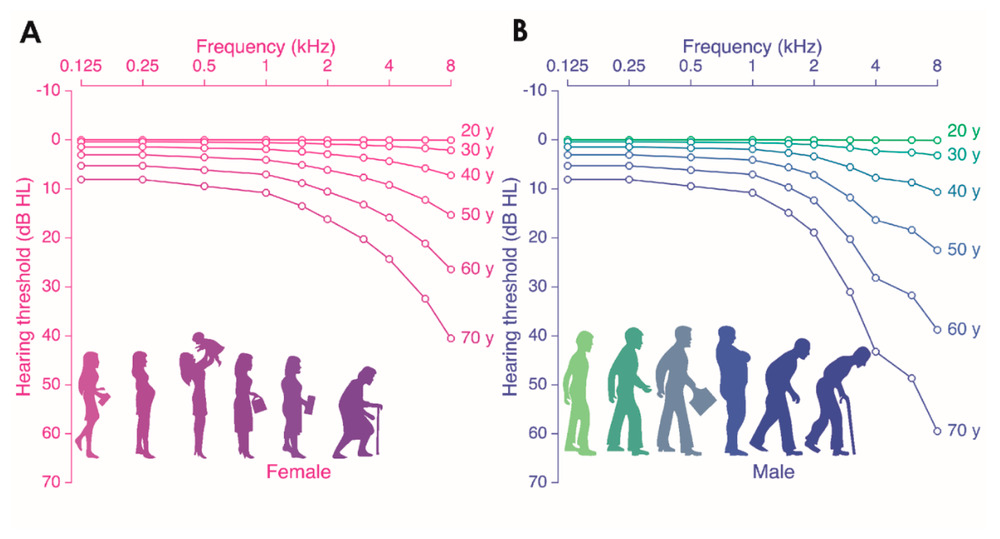
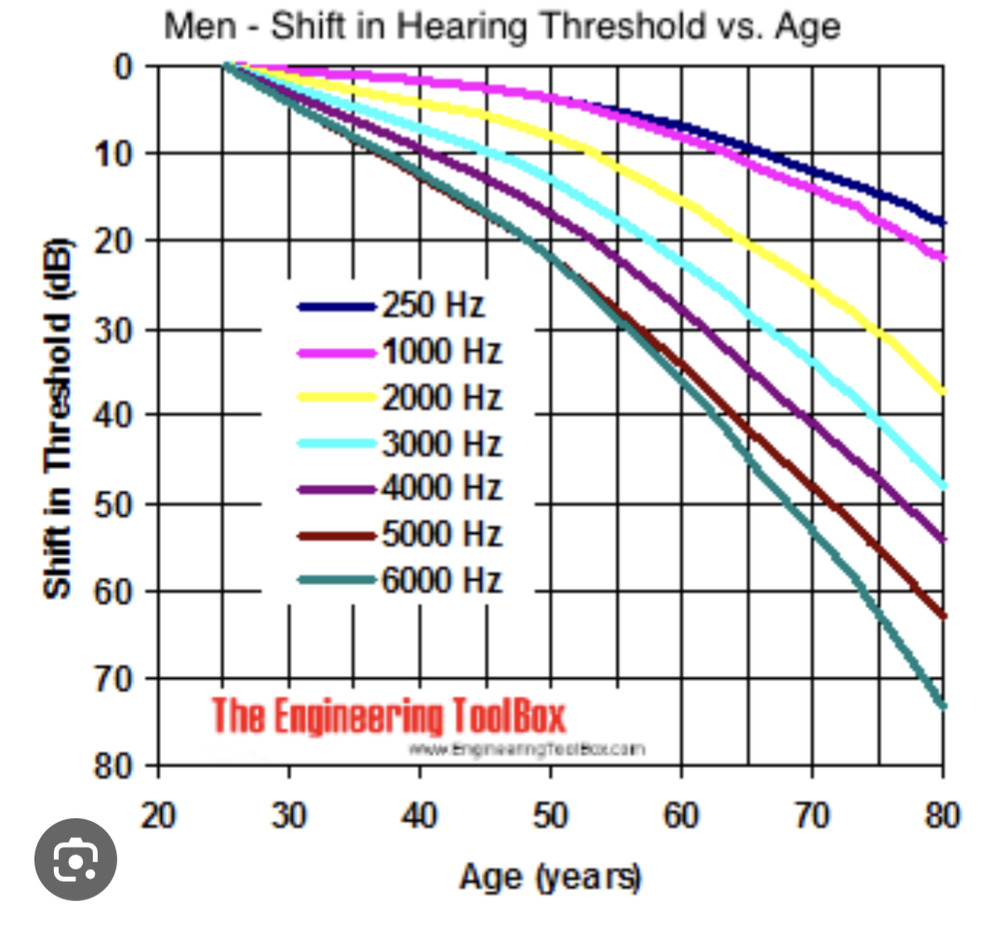
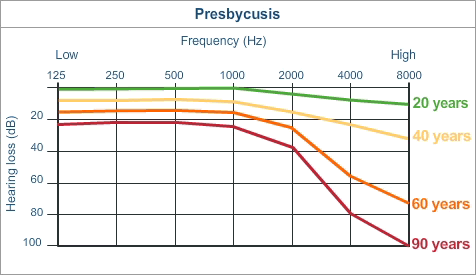
going to go out on a limb here and say they’re also loud in frequencies that adults don’t care about because they’re already deaf in those frequencies


https://www.mdpi.com/2077-0383/9/1/218


https://www.audiosciencereview.com/forum/index.php?threads/age-related-frequency-loss-and-speaker-choice.48162/


https://www.cochlea.eu/en/pathology/presbycusis/

also that if you want to blow pathogens everywhere then hand dryers are great, but if you want clean then use something else

Reply Quote

Date: 20/02/2026 10:43:39
From: Michael V
ID: 2362372
Subject: re: International Day of Women and Girls in Science, 11 February

Divine Angel said:


“She was 9 when she noticed kids covering their ears in bathrooms. At 13, she proved they were right – in a medical journal.”

Nora Keegan from Calgary noticed something adults kept ignoring.
In 4th grade, she watched kids rush out of public restrooms with their hands clamped over their ears. She felt it herself- after using hand dryers, her ears would ring for minutes.

Adults said it was fine. “They’re just loud.”
But Nora wondered: What if they’re not just loud – what if they’re dangerous?

So in 5th grade, she turned her observation into a science experiment. She convinced her parents (both doctors) to drive her to 44 public bathrooms across Alberta.

She brought a professional decibel meter, a ruler, and a hypothesis: hand dryers hurt children’s ears because children stand closer to the sound source.

For 2 years, she took measurements. 880 of them. Different heights. Different distances. Hands in the airstream, hands out. She measured at adult ear level. Then at children’s ear level.
The results stunned her 👇

- Xlerator dryers measured over 100 decibels – every single one 🤯
- Several Dyson Airblade models hit 105 decibels at a 3-year-old’s height.
- The loudest? A Dyson at 121 decibels- as loud as an ambulance siren🚨

Here’s what makes this terrifying: Health Canada prohibits children’s toys from exceeding 100 decibels because they know it damages hearing. Yet hand dryers in public spaces where children go daily – libraries, schools, restaurants-were routinely blasting sounds that could cause learning disabilities, attention difficulties, and ruptured eardrums.

Manufacturers claimed their dryers operated at 70-80 decibels. Nora’s real-world testing proved otherwise- many were operating at levels four times louder than advertised.

In seventh grade, she didn’t stop at exposing the problem. She started building a solution – a synthetic air filter prototype that could reduce the noise by 11 decibels.

👉 Then she wrote a scientific paper. She submitted it to a journal. They rejected it.
👉 She revised. She resubmitted.
In June 2019, Paediatrics & Child Health-Canada’s premier peer-reviewed pediatric journal, published her study.

“Children who say hand dryers ‘hurt my ears’ are correct.”
She was 13 years old.
Dyson responded by inviting her to meet with their acoustic engineers. Health officials took notice. Nora’s research is now cited by the National Institutes of Health and used to educate parents worldwide 🙌

All because a 9-year-old believed kids when they said something hurt.
The next time a child tells you something’s wrong, maybe- just maybe you should listen and not downplay or dismiss them”
Good one!

:)

Reply Quote

Date: 20/02/2026 10:46:56
From: Michael V
ID: 2362375
Subject: re: International Day of Women and Girls in Science, 11 February

SCIENCE said:

Divine Angel said:

“She was 9 when she noticed kids covering their ears in bathrooms. At 13, she proved they were right – in a medical journal.”

Nora Keegan from Calgary noticed something adults kept ignoring.
In 4th grade, she watched kids rush out of public restrooms with their hands clamped over their ears. She felt it herself- after using hand dryers, her ears would ring for minutes.

Adults said it was fine. “They’re just loud.”
But Nora wondered: What if they’re not just loud – what if they’re dangerous?

So in 5th grade, she turned her observation into a science experiment. She convinced her parents (both doctors) to drive her to 44 public bathrooms across Alberta.

She brought a professional decibel meter, a ruler, and a hypothesis: hand dryers hurt children’s ears because children stand closer to the sound source.

For 2 years, she took measurements. 880 of them. Different heights. Different distances. Hands in the airstream, hands out. She measured at adult ear level. Then at children’s ear level.
The results stunned her 👇

- Xlerator dryers measured over 100 decibels – every single one 🤯
- Several Dyson Airblade models hit 105 decibels at a 3-year-old’s height.
- The loudest? A Dyson at 121 decibels- as loud as an ambulance siren🚨

Here’s what makes this terrifying: Health Canada prohibits children’s toys from exceeding 100 decibels because they know it damages hearing. Yet hand dryers in public spaces where children go daily – libraries, schools, restaurants-were routinely blasting sounds that could cause learning disabilities, attention difficulties, and ruptured eardrums.

Manufacturers claimed their dryers operated at 70-80 decibels. Nora’s real-world testing proved otherwise- many were operating at levels four times louder than advertised.

In seventh grade, she didn’t stop at exposing the problem. She started building a solution – a synthetic air filter prototype that could reduce the noise by 11 decibels.

👉 Then she wrote a scientific paper. She submitted it to a journal. They rejected it.
👉 She revised. She resubmitted.
In June 2019, Paediatrics & Child Health-Canada’s premier peer-reviewed pediatric journal, published her study.

“Children who say hand dryers ‘hurt my ears’ are correct.”
She was 13 years old.
Dyson responded by inviting her to meet with their acoustic engineers. Health officials took notice. Nora’s research is now cited by the National Institutes of Health and used to educate parents worldwide 🙌

All because a 9-year-old believed kids when they said something hurt.
The next time a child tells you something’s wrong, maybe- just maybe you should listen and not downplay or dismiss them”
good

going to go out on a limb here and say they’re also loud in frequencies that adults don’t care about because they’re already deaf in those frequencies


https://www.mdpi.com/2077-0383/9/1/218


https://www.audiosciencereview.com/forum/index.php?threads/age-related-frequency-loss-and-speaker-choice.48162/


https://www.cochlea.eu/en/pathology/presbycusis/

also that if you want to blow pathogens everywhere then hand dryers are great, but if you want clean then use something else

Nods.

Reply Quote

Date: 20/02/2026 10:58:29
From: roughbarked
ID: 2362379
Subject: re: International Day of Women and Girls in Science, 11 February

Divine Angel said:


“She was 9 when she noticed kids covering their ears in bathrooms. At 13, she proved they were right – in a medical journal.”

Nora Keegan from Calgary noticed something adults kept ignoring.
In 4th grade, she watched kids rush out of public restrooms with their hands clamped over their ears. She felt it herself- after using hand dryers, her ears would ring for minutes.

Adults said it was fine. “They’re just loud.”
But Nora wondered: What if they’re not just loud – what if they’re dangerous?

So in 5th grade, she turned her observation into a science experiment. She convinced her parents (both doctors) to drive her to 44 public bathrooms across Alberta.

She brought a professional decibel meter, a ruler, and a hypothesis: hand dryers hurt children’s ears because children stand closer to the sound source.

For 2 years, she took measurements. 880 of them. Different heights. Different distances. Hands in the airstream, hands out. She measured at adult ear level. Then at children’s ear level.
The results stunned her 👇

- Xlerator dryers measured over 100 decibels – every single one 🤯
- Several Dyson Airblade models hit 105 decibels at a 3-year-old’s height.
- The loudest? A Dyson at 121 decibels- as loud as an ambulance siren🚨

Here’s what makes this terrifying: Health Canada prohibits children’s toys from exceeding 100 decibels because they know it damages hearing. Yet hand dryers in public spaces where children go daily – libraries, schools, restaurants-were routinely blasting sounds that could cause learning disabilities, attention difficulties, and ruptured eardrums.

Manufacturers claimed their dryers operated at 70-80 decibels. Nora’s real-world testing proved otherwise- many were operating at levels four times louder than advertised.

In seventh grade, she didn’t stop at exposing the problem. She started building a solution – a synthetic air filter prototype that could reduce the noise by 11 decibels.

👉 Then she wrote a scientific paper. She submitted it to a journal. They rejected it.
👉 She revised. She resubmitted.
In June 2019, Paediatrics & Child Health-Canada’s premier peer-reviewed pediatric journal, published her study.

“Children who say hand dryers ‘hurt my ears’ are correct.”
She was 13 years old.
Dyson responded by inviting her to meet with their acoustic engineers. Health officials took notice. Nora’s research is now cited by the National Institutes of Health and used to educate parents worldwide 🙌

All because a 9-year-old believed kids when they said something hurt.
The next time a child tells you something’s wrong, maybe- just maybe you should listen and not downplay or dismiss them”

Always listen to children, always.

Reply Quote

Date: 20/02/2026 11:01:23
From: roughbarked
ID: 2362383
Subject: re: International Day of Women and Girls in Science, 11 February

Michael V said:


SCIENCE said:

Divine Angel said:

“She was 9 when she noticed kids covering their ears in bathrooms. At 13, she proved they were right – in a medical journal.”

Nora Keegan from Calgary noticed something adults kept ignoring.
In 4th grade, she watched kids rush out of public restrooms with their hands clamped over their ears. She felt it herself- after using hand dryers, her ears would ring for minutes.

Adults said it was fine. “They’re just loud.”
But Nora wondered: What if they’re not just loud – what if they’re dangerous?

So in 5th grade, she turned her observation into a science experiment. She convinced her parents (both doctors) to drive her to 44 public bathrooms across Alberta.

She brought a professional decibel meter, a ruler, and a hypothesis: hand dryers hurt children’s ears because children stand closer to the sound source.

For 2 years, she took measurements. 880 of them. Different heights. Different distances. Hands in the airstream, hands out. She measured at adult ear level. Then at children’s ear level.
The results stunned her 👇

- Xlerator dryers measured over 100 decibels – every single one 🤯
- Several Dyson Airblade models hit 105 decibels at a 3-year-old’s height.
- The loudest? A Dyson at 121 decibels- as loud as an ambulance siren🚨

Here’s what makes this terrifying: Health Canada prohibits children’s toys from exceeding 100 decibels because they know it damages hearing. Yet hand dryers in public spaces where children go daily – libraries, schools, restaurants-were routinely blasting sounds that could cause learning disabilities, attention difficulties, and ruptured eardrums.

Manufacturers claimed their dryers operated at 70-80 decibels. Nora’s real-world testing proved otherwise- many were operating at levels four times louder than advertised.

In seventh grade, she didn’t stop at exposing the problem. She started building a solution – a synthetic air filter prototype that could reduce the noise by 11 decibels.

👉 Then she wrote a scientific paper. She submitted it to a journal. They rejected it.
👉 She revised. She resubmitted.
In June 2019, Paediatrics & Child Health-Canada’s premier peer-reviewed pediatric journal, published her study.

“Children who say hand dryers ‘hurt my ears’ are correct.”
She was 13 years old.
Dyson responded by inviting her to meet with their acoustic engineers. Health officials took notice. Nora’s research is now cited by the National Institutes of Health and used to educate parents worldwide 🙌

All because a 9-year-old believed kids when they said something hurt.
The next time a child tells you something’s wrong, maybe- just maybe you should listen and not downplay or dismiss them”

good

going to go out on a limb here and say they’re also loud in frequencies that adults don’t care about because they’re already deaf in those frequencies


https://www.mdpi.com/2077-0383/9/1/218


https://www.audiosciencereview.com/forum/index.php?threads/age-related-frequency-loss-and-speaker-choice.48162/


https://www.cochlea.eu/en/pathology/presbycusis/

also that if you want to blow pathogens everywhere then hand dryers are great, but if you want clean then use something else

Nods.

Carry hand sanitiser.

Reply Quote

Date: 20/02/2026 11:01:53
From: SCIENCE
ID: 2362385
Subject: re: International Day of Women and Girls in Science, 11 February

roughbarked said:

Always listen to children, always.

pretty sure they should be herded and not in the scene

Reply Quote

Date: 20/02/2026 11:06:23
From: roughbarked
ID: 2362389
Subject: re: International Day of Women and Girls in Science, 11 February

SCIENCE said:

roughbarked said:

Always listen to children, always.

pretty sure they should be herded and not in the scene

In my day it was be the scene but not herded.

Reply Quote

Date: 20/02/2026 11:46:53
From: Divine Angel
ID: 2362418
Subject: re: International Day of Women and Girls in Science, 11 February

roughbarked said:

Always listen to children, always.

Even if they’re telling a shaggy dog story which ends with “and that’s why unicorn tails are purple”?

Reply Quote

Date: 20/02/2026 11:49:30
From: SCIENCE
ID: 2362420
Subject: re: International Day of Women and Girls in Science, 11 February

Divine Angel said:

roughbarked said:

Always listen to children, always.

Even if they’re telling a shaggy dog story which ends with “and that’s why unicorn tails are purple”?

well the tail is kind of purple

and they can fly too

Reply Quote

Date: 20/02/2026 11:50:57
From: Cymek
ID: 2362423
Subject: re: International Day of Women and Girls in Science, 11 February

SCIENCE said:

Divine Angel said:

roughbarked said:

Always listen to children, always.

Even if they’re telling a shaggy dog story which ends with “and that’s why unicorn tails are purple”?

well the tail is kind of purple

and they can fly too

A unicorn without the magical part is quite a believable animals to exist

Reply Quote

Date: 20/02/2026 11:53:09
From: SCIENCE
ID: 2362425
Subject: re: International Day of Women and Girls in Science, 11 February

Cymek said:

SCIENCE said:

Divine Angel said:

Even if they’re telling a shaggy dog story which ends with “and that’s why unicorn tails are purple”?

well the tail is kind of purple

and they can fly too

A unicorn without the magical part is quite a believable animals to exist

tactical unicorn

still pretty magical though

Reply Quote

Date: 20/02/2026 11:54:11
From: Divine Angel
ID: 2362428
Subject: re: International Day of Women and Girls in Science, 11 February

Cymek said:


SCIENCE said:

Divine Angel said:

Even if they’re telling a shaggy dog story which ends with “and that’s why unicorn tails are purple”?

well the tail is kind of purple

and they can fly too

A unicorn without the magical part is quite a believable animals to exist

Narwhals exist. But then again there are people in the world who don’t believe in gravity 🤷‍♀️

Reply Quote

Date: 20/02/2026 11:56:00
From: Cymek
ID: 2362431
Subject: re: International Day of Women and Girls in Science, 11 February

Divine Angel said:


Cymek said:

SCIENCE said:

well the tail is kind of purple

and they can fly too

A unicorn without the magical part is quite a believable animals to exist

Narwhals exist. But then again there are people in the world who don’t believe in gravity 🤷‍♀️

Yeah they are weird aren’t they, nature is pretty cool with its designs

Reply Quote

Date: 20/02/2026 12:07:48
From: Michael V
ID: 2362439
Subject: re: International Day of Women and Girls in Science, 11 February

SCIENCE said:

Cymek said:

SCIENCE said:

well the tail is kind of purple

and they can fly too

A unicorn without the magical part is quite a believable animals to exist

tactical unicorn

still pretty magical though

More magical unicorns – marine, rather than terrestrial:

Reply Quote

Date: 20/02/2026 12:09:21
From: SCIENCE
ID: 2362442
Subject: re: International Day of Women and Girls in Science, 11 February

we love this planet

Reply Quote

Date: 20/02/2026 12:12:20
From: The Rev Dodgson
ID: 2362446
Subject: re: International Day of Women and Girls in Science, 11 February

SCIENCE said:

we love this planet

Well it is certainly a much better place to live than any of the other ones which we have detailed knowledge of.

Reply Quote

Date: 20/02/2026 12:13:28
From: roughbarked
ID: 2362448
Subject: re: International Day of Women and Girls in Science, 11 February

Divine Angel said:


roughbarked said:

Always listen to children, always.

Even if they’re telling a shaggy dog story which ends with “and that’s why unicorn tails are purple”?

Yeah. You are supposed to work out what that means or ask them if you want further detail.

Reply Quote

Date: 20/02/2026 12:14:11
From: roughbarked
ID: 2362450
Subject: re: International Day of Women and Girls in Science, 11 February

SCIENCE said:

Divine Angel said:

roughbarked said:

Always listen to children, always.

Even if they’re telling a shaggy dog story which ends with “and that’s why unicorn tails are purple”?

well the tail is kind of purple

and they can fly too

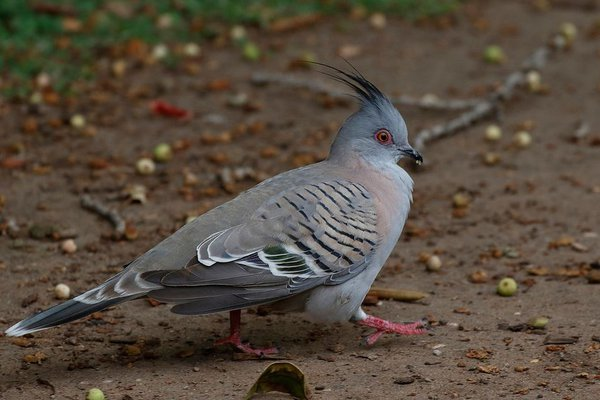
You are confusing a crest for a horn.

Reply Quote

Date: 20/02/2026 12:15:47
From: roughbarked
ID: 2362452
Subject: re: International Day of Women and Girls in Science, 11 February

Cymek said:


SCIENCE said:

Divine Angel said:

Even if they’re telling a shaggy dog story which ends with “and that’s why unicorn tails are purple”?

well the tail is kind of purple

and they can fly too

A unicorn without the magical part is quite a believable animals to exist

Except Noah couldn’t find a pair to put on the ark before the flood hit.

Reply Quote

Date: 20/02/2026 12:16:46
From: roughbarked
ID: 2362454
Subject: re: International Day of Women and Girls in Science, 11 February

SCIENCE said:

Cymek said:

SCIENCE said:

well the tail is kind of purple

and they can fly too

A unicorn without the magical part is quite a believable animals to exist

tactical unicorn

still pretty magical though

More military than magical.

Reply Quote

Date: 20/02/2026 12:18:10
From: roughbarked
ID: 2362456
Subject: re: International Day of Women and Girls in Science, 11 February

Divine Angel said:


Cymek said:

SCIENCE said:

well the tail is kind of purple

and they can fly too

A unicorn without the magical part is quite a believable animals to exist

Narwhals exist. But then again there are people in the world who don’t believe in gravity 🤷‍♀️

Without which, they couldn’t possibly exist.

Reply Quote

Date: 20/02/2026 12:39:33
From: buffy
ID: 2362465
Subject: re: International Day of Women and Girls in Science, 11 February

Divine Angel said:


roughbarked said:

Always listen to children, always.

Even if they’re telling a shaggy dog story which ends with “and that’s why unicorn tails are purple”?

Especially in that case. Because imagination is a wonderful thing and should be encouraged.

Reply Quote