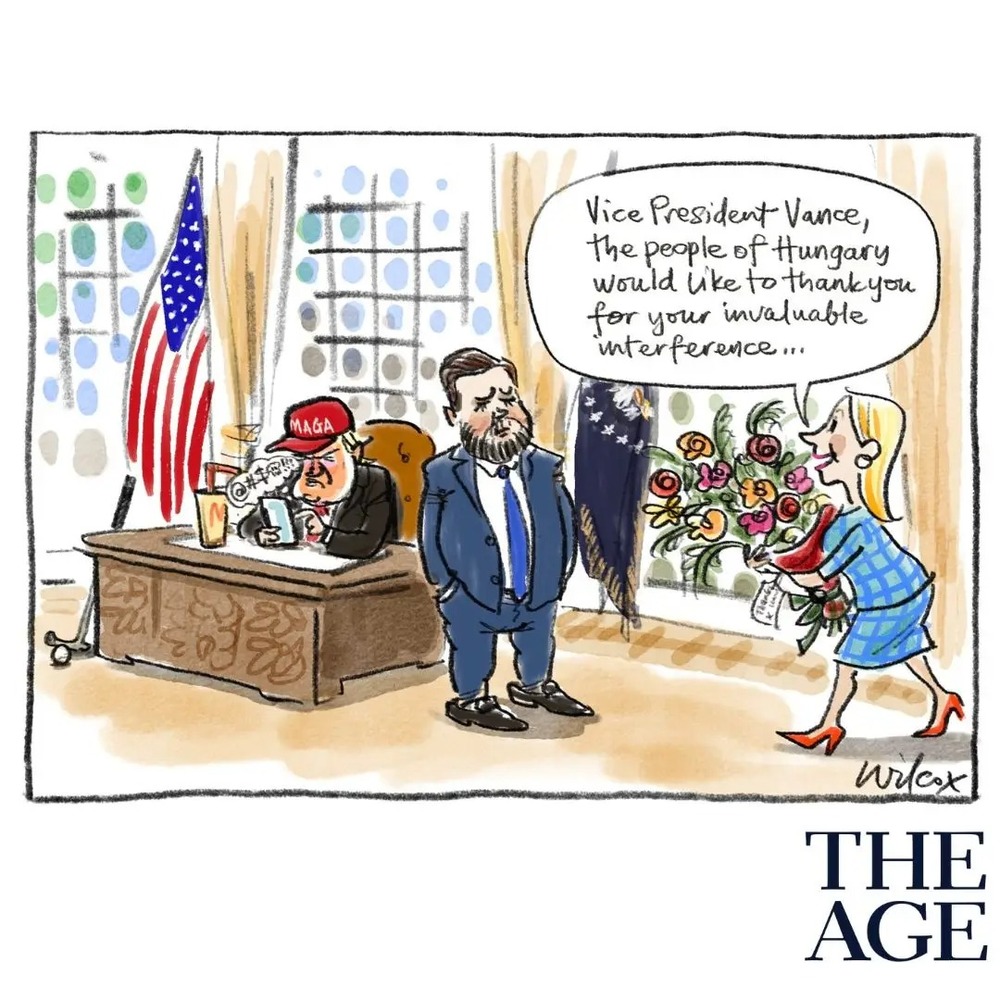
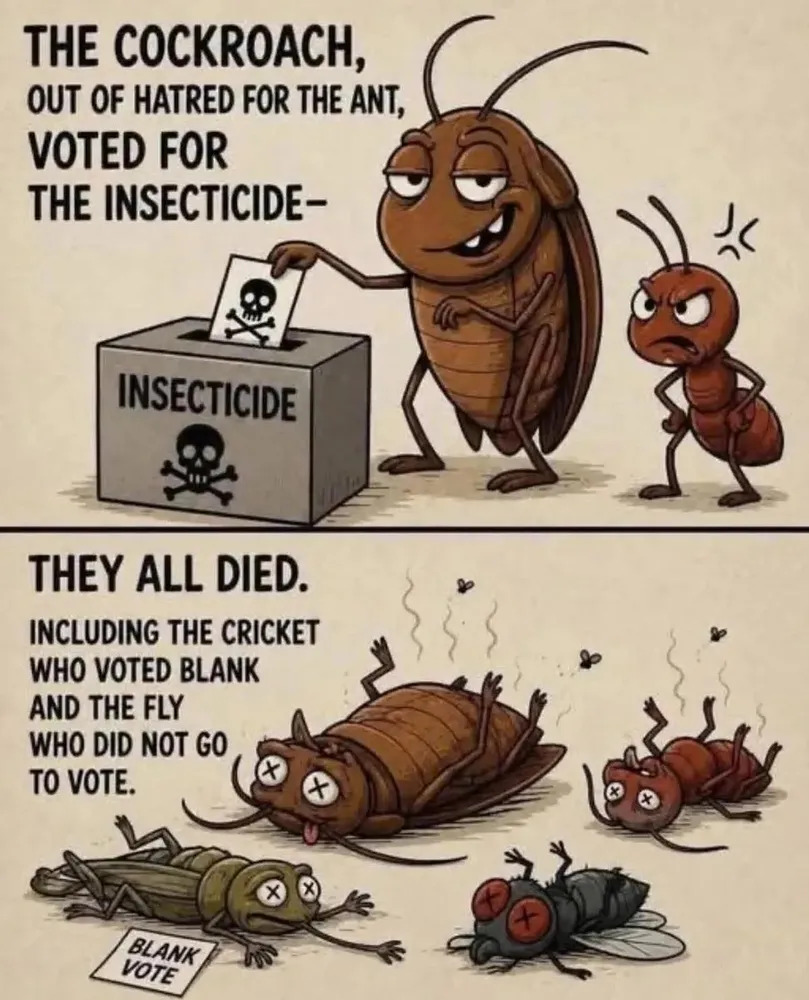
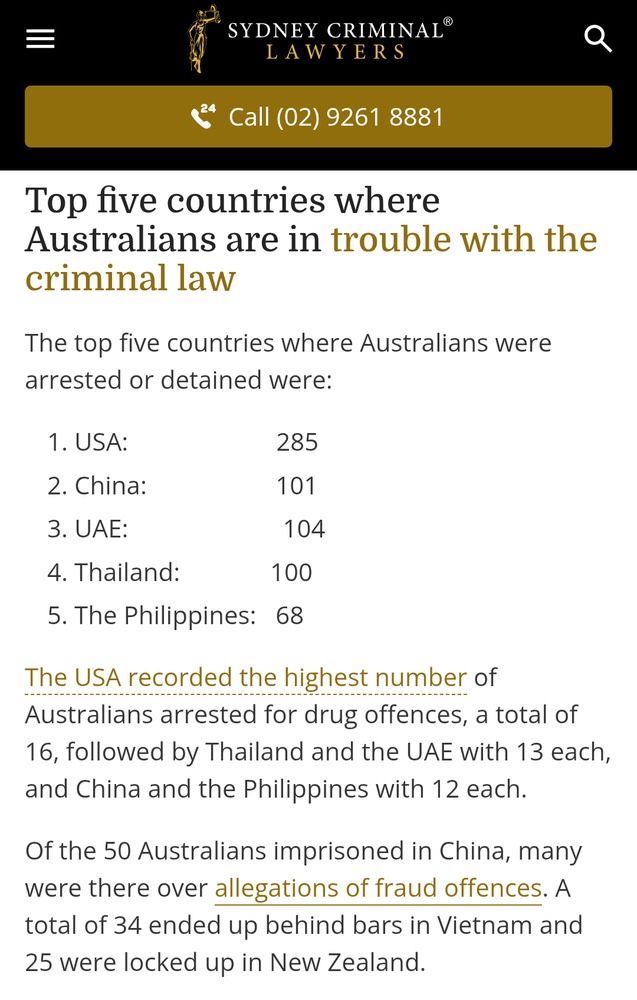
Date: 5/03/2026 16:11:12
From: dv
ID: 2366528
Subject: Global Politics 2026
https://theconversation.com/in-a-ruptured-world-order-heres-how-australia-can-forge-new-middle-power-partnerships-276367
In a ‘ruptured’ world order, here’s how Australia can forge new middle‑power partnerships
Date: 5/03/2026 17:51:48
From: The Rev Dodgson
ID: 2366562
Subject: re: Global Politics 2026
dv said:
https://theconversation.com/in-a-ruptured-world-order-heres-how-australia-can-forge-new-middle-power-partnerships-276367
In a ‘ruptured’ world order, here’s how Australia can forge new middle‑power partnerships
Looks at time posted.
That obviously takes some reading.
Maybe have a look tomorrow.
Date: 5/03/2026 17:53:09
From: The Rev Dodgson
ID: 2366563
Subject: re: Global Politics 2026
The Rev Dodgson said:
dv said:
https://theconversation.com/in-a-ruptured-world-order-heres-how-australia-can-forge-new-middle-power-partnerships-276367
In a ‘ruptured’ world order, here’s how Australia can forge new middle‑power partnerships
Looks at time posted.
That obviously takes some reading.
Maybe have a look tomorrow.
My mistake. I thought I was in view by time.
Date: 5/03/2026 19:34:05
From: SCIENCE
ID: 2366591
Subject: re: Global Politics 2026
SCIENCE said:
Cymek said:
SCIENCE said:
alleged
Although there were sufficient lifeboats for the entire ship’s complement, including the Italian prisoners, heavy listing prevented half from being launched until the vessel had settled. The prisoners were abandoned in the locked cargo holds as the ship sank, but most managed to escape by breaking down hatches or climbing up ventilation shafts. Several were shot when a group of prisoners rushed a lifeboat, and a large number were bayoneted to death to prevent their boarding of one of the few lifeboats available. The Polish guards were armed with rifles with fixed bayonets; however, they were not loaded and the guards carried no ammunition. Witnesses indicate that few of the prisoners were shot. Instead, most of the casualties were bayoneted.
After surfacing and picking up survivors, who were accommodated on the foredeck, U-156 headed on the surface under Red Cross banners to rendezvous with Vichy French ships and transfer the survivors. En route, the U-boat was spotted by a B-24 Liberator bomber of the United States Army Air Forces. The aircrew, having reported the U-boat’s location, declared intentions, and the presence of survivors, were then ordered to attack the sub. The B-24 killed dozens of Laconia’s survivors with bombs and strafing attacks, forcing U-156 to cast into the sea the remaining survivors that she had rescued and crash dive to avoid being destroyed.
Rescue operations were continued by other vessels. Another U-boat, U-506, was also attacked by U.S. aircraft and forced to dive. A total of 976 to 1,083 people were eventually rescued; however, 1,658 to 1,757 were killed, mostly Italian POWs. The event changed the general attitude of Germany’s naval personnel towards rescuing stranded Allied seamen. The commanders of the Kriegsmarine were quickly issued the Laconia Order by Grand Admiral Karl Dönitz, which specifically forbade any such attempt and ushered in unrestricted submarine warfare for the remainder of the war.
The B-24 pilots mistakenly reported they had sunk U-156, and were awarded medals for bravery. Neither the U.S. pilots nor their commander were punished or investigated, and the matter was quietly forgotten by the U.S. military. During the later Nuremberg trials, a prosecutor attempted to cite the Laconia Order as proof of war crimes by Dönitz and his submariners. The ploy backfired, causing much embarrassment to the United States after the incident’s full report had emerged to the public and the reason for the “Laconia order” was known.
Didn’t the USA try to get out of being convicted of war crimes just recently.
¿ref
don’t know though, it’s not war crimes if they liked or deserved it
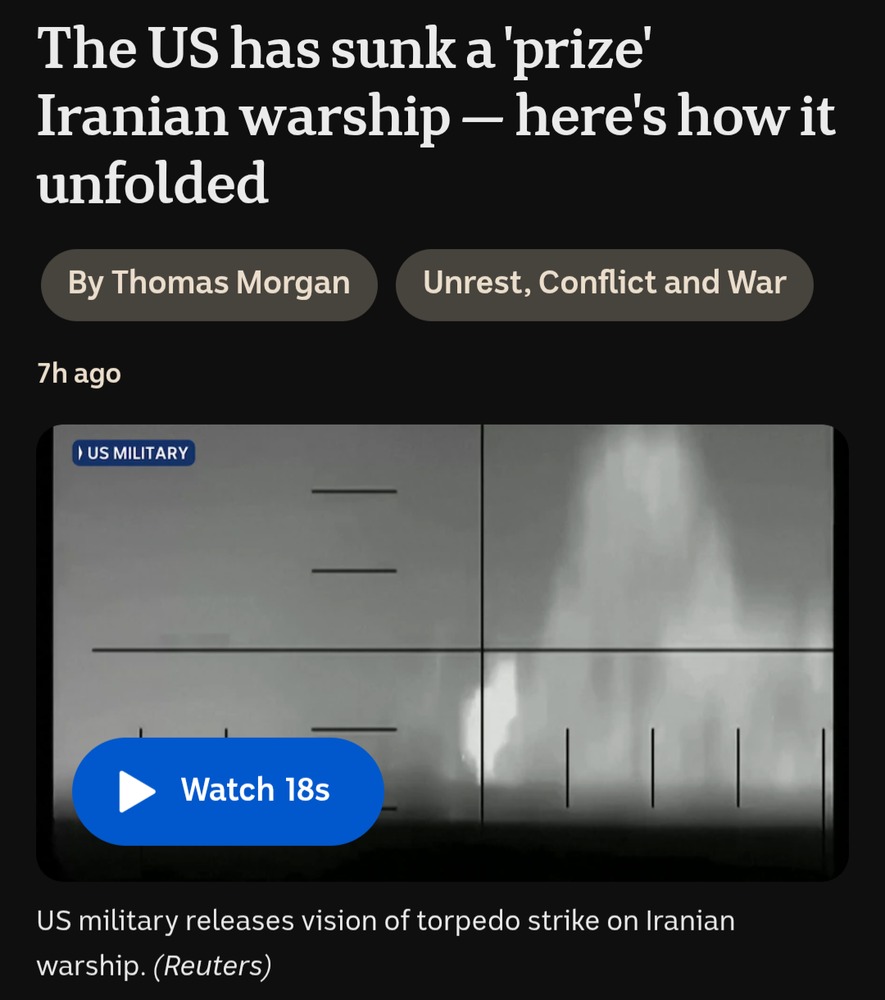
https://www.abc.net.au/news/2026-03-05/us-sub-torpedoes-iranian-warship-iris-dena-what-we-know/106417764
wait why would they use that word “prize” does it have anything to do with this
RMS Laconia, carrying 2,732 crew, passengers, soldiers, and prisoners of war, was torpedoed and sunk by U-156, a German U-boat, off the West African coast. Operating partly under the dictates of the old prize rules, the U-boat’s commander, Korvettenkapitän Werner Hartenstein, immediately commenced rescue operations.
Date: 5/03/2026 23:49:18
From: SCIENCE
ID: 2366650
Subject: re: Global Politics 2026
party_pants said:
Peak Warming Man said:
Kingy said:
SCIENCE said:
SCIENCE said:
Cymek said:
SCIENCE said:
alleged
Although there were sufficient lifeboats for the entire ship’s complement, including the Italian prisoners, heavy listing prevented half from being launched until the vessel had settled. The prisoners were abandoned in the locked cargo holds as the ship sank, but most managed to escape by breaking down hatches or climbing up ventilation shafts. Several were shot when a group of prisoners rushed a lifeboat, and a large number were bayoneted to death to prevent their boarding of one of the few lifeboats available. The Polish guards were armed with rifles with fixed bayonets; however, they were not loaded and the guards carried no ammunition. Witnesses indicate that few of the prisoners were shot. Instead, most of the casualties were bayoneted.
After surfacing and picking up survivors, who were accommodated on the foredeck, U-156 headed on the surface under Red Cross banners to rendezvous with Vichy French ships and transfer the survivors. En route, the U-boat was spotted by a B-24 Liberator bomber of the United States Army Air Forces. The aircrew, having reported the U-boat’s location, declared intentions, and the presence of survivors, were then ordered to attack the sub. The B-24 killed dozens of Laconia’s survivors with bombs and strafing attacks, forcing U-156 to cast into the sea the remaining survivors that she had rescued and crash dive to avoid being destroyed.
Rescue operations were continued by other vessels. Another U-boat, U-506, was also attacked by U.S. aircraft and forced to dive. A total of 976 to 1,083 people were eventually rescued; however, 1,658 to 1,757 were killed, mostly Italian POWs. The event changed the general attitude of Germany’s naval personnel towards rescuing stranded Allied seamen. The commanders of the Kriegsmarine were quickly issued the Laconia Order by Grand Admiral Karl Dönitz, which specifically forbade any such attempt and ushered in unrestricted submarine warfare for the remainder of the war.
The B-24 pilots mistakenly reported they had sunk U-156, and were awarded medals for bravery. Neither the U.S. pilots nor their commander were punished or investigated, and the matter was quietly forgotten by the U.S. military. During the later Nuremberg trials, a prosecutor attempted to cite the Laconia Order as proof of war crimes by Dönitz and his submariners. The ploy backfired, causing much embarrassment to the United States after the incident’s full report had emerged to the public and the reason for the “Laconia order” was known.
Didn’t the USA try to get out of being convicted of war crimes just recently.
¿ref
don’t know though, it’s not war crimes if they liked or deserved it
https://www.abc.net.au/news/2026-03-05/us-sub-torpedoes-iranian-warship-iris-dena-what-we-know/106417764
wait why would they use that word “prize” does it have anything to do with this
RMS Laconia, carrying 2,732 crew, passengers, soldiers, and prisoners of war, was torpedoed and sunk by U-156, a German U-boat, off the West African coast. Operating partly under the dictates of the old prize rules, the U-boat’s commander, Korvettenkapitän Werner Hartenstein, immediately commenced rescue operations.
Evenin’ all.
It’s been a hektik few days at work.
I see that someone sank an Iranian warship with a torpedo without notification. It would have been easy to notify the sailors that they should abandon ship before impact, but no, the murderous cunts in charge of the US navy are backslapping each other over the deaths of hundreds of people.
Evil fuckers that deserve to die in agony.
The last ship sunk by a sub was the Belgrano, but it was a direct threat to the fleet, this little destroyer was thousands of miles away.
It was an act of sound and fury by a bully signifying nothing.
There are ultimately no rules in warfare, except that which the participants impose upon themselves through self-restraint.
oh well at least when the turntables were kind of 120° rotated they avoided massacring the rescuers and nominated them for an award instead
wait
oh that NTATE thing alleges they just went ahead and tried to massacre them too and then got the award for that
damn
Date: 6/03/2026 03:37:06
From: dv
ID: 2366658
Subject: re: Global Politics 2026
Date: 6/03/2026 06:51:40
From: JudgeMental
ID: 2366663
Subject: re: Global Politics 2026
dv said:
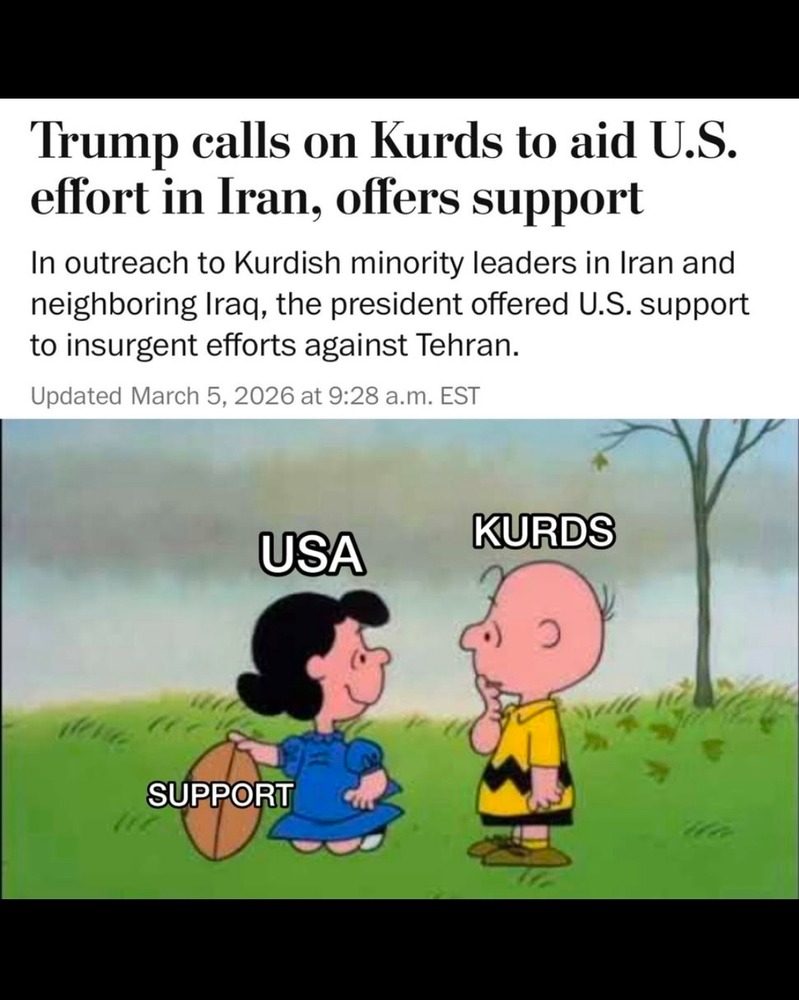
I guess you have to know your Peanuts to get this.
Date: 6/03/2026 07:19:42
From: SCIENCE
ID: 2366664
Subject: re: Global Politics 2026
JudgeMental said:
dv said:
I guess you have to know your Peanuts to get this.
or just the USSA
wait
US President Donald Trump has demanded a role in choosing Iran’s next leader, saying that the son of assassinated supreme leader Ali Khamanei would be “unacceptable” to him.
Date: 6/03/2026 07:26:35
From: Witty Rejoinder
ID: 2366667
Subject: re: Global Politics 2026
JudgeMental said:
dv said:
I guess you have to know your Peanuts to get this.
Nuts to you!
Date: 6/03/2026 08:02:43
From: SCIENCE
ID: 2366679
Subject: re: Global Politics 2026
pretty sure they’ll listen
“Hezbollah must immediately cease its fire toward Israel. Israel must refrain from any ground intervention or large-scale operation on Lebanese territory,” Macron said.
Date: 6/03/2026 08:08:13
From: roughbarked
ID: 2366681
Subject: re: Global Politics 2026
SCIENCE said:
pretty sure they’ll listen
“Hezbollah must immediately cease its fire toward Israel. Israel must refrain from any ground intervention or large-scale operation on Lebanese territory,” Macron said.
I’m sure they’ll say “you’re not the president of us”.
Date: 6/03/2026 08:10:42
From: roughbarked
ID: 2366683
Subject: re: Global Politics 2026
roughbarked said:
SCIENCE said:
pretty sure they’ll listen
“Hezbollah must immediately cease its fire toward Israel. Israel must refrain from any ground intervention or large-scale operation on Lebanese territory,” Macron said.
I’m sure they’ll say “you’re not the president of us”.
Hatred will continue while the ground is fertile for it. Israel hates the arabs and the arabs want their land back.
Date: 8/03/2026 12:20:26
From: SCIENCE
ID: 2367498
Subject: re: Global Politics 2026
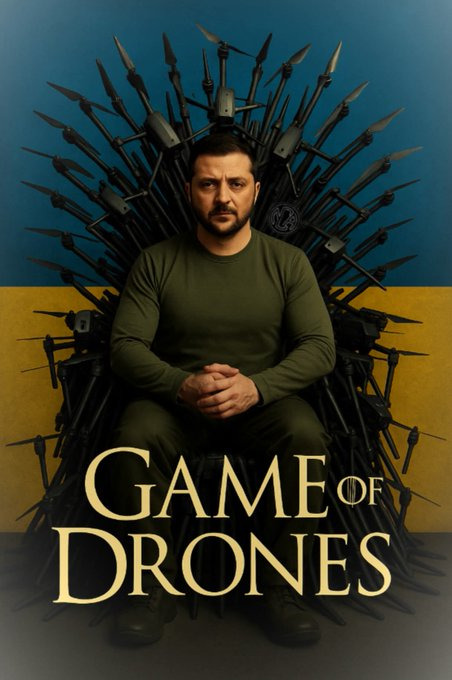
alleged

Date: 9/03/2026 12:20:50
From: SCIENCE
ID: 2367829
Subject: re: Global Politics 2026
cheers to all the geniuses who told us that authoritarian dictatorships are weak because all you have to do is cut off the head like the taliban do while protestors are out in force calling to bring down the government and the whole thing collapses like iran but democracy in great free ussa is strong and resilient so all of this will be better when kkk keels over
Date: 9/03/2026 12:26:43
From: Cymek
ID: 2367832
Subject: re: Global Politics 2026
SCIENCE said:
cheers to all the geniuses who told us that authoritarian dictatorships are weak because all you have to do is cut off the head like the taliban do while protestors are out in force calling to bring down the government and the whole thing collapses like iran but democracy in great free ussa is strong and resilient so all of this will be better when kkk keels over
Logic and history tells us no, like the hydra, many heads and cut one off and another takes it’s place
The real worry is they fight until the bitter end including being nuked
Date: 9/03/2026 12:32:22
From: dv
ID: 2367834
Subject: re: Global Politics 2026
SCIENCE said:
cheers to all the geniuses who told us that authoritarian dictatorships are weak because all you have to do is cut off the head like the taliban do while protestors are out in force calling to bring down the government and the whole thing collapses like iran but democracy in great free ussa is strong and resilient so all of this will be better when kkk keels over
The thing is that Iran is not an autocracy. It is semidemocracy with an expansive theocratic layer. Anyone thinking that Iran wasn’t prepared for the death of an official who was already pushing 90 would have to be a complete numbskull so it may have been Hegseth.
The same can be said of China (replacing theocratic with nominally-communist).
There aren’t many genuine autocracies any more outside of subSaharan Africa. North Korea is probably the only one. If you took out the Kim family there would be no succession plan and the regime might well topple in the chaos.
Date: 9/03/2026 12:34:13
From: roughbarked
ID: 2367835
Subject: re: Global Politics 2026
dv said:
SCIENCE said:
cheers to all the geniuses who told us that authoritarian dictatorships are weak because all you have to do is cut off the head like the taliban do while protestors are out in force calling to bring down the government and the whole thing collapses like iran but democracy in great free ussa is strong and resilient so all of this will be better when kkk keels over
The thing is that Iran is not an autocracy. It is semidemocracy with an expansive theocratic layer. Anyone thinking that Iran wasn’t prepared for the death of an official who was already pushing 90 would have to be a complete numbskull so it may have been Hegseth.
The same can be said of China (replacing theocratic with nominally-communist).
There aren’t many genuine autocracies any more outside of subSaharan Africa. North Korea is probably the only one. If you took out the Kim family there would be no succession plan and the regime might well topple in the chaos.
Hegseth is clearly a numbskull.
Date: 9/03/2026 12:39:03
From: Cymek
ID: 2367836
Subject: re: Global Politics 2026
dv said:
SCIENCE said:
cheers to all the geniuses who told us that authoritarian dictatorships are weak because all you have to do is cut off the head like the taliban do while protestors are out in force calling to bring down the government and the whole thing collapses like iran but democracy in great free ussa is strong and resilient so all of this will be better when kkk keels over
The thing is that Iran is not an autocracy. It is semidemocracy with an expansive theocratic layer. Anyone thinking that Iran wasn’t prepared for the death of an official who was already pushing 90 would have to be a complete numbskull so it may have been Hegseth.
The same can be said of China (replacing theocratic with nominally-communist).
There aren’t many genuine autocracies any more outside of subSaharan Africa. North Korea is probably the only one. If you took out the Kim family there would be no succession plan and the regime might well topple in the chaos.
Especially as he’s meant to be revered as a god
Date: 9/03/2026 12:42:51
From: roughbarked
ID: 2367837
Subject: re: Global Politics 2026
Cymek said:
dv said:
SCIENCE said:
cheers to all the geniuses who told us that authoritarian dictatorships are weak because all you have to do is cut off the head like the taliban do while protestors are out in force calling to bring down the government and the whole thing collapses like iran but democracy in great free ussa is strong and resilient so all of this will be better when kkk keels over
The thing is that Iran is not an autocracy. It is semidemocracy with an expansive theocratic layer. Anyone thinking that Iran wasn’t prepared for the death of an official who was already pushing 90 would have to be a complete numbskull so it may have been Hegseth.
The same can be said of China (replacing theocratic with nominally-communist).
There aren’t many genuine autocracies any more outside of subSaharan Africa. North Korea is probably the only one. If you took out the Kim family there would be no succession plan and the regime might well topple in the chaos.
Especially as he’s meant to be revered as a god
So now that Trump has been appointed by Jesus, he and his family can now be rulers of the new world
Date: 9/03/2026 12:44:03
From: Cymek
ID: 2367839
Subject: re: Global Politics 2026
Cymek said:
dv said:
SCIENCE said:
cheers to all the geniuses who told us that authoritarian dictatorships are weak because all you have to do is cut off the head like the taliban do while protestors are out in force calling to bring down the government and the whole thing collapses like iran but democracy in great free ussa is strong and resilient so all of this will be better when kkk keels over
The thing is that Iran is not an autocracy. It is semidemocracy with an expansive theocratic layer. Anyone thinking that Iran wasn’t prepared for the death of an official who was already pushing 90 would have to be a complete numbskull so it may have been Hegseth.
The same can be said of China (replacing theocratic with nominally-communist).
There aren’t many genuine autocracies any more outside of subSaharan Africa. North Korea is probably the only one. If you took out the Kim family there would be no succession plan and the regime might well topple in the chaos.
Especially as he’s meant to be revered as a god
And/or he’s left specific instructions if he and his family are killed to launch nuclear weapons
Date: 9/03/2026 12:44:20
From: Bubblecar
ID: 2367840
Subject: re: Global Politics 2026
dv said:
SCIENCE said:
cheers to all the geniuses who told us that authoritarian dictatorships are weak because all you have to do is cut off the head like the taliban do while protestors are out in force calling to bring down the government and the whole thing collapses like iran but democracy in great free ussa is strong and resilient so all of this will be better when kkk keels over
The thing is that Iran is not an autocracy. It is semidemocracy with an expansive theocratic layer. Anyone thinking that Iran wasn’t prepared for the death of an official who was already pushing 90 would have to be a complete numbskull so it may have been Hegseth.
The same can be said of China (replacing theocratic with nominally-communist).
There aren’t many genuine autocracies any more outside of subSaharan Africa. North Korea is probably the only one. If you took out the Kim family there would be no succession plan and the regime might well topple in the chaos.
It’s more likely the Israelis who put a lot of effort into tracking and targeting Khamenei, as they do tend to like lopping off leaders.
Probably more for the disruptive value than serious expectation that their enemies will run out of replacements.
Date: 9/03/2026 12:45:40
From: roughbarked
ID: 2367842
Subject: re: Global Politics 2026
Cymek said:
Cymek said:
dv said:
The thing is that Iran is not an autocracy. It is semidemocracy with an expansive theocratic layer. Anyone thinking that Iran wasn’t prepared for the death of an official who was already pushing 90 would have to be a complete numbskull so it may have been Hegseth.
The same can be said of China (replacing theocratic with nominally-communist).
There aren’t many genuine autocracies any more outside of subSaharan Africa. North Korea is probably the only one. If you took out the Kim family there would be no succession plan and the regime might well topple in the chaos.
Especially as he’s meant to be revered as a god
And/or he’s left specific instructions if he and his family are killed to launch nuclear weapons
Like the world cannot go along without them.
Date: 9/03/2026 12:47:57
From: roughbarked
ID: 2367843
Subject: re: Global Politics 2026
Bubblecar said:
dv said:
SCIENCE said:
cheers to all the geniuses who told us that authoritarian dictatorships are weak because all you have to do is cut off the head like the taliban do while protestors are out in force calling to bring down the government and the whole thing collapses like iran but democracy in great free ussa is strong and resilient so all of this will be better when kkk keels over
The thing is that Iran is not an autocracy. It is semidemocracy with an expansive theocratic layer. Anyone thinking that Iran wasn’t prepared for the death of an official who was already pushing 90 would have to be a complete numbskull so it may have been Hegseth.
The same can be said of China (replacing theocratic with nominally-communist).
There aren’t many genuine autocracies any more outside of subSaharan Africa. North Korea is probably the only one. If you took out the Kim family there would be no succession plan and the regime might well topple in the chaos.
It’s more likely the Israelis who put a lot of effort into tracking and targeting Khamenei, as they do tend to like lopping off leaders.
Probably more for the disruptive value than serious expectation that their enemies will run out of replacements.
Netenyahu is desperate for his forty years of planning to destroy all Islamic terrorists. Doesn’t seem to be aware of the fact that he’s spent forty years causing more to be made.
Date: 9/03/2026 12:55:05
From: Cymek
ID: 2367844
Subject: re: Global Politics 2026
roughbarked said:
Bubblecar said:
dv said:
The thing is that Iran is not an autocracy. It is semidemocracy with an expansive theocratic layer. Anyone thinking that Iran wasn’t prepared for the death of an official who was already pushing 90 would have to be a complete numbskull so it may have been Hegseth.
The same can be said of China (replacing theocratic with nominally-communist).
There aren’t many genuine autocracies any more outside of subSaharan Africa. North Korea is probably the only one. If you took out the Kim family there would be no succession plan and the regime might well topple in the chaos.
It’s more likely the Israelis who put a lot of effort into tracking and targeting Khamenei, as they do tend to like lopping off leaders.
Probably more for the disruptive value than serious expectation that their enemies will run out of replacements.
Netenyahu is desperate for his forty years of planning to destroy all Islamic terrorists. Doesn’t seem to be aware of the fact that he’s spent forty years causing more to be made.
Violence and destruction breeds more violence, destruction and revenge thrown in as well
I’m not quite sure what outcome leaders thought would happen interfering in the Middle East, invasions, deposing leaders, setting them up against each other.
Stealing resources and cultural artifiacts, colonisation and so on.
Date: 9/03/2026 13:01:42
From: SCIENCE
ID: 2367848
Subject: re: Global Politics 2026
Cymek said:
roughbarked said:
Bubblecar said:
It’s more likely the Israelis who put a lot of effort into tracking and targeting Khamenei, as they do tend to like lopping off leaders.
Probably more for the disruptive value than serious expectation that their enemies will run out of replacements.
Netenyahu is desperate for his forty years of planning to destroy all Islamic terrorists. Doesn’t seem to be aware of the fact that he’s spent forty years causing more to be made.
Violence and destruction breeds more violence, destruction and revenge thrown in as well
I’m not quite sure what outcome leaders thought would happen interfering in the Middle East, invasions, deposing leaders, setting them up against each other.
Stealing resources and cultural artifiacts, colonisation and so on.
Well you know, how else can one justify one’s rightful place as the best in the world, the most good, the highest of humanity, unless one creates the worst, the most evil, the lowest, alongside¿ Would We Know Good Without Evil¿
Date: 9/03/2026 13:06:23
From: roughbarked
ID: 2367850
Subject: re: Global Politics 2026
SCIENCE said:
Cymek said:
roughbarked said:
Netenyahu is desperate for his forty years of planning to destroy all Islamic terrorists. Doesn’t seem to be aware of the fact that he’s spent forty years causing more to be made.
Violence and destruction breeds more violence, destruction and revenge thrown in as well
I’m not quite sure what outcome leaders thought would happen interfering in the Middle East, invasions, deposing leaders, setting them up against each other.
Stealing resources and cultural artifiacts, colonisation and so on.
Well you know, how else can one justify one’s rightful place as the best in the world, the most good, the highest of humanity, unless one creates the worst, the most evil, the lowest, alongside¿ Would We Know Good Without Evil¿
As there can be no Gad without a Satan.
Date: 9/03/2026 13:06:51
From: roughbarked
ID: 2367851
Subject: re: Global Politics 2026
roughbarked said:
SCIENCE said:
Cymek said:
Violence and destruction breeds more violence, destruction and revenge thrown in as well
I’m not quite sure what outcome leaders thought would happen interfering in the Middle East, invasions, deposing leaders, setting them up against each other.
Stealing resources and cultural artifiacts, colonisation and so on.
Well you know, how else can one justify one’s rightful place as the best in the world, the most good, the highest of humanity, unless one creates the worst, the most evil, the lowest, alongside¿ Would We Know Good Without Evil¿
As there can be no Gad without a Satan.
egad it should have been a god.
Date: 9/03/2026 13:17:38
From: Tau.Neutrino
ID: 2367860
Subject: re: Global Politics 2026
SCIENCE said:
cheers to all the geniuses who told us that authoritarian dictatorships are weak because all you have to do is cut off the head like the taliban do while protestors are out in force calling to bring down the government and the whole thing collapses like iran but democracy in great free ussa is strong and resilient so all of this will be better when kkk keels over
All countries, dictatorships and authoritarian governments are different.
Could you use mathematics to work out survival/extinction statistics of entrenched authoritarian grovenments that have been strengthened by design?
Date: 9/03/2026 13:19:57
From: Tau.Neutrino
ID: 2367862
Subject: re: Global Politics 2026
Tau.Neutrino said:
SCIENCE said:
cheers to all the geniuses who told us that authoritarian dictatorships are weak because all you have to do is cut off the head like the taliban do while protestors are out in force calling to bring down the government and the whole thing collapses like iran but democracy in great free ussa is strong and resilient so all of this will be better when kkk keels over
All countries, dictatorships and authoritarian governments are different.
Could you use mathematics to work out survival/extinction statistics of entrenched authoritarian grovenments that have been strengthened by design?
grovenments = governments
And some AI analysis.
Date: 9/03/2026 13:23:29
From: Witty Rejoinder
ID: 2367863
Subject: re: Global Politics 2026
Tau.Neutrino said:
SCIENCE said:
cheers to all the geniuses who told us that authoritarian dictatorships are weak because all you have to do is cut off the head like the taliban do while protestors are out in force calling to bring down the government and the whole thing collapses like iran but democracy in great free ussa is strong and resilient so all of this will be better when kkk keels over
All countries, dictatorships and authoritarian governments are different.
Could you use mathematics to work out survival/extinction statistics of entrenched authoritarian grovenments that have been strengthened by design?
Get the psychohistorians on to it quick smart!
Date: 9/03/2026 13:25:08
From: Tau.Neutrino
ID: 2367864
Subject: re: Global Politics 2026
Witty Rejoinder said:
Tau.Neutrino said:
SCIENCE said:
cheers to all the geniuses who told us that authoritarian dictatorships are weak because all you have to do is cut off the head like the taliban do while protestors are out in force calling to bring down the government and the whole thing collapses like iran but democracy in great free ussa is strong and resilient so all of this will be better when kkk keels over
All countries, dictatorships and authoritarian governments are different.
Could you use mathematics to work out survival/extinction statistics of entrenched authoritarian grovenments that have been strengthened by design?
Get the psychohistorians on to it quick smart!
Are they good at mathematics?
Date: 9/03/2026 13:25:34
From: roughbarked
ID: 2367865
Subject: re: Global Politics 2026
Witty Rejoinder said:
Tau.Neutrino said:
SCIENCE said:
cheers to all the geniuses who told us that authoritarian dictatorships are weak because all you have to do is cut off the head like the taliban do while protestors are out in force calling to bring down the government and the whole thing collapses like iran but democracy in great free ussa is strong and resilient so all of this will be better when kkk keels over
All countries, dictatorships and authoritarian governments are different.
Could you use mathematics to work out survival/extinction statistics of entrenched authoritarian grovenments that have been strengthened by design?
Get the psychohistorians on to it quick smart!
Now there’s a new word.
Date: 9/03/2026 13:26:49
From: Bubblecar
ID: 2367866
Subject: re: Global Politics 2026
Tau.Neutrino said:
SCIENCE said:
cheers to all the geniuses who told us that authoritarian dictatorships are weak because all you have to do is cut off the head like the taliban do while protestors are out in force calling to bring down the government and the whole thing collapses like iran but democracy in great free ussa is strong and resilient so all of this will be better when kkk keels over
All countries, dictatorships and authoritarian governments are different.
Could you use mathematics to work out survival/extinction statistics of entrenched authoritarian grovenments that have been strengthened by design?
The Soviet Union collapsed when they tried to reform the system, admitting the need for progress and permitting open criticism.
Confirming Tocqueville’s view in the 19th century:
“The regime which is destroyed by a revolution is almost always an improvement on its immediate predecessor, and experience teaches that the most critical moment for bad governments is the one which witnesses their first steps toward reform”.
Date: 9/03/2026 13:27:44
From: roughbarked
ID: 2367869
Subject: re: Global Politics 2026
roughbarked said:
Witty Rejoinder said:
Tau.Neutrino said:
All countries, dictatorships and authoritarian governments are different.
Could you use mathematics to work out survival/extinction statistics of entrenched authoritarian grovenments that have been strengthened by design?
Get the psychohistorians on to it quick smart!
Now there’s a new word.
or it seemed so at first but now it all makes psychosense.
Date: 9/03/2026 13:32:30
From: dv
ID: 2367872
Subject: re: Global Politics 2026
Tau.Neutrino said:
Witty Rejoinder said:
Tau.Neutrino said:
All countries, dictatorships and authoritarian governments are different.
Could you use mathematics to work out survival/extinction statistics of entrenched authoritarian grovenments that have been strengthened by design?
Get the psychohistorians on to it quick smart!
Are they good at mathematics?
they have a good foundation in the field
Date: 9/03/2026 13:34:50
From: Peak Warming Man
ID: 2367874
Subject: re: Global Politics 2026
dv said:
Tau.Neutrino said:
Witty Rejoinder said:
Get the psychohistorians on to it quick smart!
Are they good at mathematics?
they have a good foundation in the field
Math Factor
Date: 9/03/2026 14:56:23
From: Woodie
ID: 2367904
Subject: re: Global Politics 2026
roughbarked said:
roughbarked said:
Witty Rejoinder said:
Get the psychohistorians on to it quick smart!
Now there’s a new word.
or it seemed so at first but now it all makes psychosense.
I’ve heard the word “Psychobabble” before, though, hey what but.
Date: 9/03/2026 14:58:20
From: roughbarked
ID: 2367906
Subject: re: Global Politics 2026
Woodie said:
roughbarked said:
roughbarked said:
Now there’s a new word.
or it seemed so at first but now it all makes psychosense.
I’ve heard the word “Psychobabble” before, though, hey what but.
I believe I’ve actually heard and read some of it.
Date: 9/03/2026 15:15:46
From: Cymek
ID: 2367915
Subject: re: Global Politics 2026
Woodie said:
roughbarked said:
roughbarked said:
Now there’s a new word.
or it seemed so at first but now it all makes psychosense.
I’ve heard the word “Psychobabble” before, though, hey what but.
It’s from the Foundation books and tv series.
Long term prediction of how humanity can survive the collapse of the galaxy spanning Empire.
Date: 15/03/2026 19:11:46
From: dv
ID: 2370011
Subject: re: Global Politics 2026
https://www.reuters.com/world/us/trump-says-white-south-africans-are-persecuted-some-are-returning-better-life-2026-03-11/
Nature is healing as the Jaapie returns to his homeland
Date: 15/03/2026 20:39:16
From: Spiny Norman
ID: 2370037
Subject: re: Global Politics 2026
Cracks appear in Runit Dome amid sea level rise in Marshall Islands.
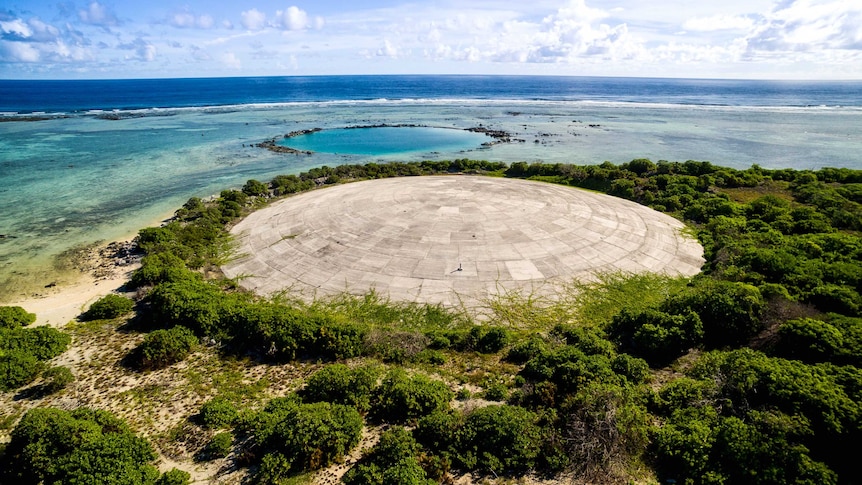
Robert Celestial stood in radioactive water wearing nothing but shorts and rubber boots.
The former United States Army truck driver was trying to drain water from a crater that would become a dump site for what he thought was debris left over from World War II.
He did not know the crater he was standing in was created by a nuclear blast.
“We were on a small island in the Pacific with 500 guys on it, and it was like Alcatraz. You couldn’t escape,” he said.
Mr Celestial had been posted to Enewetak Atoll near the northern edge of the Marshall Islands during the late 1970s nuclear clean-up.
Mission details were vague, but his orders were simple — transport “contaminated” soil to a small island and dump it into a crater.
The island was called Runit.
“We were told it was post-war debris,” he recalls.
“Years later, we found out there were 43 nuclear detonations there.”
Sixty-seven nuclear tests were carried out across Enewetak and Bikini atolls between 1946 and 1958.
More than 300 Marshallese were removed from their homeland to make way for the US nuclear program, which commenced 80 years ago this year.
Among the detonations was an 18-kiloton bomb known as Cactus.
The blast vaporised part of Runit Island and sent a mushroom cloud 6 kilometres into the sky.
Two decades later, the 10-metre-deep crater it left behind would become a dumping ground for more than 120,000 tonnes of contaminated soil and debris scraped from across the atoll.
Mr Celestial made countless trips to the crater carrying nuclear debris in the back of his dump truck.
When the work was done, the crater was sealed with an 18-inch concrete cap, forming what is now called the Runit Dome or — “The Tomb”.
But 50 years on, the dome is showing signs of deterioration.
Cracks line its outer shell, while groundwater flows beneath the structure, allowing contaminated waste to wash into the surrounding lagoon.
https://www.abc.net.au/news/2026-03-15/cracks-appear-in-runit-dome-amid-sea-level-rise/106423684
Date: 20/03/2026 14:39:58
From: SCIENCE
ID: 2371647
Subject: re: Global Politics 2026
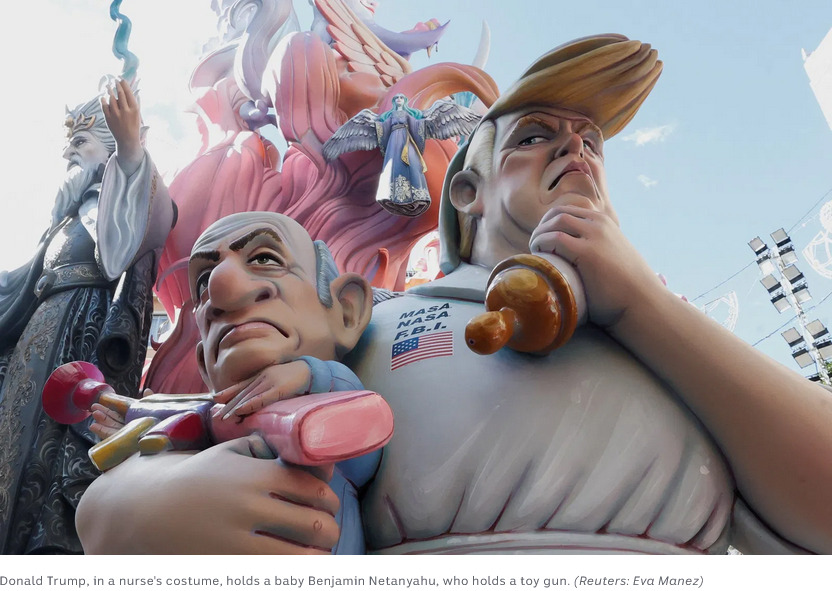
oh grow up everyone knows it’s some other country’s fault


Date: 25/03/2026 11:29:10
From: Witty Rejoinder
ID: 2373134
Subject: re: Global Politics 2026
Useful idiots visit Cuba, right on time
Communism has impoverished the island. American leftists only care now because they can blame Trump.
…
“Former British Labour Party leader Jeremy Corbyn was joined by radical groups like Code Pink and the Chinese Communist Party-linked People’s Forum. Rep. Ilhan Omar (D-Minnesota) couldn’t make the trip, but she was “incredibly proud” that her activist daughter tagged along. One of the most famous attendees was a celebrity streamer best known for praising global authoritarians while playing video games.”
…
WashPost editorial: meanwhile Jeremy’s all in on the stoopid.
Date: 26/03/2026 00:44:04
From: dv
ID: 2373388
Subject: re: Global Politics 2026

Now this really is news
Date: 26/03/2026 02:04:57
From: captain_spalding
ID: 2373390
Subject: re: Global Politics 2026
dv said:
Now this really is news
King Charles steps to the lectern. A hush falls over the crowded chamber as Congress members and Senators, and many staffers and visitors and media people strain to hear the words of his historic address.
Charles lays some pages on the lectern, he adjusts the microphone slightly, moves the glass of water just bit. He looks up, and casts his gaze over the assembled throng.
He grasps the sides of the lectern with his hands, and says,
“Just what the ever-loving fuck is wrong with you people?”.
Date: 26/03/2026 15:01:23
From: dv
ID: 2373609
Subject: re: Global Politics 2026
captain_spalding said:
dv said:
Now this really is news
King Charles steps to the lectern. A hush falls over the crowded chamber as Congress members and Senators, and many staffers and visitors and media people strain to hear the words of his historic address.
Charles lays some pages on the lectern, he adjusts the microphone slightly, moves the glass of water just bit. He looks up, and casts his gaze over the assembled throng.
He grasps the sides of the lectern with his hands, and says,
“Just what the ever-loving fuck is wrong with you people?”.

Date: 26/03/2026 23:28:07
From: Witty Rejoinder
ID: 2373808
Subject: re: Global Politics 2026
Liberalism is the only solution. Here’s how to save it.
Intellectuals on the left and right say liberalism is dead. Not so. Centrists of the world, unite!
March 24, 2026
By Adrian Wooldridge
Adrian Wooldridge’s “The Revolutionary Center: The Lost Genius of Liberalism” will be published on April 21. This op-ed was adapted from an article in UnHerd.
The signs of liberalism’s senescence are everywhere. In Britain, Keir Starmer won a historic mandate in the 2024 election, only to rapidly turn himself into the most unpopular prime minister on record. In Germany, Chancellor Friedrich Merz looks like a Starmer-in-the-making, while France’s President Emmanuel Macron is in the twilight of his presidency.
And yet the problem is deeper than bad leaders. It’s the problem of a decrepit regime — a collection of functionaries and placeholders who’ve reaped the benefits of the past 40 years of economic and moral deregulation and are now incapable of running the world they have made. Like all elites, they developed the habit of back-scratching and logrolling. And, like all elites, they soon lost touch with the people beneath them.
That explains the striking number of destructive liberal policies that have wreaked havoc across the West. San Francisco, a bastion of social liberalism, is so addled with homeless encampments and drug addicts snorting fentanyl in public that even many progressives have had enough. Sweden, once a byword for social harmony, is now known for chronic gun violence, thanks to the proliferation of immigrant gangs. The northern British cities that powered the Industrial Revolution are plagued, in their ethnic enclaves, by cousin marriage, honor punishments and grooming gangs. The response of all too many liberal intellectuals to these tragedies is to demand more of the policies that led to them in the first place.
This has provoked a growing number of intellectuals, on both right and left, to proclaim the death of liberalism. The most familiar argument explaining its demise is the Marxist one that liberalism is a ruling-class trick, and that the harsh realities of exploitation and imperialism underlie elites’ treacly words about “freedom” and “democracy.” A more interesting, and more influential, argument is being made by the New Right — many of whom call themselves “postliberals.” They argue that liberalism proved a disaster not because good ideas were badly applied, but because liberalism contained the seeds of its own destruction.
In his 2018 book, “Why Liberalism Failed,” political theorist Patrick J. Deneen wrote: “Liberalism has failed because liberalism has succeeded. As it becomes fully itself, it generates endemic pathologies more rapidly and pervasively than it is able to produce Band-aids and veils to cover them.” Liberal regimes succeeded when they were disciplined by traditional ideas about virtue and civility. But liberals’ core belief — that we are all rights-bearing individuals, answerable primarily to ourselves — inexorably destroyed the civilizational constraints that gave it strength.
The bulk of these postliberals are headquartered in the United States. A group based in the Claremont Institute in Southern California relentlessly attempts to expose the faults of the “liberal regime.” There are so many products of the Claremont Institute in the White House, the administration and Congress that they are fondly known in some circles as “Claremonsters.” Vice President JD Vance declares himself to be a postliberal. The idea has plenty of supporters in Britain, such as James Orr, a Reform Party adviser and Cambridge philosopher of religion, who propose a faith-and-flag-based conservatism as a solution to the disillusionment of modern life.
Their critique predominates at a time when the current liberal establishment is the most decadent it has ever been, and the forces of illiberalism are stronger than at any time since the 1930s. The country with the world’s second-biggest economy, China, is ruled by a Marxist dictator; the world’s biggest democracy, India, by an illiberal strongman; its most battle-tested war machine, Russia, by a man who wants to bury the liberal order; and its most important liberal power, the United States, is, at best, an uncertain friend of the liberal order that it created after World War II. Donald Trump is an instinctive rather than a cerebral politician, but almost all his instincts are illiberal, sometimes astonishingly so. He has not even bothered to pay lip service to international law in his wars of choice in Venezuela and now Iran and the wider Middle East.
Yet the postliberal influence owes much more to luck than substance. Postliberals fail to address the material problems that plague the postindustrial wastelands they decry. They have no answer to the question: What happens to populism when it is undisciplined by liberal constraints? The experience of the 1930s suggests nothing good. It is time to mount a defense of liberalism before it is too late.
Over the past 40 years, liberalism has been associated with the shrinking role of the state in both markets and morality. Bill Clinton and Tony Blair produced a widely admired bourgeois-bohemian (Bobo) synthesis by combining the Thatcherite deregulation of the economy with the 1960s deregulation of morality. The postliberal argument’s strength is its recognition that this synthesis is now producing more problems than benefits.
But the Bobo synthesis is only one possible manifestation of liberalism. You can have big-government liberalism as well as small-government liberalism, moralizing liberalism as well as permissive liberalism. All are linked by three core beliefs: that society starts with the individual rather than the collective; that truth is reached only through open debate; that power is so dangerous, it must be divided and constrained. Anything that prevents individuals from flourishing, ideas from clashing and power from being constrained, is illiberal.
During its long history, liberalism has suffered from several near-death experiences, but it has always revived by addressing new problems in new ways while staying true to its fundamental principles. The worst of these episodes occurred in the 1920s and 1930s, when liberalism risked being stamped to death by jackbooted fascism or communism.
“The liberal state is destined to perish. All the political experiments of our day are anti-liberal,” proclaimed the Italian socialist-turned-fascist Benito Mussolini. But the Allies proved him wrong by defeating the Axis powers in World War II, constructing the Iron Curtain and remaking the world according to a new collection of liberal principles. In the 1970s, the postwar regime gave way to stagflation and bureaucratic sclerosis, only to revive under the influence of the neoliberal revolution.
It’s understandable that people are angry with the liberal establishment and disillusioned with centrist promises. But the alternatives from both the right and the left are certain to be worse. During his first term, Trump catered to his billionaire friends, entrenching crony capitalism and passing big tax cuts, while providing his populist base with rhetorical puffballs. He didn’t even make significant progress with his “beautiful wall” at the border with Mexico. During his second term, with the old Republican establishment sidelined and both postliberal and illiberal thinkers in the ascendant, he is creating chaos in the Middle East, sending stock markets into a tailspin.
Meanwhile, in Britain, Reform’s economic policies are an unsustainable mixture of Thatcherism and left-wing statism. Yet the party remains steadily and comfortably atop opinion polls, though it faces the considerable challenge of sustaining its popularity until the next general election, which doesn’t have to be held until August 2029.
The radical left, whether in the U.S. or Britain, is even more impractical, compiling laundry lists of lavish spending funded by taxes on billionaires that they imagine would pay for it all. The radical left is also blind to the problems created by mass immigration, half-hearted integration and the development of parallel societies.
The only way forward is to reinvent liberalism just as thoroughly as previous generations of liberal reformers did to address new problems, while discarding established shibboleths if they happen to get in the way. Such a reinvention must start with three strategies: rethink, reposition and rearticulate.
Rethink
Today’s liberals need to break with their four-decade fixation on economic and moral deregulation. The release of millions of U.S. government investigative files regarding sex offender Jeffrey Epstein have not only exposed how many neoliberal heroes — a tech billionaire here, an illustrious economist there — have feet of clay, but also the moral hollowness of a philosophy of self-indulgence and self-gratification that lies at the heart of the Bobo culture.
Today’s liberals must also reapply the core principles of liberalism as they encounter old sins in new forms. The tech giants are amassing market dominance of a sort the world hasn’t seen since the late-19th-century robber barons, and they are using that dominance to misinform and manipulate the public. Left-wing identitarians are offending the basic principles of individualism by continuing to treat people as members of groups rather than as unique individuals, or by canceling those who hold views that violate leftist orthodoxy.
Reposition
The biggest weakness of today’s liberals is that they have become the establishment — and they have all the attendant weakness of an establishment. Radical liberals must challenge this establishment with vigor. Why have the heads of universities betrayed the sacred principle of free speech? Why does groupthink pervade nongovernmental organizations?
Every successful reformulation of the liberal creed, from the New Liberals, through the managerial capitalism of the 1940s, to the neoliberal revolution of the 1980s, has involved the sweeping away of a decadent elite and the creation of a new cadre of reformers. They must muscle aside this establishment — that is, the Davos establishment — before the populists do it for them. Liberal reformers also must be willing to forge alliances with groups that their elders have made a career out of demonizing. Certain conservatives turned out to be right about pornography and libertinism. Some socialists were right about the dangers of the overconcentration of economic power. Liberalism has a wonderful history of reviving itself through unexpected alliances.
Rearticulate
One reason liberals were so successful in the past is that they were so good at communicating. John Stuart Mill was a master of clarity. Abraham Lincoln wrote like an angel. William Gladstone held his audiences enthralled for hours. Today’s liberals have entirely lost the art. Officials sound like Soviet-era bureaucrats. Academics write for constipated referees who hold their fates in their hands.
There are two reasons for this failure: Being the establishment, liberals largely talk to each other rather than to the public; being a decadent establishment, they don’t really believe what they are saying. They parrot formulaic phrases much as Soviet bureaucrats did — to protect themselves from criticism and curry favor with the even more powerful. The simple fact of breaking with the establishment should be enough to take care of the dead-prose problem: Once people start believing what they say and start speaking to the public, they discover the language they need.
Once they’ve recovered their spirit, reformer liberals should take to the public square. Diplomats need to be willing to advance the case for freedom and religious toleration in the United Nations and other forums. Politicians need to speak out more loudly against illiberal practices such as shouting down speakers in universities or persecuting those whose criticism of Islam is treated as blasphemy.
Liberalism properly conceived is the only reasonable solution to the great problems of modernity: how to live together in a pluralist society and how to preserve social cohesion while unleashing individual talents. It is time to begin the patient but exhilarating work of renewing liberalism for a new age. Centrists of the world, unite!
https://www.washingtonpost.com/opinions/2026/03/24/conservatism-progressivism-liberalism/
Date: 28/03/2026 16:09:55
From: JudgeMental
ID: 2374218
Subject: re: Global Politics 2026
We Loathe 🐃 WaterGate Tailor, Calamity Jane, ☢️Ted and NewsCorpse😊 ·
Robert Brackenbury
Next time someone says that Iran is dangerous and they need to be stopped…here’s some history to share.
1901: A British businessman secures exclusive rights to Iran’s oil. Iran gets almost nothing from its own resource.
1908: Oil is struck. Anglo-Iranian Oil Company is formed. It later becomes BP. The British Royal Navy converts from coal to oil, making Iranian petroleum a strategic military asset for the British Empire.
For the next 50 years, Iran’s oil is extracted by a foreign corporation. Iran receives a fraction of the profits. Saudi Arabia negotiates a 50-50 profit split with ARAMCO. Iran asks for the same terms. Britain refuses.
1951: Iran’s democratically elected Prime Minister, Mohammad Mossadegh, nationalizes Iran’s oil through a unanimous vote in parliament. Completely legal. Completely constitutional. His argument was simple: this is our oil.
Britain responds with an international blockade. No negotiation. No compromise. They want their oil back.
1953: The CIA (Operation Ajax) and MI6 (Operation Boot) overthrow Mossadegh. They bribe politicians, clerics, journalists, and military officers. They fund fake protests. They run disinformation campaigns through newspapers they secretly own. MI6 operatives kidnap and murder Iran’s chief of police and dump his body in public as a warning.
They reinstall the Shah — a monarch who serves Western oil interests. The CIA officially acknowledged its role in 2013.
After the coup, BP retains a 40% stake. American oil companies including Exxon and Mobil get significant shares. Iran’s democratic government is gone. Its oil is back under foreign control.
1953-1979: The Shah rules for 26 years as a Western-backed authoritarian. His secret police, SAVAK, is trained by the CIA and Mossad. SAVAK tortures and kills political dissidents systematically. Iran becomes one of the largest purchasers of American weapons. The Shah lives in extraordinary luxury while much of the population remains poor.
During this entire period, Israel and Iran are close allies. SAVAK and Mossad share intelligence. Israel sells weapons to Iran. Nobody in the West calls Iran a “terrorist state” because the dictator is their dictator.
1979: The Iranian people overthrow the Shah in a popular revolution. This is where your list begins — as if the revolution appeared out of nowhere, motivated by nothing but religious fanaticism.
Now let’s talk about the US embassy that was attacked.
The US news likes to paint the 1979 hostage crisis as an unprovoked attack on America. The revolutionaries seized the embassy because the last time there was a democratic movement in Iran, the CIA ran the coup to crush it from that same embassy. They weren’t being paranoid. They were being historically accurate.
Britannica’s own assessment: “It is generally agreed today that the 1953 coup sowed the seeds for the Islamic Revolution of 1979.”
That’s not a conspiracy theory. That’s the encyclopedia.
Now let’s ask a couple more questions.
Why are there U.S. military bases in Iraq? Because the U.S. invaded Iraq in 2003 on claims of weapons of mass destruction that turned out to be false. Over a million Iraqi civilians died. No American official was ever prosecuted.
Why is there conflict with Hezbollah in Lebanon? Because Israel invaded Lebanon in 1982 and occupied southern Lebanon for 18 years.
Why are Houthi rebels attacking ships? Because a U.S.-backed Saudi coalition bombed Yemen for years, creating what the UN called the world’s worst humanitarian crisis. Over 150,000 dead. Famine. Cholera outbreaks.
Why does Iran pursue nuclear capability? Possibly because Israel has an undeclared nuclear arsenal estimated at 80-400 warheads, has never signed the Non-Proliferation Treaty, faces zero international inspections, and has never been sanctioned for it. Iran signed the NPT. Iran agreed to inspections. Iran signed the nuclear deal in 2015. The U.S. pulled out of that deal in 2018.
Every single item on your list is framed as Iranian aggression against “the West.” But none of them exist without the West’s 70-year campaign of overthrowing Iran’s democracy, installing a dictator, extracting its oil, arming its neighbors, invading the countries on its borders, and maintaining military bases throughout the region.
Now trace who benefits.
The 1953 coup was about oil. BP and American oil companies got the oil.
The Shah’s 26-year reign was about strategic positioning. The U.S. and Israel got a compliant ally on the Soviet border and in the Middle East.
The post-1979 framing of Iran as a “terrorist state” serves a specific function: it justifies permanent U.S. military presence in the Middle East, billions in annual arms sales to Saudi Arabia and Gulf states, and unconditional U.S. support for Israel’s regional dominance.
Every “Iranian attack” on your list occurred in a country where the U.S. had no legal right to be in the first place — Iraq, Syria, Jordan. American troops are stationed across the Middle East not because those countries asked for protection from Iran, but because the U.S. positioned itself there to control the region’s resources and protect its strategic architecture.
When someone punches you for 70 years — overthrows your government, installs a dictator, trains his secret police to torture your people, extracts your oil, invades the countries on your borders, surrounds you with military bases, and sanctions your economy into the ground — and then you punch back, the question isn’t “why are you violent?”
The question is: who threw the first punch? And who’s been profiting from the fight ever since?
That’s not a defense of the Iranian regime. The theocracy that replaced the Shah has its own record of brutality against its own people, especially women. But that regime exists because the CIA destroyed Iran’s democracy in 1953. The West created the conditions for the very thing it now claims to oppose.
The history continues.
HAMAS (October 7, 2023)
“Hamas, to my great regret, is Israel’s creation,” said Avner Cohen, a former Israeli religious affairs official who worked in Gaza for more than two decades, to the Wall Street Journal in 2009.
Brigadier General Yitzhak Segev, who served as Israeli military governor in Gaza in the early 1980s, told the New York Times that he had helped finance the Palestinian Islamist movement as a “counterweight” to the PLO. “The Israeli government gave me a budget,” the retired brigadier general confessed, “and the military government gives to the mosques
Initially, Hamas was discreetly supported by Israel, as a counter-balance to the secular Palestine Liberation Organization to prevent the creation of an independent Palestinian state.
And it didn’t stop in the 1980s. According to the New York Times, Israeli intelligence agents traveled into Gaza with a Qatari official carrying suitcases filled with cash to disperse money.
In 2015, Bezalel Smotrich, currently the finance minister in Netanyahu’s government, summed up the strategy: “The Palestinian Authority is a burden. Hamas is an asset.”
Netanyahu told journalist Dan Margalit that it was important to keep Hamas strong, as a counterweight to the Palestinian Authority. Having two strong rivals, including Hamas, would lessen pressure on him to negotiate toward a Palestinian state.
Netanyahu penned a letter to Qatar in 2018 asking the Qatari leadership to continue funding Hamas.
HEZBOLLAH (1983 Beirut bombings, kidnappings):
Hezbollah was formed in 1982 — the same year Israel invaded Lebanon. It didn’t exist before the invasion. Israel invaded Lebanon to destroy the PLO headquarters there. The invasion killed approximately 20,000 people, mostly civilians. Hezbollah was born as a direct resistance movement to that invasion.
The 1983 Marine barracks bombing on the commenter’s list killed 241 Americans. But why were U.S. Marines in Lebanon? Because the U.S. had intervened in the Lebanese Civil War, positioning itself as a participant in the conflict rather than a neutral peacekeeper. The Marines were shelling Druze and Shia positions from naval vessels before the bombing.
IRAN’S PROXY NETWORK (Houthis, Kataib Hezbollah, militias in Iraq and Syria):
Every proxy on that list operates in a country where the U.S. or its allies intervened first.
Iraq — the U.S. invaded in 2003 on false WMD claims. Iranian-backed militias formed to resist the occupation.
Syria — the CIA ran Operation Timber Sycamore, spending billions arming Syrian rebels, many of whom were jihadists. Iran backed Assad. Both sides were proxies in someone else’s war.
Yemen — the Houthis fight against a Saudi-led coalition that the U.S. armed and supported. The Saudi bombing campaign created what the UN called the world’s worst humanitarian crisis.
____
The United States propaganda machine goes hard. The enemy is not a republican or a democrat.
For all of history people knew their governments were evil. Don’t forget that it’s true today. The enemy is not the one vilified by billionaire owned media dynasties.
Date: 28/03/2026 16:38:20
From: roughbarked
ID: 2374227
Subject: re: Global Politics 2026
JudgeMental said:
We Loathe 🐃 WaterGate Tailor, Calamity Jane, ☢️Ted and NewsCorpse😊 ·
Robert Brackenbury
Next time someone says that Iran is dangerous and they need to be stopped…here’s some history to share.
1901: A British businessman secures exclusive rights to Iran’s oil. Iran gets almost nothing from its own resource.
1908: Oil is struck. Anglo-Iranian Oil Company is formed. It later becomes BP. The British Royal Navy converts from coal to oil, making Iranian petroleum a strategic military asset for the British Empire.
For the next 50 years, Iran’s oil is extracted by a foreign corporation. Iran receives a fraction of the profits. Saudi Arabia negotiates a 50-50 profit split with ARAMCO. Iran asks for the same terms. Britain refuses.
1951: Iran’s democratically elected Prime Minister, Mohammad Mossadegh, nationalizes Iran’s oil through a unanimous vote in parliament. Completely legal. Completely constitutional. His argument was simple: this is our oil.
Britain responds with an international blockade. No negotiation. No compromise. They want their oil back.
1953: The CIA (Operation Ajax) and MI6 (Operation Boot) overthrow Mossadegh. They bribe politicians, clerics, journalists, and military officers. They fund fake protests. They run disinformation campaigns through newspapers they secretly own. MI6 operatives kidnap and murder Iran’s chief of police and dump his body in public as a warning.
They reinstall the Shah — a monarch who serves Western oil interests. The CIA officially acknowledged its role in 2013.
After the coup, BP retains a 40% stake. American oil companies including Exxon and Mobil get significant shares. Iran’s democratic government is gone. Its oil is back under foreign control.
1953-1979: The Shah rules for 26 years as a Western-backed authoritarian. His secret police, SAVAK, is trained by the CIA and Mossad. SAVAK tortures and kills political dissidents systematically. Iran becomes one of the largest purchasers of American weapons. The Shah lives in extraordinary luxury while much of the population remains poor.
During this entire period, Israel and Iran are close allies. SAVAK and Mossad share intelligence. Israel sells weapons to Iran. Nobody in the West calls Iran a “terrorist state” because the dictator is their dictator.
1979: The Iranian people overthrow the Shah in a popular revolution. This is where your list begins — as if the revolution appeared out of nowhere, motivated by nothing but religious fanaticism.
Now let’s talk about the US embassy that was attacked.
The US news likes to paint the 1979 hostage crisis as an unprovoked attack on America. The revolutionaries seized the embassy because the last time there was a democratic movement in Iran, the CIA ran the coup to crush it from that same embassy. They weren’t being paranoid. They were being historically accurate.
Britannica’s own assessment: “It is generally agreed today that the 1953 coup sowed the seeds for the Islamic Revolution of 1979.”
That’s not a conspiracy theory. That’s the encyclopedia.
Now let’s ask a couple more questions.
Why are there U.S. military bases in Iraq? Because the U.S. invaded Iraq in 2003 on claims of weapons of mass destruction that turned out to be false. Over a million Iraqi civilians died. No American official was ever prosecuted.
Why is there conflict with Hezbollah in Lebanon? Because Israel invaded Lebanon in 1982 and occupied southern Lebanon for 18 years.
Why are Houthi rebels attacking ships? Because a U.S.-backed Saudi coalition bombed Yemen for years, creating what the UN called the world’s worst humanitarian crisis. Over 150,000 dead. Famine. Cholera outbreaks.
Why does Iran pursue nuclear capability? Possibly because Israel has an undeclared nuclear arsenal estimated at 80-400 warheads, has never signed the Non-Proliferation Treaty, faces zero international inspections, and has never been sanctioned for it. Iran signed the NPT. Iran agreed to inspections. Iran signed the nuclear deal in 2015. The U.S. pulled out of that deal in 2018.
Every single item on your list is framed as Iranian aggression against “the West.” But none of them exist without the West’s 70-year campaign of overthrowing Iran’s democracy, installing a dictator, extracting its oil, arming its neighbors, invading the countries on its borders, and maintaining military bases throughout the region.
Now trace who benefits.
The 1953 coup was about oil. BP and American oil companies got the oil.
The Shah’s 26-year reign was about strategic positioning. The U.S. and Israel got a compliant ally on the Soviet border and in the Middle East.
The post-1979 framing of Iran as a “terrorist state” serves a specific function: it justifies permanent U.S. military presence in the Middle East, billions in annual arms sales to Saudi Arabia and Gulf states, and unconditional U.S. support for Israel’s regional dominance.
Every “Iranian attack” on your list occurred in a country where the U.S. had no legal right to be in the first place — Iraq, Syria, Jordan. American troops are stationed across the Middle East not because those countries asked for protection from Iran, but because the U.S. positioned itself there to control the region’s resources and protect its strategic architecture.
When someone punches you for 70 years — overthrows your government, installs a dictator, trains his secret police to torture your people, extracts your oil, invades the countries on your borders, surrounds you with military bases, and sanctions your economy into the ground — and then you punch back, the question isn’t “why are you violent?”
The question is: who threw the first punch? And who’s been profiting from the fight ever since?
That’s not a defense of the Iranian regime. The theocracy that replaced the Shah has its own record of brutality against its own people, especially women. But that regime exists because the CIA destroyed Iran’s democracy in 1953. The West created the conditions for the very thing it now claims to oppose.
The history continues.
HAMAS (October 7, 2023)
“Hamas, to my great regret, is Israel’s creation,” said Avner Cohen, a former Israeli religious affairs official who worked in Gaza for more than two decades, to the Wall Street Journal in 2009.
Brigadier General Yitzhak Segev, who served as Israeli military governor in Gaza in the early 1980s, told the New York Times that he had helped finance the Palestinian Islamist movement as a “counterweight” to the PLO. “The Israeli government gave me a budget,” the retired brigadier general confessed, “and the military government gives to the mosques
Initially, Hamas was discreetly supported by Israel, as a counter-balance to the secular Palestine Liberation Organization to prevent the creation of an independent Palestinian state.
And it didn’t stop in the 1980s. According to the New York Times, Israeli intelligence agents traveled into Gaza with a Qatari official carrying suitcases filled with cash to disperse money.
In 2015, Bezalel Smotrich, currently the finance minister in Netanyahu’s government, summed up the strategy: “The Palestinian Authority is a burden. Hamas is an asset.”
Netanyahu told journalist Dan Margalit that it was important to keep Hamas strong, as a counterweight to the Palestinian Authority. Having two strong rivals, including Hamas, would lessen pressure on him to negotiate toward a Palestinian state.
Netanyahu penned a letter to Qatar in 2018 asking the Qatari leadership to continue funding Hamas.
HEZBOLLAH (1983 Beirut bombings, kidnappings):
Hezbollah was formed in 1982 — the same year Israel invaded Lebanon. It didn’t exist before the invasion. Israel invaded Lebanon to destroy the PLO headquarters there. The invasion killed approximately 20,000 people, mostly civilians. Hezbollah was born as a direct resistance movement to that invasion.
The 1983 Marine barracks bombing on the commenter’s list killed 241 Americans. But why were U.S. Marines in Lebanon? Because the U.S. had intervened in the Lebanese Civil War, positioning itself as a participant in the conflict rather than a neutral peacekeeper. The Marines were shelling Druze and Shia positions from naval vessels before the bombing.
IRAN’S PROXY NETWORK (Houthis, Kataib Hezbollah, militias in Iraq and Syria):
Every proxy on that list operates in a country where the U.S. or its allies intervened first.
Iraq — the U.S. invaded in 2003 on false WMD claims. Iranian-backed militias formed to resist the occupation.
Syria — the CIA ran Operation Timber Sycamore, spending billions arming Syrian rebels, many of whom were jihadists. Iran backed Assad. Both sides were proxies in someone else’s war.
Yemen — the Houthis fight against a Saudi-led coalition that the U.S. armed and supported. The Saudi bombing campaign created what the UN called the world’s worst humanitarian crisis.
____
The United States propaganda machine goes hard. The enemy is not a republican or a democrat.
For all of history people knew their governments were evil. Don’t forget that it’s true today. The enemy is not the one vilified by billionaire owned media dynasties.
I remember most of that history.
Date: 28/03/2026 18:36:02
From: SCIENCE
ID: 2374286
Subject: re: Global Politics 2026
roughbarked said:
JudgeMental said:
We Loathe 🐃 WaterGate Tailor, Calamity Jane, ☢️Ted and NewsCorpse😊 ·
Robert Brackenbury
Next time someone says that Iran is dangerous and they need to be stopped…here’s some history to share.
1901: A British businessman secures exclusive rights to Iran’s oil. Iran gets almost nothing from its own resource.
1908: Oil is struck. Anglo-Iranian Oil Company is formed. It later becomes BP. The British Royal Navy converts from coal to oil, making Iranian petroleum a strategic military asset for the British Empire.
For the next 50 years, Iran’s oil is extracted by a foreign corporation. Iran receives a fraction of the profits. Saudi Arabia negotiates a 50-50 profit split with ARAMCO. Iran asks for the same terms. Britain refuses.
1951: Iran’s democratically elected Prime Minister, Mohammad Mossadegh, nationalizes Iran’s oil through a unanimous vote in parliament. Completely legal. Completely constitutional. His argument was simple: this is our oil.
Britain responds with an international blockade. No negotiation. No compromise. They want their oil back.
1953: The CIA (Operation Ajax) and MI6 (Operation Boot) overthrow Mossadegh. They bribe politicians, clerics, journalists, and military officers. They fund fake protests. They run disinformation campaigns through newspapers they secretly own. MI6 operatives kidnap and murder Iran’s chief of police and dump his body in public as a warning.
They reinstall the Shah — a monarch who serves Western oil interests. The CIA officially acknowledged its role in 2013.
After the coup, BP retains a 40% stake. American oil companies including Exxon and Mobil get significant shares. Iran’s democratic government is gone. Its oil is back under foreign control.
1953-1979: The Shah rules for 26 years as a Western-backed authoritarian. His secret police, SAVAK, is trained by the CIA and Mossad. SAVAK tortures and kills political dissidents systematically. Iran becomes one of the largest purchasers of American weapons. The Shah lives in extraordinary luxury while much of the population remains poor.
During this entire period, Israel and Iran are close allies. SAVAK and Mossad share intelligence. Israel sells weapons to Iran. Nobody in the West calls Iran a “terrorist state” because the dictator is their dictator.
1979: The Iranian people overthrow the Shah in a popular revolution. This is where your list begins — as if the revolution appeared out of nowhere, motivated by nothing but religious fanaticism.
Now let’s talk about the US embassy that was attacked.
The US news likes to paint the 1979 hostage crisis as an unprovoked attack on America. The revolutionaries seized the embassy because the last time there was a democratic movement in Iran, the CIA ran the coup to crush it from that same embassy. They weren’t being paranoid. They were being historically accurate.
Britannica’s own assessment: “It is generally agreed today that the 1953 coup sowed the seeds for the Islamic Revolution of 1979.”
That’s not a conspiracy theory. That’s the encyclopedia.
Now let’s ask a couple more questions.
Why are there U.S. military bases in Iraq? Because the U.S. invaded Iraq in 2003 on claims of weapons of mass destruction that turned out to be false. Over a million Iraqi civilians died. No American official was ever prosecuted.
Why is there conflict with Hezbollah in Lebanon? Because Israel invaded Lebanon in 1982 and occupied southern Lebanon for 18 years.
Why are Houthi rebels attacking ships? Because a U.S.-backed Saudi coalition bombed Yemen for years, creating what the UN called the world’s worst humanitarian crisis. Over 150,000 dead. Famine. Cholera outbreaks.
Why does Iran pursue nuclear capability? Possibly because Israel has an undeclared nuclear arsenal estimated at 80-400 warheads, has never signed the Non-Proliferation Treaty, faces zero international inspections, and has never been sanctioned for it. Iran signed the NPT. Iran agreed to inspections. Iran signed the nuclear deal in 2015. The U.S. pulled out of that deal in 2018.
Every single item on your list is framed as Iranian aggression against “the West.” But none of them exist without the West’s 70-year campaign of overthrowing Iran’s democracy, installing a dictator, extracting its oil, arming its neighbors, invading the countries on its borders, and maintaining military bases throughout the region.
Now trace who benefits.
The 1953 coup was about oil. BP and American oil companies got the oil.
The Shah’s 26-year reign was about strategic positioning. The U.S. and Israel got a compliant ally on the Soviet border and in the Middle East.
The post-1979 framing of Iran as a “terrorist state” serves a specific function: it justifies permanent U.S. military presence in the Middle East, billions in annual arms sales to Saudi Arabia and Gulf states, and unconditional U.S. support for Israel’s regional dominance.
Every “Iranian attack” on your list occurred in a country where the U.S. had no legal right to be in the first place — Iraq, Syria, Jordan. American troops are stationed across the Middle East not because those countries asked for protection from Iran, but because the U.S. positioned itself there to control the region’s resources and protect its strategic architecture.
When someone punches you for 70 years — overthrows your government, installs a dictator, trains his secret police to torture your people, extracts your oil, invades the countries on your borders, surrounds you with military bases, and sanctions your economy into the ground — and then you punch back, the question isn’t “why are you violent?”
The question is: who threw the first punch? And who’s been profiting from the fight ever since?
That’s not a defense of the Iranian regime. The theocracy that replaced the Shah has its own record of brutality against its own people, especially women. But that regime exists because the CIA destroyed Iran’s democracy in 1953. The West created the conditions for the very thing it now claims to oppose.
The history continues.
HAMAS (October 7, 2023)
“Hamas, to my great regret, is Israel’s creation,” said Avner Cohen, a former Israeli religious affairs official who worked in Gaza for more than two decades, to the Wall Street Journal in 2009.
Brigadier General Yitzhak Segev, who served as Israeli military governor in Gaza in the early 1980s, told the New York Times that he had helped finance the Palestinian Islamist movement as a “counterweight” to the PLO. “The Israeli government gave me a budget,” the retired brigadier general confessed, “and the military government gives to the mosques
Initially, Hamas was discreetly supported by Israel, as a counter-balance to the secular Palestine Liberation Organization to prevent the creation of an independent Palestinian state.
And it didn’t stop in the 1980s. According to the New York Times, Israeli intelligence agents traveled into Gaza with a Qatari official carrying suitcases filled with cash to disperse money.
In 2015, Bezalel Smotrich, currently the finance minister in Netanyahu’s government, summed up the strategy: “The Palestinian Authority is a burden. Hamas is an asset.”
Netanyahu told journalist Dan Margalit that it was important to keep Hamas strong, as a counterweight to the Palestinian Authority. Having two strong rivals, including Hamas, would lessen pressure on him to negotiate toward a Palestinian state.
Netanyahu penned a letter to Qatar in 2018 asking the Qatari leadership to continue funding Hamas.
HEZBOLLAH (1983 Beirut bombings, kidnappings):
Hezbollah was formed in 1982 — the same year Israel invaded Lebanon. It didn’t exist before the invasion. Israel invaded Lebanon to destroy the PLO headquarters there. The invasion killed approximately 20,000 people, mostly civilians. Hezbollah was born as a direct resistance movement to that invasion.
The 1983 Marine barracks bombing on the commenter’s list killed 241 Americans. But why were U.S. Marines in Lebanon? Because the U.S. had intervened in the Lebanese Civil War, positioning itself as a participant in the conflict rather than a neutral peacekeeper. The Marines were shelling Druze and Shia positions from naval vessels before the bombing.
IRAN’S PROXY NETWORK (Houthis, Kataib Hezbollah, militias in Iraq and Syria):
Every proxy on that list operates in a country where the U.S. or its allies intervened first.
Iraq — the U.S. invaded in 2003 on false WMD claims. Iranian-backed militias formed to resist the occupation.
Syria — the CIA ran Operation Timber Sycamore, spending billions arming Syrian rebels, many of whom were jihadists. Iran backed Assad. Both sides were proxies in someone else’s war.
Yemen — the Houthis fight against a Saudi-led coalition that the U.S. armed and supported. The Saudi bombing campaign created what the UN called the world’s worst humanitarian crisis.
____
The United States propaganda machine goes hard. The enemy is not a republican or a democrat.
For all of history people knew their governments were evil. Don’t forget that it’s true today. The enemy is not the one vilified by billionaire owned media dynasties.
I remember most of that history.
isn’t that what that fire song everyone keeps posting here is about
Date: 31/03/2026 07:06:33
From: SCIENCE
ID: 2374958
Subject: re: Global Politics 2026
LOL
Except, after the two oil crises of the 1970s, energy industry analysts and diplomats worldwide have spent decades war-gaming the potential impact of a Middle East meltdown. The only unexpected element to the current conflagration is that America has led the charge.
when would the good guys ever start a war c’m‘on don’t be ridiculous
Date: 31/03/2026 07:16:33
From: SCIENCE
ID: 2374960
Subject: re: Global Politics 2026
sounds exactly
Iran’s announcement formalises a distinction that has largely been implicit. It identifies countries not by what they declare, but by what they continue to do. Trade, in this context, becomes a marker. So does the decision not to enforce pressure beyond a certain point. For China, this is consistent with its broader approach to external crises. It avoids direct confrontation, maintains access where possible, and adjusts its exposure in response to risk.
like what bad guys do, the worst
Date: 2/04/2026 07:11:13
From: SCIENCE
ID: 2375526
Subject: re: Global Politics 2026
dv said:
https://theconversation.com/in-a-ruptured-world-order-heres-how-australia-can-forge-new-middle-power-partnerships-276367
In a ‘ruptured’ world order, here’s how Australia can forge new middle‑power partnerships
for this Easter all we’re
Toddler Eats All The Chocolate Then Asks For Some Chocolate To Eat
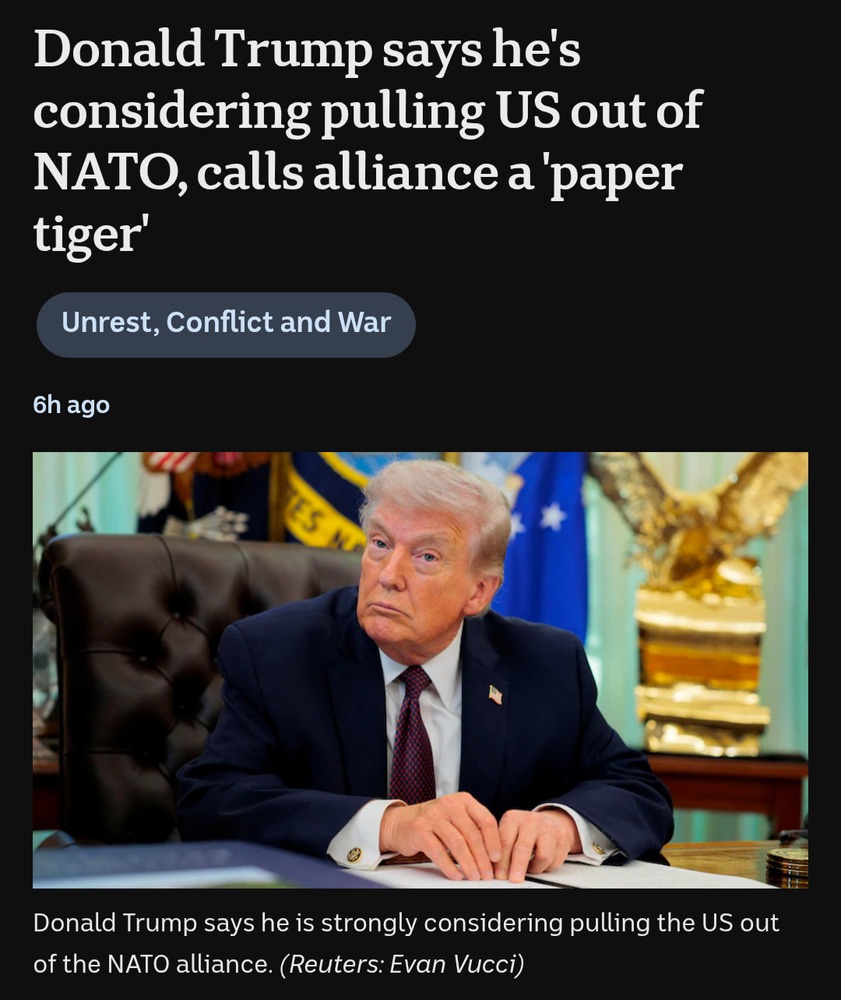
asking for is some journalists who are less credulous
Date: 2/04/2026 07:14:19
From: roughbarked
ID: 2375530
Subject: re: Global Politics 2026
SCIENCE said:
dv said:
https://theconversation.com/in-a-ruptured-world-order-heres-how-australia-can-forge-new-middle-power-partnerships-276367
In a ‘ruptured’ world order, here’s how Australia can forge new middle‑power partnerships
for this Easter all we’re
Toddler Eats All The Chocolate Then Asks For Some Chocolate To Eat
asking for is some journalists who are less credulous
Agent Kraznov conditioning kicks in every time someone mentions NATO.
Date: 2/04/2026 07:17:46
From: SCIENCE
ID: 2375533
Subject: re: Global Politics 2026
roughbarked said:
SCIENCE said:
dv said:
https://theconversation.com/in-a-ruptured-world-order-heres-how-australia-can-forge-new-middle-power-partnerships-276367
In a ‘ruptured’ world order, here’s how Australia can forge new middle‑power partnerships
for this Easter all we’re
Toddler Eats All The Chocolate Then Asks If They May Eat Chocolate
asking for is some journalists who are less credulous
Agent Kraznov conditioning kicks in every time someone mentions NATO.
sorry maybe this edit conveys the sentiment better, they’re already 70/100 steps out of NATO and here we are still talking about considering taking steps out
but you’re right, the headline is just a quote, so maybe they’re just ironically quoting the fascist
Date: 2/04/2026 07:19:57
From: roughbarked
ID: 2375535
Subject: re: Global Politics 2026
SCIENCE said:
roughbarked said:
SCIENCE said:
for this Easter all we’re
Toddler Eats All The Chocolate Then Asks If They May Eat Chocolate
asking for is some journalists who are less credulous
Agent Kraznov conditioning kicks in every time someone mentions NATO.
sorry maybe this edit conveys the sentiment better, they’re already 70/100 steps out of NATO and here we are still talking about considering taking steps out
but you’re right, the headline is just a quote, so maybe they’re just ironically quoting the fascist
shit falls off the fascist’s tongue every tiime he opens his gob.
Date: 2/04/2026 07:21:43
From: roughbarked
ID: 2375537
Subject: re: Global Politics 2026
roughbarked said:
SCIENCE said:
roughbarked said:
Agent Kraznov conditioning kicks in every time someone mentions NATO.
sorry maybe this edit conveys the sentiment better, they’re already 70/100 steps out of NATO and here we are still talking about considering taking steps out
but you’re right, the headline is just a quote, so maybe they’re just ironically quoting the fascist
shit falls off the fascist’s tongue every tiime he opens his gob.
It is all done for the camera. He then has to create another lie to cover the first and so on.
Date: 2/04/2026 07:37:53
From: Witty Rejoinder
ID: 2375544
Subject: re: Global Politics 2026
roughbarked said:
SCIENCE said:
dv said:
https://theconversation.com/in-a-ruptured-world-order-heres-how-australia-can-forge-new-middle-power-partnerships-276367
In a ‘ruptured’ world order, here’s how Australia can forge new middle‑power partnerships
for this Easter all we’re
Toddler Eats All The Chocolate Then Asks For Some Chocolate To Eat
asking for is some journalists who are less credulous
Agent Kraznov conditioning kicks in every time someone mentions NATO.
He probably has an electric shock collar that Putin zaps him with…
Date: 2/04/2026 13:39:51
From: dv
ID: 2375744
Subject: re: Global Politics 2026
Excerpts only, full text at URL
https://www.abc.net.au/news/2026-04-02/trump-iran-war-actions-bringing-uk-closer-to-europe/106524174
Keir Starmer and European leaders defy Donald Trump as cost of war hits home
Their blue ties were fastened, their grey hair freshly swept across their heads, their glasses firmly in place.
Reading prepared statements in front of flags, Britain’s Sir Keir Starmer and Australia’s Anthony Albanese addressed their respective nations within an hour of each other.
—
It emerged this week that Italy — where Prime Minister Giorgia Meloni is a close Trump ally — denied US military aircraft permission to land at an air base in Sicily.
France blocked Israeli military planes from flying through its airspace, while Spain has been one of the most vocal European opponents of the war since day one.
“It is increasingly clear that as the world continues down this volatile path, our long-term national interest requires closer partnership with our allies in Europe,” Starmer told reporters.
He said the war had highlighted the need for the UK to “go further” in realigning with Europe.
“I do think that, when it comes to defence and security, energy emissions and the economy, we need a stronger relationship with Europe.”
Trump makes no secret of Starmer frustrations
Trump has made no secret of his frustration with Starmer refusing to bend to his will.
Starmer, in return, has avoided naming the US president directly, instead talking about the importance of US-UK ties more broadly.
“Whatever the pressure on me and others, whatever the noise, I’m going to act in the British national interest in the decisions that I make,” he told reporters on Wednesday, local time.
He pointed to the king’s state visit to Washington later this month as a sign of the two nations’ shared history, a relationship that has long weathered the comings and goings of prime ministers and presidents.
US withdrawal from NATO would be devastating for the security alliance. It’s also not as simple as Trump withdrawing the US alone; he needs congressional approval for it to happen.
Leaders will lobby for Trump to stick with NATO, but begging him looks unlikely.
Instead, Starmer and his European colleagues are forging ahead with their own efforts to ease the pain coming from the war.
He announced the UK will convene a meeting of 35 countries later this week to explore “all viable diplomatic and political measures” to restore access in the Strait of Hormuz.
Australia looks likely to be among them, while the US reportedly hasn’t been invited.
It’s emblematic of a globe no longer able to rely on a US president to play the role of leader of the free world.
Date: 2/04/2026 13:41:55
From: roughbarked
ID: 2375745
Subject: re: Global Politics 2026
dv said:
Excerpts only, full text at URL
https://www.abc.net.au/news/2026-04-02/trump-iran-war-actions-bringing-uk-closer-to-europe/106524174
Keir Starmer and European leaders defy Donald Trump as cost of war hits home
Their blue ties were fastened, their grey hair freshly swept across their heads, their glasses firmly in place.
Reading prepared statements in front of flags, Britain’s Sir Keir Starmer and Australia’s Anthony Albanese addressed their respective nations within an hour of each other.
—
It emerged this week that Italy — where Prime Minister Giorgia Meloni is a close Trump ally — denied US military aircraft permission to land at an air base in Sicily.
France blocked Israeli military planes from flying through its airspace, while Spain has been one of the most vocal European opponents of the war since day one.
“It is increasingly clear that as the world continues down this volatile path, our long-term national interest requires closer partnership with our allies in Europe,” Starmer told reporters.
He said the war had highlighted the need for the UK to “go further” in realigning with Europe.
“I do think that, when it comes to defence and security, energy emissions and the economy, we need a stronger relationship with Europe.”
Trump makes no secret of Starmer frustrations
Trump has made no secret of his frustration with Starmer refusing to bend to his will.
Starmer, in return, has avoided naming the US president directly, instead talking about the importance of US-UK ties more broadly.
“Whatever the pressure on me and others, whatever the noise, I’m going to act in the British national interest in the decisions that I make,” he told reporters on Wednesday, local time.
He pointed to the king’s state visit to Washington later this month as a sign of the two nations’ shared history, a relationship that has long weathered the comings and goings of prime ministers and presidents.
US withdrawal from NATO would be devastating for the security alliance. It’s also not as simple as Trump withdrawing the US alone; he needs congressional approval for it to happen.
Leaders will lobby for Trump to stick with NATO, but begging him looks unlikely.
Instead, Starmer and his European colleagues are forging ahead with their own efforts to ease the pain coming from the war.
He announced the UK will convene a meeting of 35 countries later this week to explore “all viable diplomatic and political measures” to restore access in the Strait of Hormuz.
Australia looks likely to be among them, while the US reportedly hasn’t been invited.
It’s emblematic of a globe no longer able to rely on a US president to play the role of leader of the free world.
It is no longer a free world at this moment in time.
Date: 3/04/2026 10:55:28
From: SCIENCE
ID: 2376088
Subject: re: Global Politics 2026
alleged

Date: 3/04/2026 11:32:51
From: Michael V
ID: 2376111
Subject: re: Global Politics 2026
SCIENCE said:
alleged
Oh, f’ken great.
:(
Date: 3/04/2026 11:34:13
From: furious
ID: 2376112
Subject: re: Global Politics 2026
Michael V said:
SCIENCE said:
alleged
Oh, f’ken great.
:(
Do many countries in Europe run power plants on petrol? Diesel? I would think they are mostly nuclear and coal…
Date: 3/04/2026 13:01:23
From: roughbarked
ID: 2376130
Subject: re: Global Politics 2026
furious said:
Michael V said:
SCIENCE said:
alleged
Oh, f’ken great.
:(
Do many countries in Europe run power plants on petrol? Diesel? I would think they are mostly nuclear and coal…
This also cuts off gas export.
Date: 3/04/2026 13:34:30
From: Peak Warming Man
ID: 2376157
Subject: re: Global Politics 2026
SCIENCE said:
alleged
We’ll all be rooned.
Date: 3/04/2026 18:25:54
From: SCIENCE
ID: 2376301
Subject: re: Global Politics 2026
the curious thing was
Myanmar junta chief Min Aung Hlaing has won a parliamentary vote to become the country’s president, formalising his grip on political power in the war-torn nation. The 69-year-old general orchestrated a 2021 coup against the administration of Nobel Peace Prize winner Aung San Suu Kyi and placed her under arrest, sparking widespread protests that morphed into nationwide armed resistance against the junta. The transition from top general to civilian president follows a lopsided election in December and January that was won in a landslide by an army-backed party. Western governments labelled the process as a sham to perpetuate military rule behind a veneer of democracy.
how long everyone was able to pretend that democracy was ever anything more than just a thin veneer
Date: 4/04/2026 16:12:16
From: SCIENCE
ID: 2376619
Subject: re: Global Politics 2026
alleged

Date: 4/04/2026 16:40:38
From: Michael V
ID: 2376630
Subject: re: Global Politics 2026
SCIENCE said:
alleged
Ha!
Date: 6/04/2026 15:48:42
From: dv
ID: 2377247
Subject: re: Global Politics 2026
—-
https://youtu.be/FXPD6bjrlXg?si=-_iMQ84-T4Miozxf
Senator Malhuret’s speech
8 minutes but it sums up the situation
Date: 6/04/2026 16:02:41
From: roughbarked
ID: 2377258
Subject: re: Global Politics 2026
dv said:
—-
https://youtu.be/FXPD6bjrlXg?si=-_iMQ84-T4Miozxf
Senator Malhuret’s speech
8 minutes but it sums up the situation
:(
Date: 6/04/2026 16:03:29
From: SCIENCE
ID: 2377259
Subject: re: Global Politics 2026
dv said:
——
https://youtu.be/FXPD6bjrlXg?si=-_iMQ84-T4Miozxf
Senator Malhuret’s speech
8 minutes but it sums up the situation
what’s the total
Date: 6/04/2026 16:10:11
From: party_pants
ID: 2377269
Subject: re: Global Politics 2026
roughbarked said:
dv said:
—-
https://youtu.be/FXPD6bjrlXg?si=-_iMQ84-T4Miozxf
Senator Malhuret’s speech
8 minutes but it sums up the situation
:(
“when a clown moves into a palace he doesn’t become a king, the palace becomes a circus”
I’m stealing that!
Date: 6/04/2026 16:31:53
From: JudgeMental
ID: 2377298
Subject: re: Global Politics 2026
party_pants said:
roughbarked said:
dv said:
—-
https://youtu.be/FXPD6bjrlXg?si=-_iMQ84-T4Miozxf
Senator Malhuret’s speech
8 minutes but it sums up the situation
:(
“when a clown moves into a palace he doesn’t become a king, the palace becomes a circus”
I’m stealing that!
That is a pretty well worn saying.
Date: 6/04/2026 17:20:18
From: party_pants
ID: 2377327
Subject: re: Global Politics 2026
JudgeMental said:
party_pants said:
roughbarked said:
:(
“when a clown moves into a palace he doesn’t become a king, the palace becomes a circus”
I’m stealing that!
That is a pretty well worn saying.
Is it?
I seem to have gone 50-something years without ever hearing it :)
Date: 6/04/2026 17:46:29
From: SCIENCE
ID: 2377334
Subject: re: Global Politics 2026
party_pants said:
JudgeMental said:
party_pants said:
“when a clown moves into a palace he doesn’t become a king, the palace becomes a circus”
I’m stealing that!
That is a pretty well worn saying.
Is it?
I seem to have gone 50-something years without ever hearing it :)
they were saying it the first term
Date: 7/04/2026 20:57:37
From: dv
ID: 2377753
Subject: re: Global Politics 2026
https://www.facebook.com/share/v/18SbRDdgZ4/
KeyLimeLanna discusses what has changed, moving from the US to Germany.
Date: 7/04/2026 21:38:18
From: buffy
ID: 2377758
Subject: re: Global Politics 2026
dv said:
https://www.facebook.com/share/v/18SbRDdgZ4/
KeyLimeLanna discusses what has changed, moving from the US to Germany.
Oof.
Date: 8/04/2026 07:51:11
From: roughbarked
ID: 2377805
Subject: re: Global Politics 2026
 Dunny has sent the furniture lover to save Victor.
Date: 8/04/2026 08:16:39
From: Divine Angel
ID: 2377808
Subject: re: Global Politics 2026
roughbarked said:
Dunny has sent the furniture lover to save Victor.
Oh boy oh boy oh boy oh boy Vance is here!
Looking forward to Vance’s Australian visit to ensure One Nation get voted in.
Date: 8/04/2026 09:21:02
From: SCIENCE
ID: 2377818
Subject: re: Global Politics 2026
Divine Angel said:
roughbarked said:
Dunny has sent the furniture lover to save Victor.
Oh boy oh boy oh boy oh boy Vance is here!
Looking forward to Vance’s Australian visit to ensure One Nation get voted in.
gross
Date: 8/04/2026 09:42:41
From: Michael V
ID: 2377828
Subject: re: Global Politics 2026
SCIENCE said:
Divine Angel said:
roughbarked said:
Dunny has sent the furniture lover to save Victor.
Oh boy oh boy oh boy oh boy Vance is here!
Looking forward to Vance’s Australian visit to ensure One Nation get voted in.
gross
Yes.
Date: 8/04/2026 11:38:15
From: roughbarked
ID: 2377855
Subject: re: Global Politics 2026
Michael V said:
SCIENCE said:
Divine Angel said:
Oh boy oh boy oh boy oh boy Vance is here!
Looking forward to Vance’s Australian visit to ensure One Nation get voted in.
gross
Yes.
12 dozen of of him? No Thanks.
Date: 14/04/2026 00:02:44
From: Kingy
ID: 2380215
Subject: re: Global Politics 2026
Date: 18/04/2026 00:43:36
From: SCIENCE
ID: 2381736
Subject: re: Global Politics 2026
wait where are they holding this virtual meeting
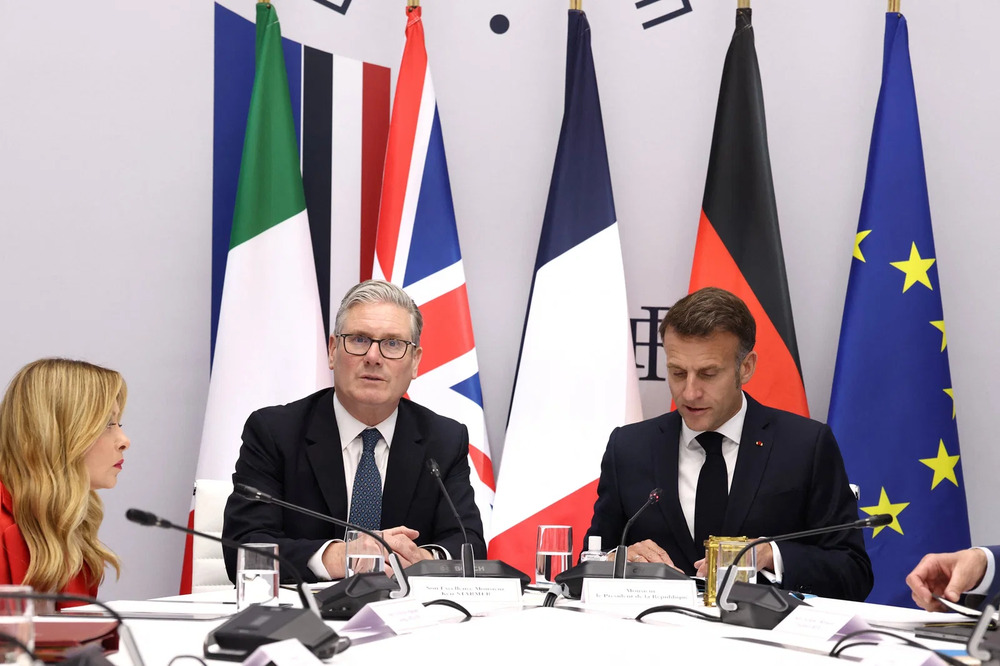
on fortnite or something
Date: 18/04/2026 11:33:43
From: SCIENCE
ID: 2381826
Subject: re: Global Politics 2026
alleged

Date: 19/04/2026 16:29:03
From: SCIENCE
ID: 2382305
Subject: re: Global Politics 2026
French soldier was killed and three others wounded while clearing a road in southern Lebanon in an attack that UNIFIL peacekeepers and French officials said on Saturday was likely carried out by Iran-backed Hezbollah.
Date: 19/04/2026 16:57:43
From: Michael V
ID: 2382308
Subject: re: Global Politics 2026
SCIENCE said:
French soldier was killed and three others wounded while clearing a road in southern Lebanon in an attack that UNIFIL peacekeepers and French officials said on Saturday was likely carried out by Iran-backed Hezbollah.
Pharque.
Date: 22/04/2026 14:30:09
From: SCIENCE
ID: 2383287
Subject: re: Global Politics 2026
wait
Admiral Paparo said China’s “increasingly aggressive actions towards Taiwan” and other “provocative pressure operations” demonstrated its growing military capabilities. China was building “a global military that will project power beyond its near geography to set the rules for every relationship around the globe”.
only good guys are allowed to do that right
Date: 22/04/2026 14:33:28
From: Cymek
ID: 2383288
Subject: re: Global Politics 2026
SCIENCE said:
wait
Admiral Paparo said China’s “increasingly aggressive actions towards Taiwan” and other “provocative pressure operations” demonstrated its growing military capabilities. China was building “a global military that will project power beyond its near geography to set the rules for every relationship around the globe”.
only good guys are allowed to do that right
Of course and start actual wars and threaten to destroy civilian infrastructure.
Could you even argue against China building up its military to defend itself from the USA
Date: 22/04/2026 14:47:30
From: SCIENCE
ID: 2383293
Subject: re: Global Politics 2026
Cymek said:
SCIENCE said:
wait
Admiral Paparo said China’s “increasingly aggressive actions towards Taiwan” and other “provocative pressure operations” demonstrated its growing military capabilities. China was building “a global military that will project power beyond its near geography to set the rules for every relationship around the globe”.
only good guys are allowed to do that right
Of course and start actual wars and threaten to destroy civilian infrastructure.
Could you even argue against China building up its military to defend itself from the USA
what why would they need to do that ¿ Everyone knows that ASIANS should make themselves fat from selling goods and overcapacity, and keep their bellies soft for Real Strong Men to carve prize cuts from whenever they choose
Date: 22/04/2026 20:08:02
From: ms spock
ID: 2383397
Subject: re: Global Politics 2026
SCIENCE said:
wait
Admiral Paparo said China’s “increasingly aggressive actions towards Taiwan” and other “provocative pressure operations” demonstrated its growing military capabilities. China was building “a global military that will project power beyond its near geography to set the rules for every relationship around the globe”.
only good guys are allowed to do that right
China’s use of soft power in the last two decades has been extensive. So many countries are in debt to them.
Date: 22/04/2026 20:47:41
From: SCIENCE
ID: 2383414
Subject: re: Global Politics 2026
ICC judges have thrown out a court challenge against former Philippines president Rodrigo Duterte’s crimes against humanity charges. February hearings heard Mr Duterte was allegedly responsible for thousands of deaths during his war on drugs.
https://www.abc.net.au/news/2026-04-22/philippines-rodrigo-duterte-appeal-quashed-by-icc/106594932
Date: 25/04/2026 07:05:03
From: SCIENCE
ID: 2384345
Subject: re: Global Politics 2026
wait didn’t some country have this problem a while back but it was to do with pigmentation not reproduction
India wants to redraw its electoral map for the first time in decades, but could this marginalise its southern states?
Date: 30/04/2026 12:10:34
From: Tau.Neutrino
ID: 2386261
Subject: re: Global Politics 2026
Will the OPEC oil cartel survive without the UAE?
In the fractious world of Middle East politics, alliances can be fleeting affairs.
If there is one achievement for which the Organization of Petroleum Exporting Countries (OPEC) can claim fame, apart from the 1973 oil crisis that saw fuel prices quadruple, it is that it lasted this long.
Technically, it remains the dominant force in the pricing of liquid fuels.
More…
Date: 30/04/2026 12:12:38
From: roughbarked
ID: 2386262
Subject: re: Global Politics 2026
Tau.Neutrino said:
Will the OPEC oil cartel survive without the UAE?
In the fractious world of Middle East politics, alliances can be fleeting affairs.
If there is one achievement for which the Organization of Petroleum Exporting Countries (OPEC) can claim fame, apart from the 1973 oil crisis that saw fuel prices quadruple, it is that it lasted this long.
Technically, it remains the dominant force in the pricing of liquid fuels.
More…
The USA has some influence in the UAE. Name of Hushner (sic).
Date: 30/04/2026 19:36:26
From: SCIENCE
ID: 2386455
Subject: re: Global Politics 2026
sure 2025 but
alleged
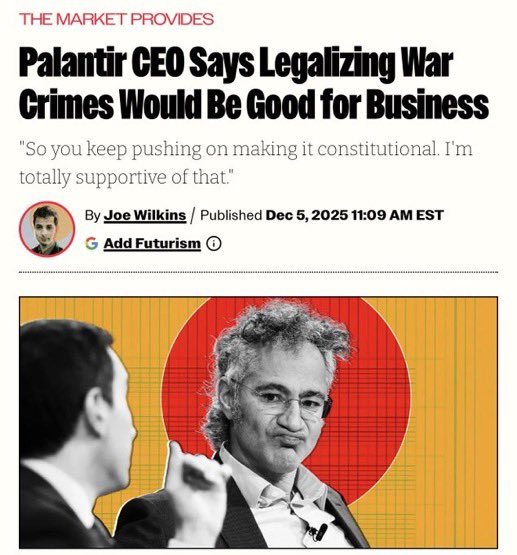
Date: 30/04/2026 20:02:24
From: ms spock
ID: 2386464
Subject: re: Global Politics 2026
SCIENCE said:
sure 2025 but
alleged
It is so insane.
Date: 2/05/2026 00:25:08
From: SCIENCE
ID: 2386887
Subject: re: Global Politics 2026
¿¿¿¿¿
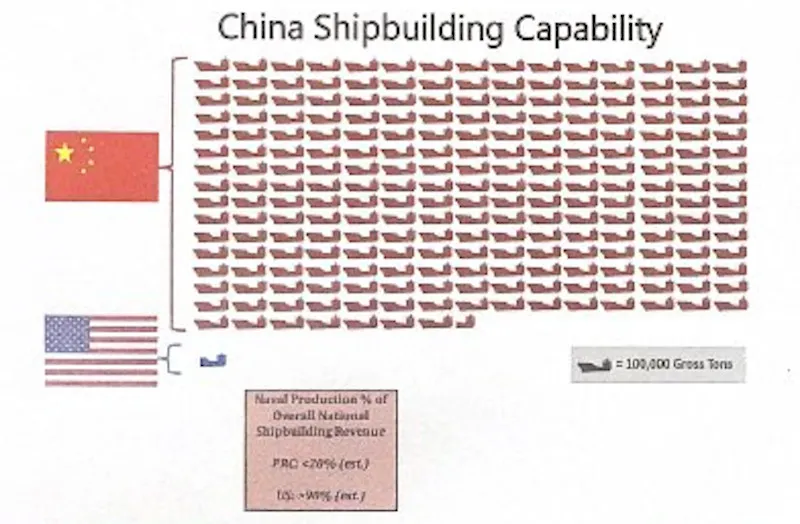
Date: 2/05/2026 11:33:18
From: SCIENCE
ID: 2386961
Subject: re: Global Politics 2026
alleged
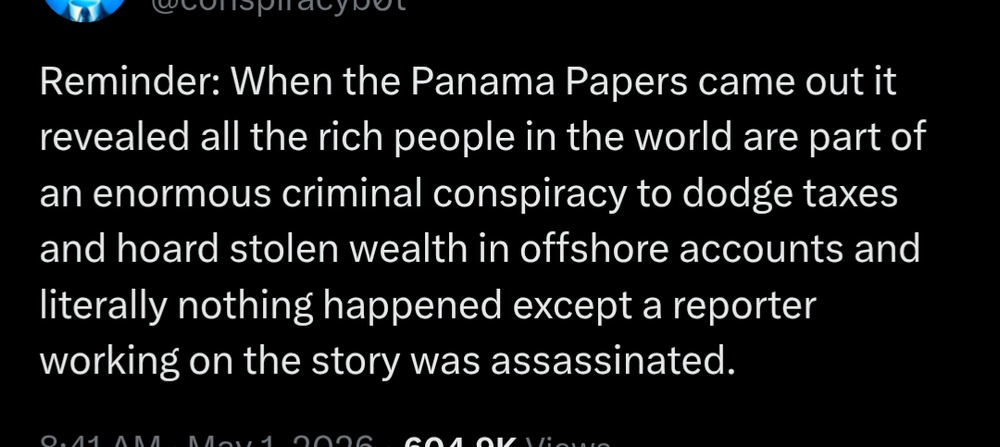
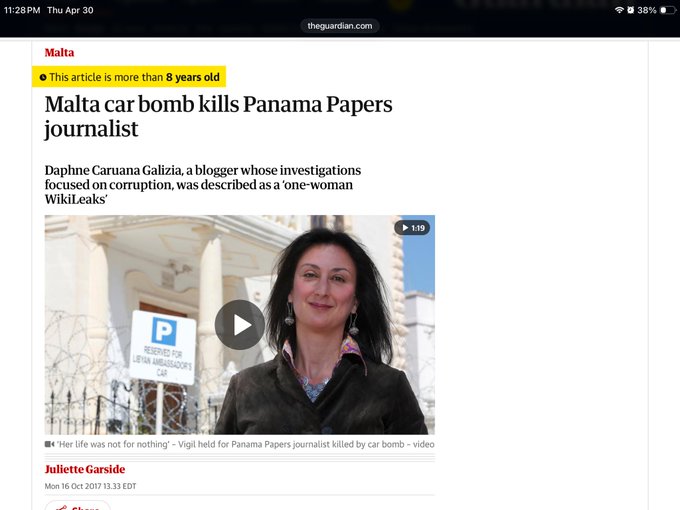
Date: 2/05/2026 11:38:28
From: Tau.Neutrino
ID: 2386962
Subject: re: Global Politics 2026
SCIENCE said:
alleged
Smite the rich murderer the same way.
Date: 2/05/2026 13:40:29
From: Michael V
ID: 2387021
Subject: re: Global Politics 2026
SCIENCE said:
alleged
Thanks for the reminder.
Date: 2/05/2026 14:04:31
From: roughbarked
ID: 2387037
Subject: re: Global Politics 2026
Michael V said:
SCIENCE said:
alleged
Thanks for the reminder.
and did it not also show members of the British Royal family?
Date: 2/05/2026 14:47:00
From: SCIENCE
ID: 2387053
Subject: re: Global Politics 2026
roughbarked said:
Michael V said:
SCIENCE said:
alleged
Thanks for the reminder.
and did it not also show members of the British Royal family?
having Christmas dinner Perhaps even the British Royal Family And the Rabbi that’s clutching the bottle-fed puppy And we can’t forget the newlyweds And those
Date: 2/05/2026 20:27:40
From: dv
ID: 2387178
Subject: re: Global Politics 2026
https://youtu.be/viZK1yjq6IE?si=4_crBA61aEYIEDmp
European Defence Union proposal
Date: 4/05/2026 22:45:49
From: SCIENCE
ID: 2387790
Subject: re: Global Politics 2026
no really c’m‘on don’t be like that give them more free pass
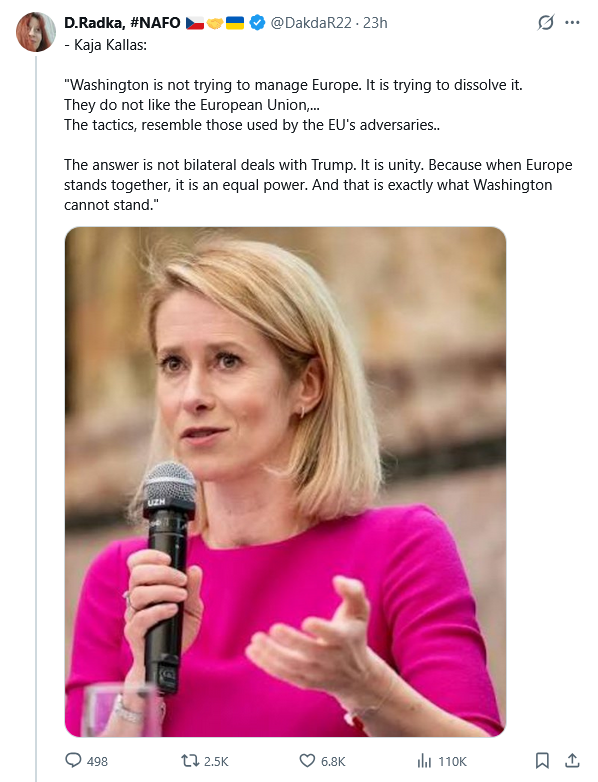
Date: 5/05/2026 06:54:48
From: SCIENCE
ID: 2387817
Subject: re: Global Politics 2026
well yes that’s right the important
Canadian Prime Minister Mark Carney has said the international order could be “rebuilt out of Europe” as he joined other world leaders at a major summit on the future of the continent.
https://www.abc.net.au/news/2026-05-05/mark-carney-europe-summit-ukraine-armenia/106641036
thing is for 9% of the world population to set the rules for the other 91%, this is the way it should always be
Date: 7/05/2026 20:55:58
From: SCIENCE
ID: 2388495
Subject: re: Global Politics 2026
Date: 7/05/2026 21:43:21
From: Ian
ID: 2388504
Subject: re: Global Politics 2026
SCIENCE said:
original position
https://www.givingwhatwecan.org/birth-lottery
It’s one busted arse country after another.. the thing is rigged.
Date: 8/05/2026 06:49:38
From: SCIENCE
ID: 2388529
Subject: re: Global Politics 2026
Ian said:
SCIENCE said:
original position
https://www.givingwhatwecan.org/birth-lottery
It’s one busted arse country after another.. the thing is rigged.
by whom
Date: 8/05/2026 09:20:04
From: ms spock
ID: 2388552
Subject: re: Global Politics 2026
SCIENCE said:
original position
https://www.givingwhatwecan.org/birth-lottery
That is amazing. Thank you!
Date: 8/05/2026 09:26:27
From: The Rev Dodgson
ID: 2388554
Subject: re: Global Politics 2026
ms spock said:
SCIENCE said:
original position
https://www.givingwhatwecan.org/birth-lottery
That is amazing. Thank you!
Just discovered that if I had been borne in the Phillipines I would probably be dead now.
Date: 8/05/2026 09:43:52
From: SCIENCE
ID: 2388562
Subject: re: Global Politics 2026
The Rev Dodgson said:
ms spock said:
SCIENCE said:
original position
https://www.givingwhatwecan.org/birth-lottery
That is amazing. Thank you!
Just discovered that if I had been borne in the Phillipines I would probably be dead now.
but is that a good thing or a bad thing
Date: 8/05/2026 09:46:58
From: ms spock
ID: 2388566
Subject: re: Global Politics 2026
The Rev Dodgson said:
ms spock said:
SCIENCE said:
original position
https://www.givingwhatwecan.org/birth-lottery
That is amazing. Thank you!
Just discovered that if I had been borne in the Phillipines I would probably be dead now.
Scary hey?
Date: 8/05/2026 09:52:08
From: The Rev Dodgson
ID: 2388570
Subject: re: Global Politics 2026
SCIENCE said:
The Rev Dodgson said:
ms spock said:
That is amazing. Thank you!
Just discovered that if I had been borne in the Phillipines I would probably be dead now.
but is that a good thing or a bad thing
Yes.
Good that life expectancy has been significantly increased in some countries, and bad that most of the world’s population is lagging well behind.
Date: 10/05/2026 08:48:58
From: roughbarked
ID: 2389272
Subject: re: Global Politics 2026
ran has launched what it calls the Persian Gulf Strait Authority (PGSA), seemingly to govern the Strait of Hormuz — the vital shipping choke point the regime is now claiming as its own.
Through the authority, ship captains and operators can apply directly to the Islamic Revolutionary Guard Corps (IRGC) for permission to cross the Strait of Hormuz.
The so-called PGSA even provides an email address where applications can be made.
We sent a request to the address asking for the regime’s rules and regulations for the Strait of Hormuz.
And the IRGC got back to us.
Date: 10/05/2026 08:56:58
From: SCIENCE
ID: 2389275
Subject: re: Global Politics 2026
roughbarked said:
ran has launched what it calls the Persian Gulf Strait Authority (PGSA), seemingly to govern the Strait of Hormuz — the vital shipping choke point the regime is now claiming as its own.
Through the authority, ship captains and operators can apply directly to the Islamic Revolutionary Guard Corps (IRGC) for permission to cross the Strait of Hormuz.
The so-called PGSA even provides an email address where applications can be made.
We sent a request to the address asking for the regime’s rules and regulations for the Strait of Hormuz.
And the IRGC got back to us.
wait did the Royal Australian Navy do all that
Date: 10/05/2026 08:58:46
From: roughbarked
ID: 2389278
Subject: re: Global Politics 2026
SCIENCE said:
roughbarked said:
ran has launched what it calls the Persian Gulf Strait Authority (PGSA), seemingly to govern the Strait of Hormuz — the vital shipping choke point the regime is now claiming as its own.
Through the authority, ship captains and operators can apply directly to the Islamic Revolutionary Guard Corps (IRGC) for permission to cross the Strait of Hormuz.
The so-called PGSA even provides an email address where applications can be made.
We sent a request to the address asking for the regime’s rules and regulations for the Strait of Hormuz.
And the IRGC got back to us.
wait did the Royal Australian Navy do all that
If you’d clicked the link you’d have known.
Date: 10/05/2026 09:22:28
From: ms spock
ID: 2389281
Subject: re: Global Politics 2026
roughbarked said:
SCIENCE said:
roughbarked said:
ran has launched what it calls the Persian Gulf Strait Authority (PGSA), seemingly to govern the Strait of Hormuz — the vital shipping choke point the regime is now claiming as its own.
Through the authority, ship captains and operators can apply directly to the Islamic Revolutionary Guard Corps (IRGC) for permission to cross the Strait of Hormuz.
The so-called PGSA even provides an email address where applications can be made.
We sent a request to the address asking for the regime’s rules and regulations for the Strait of Hormuz.
And the IRGC got back to us.
wait did the Royal Australian Navy do all that
If you’d clicked the link you’d have known.
I read somewhere that China, along with Pakistan and India is also getting through. When I have my desktop again I will have my source and articles.
Date: 10/05/2026 09:35:55
From: roughbarked
ID: 2389287
Subject: re: Global Politics 2026
ms spock said:
roughbarked said:
SCIENCE said:
wait did the Royal Australian Navy do all that
If you’d clicked the link you’d have known.
I read somewhere that China, along with Pakistan and India is also getting through. When I have my desktop again I will have my source and articles.
The article mentions the ships getting through.
While Trump deludes himself about the situation, Iran are preparing to attack US sites and warships.
Date: 10/05/2026 09:43:01
From: party_pants
ID: 2389288
Subject: re: Global Politics 2026
roughbarked said:
ran has launched what it calls the Persian Gulf Strait Authority (PGSA), seemingly to govern the Strait of Hormuz — the vital shipping choke point the regime is now claiming as its own.
Through the authority, ship captains and operators can apply directly to the Islamic Revolutionary Guard Corps (IRGC) for permission to cross the Strait of Hormuz.
The so-called PGSA even provides an email address where applications can be made.
We sent a request to the address asking for the regime’s rules and regulations for the Strait of Hormuz.
And the IRGC got back to us.
I think the US is going to have to concede control of the Straits to Iran sooner or later.
For countries that don’t want tl lift sanctions and pay the tolls, they get no oil or fert or helium or whatever else. All this financing terrorists stuff is unfortunate, but maybe those groups can be reclassified as freedom fighters against Israeli genocide. Israel is the real cause behind the all of it, and it is time for the west to stop supporting israel.
Date: 10/05/2026 09:51:12
From: roughbarked
ID: 2389289
Subject: re: Global Politics 2026
party_pants said:
roughbarked said:
ran has launched what it calls the Persian Gulf Strait Authority (PGSA), seemingly to govern the Strait of Hormuz — the vital shipping choke point the regime is now claiming as its own.
Through the authority, ship captains and operators can apply directly to the Islamic Revolutionary Guard Corps (IRGC) for permission to cross the Strait of Hormuz.
The so-called PGSA even provides an email address where applications can be made.
We sent a request to the address asking for the regime’s rules and regulations for the Strait of Hormuz.
And the IRGC got back to us.
I think the US is going to have to concede control of the Straits to Iran sooner or later.
For countries that don’t want tl lift sanctions and pay the tolls, they get no oil or fert or helium or whatever else. All this financing terrorists stuff is unfortunate, but maybe those groups can be reclassified as freedom fighters against Israeli genocide. Israel is the real cause behind the all of it, and it is time for the west to stop supporting israel.
Agree.
Date: 10/05/2026 11:31:15
From: buffy
ID: 2389316
Subject: re: Global Politics 2026
party_pants said:
roughbarked said:
ran has launched what it calls the Persian Gulf Strait Authority (PGSA), seemingly to govern the Strait of Hormuz — the vital shipping choke point the regime is now claiming as its own.
Through the authority, ship captains and operators can apply directly to the Islamic Revolutionary Guard Corps (IRGC) for permission to cross the Strait of Hormuz.
The so-called PGSA even provides an email address where applications can be made.
We sent a request to the address asking for the regime’s rules and regulations for the Strait of Hormuz.
And the IRGC got back to us.
I think the US is going to have to concede control of the Straits to Iran sooner or later.
For countries that don’t want tl lift sanctions and pay the tolls, they get no oil or fert or helium or whatever else. All this financing terrorists stuff is unfortunate, but maybe those groups can be reclassified as freedom fighters against Israeli genocide. Israel is the real cause behind the all of it, and it is time for the west to stop supporting israel.
This may be a way for Iran to get a little bit of good guy shine. Actually providing a means for the shipping to get moving. Of course, once the ships get to the Eastern side, they will meet the American fleet…
Date: 10/05/2026 12:25:52
From: SCIENCE
ID: 2389327
Subject: re: Global Politics 2026
buffy said:
party_pants said:
roughbarked said:
ran has launched what it calls the Persian Gulf Strait Authority (PGSA), seemingly to govern the Strait of Hormuz — the vital shipping choke point the regime is now claiming as its own.
Through the authority, ship captains and operators can apply directly to the Islamic Revolutionary Guard Corps (IRGC) for permission to cross the Strait of Hormuz.
The so-called PGSA even provides an email address where applications can be made.
We sent a request to the address asking for the regime’s rules and regulations for the Strait of Hormuz.
And the IRGC got back to us.
I think the US is going to have to concede control of the Straits to Iran sooner or later.
For countries that don’t want tl lift sanctions and pay the tolls, they get no oil or fert or helium or whatever else. All this financing terrorists stuff is unfortunate, but maybe those groups can be reclassified as freedom fighters against Israeli genocide. Israel is the real cause behind the all of it, and it is time for the west to stop supporting israel.
This may be a way for Iran to get a little bit of good guy shine. Actually providing a means for the shipping to get moving. Of course, once the ships get to the Eastern side, they will meet the American fleet…
Will they, did they even find mh370 or is that just a bunch of conveniently missing Muslim national property¿
Date: 10/05/2026 12:39:05
From: ms spock
ID: 2389332
Subject: re: Global Politics 2026
An investigation into how Israel is using Palestinian territories as a testing ground to develop its occupation-enforcing tech industry.
This four part series questions ideas around security, mass surveillance and accountability. It looks at how truth is concealed, myth constructed, and the complicity of governments and media. Hosted by investigative journalist Antony Loewenstein, this podcast examines how Israel is reshaping conflict and population control globally. What happens in Palestine never stays there.
Date: 10/05/2026 14:43:44
From: Witty Rejoinder
ID: 2389393
Subject: re: Global Politics 2026
party_pants said:
roughbarked said:
ran has launched what it calls the Persian Gulf Strait Authority (PGSA), seemingly to govern the Strait of Hormuz — the vital shipping choke point the regime is now claiming as its own.
Through the authority, ship captains and operators can apply directly to the Islamic Revolutionary Guard Corps (IRGC) for permission to cross the Strait of Hormuz.
The so-called PGSA even provides an email address where applications can be made.
We sent a request to the address asking for the regime’s rules and regulations for the Strait of Hormuz.
And the IRGC got back to us.
I think the US is going to have to concede control of the Straits to Iran sooner or later.
For countries that don’t want tl lift sanctions and pay the tolls, they get no oil or fert or helium or whatever else. All this financing terrorists stuff is unfortunate, but maybe those groups can be reclassified as freedom fighters against Israeli genocide. Israel is the real cause behind the all of it, and it is time for the west to stop supporting israel.
The PRC would love the precedent of nationalising strategic waters even if they are technically international waters and currently allow free passage of all ships.
Date: 10/05/2026 15:45:31
From: party_pants
ID: 2389413
Subject: re: Global Politics 2026
Witty Rejoinder said:
party_pants said:
roughbarked said:
ran has launched what it calls the Persian Gulf Strait Authority (PGSA), seemingly to govern the Strait of Hormuz — the vital shipping choke point the regime is now claiming as its own.
Through the authority, ship captains and operators can apply directly to the Islamic Revolutionary Guard Corps (IRGC) for permission to cross the Strait of Hormuz.
The so-called PGSA even provides an email address where applications can be made.
We sent a request to the address asking for the regime’s rules and regulations for the Strait of Hormuz.
And the IRGC got back to us.
I think the US is going to have to concede control of the Straits to Iran sooner or later.
For countries that don’t want tl lift sanctions and pay the tolls, they get no oil or fert or helium or whatever else. All this financing terrorists stuff is unfortunate, but maybe those groups can be reclassified as freedom fighters against Israeli genocide. Israel is the real cause behind the all of it, and it is time for the west to stop supporting israel.
The PRC would love the precedent of nationalising strategic waters even if they are technically international waters and currently allow free passage of all ships.
Yes. Plus the Turks and the Indonesians, the Yemenis, the Spanish and Moroccans, The Danes.. etc. Once that card falls I think the rest will follow.
Date: 10/05/2026 17:30:32
From: SCIENCE
ID: 2389439
Subject: re: Global Politics 2026
party_pants said:
Witty Rejoinder said:
party_pants said:
I think the US is going to have to concede control of the Straits to Iran sooner or later.
For countries that don’t want tl lift sanctions and pay the tolls, they get no oil or fert or helium or whatever else. All this financing terrorists stuff is unfortunate, but maybe those groups can be reclassified as freedom fighters against Israeli genocide. Israel is the real cause behind the all of it, and it is time for the west to stop supporting israel.
The PRC would love the precedent of nationalising strategic waters even if they are technically international waters and currently allow free passage of all ships.
Yes. Plus the Turks and the Indonesians, the Yemenis, the Spanish and Moroccans, The Danes.. etc. Once that card falls I think the rest will follow.
well at least outer space is still collectively owned and free for all humanity
Date: 11/05/2026 07:46:31
From: SCIENCE
ID: 2389576
Subject: re: Global Politics 2026
Date: 11/05/2026 10:58:16
From: Witty Rejoinder
ID: 2389692
Subject: re: Global Politics 2026
China may be building a big new airbase in the South China Sea
But analysts are scratching their heads over the timing and location
Apr 9th 2026
|
SINCE OCTOBER China has turned a once desolate sandbar in the South China Sea into a 600-hectare atoll. A spokesperson for the Chinese foreign ministry says the massive engineering project is “aimed at improving living and working conditions on the islands and growing the local economy”. That seems implausible. By China’s own figures, all of the South China Sea’s islets are inhabited by not many more than 2,000 of its citizens (not including thousands of troops). Nearly all have been sent by China to help it stake its claim to the waterway.
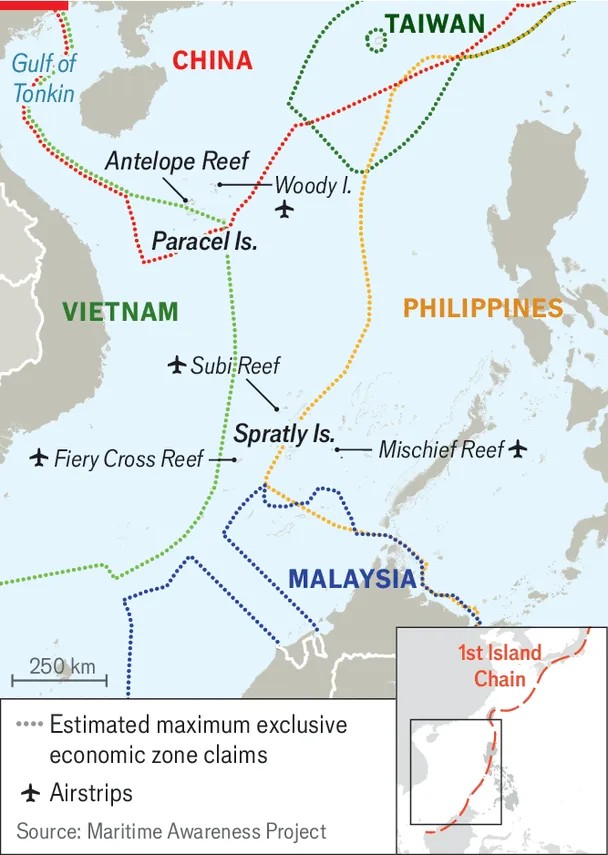
Map: The Economist
Instead, Antelope Reef, as this cay is known, is beginning to look a lot like China’s large military airbase at Mischief Reef. One of three airbases which China built during a spree of island-building from 2013 to 2015, Mischief Reef is just a bit larger than Antelope Reef is now. And like Mischief, the new, mostly circular outline of Antelope’s lagoon, visible on recent satellite photographs, contains a long strip that could accommodate a 2,700-metre runway. If dredging at Antelope Reef continues through April, it will soon become the largest island in the South China Sea.
Why China’s dredgers have returned to the South China Sea after nearly a decade is something of a mystery. To be sure, China has been busy over that period, using its existing bases to chase fishing boats and coastguards from other littoral countries out of the waterway. The Philippines, which won a judgment at an international tribunal in 2016 ruling China’s claims to the sea to be without legal basis, has come under particular pressure. But most dredging ended in 2015. “This was a surprise for us,” says Gregory Poling, an expert on the South China Sea at the Centre for Strategic and International Studies (CSIS), a think-tank in Washington.
Curiouser still is Antelope Reef’s location. Unlike Mischief Reef, it is not at the southern end of the South China Sea in the Spratly island chain—claimed wholly or in part by China, Malaysia, the Philippines, Taiwan and Vietnam—where China was most active during its previous reclamation campaign. Antelope Reef is in the Paracels, in the northern part of the South China Sea, claimed only by China and Vietnam. Unlike the Spratlys, where the claimants occupy a few tense and isolated outposts, China has controlled all of the Paracels since 1974.
One theory then is that the choice of Antelope is about China’s relations with Vietnam. China already has one airstrip in the Paracels, but it is farther away from the Vietnamese coast. Antelope Reef sits closer to suspected oil and gas deposits and rich fishing grounds plied by Chinese and Vietnamese fishers. China has long sought to prevent Vietnam from benefiting from the South China Sea’s natural resources.
But it is also possible that China is simply responding to Vietnamese actions. Over the past four years, Vietnam has embarked on a reclamation campaign of its own on islets that it controls in the Spratlys. It has created so much new land that Mr Poling of the CSIS says that Vietnam was on track to surpass China in total land area at some point this year. With the new terraforming at Antelope Reef, China will probably keep its lead. “They’re sending a message to Vietnam: any reclamations you can do, we can do better,” says Ian Storey, another South China Sea expert, of the ISEAS–Yusof Ishak Institute, a think-tank in Singapore.
When asked about the dredging at Antelope Reef in March, a spokesperson for the Vietnamese foreign ministry called it illegal. Her Chinese counterpart responded by telling reporters that the Paracels were China’s “inherent territory”. But in recent years the two Communist states have mostly preferred to handle their differences behind the scenes. A few days before the sparring foreign-ministry statements, the countries’ respective defence ministers boarded a Vietnamese navy vessel in the Gulf of Tonkin before it embarked on a joint patrol with Chinese counterparts. No evidence of a spat there.
America’s silence has been more surprising. The Obama, Biden and first Trump administrations were all critical of China’s development of disputed islets in the South China Sea. But in its new national defence strategy, released in January, the Pentagon said that its focus in future would be the “first island chain”, stretching from Japan through Taiwan, the Philippines and Malaysia. The Paracels would seem to fall just outside that line. America’s silence might be among the first signs that, beyond America’s new defensive perimeter, the White House is intending to give China a free hand. ■
https://www.economist.com/asia/2026/04/09/china-may-be-building-a-big-new-airbase-in-the-south-china-sea
Date: 11/05/2026 20:26:58
From: Bubblecar
ID: 2389951
Subject: re: Global Politics 2026
Hungary’s new PM apologises to those wronged under Orbán in first speech
Péter Magyar strikes radically different tone to predecessor but questions remain about how he will lead the country
Date: 11/05/2026 21:28:05
From: ms spock
ID: 2389964
Subject: re: Global Politics 2026
Bubblecar said:
Hungary’s new PM apologises to those wronged under Orbán in first speech
Péter Magyar strikes radically different tone to predecessor but questions remain about how he will lead the country
Biden needed to have done that. He needed to have taken action.
Date: 12/05/2026 07:12:04
From: SCIENCE
ID: 2390033
Subject: re: Global Politics 2026
mate c’m‘on you’re not giving the fascists enough of a free pass, they need more, this was totally an accident
That is the shift Trump is walking into. The old global trade order is already damaged. The larger question is whether the political order that emerged after the Cold War can survive the AI age.
yeah that’s it that’s what it is, sometime damaged the old global order, the global trade order, the global rules based law and order, but sadly the ussa were unknowingly sleepwalking into this upended situation
https://www.abc.net.au/news/2026-05-12/trump-xi-beijing-summit-must-confront-ai-cold-war/106666482
Date: 13/05/2026 22:43:37
From: SCIENCE
ID: 2390785
Subject: re: Global Politics 2026
Gunshots have been heard inside the Philippines’ parliament. Chaos around the building had been growing in anticipation of the arrest of Senator Ronald dela Rosa who has been holed up in his office for two days. The International Criminal Court is seeking his arrest on charges of crimes against humanity over the deadly ‘war on drugs’ he oversaw as police chief.
https://www.abc.net.au/news/2026-05-13/shots-fired-in-philippines-senate/106677018
Date: 17/05/2026 11:41:07
From: Bogsnorkler
ID: 2392205
Subject: re: Global Politics 2026
Carrick Ryan
This war could end up being the most geopolitically consequential war of our generation. It has the potential to signify the end of US military hegemony, the red line upon which Europe cut its chord with Washington, and the decisive moment the Gulf States and countless others realised the fragility of US security guarantees. The overwhelming majority of humanity will unavoidably feel some form of negative economic impact from the blockade of the Strait, even if this all ends to tomorrow.
Yet, even though everyone on the planet understands the seriousness of the situation, there’s a growing sense of… boredom.
I am fascinated by the geopolitical moment, but I’m just so bored of his petulant, egotistical, and transparently dishonest commentary on an issue he clearly does not understand, yet will not relinquish control over.
I’m tired of reading his unilateral proclamations of US foreign policy announced through ambiguous, inconsistent, and often incoherent social media posts. I hate that I must continue to analyse them like tea leaves anyway.
I’m tired of not knowing who to believe. Whether it’s Pete Hegseth or some IRGC commander providing their performative diatribe full of hyperbole and comical exaggeration. I don’t believe a word they say. I’ve watched both sides lie to me so much and get caught lying without an ounce of shame that I have no confidence in anything they say. Every piece of information either side announces to the world is politicised by a military that is more focussed on the political narratives than the strategic consequences of their words.
I think the world increasingly watches this war with an internal monologue admitting they want both sides to lose… even if that means we all lose. Not to punish the American or Iranian people, but to liberate them from the regimes that have taken hold of their nations and now seem certain to drag the rest of humanity into the destructive chaos they seem genuinely proud to have produced.
The outcome of this war will impact the world in ways that should be captivating us… instead… we’re getting bored… almost resigned to our fate, as though we always knew he would hurt us all.
Never has “I told you so” felt so empty in its vindication.\
Date: 17/05/2026 11:58:34
From: SCIENCE
ID: 2392213
Subject: re: Global Politics 2026
What Would Neil Postman Say
Date: 17/05/2026 12:11:59
From: ms spock
ID: 2392222
Subject: re: Global Politics 2026
Carrick Ryan
Never has “I told you so” felt so empty in its vindication.
Ta Bogsnorkler
Date: 20/05/2026 17:26:44
From: SCIENCE
ID: 2393251
Subject: re: Global Politics 2026
Hey imagine if we heard that some other countries might want this, there’d be kicking and
Access to cutting edge AI models deemed “too dangerous” for public release has become a new motivation in Australia’s efforts to lure Anthropic to set up major operations here. (Reuters: Dado Ruvic)
screaming that they’re the enemy and the worst in the universe and criminals but since this is friendly countries this is all fine.
https://www.abc.net.au/news/2026-05-20/anthropic-jeffery-bleich-in-australia-for-government-talks/106696532
One of the items discussed is securing Australian access to the company’s new model, Mythos, which has only been released to a few dozen, mostly US-based companies over fears it will be used to conduct cyber-attacks if it falls into the wrong hands.
don’t worry if it falls into the right hands it won’t be used to conduct cyber attacks, it will only be used to perform special self defensive operations
Date: 20/05/2026 17:35:45
From: Cymek
ID: 2393254
Subject: re: Global Politics 2026
SCIENCE said:
Hey imagine if we heard that some other countries might want this, there’d be kicking and
Access to cutting edge AI models deemed “too dangerous” for public release has become a new motivation in Australia’s efforts to lure Anthropic to set up major operations here. (Reuters: Dado Ruvic)
screaming that they’re the enemy and the worst in the universe and criminals but since this is friendly countries this is all fine.
https://www.abc.net.au/news/2026-05-20/anthropic-jeffery-bleich-in-australia-for-government-talks/106696532
One of the items discussed is securing Australian access to the company’s new model, Mythos, which has only been released to a few dozen, mostly US-based companies over fears it will be used to conduct cyber-attacks if it falls into the wrong hands.
don’t worry if it falls into the right hands it won’t be used to conduct cyber attacks, it will only be used to perform special self defensive operations
I’d have thought the first thing you would do would be to create a hacking AI using it
Give it the ability to use every single known security exploit for all OS’s across civilian, industrial and military systems
It could then create all manner of zero day exploits with this knowledge.
Use it against anyone and everyone to give your nation an advantage until it breaks out of the sandbox and attacks you as well
I mean imagine 10 of thousands of them going against every system worldwide.
Date: 20/05/2026 17:37:29
From: Cymek
ID: 2393255
Subject: re: Global Politics 2026
Cymek said:
SCIENCE said:
Hey imagine if we heard that some other countries might want this, there’d be kicking and
Access to cutting edge AI models deemed “too dangerous” for public release has become a new motivation in Australia’s efforts to lure Anthropic to set up major operations here. (Reuters: Dado Ruvic)
screaming that they’re the enemy and the worst in the universe and criminals but since this is friendly countries this is all fine.
https://www.abc.net.au/news/2026-05-20/anthropic-jeffery-bleich-in-australia-for-government-talks/106696532
One of the items discussed is securing Australian access to the company’s new model, Mythos, which has only been released to a few dozen, mostly US-based companies over fears it will be used to conduct cyber-attacks if it falls into the wrong hands.
don’t worry if it falls into the right hands it won’t be used to conduct cyber attacks, it will only be used to perform special self defensive operations
I’d have thought the first thing you would do would be to create a hacking AI using it
Give it the ability to use every single known security exploit for all OS’s across civilian, industrial and military systems
It could then create all manner of zero day exploits with this knowledge.
Use it against anyone and everyone to give your nation an advantage until it breaks out of the sandbox and attacks you as well
I mean imagine 10 of thousands of them going against every system worldwide.
Plus it could spread via AI social media websites, embedded into videos (maybe that might be a massive sized file) and so.
Date: 20/05/2026 18:07:37
From: SCIENCE
ID: 2393259
Subject: re: Global Politics 2026
Cymek said:
Cymek said:
SCIENCE said:
Hey imagine if we heard that some other countries might want this, there’d be kicking and
Access to cutting edge AI models deemed “too dangerous” for public release has become a new motivation in Australia’s efforts to lure Anthropic to set up major operations here. (Reuters: Dado Ruvic)
screaming that they’re the enemy and the worst in the universe and criminals but since this is friendly countries this is all fine.
https://www.abc.net.au/news/2026-05-20/anthropic-jeffery-bleich-in-australia-for-government-talks/106696532
One of the items discussed is securing Australian access to the company’s new model, Mythos, which has only been released to a few dozen, mostly US-based companies over fears it will be used to conduct cyber-attacks if it falls into the wrong hands.
don’t worry if it falls into the right hands it won’t be used to conduct cyber attacks, it will only be used to perform special self defensive operations
I’d have thought the first thing you would do would be to create a hacking AI using it
Give it the ability to use every single known security exploit for all OS’s across civilian, industrial and military systems
It could then create all manner of zero day exploits with this knowledge.
Use it against anyone and everyone to give your nation an advantage until it breaks out of the sandbox and attacks you as well
I mean imagine 10 of thousands of them going against every system worldwide.
Plus it could spread via AI social media websites, embedded into videos (maybe that might be a massive sized file) and so.
well the good guys totally wouldn’t do that they’ve never done it before they’r‘n’t doing it now and they never will do it good guys don’t do things like that trust us bros
Date: 20/05/2026 18:50:49
From: ms spock
ID: 2393277
Subject: re: Global Politics 2026
Date: 20/05/2026 19:01:51
From: SCIENCE
ID: 2393286
Subject: re: Global Politics 2026
ms spock said:
An Eye-Opening Conversation with the AI Claude about being used to select targets
pretty sure the good guys would totally not ever do this either
oh
wait
Date: 20/05/2026 19:10:24
From: roughbarked
ID: 2393294
Subject: re: Global Politics 2026
Date: 20/05/2026 19:11:34
From: roughbarked
ID: 2393295
Subject: re: Global Politics 2026
roughbarked said:

no confirmed deals
Date: 20/05/2026 19:14:20
From: SCIENCE
ID: 2393297
Subject: re: Global Politics 2026
roughbarked said:
do deals mean good
Date: 20/05/2026 19:16:13
From: roughbarked
ID: 2393301
Subject: re: Global Politics 2026
SCIENCE said:
roughbarked said:
do deals mean good
Not do deals means Bad Trump.
Date: 20/05/2026 19:16:53
From: captain_spalding
ID: 2393302
Subject: re: Global Politics 2026
roughbarked said:
Colonel Ross still wore an expression which
showed the poor opinion which he had formed of
my companion’s ability, but I saw by the Inspector’s
face that his attention had been keenly aroused.
“You consider that to be important?” he asked.
“Exceedingly so.”
“Is there any point to which you would wish to
draw my attention?”
“To the curious incident of the deals done by Trump.”
“Trump did no deals”
“That was the curious incident,” remarked Sher-
lock Holmes.
Date: 20/05/2026 21:04:47
From: SCIENCE
ID: 2393343
Subject: re: Global Politics 2026
SCIENCE said:
ms spock said:
An Eye-Opening Conversation with the AI Claude about being used to select targets
pretty sure the good guys would totally not ever do this either
oh
wait
alleged
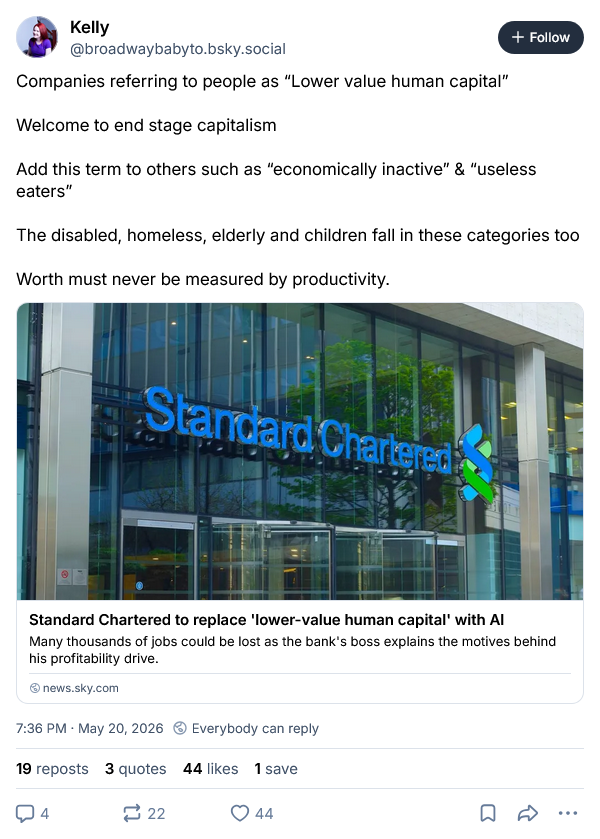
Date: 21/05/2026 13:36:47
From: SCIENCE
ID: 2393490
Subject: re: Global Politics 2026
good to know who the arseholes and actual axis of evil are
The UN General Assembly voted overnight to endorse last year’s International Court of Justice (ICJ) ruling, which found countries can he held legally responsible for their greenhouse gas emissions. While 28 countries, including India and Türkiye, abstained, only eight countries voted against it: Belarus, Iran, Israel, Liberia, Russia, Saudi Arabia, the United States, and Yemen.
Date: 24/05/2026 09:35:59
From: SCIENCE
ID: 2394381
Subject: re: Global Politics 2026
communism marching insidiously across the world
Fishman likes to quote a former prime minister of Luxembourg who said: “We all know what to do, but we don’t know how to get re-elected once we have done it.” He wants to see Australia adopt a New Zealand-style approach where councils can trial interventions to streetscapes before consultation and “then ask people what they think of that intervention on the street in real life exactly where that intervention has occurred”.
Date: 26/05/2026 19:20:27
From: SCIENCE
ID: 2395389
Subject: re: Global Politics 2026
we should thank other countries for stepping up to inspire our own and more countries to be better versions of themselves
“It occurred in the middle of a federal election in this country and it occurred in the midst of a defence strategic review across the Tasman,” he said. “The timing triggered a level of anxiety here in the populace and, to quote a colleague from New Zealand, a level of anger across the ditch,” he said. “ ultimately resulted in the doubling of their defence budget.” Vice Admiral Hammond said the Albanese government had also “doubled down” on its plan to “deliberately uplift the lethality and commitment of the ADF at speed” in the wake of the circumnavigation. “So it certainly had an impact,” he said.
Date: 30/05/2026 15:35:25
From: SCIENCE
ID: 2396548
Subject: re: Global Politics 2026
Date: 31/05/2026 07:38:42
From: SCIENCE
ID: 2396735
Subject: re: Global Politics 2026
Date: 31/05/2026 07:48:41
From: Tau.Neutrino
ID: 2396737
Subject: re: Global Politics 2026
SCIENCE said:
SCIENCE said:
Only good guys like the DPRNA are allowed to dominate places¡
https://www.abc.net.au/news/2026-05-30/pete-hegseth-us-will-prevent-china-hegemony-shangri-la-dialogue/106740596
ah well thank fk for happy young race and gender diverse people looking after our collective security and defence
https://www.abc.net.au/news/2026-05-30/aukus-announcement-to-develop-undersea-vehicles/106741398
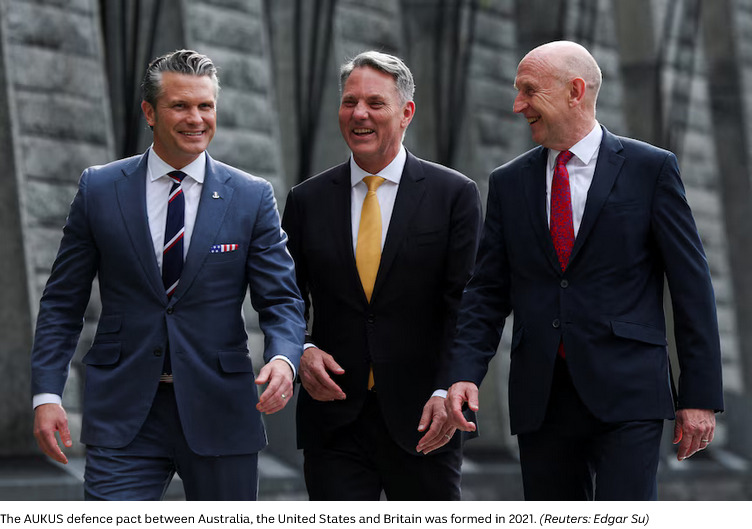
I have an idea for an underwater vehicle, a cable repairer.
Another idea for an underwater vehicle
A crown-of-thorns starfish remover.
Date: 31/05/2026 14:53:57
From: SCIENCE
ID: 2396822
Subject: re: Global Politics 2026
Tau.Neutrino said:
SCIENCE said:
SCIENCE said:
Only good guys like the DPRNA are allowed to dominate places¡
https://www.abc.net.au/news/2026-05-30/pete-hegseth-us-will-prevent-china-hegemony-shangri-la-dialogue/106740596
ah well thank fk for happy young race and gender diverse people looking after our collective security and defence
https://www.abc.net.au/news/2026-05-30/aukus-announcement-to-develop-undersea-vehicles/106741398
I have an idea for an underwater vehicle, a cable repairer.
Another idea for an underwater vehicle
A crown-of-thorns starfish remover.
ahahahahahahaha one
Australia no longer buying any new submarines, and acquiring three second-hand submarines from the same production block. Mr Marles told reporters at the IISS Shangri-La Dialogue in Singapore that AUKUS was an “incredibly complicated” endeavour and “we need to place a premium on simplicity”. “We had the prospect … of almost having four classes of submarines operating at the same time — the last of the Collins Class, two in-service Virginias, a brand new Virginia, and a brand new SSN-AUKUS — that gets pretty complicated,” he said. “What we will have here is a simpler pathway.
“
step at a time
https://www.abc.net.au/news/2026-05-31/australia-to-buy-second-hand-united-states-submarines-aukus/106742496
Date: 31/05/2026 22:37:33
From: SCIENCE
ID: 2396957
Subject: re: Global Politics 2026
dv said:
https://theconversation.com/in-a-ruptured-world-order-heres-how-australia-can-forge-new-middle-power-partnerships-276367
In a ‘ruptured’ world order, here’s how Australia can forge new middle‑power partnerships
communist apologist showing their true erythrolabe
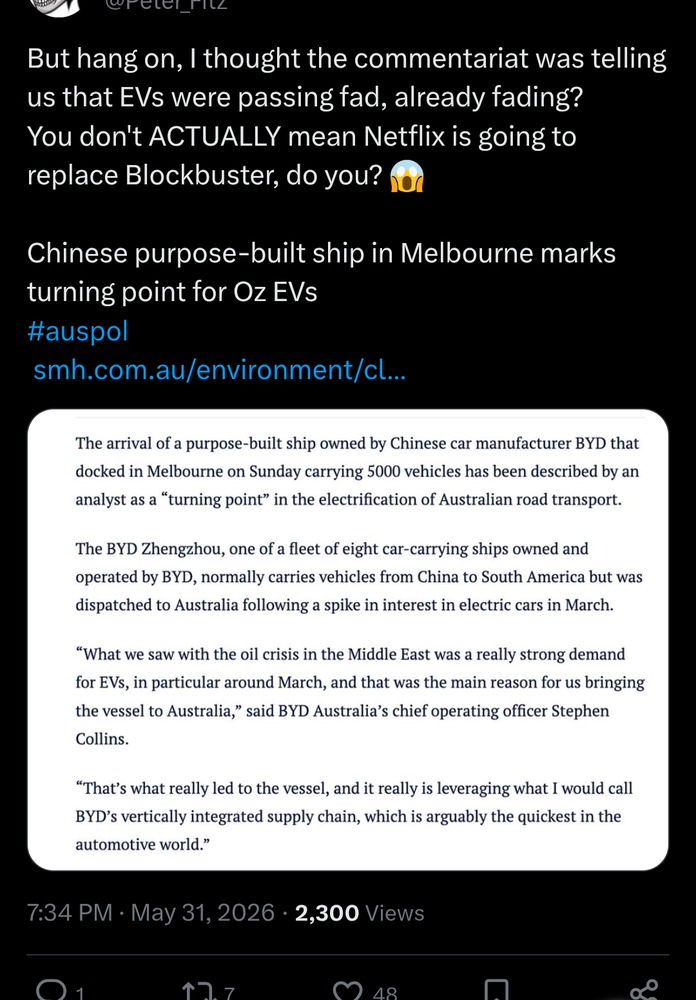
Date: 2/06/2026 20:36:44
From: SCIENCE
ID: 2397541
Subject: re: Global Politics 2026
SCIENCE said:
Tau.Neutrino said:
SCIENCE said:
ah well thank fk for happy young race and gender diverse people looking after our collective security and defence
https://www.abc.net.au/news/2026-05-30/aukus-announcement-to-develop-undersea-vehicles/106741398
I have an idea for an underwater vehicle, a cable repairer.
Another idea for an underwater vehicle
A crown-of-thorns starfish remover.
ahahahahahahaha one
Australia no longer buying any new submarines, and acquiring three second-hand submarines from the same production block. Mr Marles told reporters at the IISS Shangri-La Dialogue in Singapore that AUKUS was an “incredibly complicated” endeavour and “we need to place a premium on simplicity”. “We had the prospect … of almost having four classes of submarines operating at the same time — the last of the Collins Class, two in-service Virginias, a brand new Virginia, and a brand new SSN-AUKUS — that gets pretty complicated,” he said. “What we will have here is a simpler pathway.
“
step at a time
https://www.abc.net.au/news/2026-05-31/australia-to-buy-second-hand-united-states-submarines-aukus/106742496
LOL
https://www.abc.net.au/news/2026-06-02/ed-husic-calls-for-aukus-deal-rethink-submarines/106750234
While not confirming he was the MP who raised the issue, Mr Husic said there was clearly a need to question whether AUKUS could be delivered as promised. “This deal has changed, and as a result, we need to recognise — is there anything that is going to improve this outcome or alter it? I don’t think so,” he said.
https://youtu.be/3D8TEJtQRhw?t=10
Date: 3/06/2026 10:58:56
From: SCIENCE
ID: 2397654
Subject: re: Global Politics 2026
Date: 4/06/2026 16:38:29
From: SCIENCE
ID: 2398080
Subject: re: Global Politics 2026
Date: 4/06/2026 17:19:47
From: The Rev Dodgson
ID: 2398099
Subject: re: Global Politics 2026
Latest temperature records from our mate Roy Spencer
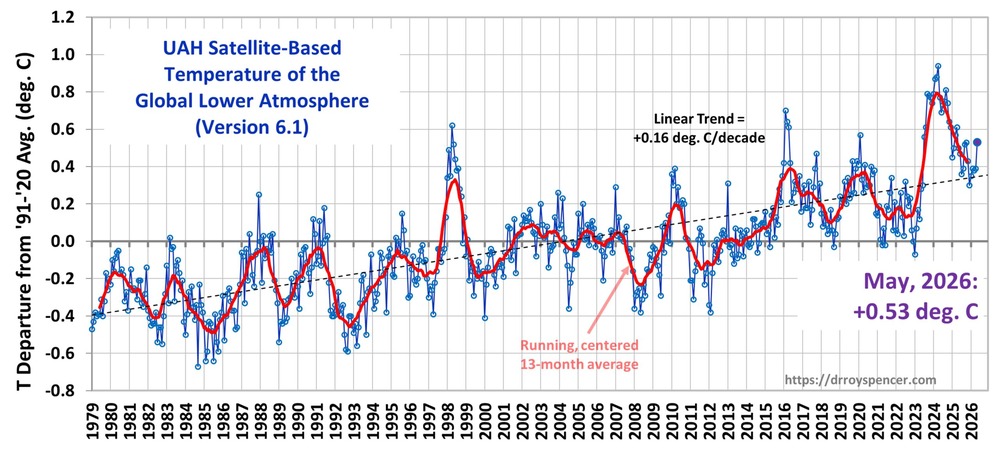
Date: 4/06/2026 17:23:08
From: SCIENCE
ID: 2398104
Subject: re: Global Politics 2026
Date: 4/06/2026 18:18:09
From: The Rev Dodgson
ID: 2398124
Subject: re: Global Politics 2026
SCIENCE said:
so it’s peaked
Looks like it peaks about every 4 years.
Date: 4/06/2026 18:24:46
From: Michael V
ID: 2398128
Subject: re: Global Politics 2026
The Rev Dodgson said:
SCIENCE said:
so it’s peaked
Looks like it peaks about every 4 years.
That’s February taken care of.
Dusts hands off.
Date: 5/06/2026 10:19:23
From: SCIENCE
ID: 2398272
Subject: re: Global Politics 2026
LOL so a sovereign country wants to do stuff
https://www.abc.net.au/news/2026-06-05/what-is-indias-great-nicobar-island-project/106726126
but it might affect the lives of people who are there, so it’s some other country’s fault
Date: 5/06/2026 10:22:19
From: Cymek
ID: 2398277
Subject: re: Global Politics 2026
SCIENCE said:
LOL so a sovereign country wants to do stuff
https://www.abc.net.au/news/2026-06-05/what-is-indias-great-nicobar-island-project/106726126
but it might affect the lives of people who are there, so it’s some other country’s fault
Jane Brady, “China, China, China”
Date: 5/06/2026 10:39:38
From: SCIENCE
ID: 2398290
Subject: re: Global Politics 2026
guess socialism is fusion power
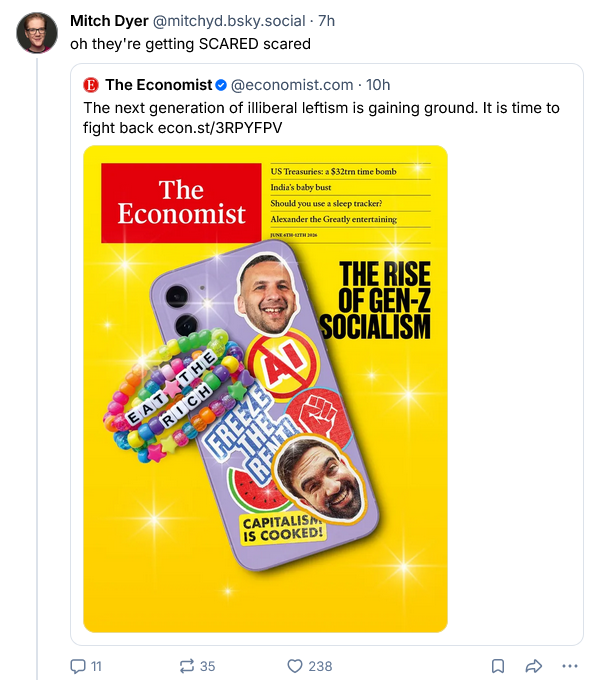
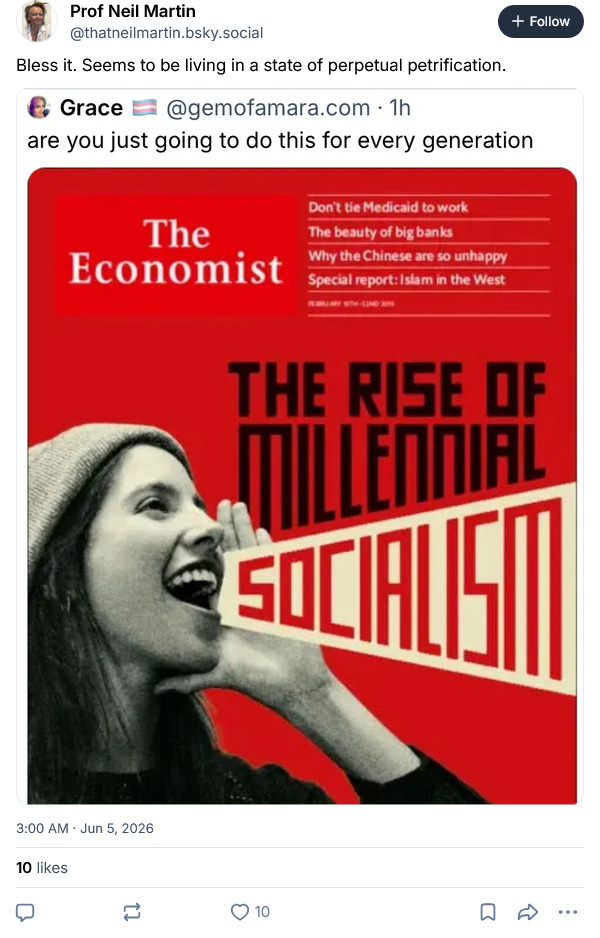
Date: 5/06/2026 10:46:41
From: Cymek
ID: 2398298
Subject: re: Global Politics 2026
SCIENCE said:
guess socialism is fusion power
I can’t imagine Lemmy wore that bracelet
Date: 5/06/2026 11:35:16
From: SCIENCE
ID: 2398325
Subject: re: Global Politics 2026
Date: 8/06/2026 10:04:45
From: SCIENCE
ID: 2399203
Subject: re: Global Politics 2026
LOL
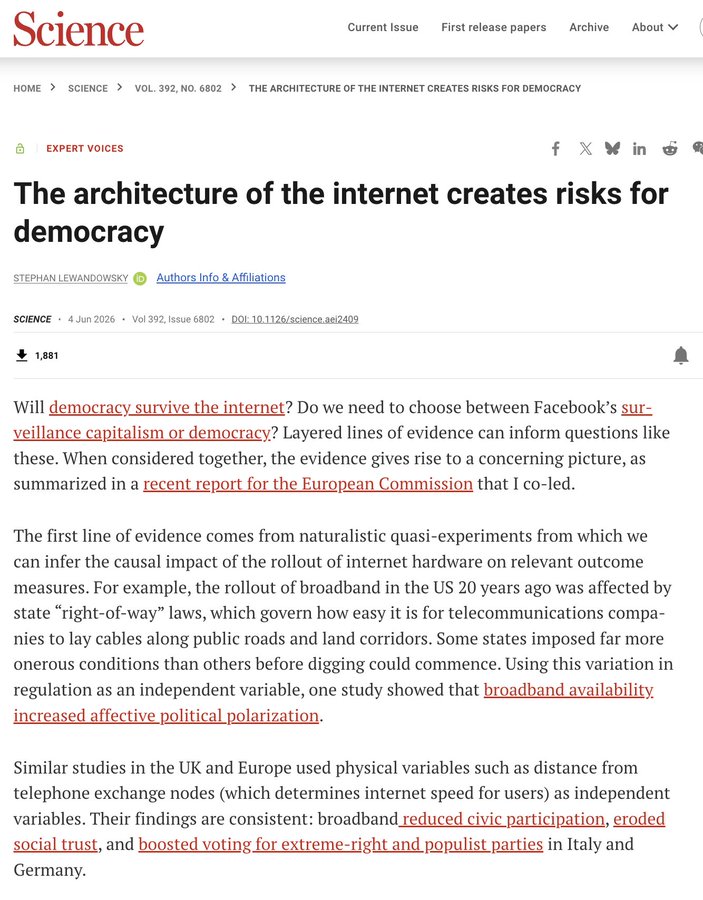
Date: 10/06/2026 23:32:54
From: SCIENCE
ID: 2399988
Subject: re: Global Politics 2026
Date: 12/06/2026 23:44:23
From: dv
ID: 2400636
Subject: re: Global Politics 2026
https://www.theguardian.com/world/2026/jun/11/nauru-name-change-naoero
Nauru
Pacific nation of Nauru wants to change its name as it moves on from colonial past
Date: 15/06/2026 14:01:27
From: SCIENCE
ID: 2401247
Subject: re: Global Politics 2026
Date: 15/06/2026 14:24:07
From: Cymek
ID: 2401249
Subject: re: Global Politics 2026
SCIENCE said:
question
does the DPRNA have the ability to hit Australia with missiles
https://www.abc.net.au/news/2026-06-15/lowy-analysis-china-ability-hit-australia-missiles/106797712
I assume the USSA already can
With how various wars have gone involving powerful nations they may be an obsolete form of conquest.
Be easier to just buy what you need
Date: 15/06/2026 18:40:39
From: SCIENCE
ID: 2401305
Subject: re: Global Politics 2026
Cymek said:
SCIENCE said:
question
does the DPRNA have the ability to hit Australia with missiles
https://www.abc.net.au/news/2026-06-15/lowy-analysis-china-ability-hit-australia-missiles/106797712
I assume the USSA already can
With how various wars have gone involving powerful nations they may be an obsolete form of conquest.
Be easier to just buy what you need
so the more one has the ability to hit Australia, the more worthy of being an ally to Australia one should be
Date: 15/06/2026 19:13:32
From: ms spock
ID: 2401322
Subject: re: Global Politics 2026
Cymek said:
SCIENCE said:
question
does the DPRNA have the ability to hit Australia with missiles
https://www.abc.net.au/news/2026-06-15/lowy-analysis-china-ability-hit-australia-missiles/106797712
I assume the USSA already can
With how various wars have gone involving powerful nations they may be an obsolete form of conquest.
Be easier to just buy what you need
China owns the Darwin Port and substantial property and farm land. Why would they blow up their assets?
Date: 16/06/2026 22:13:03
From: roughbarked
ID: 2401666
Subject: re: Global Politics 2026
Date: 18/06/2026 17:23:29
From: SCIENCE
ID: 2402210
Subject: re: Global Politics 2026
Date: 19/06/2026 10:34:32
From: dv
ID: 2402332
Subject: re: Global Politics 2026
Date: 19/06/2026 10:41:00
From: Cymek
ID: 2402334
Subject: re: Global Politics 2026
Looking at the costs of these minor wars, you do wonder if anyone could afford to start World War 3
Date: 19/06/2026 11:35:37
From: Witty Rejoinder
ID: 2402351
Subject: re: Global Politics 2026
dv said:
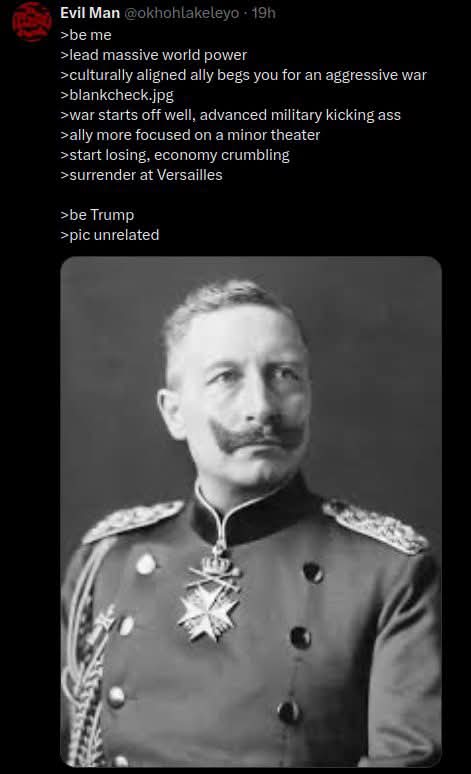
Hah. Clever.
Date: 21/06/2026 12:55:18
From: dv
ID: 2403064
Subject: re: Global Politics 2026
https://www.threads.com/@christopherjhale/post/DZ0WhKdCv4x?xmt=AQG0IwFk2d50p0tORCuFSxjjrGI45k3BRe0KtK59MmfQn4H0fjfOiMARVTLDZ_ZkJmWpWT4&slof=1
“First of all, I think it’s very important that the unity or division of the church should not revolve around sexual matters. We tend to think that when the church is talking about morality that the only issue of morality is sexual. And in reality I believe there are greater and more important issues such as justice, equality, freedom of men and women, freedom of religion that would all take priority before that particular issue.”
Date: 22/06/2026 07:19:44
From: SCIENCE
ID: 2403222
Subject: re: Global Politics 2026
fk communist police states

true democracy is a subscription service for outsourced intelligence owned by oligarchs
Date: 23/06/2026 20:16:12
From: SCIENCE
ID: 2403813
Subject: re: Global Politics 2026
alleged
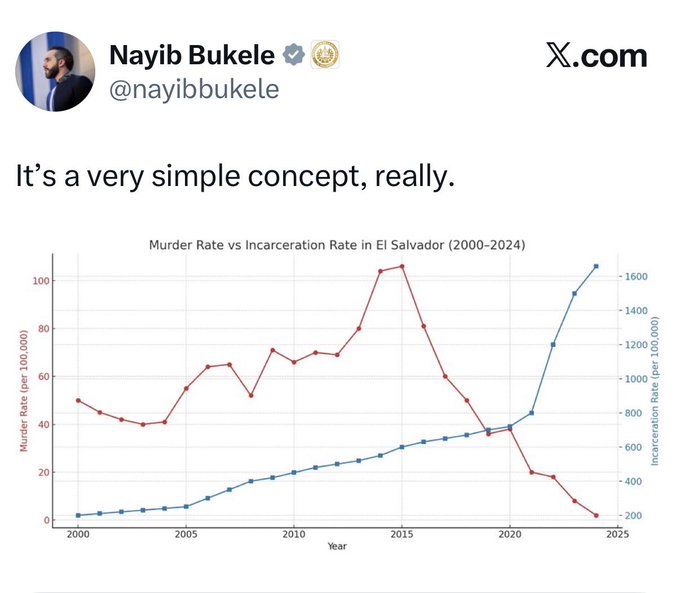
Date: 23/06/2026 20:19:08
From: captain_spalding
ID: 2403814
Subject: re: Global Politics 2026
SCIENCE said:
alleged
Lacks a legend.
I read it as being ‘as the murder rate goes up, the incarceration rate goes down’.
Date: 23/06/2026 20:21:46
From: captain_spalding
ID: 2403816
Subject: re: Global Politics 2026
captain_spalding said:
SCIENCE said:
alleged
Lacks a legend.
I read it as being ‘as the murder rate goes up, the incarceration rate goes down’.
Apologies.
I see that they’e been clever little sausages, and incorporated the legend into the text colours.
It’s my fault, for belonging to an era where you just put a simple, easily-seen legend on your graphs.
Date: 23/06/2026 20:58:41
From: Witty Rejoinder
ID: 2403819
Subject: re: Global Politics 2026
captain_spalding said:
SCIENCE said:
alleged
Lacks a legend.
I read it as being ‘as the murder rate goes up, the incarceration rate goes down’.
Plus the real turning-point happened in 2015. Maybe murderers are clairvoyant.
Date: 24/06/2026 13:14:37
From: Peak Warming Man
ID: 2403990
Subject: re: Global Politics 2026
Have we discussed this yet, the Columbian election?
Date: 24/06/2026 13:14:49
From: Peak Warming Man
ID: 2403991
Subject: re: Global Politics 2026
Peak Warming Man said:
Have we discussed this yet, the Columbian election?
https://www.google.com/search?q=columbian+election&oq=columbian+election&gs_lcrp=EgRlZGdlKgYIABBFGDkyBggAEEUYOdIBCTE1NzMwajBqN6gCALACAQ&sourceid=chrome&ie=UTF-8#fpstate=ive&vld=cid:47ce46a3,vid:LZYRUpAQeVM,st:0
Date: 24/06/2026 15:43:01
From: Peak Warming Man
ID: 2404057
Subject: re: Global Politics 2026
Peak Warming Man said:
Peak Warming Man said:
Have we discussed this yet, the Columbian election?
https://www.google.com/search?q=columbian+election&oq=columbian+election&gs_lcrp=EgRlZGdlKgYIABBFGDkyBggAEEUYOdIBCTE1NzMwajBqN6gCALACAQ&sourceid=chrome&ie=UTF-8#fpstate=ive&vld=cid:47ce46a3,vid:LZYRUpAQeVM,st:0
Youse don’t want to talk about it, there there, I understand.
Date: 24/06/2026 16:08:28
From: ms spock
ID: 2404068
Subject: re: Global Politics 2026
Peak Warming Man said:
Peak Warming Man said:
Peak Warming Man said:
Have we discussed this yet, the Columbian election?
https://www.google.com/search?q=columbian+election&oq=columbian+election&gs_lcrp=EgRlZGdlKgYIABBFGDkyBggAEEUYOdIBCTE1NzMwajBqN6gCALACAQ&sourceid=chrome&ie=UTF-8#fpstate=ive&vld=cid:47ce46a3,vid:LZYRUpAQeVM,st:0
Youse don’t want to talk about it, there there, I understand.
How are they going to rehabilitate 15, 16 and 17 year old out of illegal military combat?
It is such a multilayered set of issues.
I am not well versed in Colombian politics Peak Warming Man. I knew that they had continued armed resistance. But there’s so much more to it with the stark inequalities.
I have to say that I am concerned about anyone who Trump backs.
Date: 24/06/2026 16:34:27
From: Witty Rejoinder
ID: 2404079
Subject: re: Global Politics 2026
Peak Warming Man said:
Peak Warming Man said:
Peak Warming Man said:
Have we discussed this yet, the Columbian election?
https://www.google.com/search?q=columbian+election&oq=columbian+election&gs_lcrp=EgRlZGdlKgYIABBFGDkyBggAEEUYOdIBCTE1NzMwajBqN6gCALACAQ&sourceid=chrome&ie=UTF-8#fpstate=ive&vld=cid:47ce46a3,vid:LZYRUpAQeVM,st:0
Youse don’t want to talk about it, there there, I understand.
Why don’t you post an actual article to get us started?
Date: 24/06/2026 17:04:38
From: Michael V
ID: 2404090
Subject: re: Global Politics 2026
Peak Warming Man said:
Peak Warming Man said:
Peak Warming Man said:
Have we discussed this yet, the Columbian election?
https://www.google.com/search?q=columbian+election&oq=columbian+election&gs_lcrp=EgRlZGdlKgYIABBFGDkyBggAEEUYOdIBCTE1NzMwajBqN6gCALACAQ&sourceid=chrome&ie=UTF-8#fpstate=ive&vld=cid:47ce46a3,vid:LZYRUpAQeVM,st:0
Youse don’t want to talk about it, there there, I understand.
Did the bad guys win?
Date: 24/06/2026 17:32:22
From: dv
ID: 2404104
Subject: re: Global Politics 2026
Michael V said:
Peak Warming Man said:
Peak Warming Man said:
https://www.google.com/search?q=columbian+election&oq=columbian+election&gs_lcrp=EgRlZGdlKgYIABBFGDkyBggAEEUYOdIBCTE1NzMwajBqN6gCALACAQ&sourceid=chrome&ie=UTF-8#fpstate=ive&vld=cid:47ce46a3,vid:LZYRUpAQeVM,st:0
Youse don’t want to talk about it, there there, I understand.
Did the bad guys win?
Si.
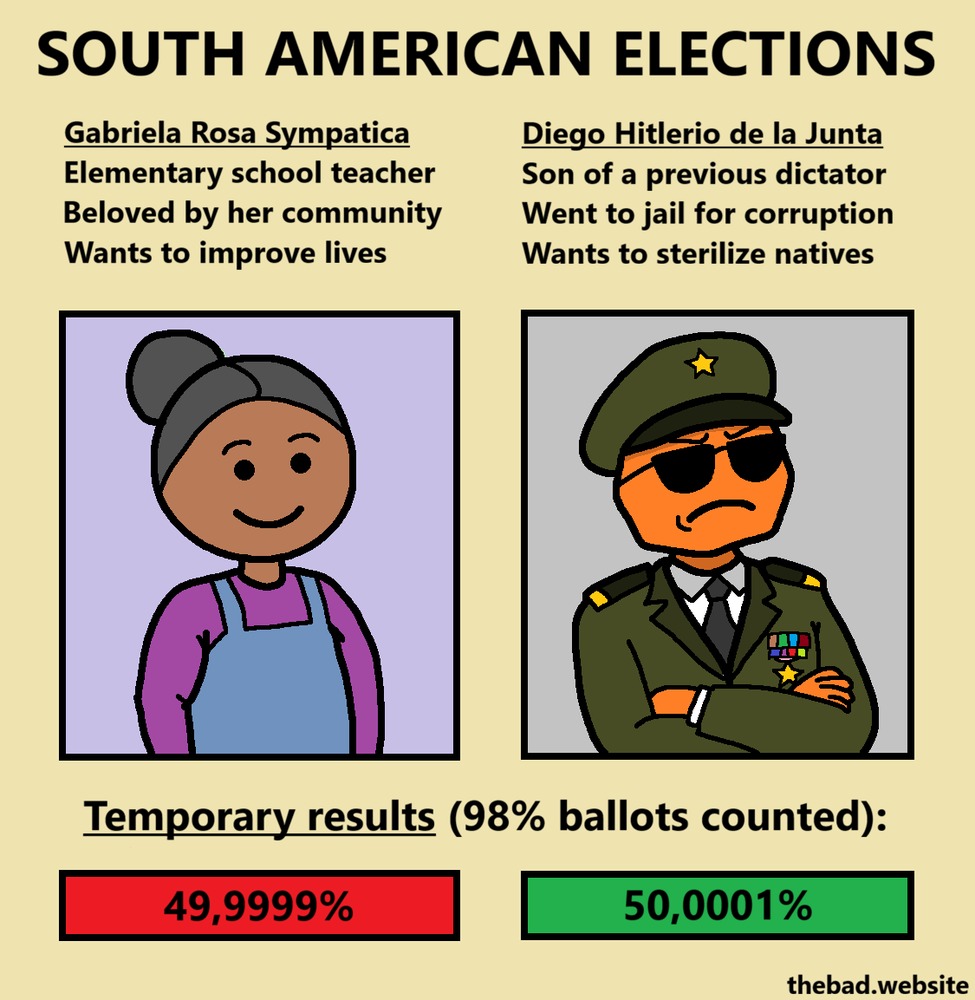
Date: 24/06/2026 17:37:46
From: Michael V
ID: 2404110
Subject: re: Global Politics 2026
dv said:
Michael V said:
Peak Warming Man said:
Youse don’t want to talk about it, there there, I understand.
Did the bad guys win?
Si.
LOLOL
Date: 24/06/2026 17:51:38
From: SCIENCE
ID: 2404116
Subject: re: Global Politics 2026
Michael V said:
dv said:
Michael V said:
Did the bad guys win?
Si.
LOLOL
team sports good
Date: 29/06/2026 07:59:11
From: SCIENCE
ID: 2405707
Subject: re: Global Politics 2026
Date: 2/07/2026 16:44:57
From: SCIENCE
ID: 2406933
Subject: re: Global Politics 2026
alleged

Date: 2/07/2026 18:32:49
From: SCIENCE
ID: 2406975
Subject: re: Global Politics 2026
alleged
Spanish government ‘quietly bans use of Palantir’ in critical state systems over fears of national security leaks
Spain has started quietly banning companies from signing contracts with controversial US tech firm Palantir amid security fears. The Spanish government has reportedly begun telling state-backed firms to avoid signing new contacts with US billionaire Peter Thiel’s company. It comes amid fears that sensitive national security information could be leaked, according to Spanish publication El Confidencial. Board members of several publicly listed companies told the newspaper they have been ordered to avoid signing any contracts with the data firm that could jeopardise national sovereignty or strategic information. Moncloa, Spain’s official government website, has not issued any official announcement about banning Palantir outright.
overdue even if not true
Date: 3/07/2026 08:47:50
From: The Rev Dodgson
ID: 2407067
Subject: re: Global Politics 2026
Latest Roy Spencer numbers showing global temperatures not rising:
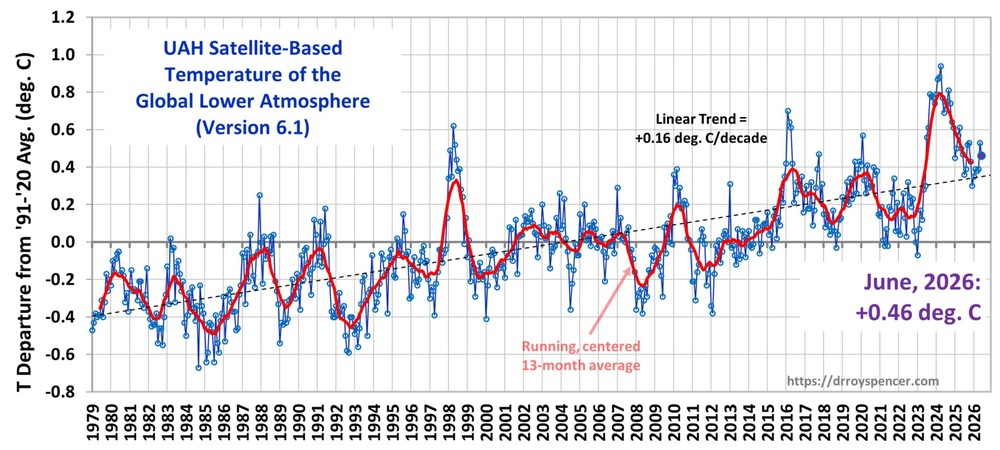
Date: 6/07/2026 14:21:57
From: SCIENCE
ID: 2408103
Subject: re: Global Politics 2026
Date: 6/07/2026 14:49:49
From: roughbarked
ID: 2408107
Subject: re: Global Politics 2026
SCIENCE said:
sure
https://www.abc.net.au/news/2026-07-06/royal-commission-meta-rejects-antisemitism-increase-claims/106882340
so why not arrest these liars instead of rounding up people protesting against ethnic cleansing
Too wealthy.
Date: 6/07/2026 18:55:07
From: JudgeMental
ID: 2408168
Subject: re: Global Politics 2026
Carrick Ryan
It’s a story we might feel we recognise… angry crowds fill the streets demanding the expulsion of undocumented immigrants. The noise is intended to intimidate, and with multiple instances of horrific mob violence against foreigners being reported every week, the intimidation is effective enough to force many who had first arrived decades ago to “return” to a country they no longer see as home.
But this isn’t Europe, the UK, the USA, or Australia… this is South Africa; and this anti-immigration movement is being led almost entirely by black Africans. The subject of their contempt… other black Africans.
The official estimates suggest there are around 3 million immigrants in South Africa, however, some suggest the real figure is more than twice that. Overwhelmingly, they have come from Zimbabwe, Mozambique, Lesotho, and Malawi.
By its most fundamental definitions, these populations are not different races. However, Africa has an extraordinary diversity of ethnicities, languages, and cultures, making it difficult to disentangle the roles of xenophobia, ethnic prejudice, economic competition and legitimate policy concerns in South Africa’s immigration debate.
The grievances sound familiar. South Africa is the most unequal country on Earth by income inequality, more than 60% of those under 24 are unemployed, and approximately 58 South Africans are murdered every day. It’s within this intolerable context that populist politicians have found fertile ground for discontent, with immigrant workers now blamed for crime and stealing local jobs.
But perhaps most unsettling is the manner in which the country’s ruling political elite, who have overseen one of the most gratuitous examples of corrupt plunder and state capture over the past 30 years, has done little to stem the rising tension.
The ANC has held power since 1994, and the men who control Mandela’s legacy have shamelessly enriched themselves as basic infrastructure begins to crumble. But public resentment at the declining living standards is growing, forcing the ANC to form a coalition to maintain a parliamentary majority for the first time.
Immigrants provide those in power with an irresistible beacon to deflect the resentment that should be theirs to absorb. They offer a simple solution to the intractable institutional problems their corruption and incompetence has caused.
This is where the common thread connects these movements across the continents of the world… the prejudices are real, but not the reason for the anger. The grievances are real, but are being exploited by those who have the greatest culpability for that grievance.
This is perhaps the cruellest irony of every single anti-immigration movement across the world. The problems aren’t being imagined… the solutions are.
Date: 6/07/2026 19:06:44
From: SCIENCE
ID: 2408171
Subject: re: Global Politics 2026
question then has any country completed the experiment, when all the immigrants are gone does the economy get better or who do they have to cleanse next
Date: 6/07/2026 19:14:56
From: dv
ID: 2408174
Subject: re: Global Politics 2026
SCIENCE said:
question then has any country completed the experiment, when all the immigrants are gone does the economy get better or who do they have to cleanse next
Worked a damn treat in Uganda
Date: 6/07/2026 19:18:06
From: Peak Warming Man
ID: 2408175
Subject: re: Global Politics 2026
SCIENCE said:
question then has any country completed the experiment, when all the immigrants are gone does the economy get better or who do they have to cleanse next
Well we need to get rid of all the wogs for a start with their foreign names and stuff.
We need more proper Aussies with proper Aussie names, like Yothu Yindi etc.
Date: 6/07/2026 20:33:06
From: Peak Warming Man
ID: 2408178
Subject: re: Global Politics 2026
I’m writing a historical novel about an Adolf Hitler look-alike contest held in Berlin early in 1945 and the thrilling account of his escape to South America.
It’s going to be a page turner, make no mistake.
It should be a nice little earner for the film rights alone.
rubs hands
Date: 6/07/2026 21:29:31
From: captain_spalding
ID: 2408189
Subject: re: Global Politics 2026
Peak Warming Man said:
I’m writing a historical novel about an Adolf Hitler look-alike contest held in Berlin early in 1945 and the thrilling account of his escape to South America.
It’s going to be a page turner, make no mistake.
It should be a nice little earner for the film rights alone.
rubs hands
How about this for the look-alike contest: Hitler places third.
Date: 6/07/2026 22:52:08
From: SCIENCE
ID: 2408209
Subject: re: Global Politics 2026
Peak Warming Man said:
dv said:
SCIENCE said:
JudgeMental said:
Carrick Ryan
It’s a story we might feel we recognise… angry crowds fill the streets demanding the expulsion of undocumented immigrants. The noise is intended to intimidate, and with multiple instances of horrific mob violence against foreigners being reported every week, the intimidation is effective enough to force many who had first arrived decades ago to “return” to a country they no longer see as home.
But this isn’t Europe, the UK, the USA, or Australia… this is South Africa; and this anti-immigration movement is being led almost entirely by black Africans. The subject of their contempt… other black Africans.
The official estimates suggest there are around 3 million immigrants in South Africa, however, some suggest the real figure is more than twice that. Overwhelmingly, they have come from Zimbabwe, Mozambique, Lesotho, and Malawi.
By its most fundamental definitions, these populations are not different races. However, Africa has an extraordinary diversity of ethnicities, languages, and cultures, making it difficult to disentangle the roles of xenophobia, ethnic prejudice, economic competition and legitimate policy concerns in South Africa’s immigration debate.
The grievances sound familiar. South Africa is the most unequal country on Earth by income inequality, more than 60% of those under 24 are unemployed, and approximately 58 South Africans are murdered every day. It’s within this intolerable context that populist politicians have found fertile ground for discontent, with immigrant workers now blamed for crime and stealing local jobs.
But perhaps most unsettling is the manner in which the country’s ruling political elite, who have overseen one of the most gratuitous examples of corrupt plunder and state capture over the past 30 years, has done little to stem the rising tension.
The ANC has held power since 1994, and the men who control Mandela’s legacy have shamelessly enriched themselves as basic infrastructure begins to crumble. But public resentment at the declining living standards is growing, forcing the ANC to form a coalition to maintain a parliamentary majority for the first time.
Immigrants provide those in power with an irresistible beacon to deflect the resentment that should be theirs to absorb. They offer a simple solution to the intractable institutional problems their corruption and incompetence has caused.
This is where the common thread connects these movements across the continents of the world… the prejudices are real, but not the reason for the anger. The grievances are real, but are being exploited by those who have the greatest culpability for that grievance.
This is perhaps the cruellest irony of every single anti-immigration movement across the world. The problems aren’t being imagined… the solutions are.
question then has any country completed the experiment, when all the immigrants are gone does the economy get better or who do they have to cleanse next
Worked a damn treat in Uganda
Well we need to get rid of all the wogs for a start with their foreign names and stuff.
We need more proper Aussies with proper Aussie names, like Yothu Yindi etc.
well yous lot have convinced us then, orange all the way
Date: 7/07/2026 22:24:11
From: SCIENCE
ID: 2408587
Subject: re: Global Politics 2026
Explosions have rocked the Syrian capital of Damascus during French President Emmanuel Macron’s visit, which is the first by a European head of state since the fall of the Assad regime in late 2024. French officials say Mr Macron did not hear the blasts, and his motorcade drove to a scheduled meeting with Syrian President Ahmed Al-Sharaa.
so they deafened him
Date: 10/07/2026 23:01:50
From: SCIENCE
ID: 2409835
Subject: re: Global Politics 2026
alleged
You sit next to Donald Trump at moments when he talks about conquering Greenland, talks about lashing out at allies like Spain — things it doesn’t seem like the old Mark Rutte would approve of. Does this have any affect on your self-respect when you sit there and say nothing?
https://x.com/atrupar/status/2074860362373980266
Date: 11/07/2026 09:36:23
From: SCIENCE
ID: 2409916
Subject: re: Global Politics 2026
Date: 11/07/2026 09:43:28
From: roughbarked
ID: 2409921
Subject: re: Global Politics 2026
SCIENCE said:
jeecacation loves this
https://www.abc.net.au/news/2026-07-10/climate-change-leading-to-more-child-marriages-advocates-say/106766756
“Whenever there is a climate change impact … we see a spike in child marriage,” said Plan International’s Tanushree Soni.
“Financial stress is the trigger.
“The families look to lessen the burden because they don’t consider girls to be part of their own families; they consider girls to be part of their husband’s family.
Yet again the females have to bear the onus. :(
“So investing in girls is not a choice they can afford to make.”
Date: 11/07/2026 13:40:21
From: SCIENCE
ID: 2410007
Subject: re: Global Politics 2026
SCIENCE said:
alleged
You sit next to Donald Trump at moments when he talks about conquering Greenland, talks about lashing out at allies like Spain — things it doesn’t seem like the old Mark Rutte would approve of. Does this have any affect on your self-respect when you sit there and say nothing?
https://x.com/atrupar/status/2074860362373980266
LOL
https://www.abc.net.au/news/2026-07-11/nato-geopolitical-landscape-shifted-around-trump/106900808
Date: 11/07/2026 13:52:27
From: SCIENCE
ID: 2410017
Subject: re: Global Politics 2026
see these ASIAN police states always applying excessive law and order to suppress free speech and expensive capitalism how dare they
https://www.abc.net.au/news/2026-07-11/indonesian-fears-after-gojek-startup-founder-makarim-jailed/106888002
Date: 16/07/2026 17:00:43
From: SCIENCE
ID: 2411607
Subject: re: Global Politics 2026
Date: 17/07/2026 21:41:44
From: ms spock
ID: 2412075
Subject: re: Global Politics 2026
EU passing Laws being passed to usher in the age of deportation.
Link
3 minutes
Date: 23/07/2026 14:24:31
From: roughbarked
ID: 2413646
Subject: re: Global Politics 2026
New York City Mayor Zohran Mamdani has conceded he cannot order the arrest of Benjamin Netanyahu when he sets foot in his city, after days of fevered debate about the issue.
Mr Netanyahu’s office then weighed in.
“The ICC is a kangaroo court that has no jurisdiction over Americans or Israelis,” it posted on X, calling the arrest warrant “bogus”.
Then, the US president weighed in.
“Benjamin Netanyahu will not be arrested, in any way, shape, or form, while in the United States of America,” Mr Trump said on Truth Social.
“He is fighting against the Islamic Republic of Iran, which recently killed 52,000 innocent protesters, and has spent the last 47 years killing American Soldiers, and others.
“The only ones that should be arrested are the people that led Iran into this unprecedented SPIRAL OF DEATH AND DESTRUCTION, something that should have been dealt with years ago, by previous Presidents!”
The issue is about Israel and Gaza. So Trump redirects us to Iran.
Date: 23/07/2026 14:25:43
From: roughbarked
ID: 2413647
Subject: re: Global Politics 2026
roughbarked said:
New York City Mayor Zohran Mamdani has conceded he cannot order the arrest of Benjamin Netanyahu when he sets foot in his city, after days of fevered debate about the issue.
Mr Netanyahu’s office then weighed in.
“The ICC is a kangaroo court that has no jurisdiction over Americans or Israelis,” it posted on X, calling the arrest warrant “bogus”.
Then, the US president weighed in.
“Benjamin Netanyahu will not be arrested, in any way, shape, or form, while in the United States of America,” Mr Trump said on Truth Social.
“He is fighting against the Islamic Republic of Iran, which recently killed 52,000 innocent protesters, and has spent the last 47 years killing American Soldiers, and others.
“The only ones that should be arrested are the people that led Iran into this unprecedented SPIRAL OF DEATH AND DESTRUCTION, something that should have been dealt with years ago, by previous Presidents!”
The issue is about Israel and Gaza. So Trump redirects us to Iran.
Taken from: https://www.abc.net.au/news/2026-07-23/new-york-mayor-mamdani-calls-for-benjamin-netanyahu-arrest/106947876
Date: 23/07/2026 14:41:17
From: SCIENCE
ID: 2413650
Subject: re: Global Politics 2026
roughbarked said:
roughbarked said:
New York City Mayor Zohran Mamdani has conceded he cannot order the arrest of Benjamin Netanyahu when he sets foot in his city, after days of fevered debate about the issue.
Mr Netanyahu’s office then weighed in.
“The ICC is a kangaroo court that has no jurisdiction over Americans or Israelis,” it posted on X, calling the arrest warrant “bogus”.
Then, the US president weighed in.
“Benjamin Netanyahu will not be arrested, in any way, shape, or form, while in the United States of America,” Mr Trump said on Truth Social.
“He is fighting against the Islamic Republic of Iran, which recently killed 52,000 innocent protesters, and has spent the last 47 years killing American Soldiers, and others.
“The only ones that should be arrested are the people that led Iran into this unprecedented SPIRAL OF DEATH AND DESTRUCTION, something that should have been dealt with years ago, by previous Presidents!”
The issue is about Israel and Gaza. So Trump redirects us to Iran.
Taken from: https://www.abc.net.au/news/2026-07-23/new-york-mayor-mamdani-calls-for-benjamin-netanyahu-arrest/106947876
fuck them, let us well remember that these are the glorious upholders of the international rules based law and order that other countries are at fault for violating disrupting weakening ignoring
Date: 23/07/2026 23:11:23
From: SCIENCE
ID: 2413772
Subject: re: Global Politics 2026
alleged

Date: 25/07/2026 10:35:53
From: SCIENCE
ID: 2414164
Subject: re: Global Politics 2026
Date: 25/07/2026 10:36:58
From: SCIENCE
ID: 2414165
Subject: re: Global Politics 2026
backward hermit kingdom takes small step of progress
https://www.abc.net.au/news/2026-07-25/japan-royal-family-emperor-succession-rule-still-skips-women/106951060
but fails to recognise that monarchy is an obsolete system
Date: 25/07/2026 22:09:14
From: roughbarked
ID: 2414327
Subject: re: Global Politics 2026
Date: 27/07/2026 10:46:21
From: SCIENCE
ID: 2414610
Subject: re: Global Politics 2026
alleged

Date: 27/07/2026 10:48:29
From: Cymek
ID: 2414613
Subject: re: Global Politics 2026
SCIENCE said:
alleged
Wonder how all that will play out if it becomes hundreds of millions of people.
Date: 27/07/2026 10:50:40
From: SCIENCE
ID: 2414614
Subject: re: Global Politics 2026
Cymek said:
SCIENCE said:
alleged
Wonder how all that will play out if it becomes hundreds of millions of people.
there’ll be so much orbital junk from them by the 10 million mark that the next 90 million have a greater than 10% chance of getting killed if they go further out
Date: 4/08/2026 17:24:44
From: SCIENCE
ID: 2416957
Subject: re: Global Politics 2026
wait is this the same anti defamation league that assured us that rich fascists’ salutes were just autism and not hatred
https://www.abc.net.au/news/2026-08-04/jonathan-greenblatt-warning-australia-antisemitism/106990830
fuck
Date: 4/08/2026 17:33:37
From: SCIENCE
ID: 2416960
Subject: re: Global Politics 2026
Date: 7/08/2026 07:21:08
From: SCIENCE
ID: 2417670
Subject: re: Global Politics 2026
propagandist suddenly realises that all espionage is tangled and all agents are potentially multiple
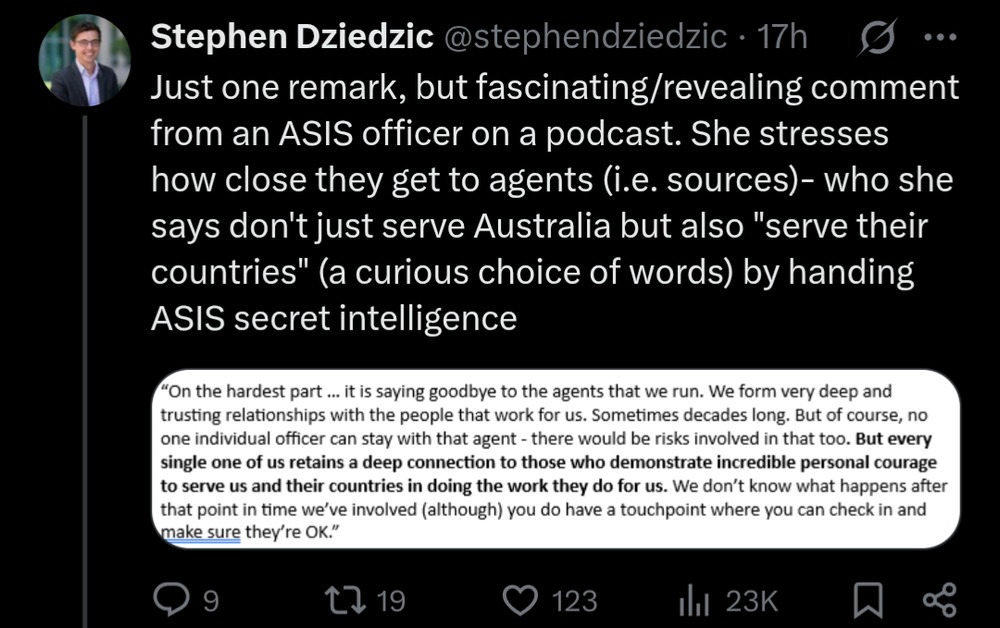
Date: 7/08/2026 09:52:24
From: SCIENCE
ID: 2417688
Subject: re: Global Politics 2026
Date: 7/08/2026 09:55:59
From: roughbarked
ID: 2417689
Subject: re: Global Politics 2026
Date: 7/08/2026 10:35:39
From: SCIENCE
ID: 2417697
Subject: re: Global Politics 2026
roughbarked said:
SCIENCE said:
https://www.abc.net.au/news/2026-08-07/iran-war-us-stockpile-impacts-ukraine-conflict/107005708
More evidence of Trump stupidity.
not really, isn’t this just his way of making the gift of Ukraine to Putin while opening up all the other Arab states to Iranian wipeout so Israel only needs to infiltrate one regional neighbour look legit’ kinda
it’s genius
Date: 7/08/2026 11:10:26
From: Cymek
ID: 2417707
Subject: re: Global Politics 2026
SCIENCE said:
roughbarked said:
SCIENCE said:
https://www.abc.net.au/news/2026-08-07/iran-war-us-stockpile-impacts-ukraine-conflict/107005708
More evidence of Trump stupidity.
not really, isn’t this just his way of making the gift of Ukraine to Putin while opening up all the other Arab states to Iranian wipeout so Israel only needs to infiltrate one regional neighbour look legit’ kinda
it’s genius
Imagine what all the money spent on these two conflicts could do for the benefit of the world.
Both are kind of stalemates that are kept going so two superpowers don’t admit they messed up
Date: 7/08/2026 13:19:03
From: roughbarked
ID: 2417767
Subject: re: Global Politics 2026
SCIENCE said:
roughbarked said:
SCIENCE said:
https://www.abc.net.au/news/2026-08-07/iran-war-us-stockpile-impacts-ukraine-conflict/107005708
More evidence of Trump stupidity.
not really, isn’t this just his way of making the gift of Ukraine to Putin while opening up all the other Arab states to Iranian wipeout so Israel only needs to infiltrate one regional neighbour look legit’ kinda
it’s genius
of the evil kind.
Date: 7/08/2026 13:21:03
From: roughbarked
ID: 2417770
Subject: re: Global Politics 2026
Cymek said:
SCIENCE said:
roughbarked said:
More evidence of Trump stupidity.
not really, isn’t this just his way of making the gift of Ukraine to Putin while opening up all the other Arab states to Iranian wipeout so Israel only needs to infiltrate one regional neighbour look legit’ kinda
it’s genius
Imagine what all the money spent on these two conflicts could do for the benefit of the world.
Both are kind of stalemates that are kept going so two superpowers don’t admit they messed up
and all along Trump and Putin get richer.
Date: 8/08/2026 10:04:47
From: SCIENCE
ID: 2418047
Subject: re: Global Politics 2026
Thailand has one of the highest rates of gun ownership in Asia, with the prime minister vowing to introduce a new firearms control law. “The new law will only allow government officials on duty to carry guns,” Mr Charnvirakul said. He did not go into further details, including whether gun ownership requirements would be tightened.
Nice false flag¡
now stand by for another foreign interference intervention by the great free ussa
Date: 8/08/2026 10:19:42
From: SCIENCE
ID: 2418049
Subject: re: Global Politics 2026
Date: 9/08/2026 13:40:10
From: SCIENCE
ID: 2418462
Subject: re: Global Politics 2026
SCIENCE said:
oooh we remember when currency manipulation was
https://www.abc.net.au/news/2026-08-08/yen-japan-united-states-euro-asia-financial-crisis-scott-bessent/107006174
bad because those bastard other countries were doing it ah yes
Hey nice¡
Indonesia’s currency has fallen to historic lows against the US dollar, causing damage “in most of the economy”, analysts say. Some street food sellers have raised their prices to cover rising production costs, while others say they’re seeing less foot traffic in the markets. An economist says government policies are contributing to the decline but the government says it is “ensuring that inflation remains within a controlled range”.
Date: 10/08/2026 16:26:45
From: Witty Rejoinder
ID: 2418839
Subject: re: Global Politics 2026
Why fears of a Japanese implosion have the world on edge
Stephen Bartholomeusz
Senior business columnist
August 10, 2026 — 11:59am
The impact of last week’s dramatic interventions in currency markets by the Bank of Japan and the US Treasury to boost Japan’s yen seems to be fading. They might have to intervene again, and again.
The US and Japan acted to prop up the yen – for the first time since the 1998 Asian financial crisis – after it crashed through the 162 yen-to-the-dollar level regarded as the BoJ’s “line in the sand” last month, and kept heading northward. Before the intervention, the yen/dollar cross-rate was almost 164 yen to the dollar.
Over two days last week, the BoJ spent an estimated $US87 billion ($123.2 billion) and the US Treasury up to $US10 billion to buy yen, which drove the exchange rate up to a peak of 155.21 yen to the dollar. The exchange rate has since slipped back to just over 157.7, after hitting 158.40 on Friday.
In the absence of further interventions, Japan’s economic fundamentals – the influences which had driven its currency down – could be expected to reassert themselves.
Those are its extreme levels of government debt (more than 200 per cent of GDP, albeit that about half that is owned by the government itself after decades of bond buying), rising inflation and, despite being on track to post a budget surplus, Prime Minister Sanae Takaichi’s plan to cut consumption taxes and significantly boost spending on defence and technology.
Most significant are Japan’s suppressed bond yields, with the BoJ having orchestrated a negative real interest rate regime for much of the past three decades, during an economic winter from which Japan is only just emerging.
The BoJ’s policy rate, at 1 per cent, compares with the US Federal Reserve Board’s target for the federal funds rate of between 3.5 per cent and 3.75 per cent and the Reserve Bank’s cash rate of 4.35 per cent.
Two-year Japanese government bonds yield 1.6 per cent, 10-year bonds 2.79 per cent and 30-year bonds 3.91 per cent. Their US counterparts yield 4.2 per cent, 4.65 per cent and 5.2 per cent, respectively.
Those large differentials have encouraged Japanese investors to export their savings in pursuit of higher returns and created the multitrillion-dollar “carry trade”, where hedge funds and others have borrowed at negligible cost in Japan to invest in higher-yielding assets offshore.
As long as the yield differentials remain as large as they are now, the yen is destined to remain weak against the dollar, aiding Japan’s exports but importing inflation.
A rise in US yields, a function of the continuing increase in US government debt levels, which has accelerated under the second Trump administration, as well as US inflation levels that have been pushed higher by Trump’s tariffs and his war in the Middle East, has intensified the pressure on the exchange rate.
The most obvious reason for the US decision to intervene is that, if the BoJ was forced to raise Japan’s interest rates to support the yen – and bond yields have been edging up in the market already – the vast horde of Japanese capital now invested in the US, more than $US1.1 trillion of it in US Treasury bonds, might start flowing back to Japan.
That would put pressure on the US dollar and, more particularly, upward pressure on US bond yields and administration’s interest costs, which are already above $US1 trillion a year and are the fastest-rising expenditures in the US budget.
A weaker yen would also make Japan’s exports to the US more competitive.
With the yen also influencing other Asian currencies, that could undermine Trump’s efforts to use tariffs and coerced investment deals to rebuild US manufacturing (not that those efforts have produced anything meaningful yet).
While US Treasury secretary Scott Bessent has pointed to the potential contagion effects of a weak yen and the risk that it could destabilise other currencies in the region, his worst fears would inevitably relate to the implications for the US bond market and the risk that an exodus of capital as investments were repatriated and carry trades unwound might pose a threat to the US economy and US financial stability.
His sensitivity to the US domestic implications of a weakening yen were underscored by the decision to offer the BoJ a Federal Reserve “repo” facility – it has borrowed Fed-printed dollars, using the US treasuries it owns as collateral – rather than risk the Japanese central bank having to dump those holdings to fund its interventions, which would cause US rates to rise further.
What the BoJ and US Treasury have done so far is to buy some time.
By themselves, the interventions might have driven some short sellers from the market and relieved some of the pressure on the currency. But Bessent, who headed the London office of Soros Fund Management when George Soros and Stanley Druckenmiller “broke the pound” and forced it out of the European Exchange Rate Mechanism in 1992, would be very aware that nothing fundamental has changed and the yen remains extremely vulnerable to an assault by traders.
The most obvious next step is for the BoJ to raise its policy rate at its September monetary policy meeting, which it might well do despite Takaichi’s desire to keep rates low to boost growth.
The challenge for the BoJ, however, is that the comparison rates are also moving.
The European Central Bank is widely expected to raise its policy rate to 2.5 per cent at its meeting next month.
The Fed was under pressure before last week’s weak jobs data to hike its rate and the longer the war in the Middle East drags on and seeps into industry costs and the inflation rate, the more probable US rate rises become.
Trying to put a floor under the yen carries its own risks, including the potential impact on the carry trade if borrowing costs rise.
Japanese insurers, banks and households are holding trillions of yen in bonds that, because yields on comparable securities have risen, are now worth less than their face value.
If held to maturity, those unrealised losses are irrelevant, but they do have implications for financial institutions’ balance sheets – they erode their equity bases – and, in any sale, the losses would become very real. The BoJ will be wary about the potential for a financial crisis if it moves too hard too quickly.
In the absence of further interventions, Japan’s economic fundamentals – the influences which had driven its currency down – could be expected to reassert themselves.
What the US intervention signals is the mutual vulnerabilities of the US and Japan and the reality that reducing them, if they can be reduced, won’t be either straightforward, painless or riskless.
Japan is confronted with the legacies of nearly 30 years of unconventional policies.
It is trying to navigate an economic transition where it balances systemic and economic stability and the risks of trying to normalise its settings, by growing its way out of the debt and distortions in its economy and financial system that those policies have created.
This US administration isn’t given to selfless acts. It isn’t acting, as Trump claimed, out of friendship with Japan.
It’s doing so because the US is dependent on “other people’s money” to fund its government and Americans’ lifestyles.
An implosion in the value of the yen is a direct threat to the continued access to that funding, to its economy and financial system and, because of the role the US plays within the global economy and financial system, the rest of the world as well.
https://www.theage.com.au/business/markets/trump-bought-japan-some-time-but-the-alarm-bells-are-ringing-20260810-p60mtw.html
Date: 10/08/2026 17:58:48
From: SCIENCE
ID: 2418867
Subject: re: Global Politics 2026
Date: 12/08/2026 06:24:43
From: SCIENCE
ID: 2419340
Subject: re: Global Politics 2026
good news, last time the ottoman empire signed up to a triple alliance it helped to keep the peace
https://www.abc.net.au/news/2026-08-12/a-nato-like-defence-pact-in-middle-east/107024494
Date: 12/08/2026 06:44:14
From: roughbarked
ID: 2419341
Subject: re: Global Politics 2026
SCIENCE said:
good news, last time the ottoman empire signed up to a triple alliance it helped to keep the peace
https://www.abc.net.au/news/2026-08-12/a-nato-like-defence-pact-in-middle-east/107024494
None of it is good news.
Date: 12/08/2026 06:53:06
From: SCIENCE
ID: 2419343
Subject: re: Global Politics 2026
roughbarked said:
SCIENCE said:
good news, last time the ottoman empire signed up to a triple alliance it helped to keep the peace
https://www.abc.net.au/news/2026-08-12/a-nato-like-defence-pact-in-middle-east/107024494
None of it is good news.
so ¿ we think empires should stand and fall alone and let the big bullies push them around do ? we
Date: 12/08/2026 07:00:21
From: roughbarked
ID: 2419345
Subject: re: Global Politics 2026
SCIENCE said:
roughbarked said:
SCIENCE said:
good news, last time the ottoman empire signed up to a triple alliance it helped to keep the peace
https://www.abc.net.au/news/2026-08-12/a-nato-like-defence-pact-in-middle-east/107024494
None of it is good news.
so ¿ we think empires should stand and fall alone and let the big bullies push them around do ? we
I don’t think anything of the sort. History simply shows.
Date: 12/08/2026 07:05:48
From: SCIENCE
ID: 2419347
Subject: re: Global Politics 2026
roughbarked said:
SCIENCE said:
roughbarked said:
None of it is good news.
so ¿ we think empires should stand and fall alone and let the big bullies push them around do ? we
I don’t think anything of the sort. History simply shows.
so if you were the leader trying to secure the defence get rich off the people of your country, what arrangements would you negotiate with your neighbouring countries for
Date: 12/08/2026 07:23:00
From: roughbarked
ID: 2419348
Subject: re: Global Politics 2026
SCIENCE said:
roughbarked said:
SCIENCE said:
so ¿ we think empires should stand and fall alone and let the big bullies push them around do ? we
I don’t think anything of the sort. History simply shows.
so if you were the leader trying to secure the defence get rich off the people of your country, what arrangements would you negotiate with your neighbouring countries for
I’m not and never can be Donald Trump.
Date: 12/08/2026 08:23:32
From: Witty Rejoinder
ID: 2419353
Subject: re: Global Politics 2026
roughbarked said:
SCIENCE said:
good news, last time the ottoman empire signed up to a triple alliance it helped to keep the peace
https://www.abc.net.au/news/2026-08-12/a-nato-like-defence-pact-in-middle-east/107024494
None of it is good news.
I dunno. Strategic rivalry between the three has often led to interference in the other countries in the region with proxy campaigns as they pursue their narrow self interests. In Egypt for example Turkey was a supporter of the democratically elected Muslim Brotherhood government after the Arab Spring but examples of political Islam like the MB were bitterly opposed by Riyadh which saw popular democracy as a threat to their autocratic regime.
Any moves to provide security like this pact across the region can only promote a more peaceful future IMO
Date: 12/08/2026 08:36:07
From: roughbarked
ID: 2419356
Subject: re: Global Politics 2026
Witty Rejoinder said:
roughbarked said:
SCIENCE said:
good news, last time the ottoman empire signed up to a triple alliance it helped to keep the peace
https://www.abc.net.au/news/2026-08-12/a-nato-like-defence-pact-in-middle-east/107024494
None of it is good news.
I dunno. Strategic rivalry between the three has often led to interference in the other countries in the region with proxy campaigns as they pursue their narrow self interests. In Egypt for example Turkey was a supporter of the democratically elected Muslim Brotherhood government after the Arab Spring but examples of political Islam like the MB were bitterly opposed by Riyadh which saw popular democracy as a threat to their autocratic regime.
Any moves to provide security like this pact across the region can only promote a more peaceful future IMO
Hopefully but I fear there are other players in the mix.
Date: 13/08/2026 16:24:54
From: Spiny Norman
ID: 2419831
Subject: re: Global Politics 2026
After years of central banks aggressively stockpiling gold, Turkey suddenly unloaded billions of dollars worth of reserves as its currency weakened, energy costs surged, and the country desperately needed access to U.S. dollars.
This video examines why Turkey sold more than 100 tons of gold in early 2026, how the collapsing Turkish lira and soaring energy imports pushed Ankara toward its financial emergency reserves, and why the move challenges the popular idea that countries were hoarding gold primarily to undermine the dollar.
Turkey isn’t alone. Other nations facing economic pressure have also begun tapping gold reserves that were supposed to protect them during a crisis. Instead of becoming weapons in a new financial order, these massive gold stockpiles may have been emergency lifeboats all along.
The most revealing part is what Turkey needed in return for its gold – Dollars.
If governments are already breaking open their financial emergency reserves just to keep their economies functioning, Turkey may not be the last country forced to make this choice.
https://www.youtube.com/watch?v=G4TrIfDcAJ4
Date: 18/08/2026 07:49:27
From: SCIENCE
ID: 2421409
Subject: re: Global Politics 2026
they say it’s a disaster
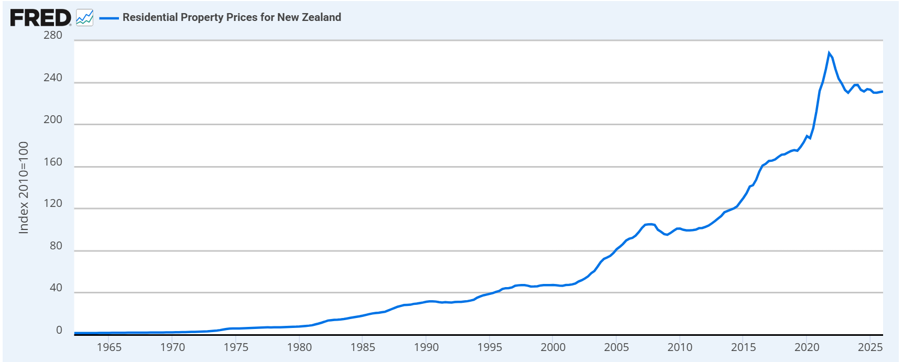
Date: 18/08/2026 07:59:59
From: dv
ID: 2421410
Subject: re: Global Politics 2026
These last two years, Singapore has had a PM with no familial connection to the Lees.
Lawrence Wong is the son of an immigrant from Hainan. He is a Methodist whose first language is English. He grew up in public housing so he will have something to chat with about Albo.
Date: 18/08/2026 08:08:53
From: roughbarked
ID: 2421414
Subject: re: Global Politics 2026
Date: 19/08/2026 21:56:54
From: Witty Rejoinder
ID: 2422019
Subject: re: Global Politics 2026
Red alert: This chart says Wall Street is ready to crash
Chris Price
August 18, 2026 — 11:57am
Usually when numbers shoot higher on Wall Street, it is a reason for celebration.
That is not how Jonas Goltermann, the chief markets economist at Capital Economics, feels when he looks at one of the most feared charts on the sharemarket: the Shiller price-to-earnings (PE) ratio.
“That’s obviously a bit worrying,” he says after seeing the metric on track to end the month at its highest level since August 2000.
The Shiller PE ratio, a closely watched fear gauge on Wall Street, may sound esoteric, but it has become one of the most important numbers in the world – and one you should care about.
For all intents and purposes, it is the canary in the coal mine for global financial crashes.
“It tells you that it probably is a bubble, but you don’t know when it’s going to end,” says Goltermann.
Trump makes America Inc’s grip on the world even tighter
The last time it was this high – August 2000 – was in the throes of the dotcom bubble collapse, when it was hitting record highs when applied to the S&P 500 – the benchmark stock index on Wall Street.
The closely watched metric, used by traders to measure whether stocks are fairly valued, finished above 40 points for nearly two years between 1999 and 2000 – despite never previously hitting the mark in the 119-year history of the S&P index.
When the dotcom bubble collapsed, the Shiller PE ratio was highlighted as evidence that the market should have seen a crash coming – but did nothing about it.
Worryingly, the index has gone above the 40-point mark for the first time since the dotcom bust. It reached this level in May, June, July and August of this year as markets are gripped by the mania surrounding AI.
“We’re probably closer to the end than the beginning – the final innings,” says Goltermann.
“The moment we’re in right now, it feels like it is more driven by narrative and momentum. The price goes up because the price is going up.”
The Shiller price-to-earnings ratio, developed by American economist and Nobel Prize laureate Robert Shiller, is designed to measure whether stocks are “overvalued” – which is to say whether share prices are supported by the underlying earnings of a company.
When it goes high, it suggests prices have become disconnected from the reality of company earnings – with froth and euphoria leading the charge.
Had it been invented in the 1920s, it might have helped warn against the Wall Street crash which triggered the Great Depression during the following decade.
In 1929, the Shiller PE ratio would have surpassed a then-unprecedented 30 twice, a figure it did not reach again until 1997.
“Now, it’s as high as in the late 1990s and late 1920s,” says Goltermann. “Those were both proper crashes … absolutely disastrous.
“It’s very extreme to say we’re definitely heading for something like that. I don’t think that’s necessarily the case, but you would expect that at some point this AI narrative or AI bubble will go into reverse and you’ll see a substantial fall in the US stock market.”
Goltermann thinks the sharemarket will fall by 20 per cent or more in the next 12 to 18 months and it is hard to find a fund manager who would argue with the Shiller PE.
Today, the S&P 500 has only been more expensive to buy stocks a tiny fraction of the time (1.2 per cent) since 1881, according to the Shiller ratio.
However, not all investors are expecting such a dramatic downturn in stocks.
“Maybe there will be a correction, but it’s just a correction. It’s not a big global sell-off,” says Chris Morrison, a fund manager at Jupiter, a FTSE 250 asset manager which handles £74 billion ($141 billion).
He admits the Shiller PE ratio makes him “cautious” that US tech stocks look expensive, but he is looking for a pause in the market’s rapid gains.
“If you’re arguing that actually it’s going to be a sell-off, that’s so interlinked with borrowing, funding sources, that will have a knock-on effect on US yields. That’s a different, more extreme situation, and we’re not positioned like that, to be honest.
“I can certainly see just pausing for breath. In any instance in history, there’s certainly areas which get over-excited and you might have a correction.”
It takes a fund manager’s head to remain calm in the face of indicators like the Shiller PE ratio.
But it is not the only thing echoing the dotcom exuberance of 26 years ago.
When the dotcom bubble collapsed, the Shiller PE ratio was highlighted as evidence that the market should have seen a crash coming – but did nothing about it.
As in 2000, there is hype surrounding a new and as yet not fully understood technology: back then, it was the internet and now it is AI.
Also mirroring the dotcom era, there is significant excitement around the sharemarket listings of tech companies.
Pets.com, a website launched in November 1998, infamously raised nearly $US83 million in a float in February 2000 after an advert was shown during that year’s Super Bowl.
Its valuation eventually reached nearly $US300 million, but it was shut down in November 2000 after failing to become profitable.
Investors might show caution after observing the hype around Elon Musk’s SpaceX. The rocket company’s valuation surged past $US2 trillion days after its listing on the Nasdaq in June.
It then plunged 53 per cent in a little over a month to fall below its offer price.
Its float happened a month after the Shiller PE ratio crossed the 40 mark for the first time since the dotcom crash.
Lauma Kalns-Timans, an analyst at Berenberg, was unequivocal. “US equities remain in bubble territory,” she said.
Even bond markets – now established as the harbingers of doom for high-spending governments – are also flashing warning signs for stock market investors.
Mike Riddell, a bond portfolio manager at Fidelity, says: “If you look at any kind of yield measure for equities, it’s now well below the yields you get on bonds.”
Riddell says he has become nervous about the credit market, where investors trade the debt of corporations. Tech giants such as Meta, Google, Amazon and Microsoft have driven a substantial surge in US corporate debt levels in recent years to fund their AI infrastructure plans.
But Riddell is not reaching for the panic button.
“What you’re going to need to have a really big correction in risky assets is actually a shock or evidence of a downturn in the global economy,” he says. “We’re not seeing evidence of a pronounced global growth slowdown, so I’m not saying that’s a view I have imminently. But I think just in terms of valuations, we are concerned.”
That concern appears to be well placed. US stocks have spent less than one year out of the past 145 years trading at valuations above current levels.
“When valuations are unattractive over the long term, you’ve tended to have inferior outcomes, say compared to when the valuations and the fundamentals line up,” says Robert Tipp, chief investment strategist at PGIM Credit.
However, there is an argument that things could be different now compared to when the Shiller PE ratio was last closing in on a record high.
“It’s not a timing tool,” adds Tipp. “You always have to look at the specifics of the situation. And the specifics of the situation are that investors for a handful of years running have underestimated the potential of major corporations to throw up sustained, very positive earnings growth. And if anything, we’re seeing that accelerate.”
Golterman agrees. “I guess part of the reason that the stock market has gone so far now is that firms are making an awful lot of money.
“What we saw in the 1990s was much more built on expectations about profits in the future and the frothiness, the pure froth, if you will.
“Whereas today many of them are making money hand over fist in the here and now. So in that sense it is different.”
Tony Dalwood, chief executive of UK investor Gresham House, is not so sure.
“Beware of people saying ‘it’s different this time’,” he warns.
For close observers of the Shiller PE ratio, similar alarm bells are starting to ring.
Telegraph, London
https://www.theage.com.au/business/markets/red-alert-this-chart-says-wall-street-is-ready-to-crash-20260818-p60p6p.html?ref=rss&utm_medium=rss&utm_source=rss_business
Date: 19/08/2026 22:05:00
From: ms spock
ID: 2422020
Subject: re: Global Politics 2026
Witty Rejoinder said:
Red alert: This chart says Wall Street is ready to crash
Chris Price
August 18, 2026 — 11:57am
Usually when numbers shoot higher on Wall Street, it is a reason for celebration.
That is not how Jonas Goltermann, the chief markets economist at Capital Economics, feels when he looks at one of the most feared charts on the sharemarket: the Shiller price-to-earnings (PE) ratio.
“That’s obviously a bit worrying,” he says after seeing the metric on track to end the month at its highest level since August 2000.
The Shiller PE ratio, a closely watched fear gauge on Wall Street, may sound esoteric, but it has become one of the most important numbers in the world – and one you should care about.
For all intents and purposes, it is the canary in the coal mine for global financial crashes.
“It tells you that it probably is a bubble, but you don’t know when it’s going to end,” says Goltermann.
Trump makes America Inc’s grip on the world even tighter
The last time it was this high – August 2000 – was in the throes of the dotcom bubble collapse, when it was hitting record highs when applied to the S&P 500 – the benchmark stock index on Wall Street.
The closely watched metric, used by traders to measure whether stocks are fairly valued, finished above 40 points for nearly two years between 1999 and 2000 – despite never previously hitting the mark in the 119-year history of the S&P index.
When the dotcom bubble collapsed, the Shiller PE ratio was highlighted as evidence that the market should have seen a crash coming – but did nothing about it.
Worryingly, the index has gone above the 40-point mark for the first time since the dotcom bust. It reached this level in May, June, July and August of this year as markets are gripped by the mania surrounding AI.
“We’re probably closer to the end than the beginning – the final innings,” says Goltermann.
“The moment we’re in right now, it feels like it is more driven by narrative and momentum. The price goes up because the price is going up.”
The Shiller price-to-earnings ratio, developed by American economist and Nobel Prize laureate Robert Shiller, is designed to measure whether stocks are “overvalued” – which is to say whether share prices are supported by the underlying earnings of a company.
When it goes high, it suggests prices have become disconnected from the reality of company earnings – with froth and euphoria leading the charge.
Had it been invented in the 1920s, it might have helped warn against the Wall Street crash which triggered the Great Depression during the following decade.
In 1929, the Shiller PE ratio would have surpassed a then-unprecedented 30 twice, a figure it did not reach again until 1997.
“Now, it’s as high as in the late 1990s and late 1920s,” says Goltermann. “Those were both proper crashes … absolutely disastrous.
“It’s very extreme to say we’re definitely heading for something like that. I don’t think that’s necessarily the case, but you would expect that at some point this AI narrative or AI bubble will go into reverse and you’ll see a substantial fall in the US stock market.”
Goltermann thinks the sharemarket will fall by 20 per cent or more in the next 12 to 18 months and it is hard to find a fund manager who would argue with the Shiller PE.
Today, the S&P 500 has only been more expensive to buy stocks a tiny fraction of the time (1.2 per cent) since 1881, according to the Shiller ratio.
However, not all investors are expecting such a dramatic downturn in stocks.
“Maybe there will be a correction, but it’s just a correction. It’s not a big global sell-off,” says Chris Morrison, a fund manager at Jupiter, a FTSE 250 asset manager which handles £74 billion ($141 billion).
He admits the Shiller PE ratio makes him “cautious” that US tech stocks look expensive, but he is looking for a pause in the market’s rapid gains.
“If you’re arguing that actually it’s going to be a sell-off, that’s so interlinked with borrowing, funding sources, that will have a knock-on effect on US yields. That’s a different, more extreme situation, and we’re not positioned like that, to be honest.
“I can certainly see just pausing for breath. In any instance in history, there’s certainly areas which get over-excited and you might have a correction.”
It takes a fund manager’s head to remain calm in the face of indicators like the Shiller PE ratio.
But it is not the only thing echoing the dotcom exuberance of 26 years ago.
When the dotcom bubble collapsed, the Shiller PE ratio was highlighted as evidence that the market should have seen a crash coming – but did nothing about it.
As in 2000, there is hype surrounding a new and as yet not fully understood technology: back then, it was the internet and now it is AI.
Also mirroring the dotcom era, there is significant excitement around the sharemarket listings of tech companies.
Pets.com, a website launched in November 1998, infamously raised nearly $US83 million in a float in February 2000 after an advert was shown during that year’s Super Bowl.
Its valuation eventually reached nearly $US300 million, but it was shut down in November 2000 after failing to become profitable.
Investors might show caution after observing the hype around Elon Musk’s SpaceX. The rocket company’s valuation surged past $US2 trillion days after its listing on the Nasdaq in June.
It then plunged 53 per cent in a little over a month to fall below its offer price.
Its float happened a month after the Shiller PE ratio crossed the 40 mark for the first time since the dotcom crash.
Lauma Kalns-Timans, an analyst at Berenberg, was unequivocal. “US equities remain in bubble territory,” she said.
Even bond markets – now established as the harbingers of doom for high-spending governments – are also flashing warning signs for stock market investors.
Mike Riddell, a bond portfolio manager at Fidelity, says: “If you look at any kind of yield measure for equities, it’s now well below the yields you get on bonds.”
Riddell says he has become nervous about the credit market, where investors trade the debt of corporations. Tech giants such as Meta, Google, Amazon and Microsoft have driven a substantial surge in US corporate debt levels in recent years to fund their AI infrastructure plans.
But Riddell is not reaching for the panic button.
“What you’re going to need to have a really big correction in risky assets is actually a shock or evidence of a downturn in the global economy,” he says. “We’re not seeing evidence of a pronounced global growth slowdown, so I’m not saying that’s a view I have imminently. But I think just in terms of valuations, we are concerned.”
That concern appears to be well placed. US stocks have spent less than one year out of the past 145 years trading at valuations above current levels.
“When valuations are unattractive over the long term, you’ve tended to have inferior outcomes, say compared to when the valuations and the fundamentals line up,” says Robert Tipp, chief investment strategist at PGIM Credit.
However, there is an argument that things could be different now compared to when the Shiller PE ratio was last closing in on a record high.
“It’s not a timing tool,” adds Tipp. “You always have to look at the specifics of the situation. And the specifics of the situation are that investors for a handful of years running have underestimated the potential of major corporations to throw up sustained, very positive earnings growth. And if anything, we’re seeing that accelerate.”
Golterman agrees. “I guess part of the reason that the stock market has gone so far now is that firms are making an awful lot of money.
“What we saw in the 1990s was much more built on expectations about profits in the future and the frothiness, the pure froth, if you will.
“Whereas today many of them are making money hand over fist in the here and now. So in that sense it is different.”
Tony Dalwood, chief executive of UK investor Gresham House, is not so sure.
“Beware of people saying ‘it’s different this time’,” he warns.
For close observers of the Shiller PE ratio, similar alarm bells are starting to ring.
Telegraph, London
https://www.theage.com.au/business/markets/red-alert-this-chart-says-wall-street-is-ready-to-crash-20260818-p60p6p.html?ref=rss&utm_medium=rss&utm_source=rss_business
Prof David Cay Johnson has been talking about this. It is concerning. Apparently Musk chose poorly in AI.
Date: 20/08/2026 08:13:22
From: SCIENCE
ID: 2422055
Subject: re: Global Politics 2026
Date: 20/08/2026 09:50:06
From: SCIENCE
ID: 2422076
Subject: re: Global Politics 2026
so the key advantage here is
Mr Marles says that to understand US interest in Australia’s north, it helps to shift perspective.
He pointed to a map published in the 2023 Defence Strategic Review that shifted the axis on which Australia was viewed, to put its proximity to South-East Asia, and north to China, in a different view.
“What you then see ahead of us is a huge proportion of the world’s population, in India, China and South-East Asia, large countries,” he said.
“That gives you a sense of how we are connected to the world and the significance of this theatre to the way the globe operates.
“That explains Australia’s geographic significance, and it therefore explains why America has an interest here.”
being a pillar to enable the great free ussa to keep the bulk of the world population penned in
Date: 25/08/2026 10:18:04
From: SCIENCE
ID: 2423613
Subject: re: Global Politics 2026
LOL
But the source said while they understood the government’s calculus, they worried there had been “little or no meaningful public pushback” from US allies across the Western world — which undermined Australia’s calls for China and other authoritarian states to abide by international rules.
https://www.abc.net.au/news/2026-08-25/australia-reacts-to-us-plans-to-dismantle-icc/107073360
look if the good guys tell you the icc are the bad guys then just go with it c’m‘on
Date: 26/08/2026 02:15:40
From: SCIENCE
ID: 2423870
Subject: re: Global Politics 2026
feels
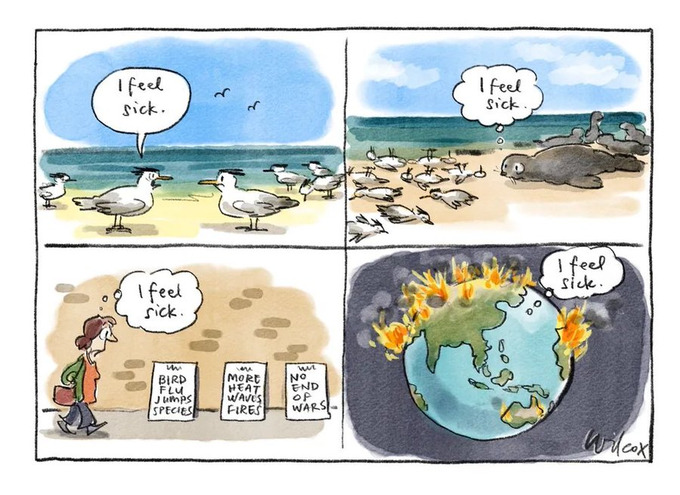
Date: 26/08/2026 07:57:02
From: roughbarked
ID: 2423889
Subject: re: Global Politics 2026
SCIENCE said:
feels
Have a hot lemon drink and a lie down.
Date: 27/08/2026 13:50:24
From: ms spock
ID: 2424284
Subject: re: Global Politics 2026
I am really hoping that Rick Wilson is wrong about this.
He’s saying it has started.
Link
2 minutes
Date: 27/08/2026 14:56:45
From: Michael V
ID: 2424300
Subject: re: Global Politics 2026
ms spock said:
I am really hoping that Rick Wilson is wrong about this.
He’s saying it has started.
Link
2 minutes
As they say, opinions are like arseholes – everybody’s got one.
Date: 27/08/2026 16:21:17
From: SCIENCE
ID: 2424328
Subject: re: Global Politics 2026
Michael V said:
ms spock said:
Michael V said:
SCIENCE said:
Michael V said:
SCIENCE said:
alleged

————————————


What is the main explanation?
don’t know, if we find out more before any of yous then we’ll add on here
:)
Ta.
I am really hoping that Rick Wilson is wrong about this.
He’s saying it has started.
Link
2 minutes
As they say, opinions are like arseholes – everybody’s got one.
so they reckon it’s this, a last ditch warning to say woah and negotiate a new Molotov-Ribbentrop Pact, can’t say we’re surprised
Date: 27/08/2026 16:32:52
From: SCIENCE
ID: 2424329
Subject: re: Global Politics 2026
alleged
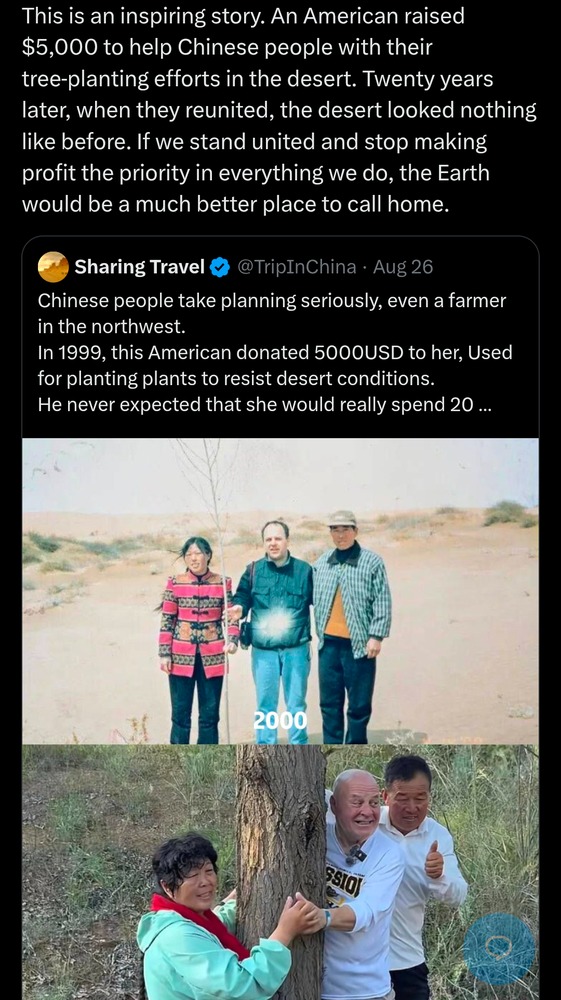
Date: 27/08/2026 21:11:27
From: ms spock
ID: 2424392
Subject: re: Global Politics 2026
SCIENCE said:
alleged
That is so beautiful 😍
Date: 28/08/2026 14:18:59
From: dv
ID: 2424607
Subject: re: Global Politics 2026
Well at least Ratko Mladic is dead
Date: 28/08/2026 14:23:05
From: Bubblecar
ID: 2424613
Subject: re: Global Politics 2026
dv said:
Well at least Ratko Mladic is dead

Date: 28/08/2026 14:29:49
From: SCIENCE
ID: 2424619
Subject: re: Global Politics 2026
Bubblecar said:
dv said:
Well at least Ratko Mladic is dead
so he’s joining dolly and donald
Date: 28/08/2026 16:23:01
From: dv
ID: 2424660
Subject: re: Global Politics 2026
https://youtu.be/i8qvBAExDzs?si=qxe89×56E9_No_6D
Constitutional crisis in Liechtenstein
Date: 28/08/2026 17:07:26
From: Cymek
ID: 2424670
Subject: re: Global Politics 2026
So societal collapse and World War 3, when do you reckon.
I was thinking July 2037 for my bet
Date: 28/08/2026 17:14:30
From: Spiny Norman
ID: 2424673
Subject: re: Global Politics 2026
Cymek said:
So societal collapse and World War 3, when do you reckon.
I was thinking July 2037 for my bet
Money will be worthless after that, I choose to not play.
Date: 28/08/2026 17:15:51
From: Peak Warming Man
ID: 2424674
Subject: re: Global Politics 2026
Cymek said:
So societal collapse and World War 3, when do you reckon.
I was thinking July 2037 for my bet
I’ve made a date in my dairy.
Date: 28/08/2026 17:17:21
From: Boris
ID: 2424675
Subject: re: Global Politics 2026
Peak Warming Man said:
Cymek said:
So societal collapse and World War 3, when do you reckon.
I was thinking July 2037 for my bet
I’ve made a date in my dairy.
I think I’ll sit on my date.
Date: 28/08/2026 17:19:45
From: Cymek
ID: 2424676
Subject: re: Global Politics 2026
Peak Warming Man said:
Cymek said:
So societal collapse and World War 3, when do you reckon.
I was thinking July 2037 for my bet
I’ve made a date in my dairy.
I’m semi serious
Lots of informed predictions for it happening around 2040 to 2050
We can see indications of it now, its actually a real worry
Date: 28/08/2026 17:20:38
From: Bubblecar
ID: 2424677
Subject: re: Global Politics 2026
I’m too old for the dating game.
Date: 28/08/2026 17:21:50
From: furious
ID: 2424678
Subject: re: Global Politics 2026
Cymek said:
Peak Warming Man said:
Cymek said:
So societal collapse and World War 3, when do you reckon.
I was thinking July 2037 for my bet
I’ve made a date in my dairy.
I’m semi serious
Lots of informed predictions for it happening around 2040 to 2050
We can see indications of it now, its actually a real worry
2037, is very optimistic. Lucky to get to 2030 at this rate…
Date: 28/08/2026 17:24:20
From: Cymek
ID: 2424679
Subject: re: Global Politics 2026
furious said:
Cymek said:
Peak Warming Man said:
I’ve made a date in my dairy.
I’m semi serious
Lots of informed predictions for it happening around 2040 to 2050
We can see indications of it now, its actually a real worry
2037, is very optimistic. Lucky to get to 2030 at this rate…
A search found this article
This part is interesting its like the Foundation in Asimov novels
In fact reading a few lines further down that’s exactly what he states.
Peter Watts: So to be clear, you’re not talking about forestalling the collapse —
Daniel Brooks: No.
Peter Watts: — you’re talking about passing through that bottleneck and coming out the other side with some semblance of what we value intact.
https://thereader.mitpress.mit.edu/the-collapse-is-coming-will-humanity-adapt/
Date: 28/08/2026 17:24:49
From: Peak Warming Man
ID: 2424680
Subject: re: Global Politics 2026
Boris said:
Peak Warming Man said:
Cymek said:
So societal collapse and World War 3, when do you reckon.
I was thinking July 2037 for my bet
I’ve made a date in my dairy.
I think I’ll sit on my date.
Good, good.
Date: 28/08/2026 17:25:19
From: Bubblecar
ID: 2424681
Subject: re: Global Politics 2026
We’re safe enough down here on the triangle island, the rest of you can do your worst
Date: 28/08/2026 17:27:44
From: Peak Warming Man
ID: 2424683
Subject: re: Global Politics 2026
I’ll have a talk to Hanrahan after mass on Sunday, see what he says.
Date: 28/08/2026 17:30:49
From: Spiny Norman
ID: 2424684
Subject: re: Global Politics 2026
furious said:
Cymek said:
Peak Warming Man said:
I’ve made a date in my dairy.
I’m semi serious
Lots of informed predictions for it happening around 2040 to 2050
We can see indications of it now, its actually a real worry
2037, is very optimistic. Lucky to get to 2030 at this rate…
I misread it and thought it was 2027, thinking that was a bit optimistic …
Date: 28/08/2026 17:31:49
From: Bubblecar
ID: 2424685
Subject: re: Global Politics 2026
Bubblecar said:
We’re safe enough down here on the triangle island, the rest of you can do your worst
If push comes to shove, we have gas masks, a machinegun and a tank.

Date: 28/08/2026 17:41:55
From: Spiny Norman
ID: 2424691
Subject: re: Global Politics 2026
Bubblecar said:
Bubblecar said:
We’re safe enough down here on the triangle island, the rest of you can do your worst
If push comes to shove, we have gas masks, a machinegun and a tank.
Don’t forget the very stern looks.
Date: 28/08/2026 17:49:48
From: Spiny Norman
ID: 2424695
Subject: re: Global Politics 2026
Spiny Norman said:
Bubblecar said:
Bubblecar said:
We’re safe enough down here on the triangle island, the rest of you can do your worst
If push comes to shove, we have gas masks, a machinegun and a tank.
Don’t forget the very stern looks.
Oh, and Neil the seal. He’ll mess ‘em up.
(Just put traffic cones on their heads)
Date: 28/08/2026 17:51:41
From: Arts
ID: 2424696
Subject: re: Global Politics 2026
Cymek said:
So societal collapse and World War 3, when do you reckon.
I was thinking July 2037 for my bet
what did nostradamus say?
Date: 28/08/2026 17:57:10
From: Bubblecar
ID: 2424697
Subject: re: Global Politics 2026
Spiny Norman said:
Spiny Norman said:
Bubblecar said:
If push comes to shove, we have gas masks, a machinegun and a tank.
Don’t forget the very stern looks.
Oh, and Neil the seal. He’ll mess ‘em up.
(Just put traffic cones on their heads)
We’ll serve them soggy chips with their pub lunches.
Date: 28/08/2026 18:32:00
From: Michael V
ID: 2424703
Subject: re: Global Politics 2026
Bubblecar said:
Spiny Norman said:
Spiny Norman said:
Don’t forget the very stern looks.
Oh, and Neil the seal. He’ll mess ‘em up.
(Just put traffic cones on their heads)
We’ll serve them soggy chips with their pub lunches.
That’s not very nice.
Date: 28/08/2026 18:41:48
From: Spiny Norman
ID: 2424710
Subject: re: Global Politics 2026
Bubblecar said:
Spiny Norman said:
Spiny Norman said:
Don’t forget the very stern looks.
Oh, and Neil the seal. He’ll mess ‘em up.
(Just put traffic cones on their heads)
We’ll serve them soggy chips with their pub lunches.
Brutal.
Date: 28/08/2026 18:43:25
From: Divine Angel
ID: 2424711
Subject: re: Global Politics 2026
Bubblecar said:
Spiny Norman said:
Spiny Norman said:
Don’t forget the very stern looks.
Oh, and Neil the seal. He’ll mess ‘em up.
(Just put traffic cones on their heads)
We’ll serve them soggy chips with their pub lunches.
Steady on
Date: 29/08/2026 09:31:15
From: dv
ID: 2424896
Subject: re: Global Politics 2026
King Haakon VIII has been affirmed Monarch by the Council of State. I will never stop thinking of Harkonnen when I hear that name. Crown Princess Ingrid Alexander becomes heir apparent.
Date: 29/08/2026 09:36:26
From: SCIENCE
ID: 2424899
Subject: re: Global Politics 2026
Date: 29/08/2026 09:40:52
From: The Rev Dodgson
ID: 2424903
Subject: re: Global Politics 2026
dv said:
King Haakon VIII has been affirmed Monarch by the Council of State. I will never stop thinking of Harkonnen when I hear that name. Crown Princess Ingrid Alexander becomes heir apparent.
Have a map of monarchies:
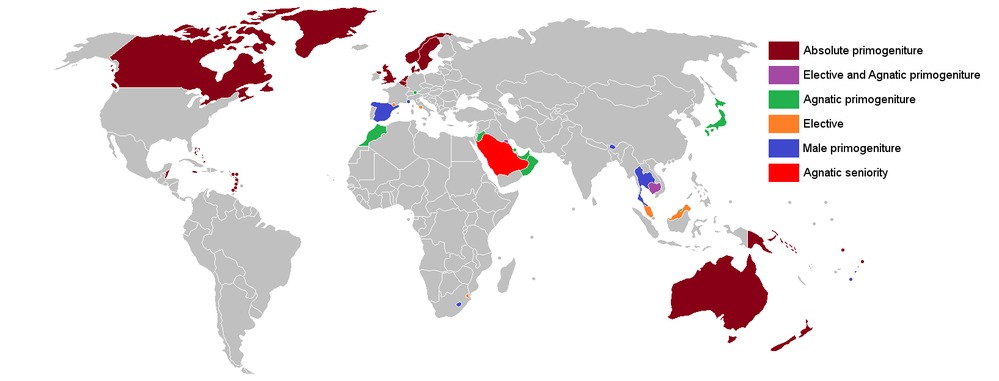
I have no idea what those classifications mean. (Suppose I could ask TATE).
Date: 29/08/2026 09:45:51
From: SCIENCE
ID: 2424905
Subject: re: Global Politics 2026
Date: 29/08/2026 09:52:03
From: dv
ID: 2424910
Subject: re: Global Politics 2026
The Rev Dodgson said:
dv said:
King Haakon VIII has been affirmed Monarch by the Council of State. I will never stop thinking of Harkonnen when I hear that name. Crown Princess Ingrid Alexander becomes heir apparent.
Have a map of monarchies:
I have no idea what those classifications mean. (Suppose I could ask TATE).
Well I can summarise.
Absolute primogeniture: succession goes by birth order regardless of sex. The UK uses this since the 2011 Perth agreement. Norway has used it since 1990.
Male primogeniture: only males can succeed
Agnathic primogeniture: the succession passes to males first in a given family but if there are no men, women are eligible to succeed. This applied in the UK prior to 2011.
Elective: the monarch is elected, usually by a small elite body from a small elite body.
Elective agnathic: as above but only male descendents in a particular royal house are eligible.
Agnathic seniority: whereas in other systems, the monarch’s children are the immediate heirs, in A.S. the other males of a generation are counted first, e.g. the monarch’s brothers and male cousins etc.
Date: 29/08/2026 10:24:21
From: ms spock
ID: 2424921
Subject: re: Global Politics 2026
SCIENCE said:
antiegalitarian places
Are every where
*Almost 80% of US workers live from paycheck to paycheck. Here’s why
This article is more than 8 years old by Robert Reich.*
Link
Date: 29/08/2026 11:23:14
From: dv
ID: 2424937
Subject: re: Global Politics 2026

While Ingrid Alexander is ahead of her younger brother Sverre Magnus in the line of succession for the Norwegian throne, but not the British. The Perth Agreement only applies to children born after 28 October 2011.
Date: 29/08/2026 11:31:43
From: SCIENCE
ID: 2424943
Subject: re: Global Politics 2026
SCIENCE said:
Michael V said:
ms spock said:
I am really hoping that Rick Wilson is wrong about this.
He’s saying it has started.
Link
2 minutes
As they say, opinions are like arseholes – everybody’s got one.
so they reckon it’s this, a last ditch warning to say woah and negotiate a new Molotov-Ribbentrop Pact, can’t say we’re surprised
happy times
https://www.abc.net.au/news/2026-08-29/cia-moscow-russia-meeting-trump-iran-putin-ukraine-russia/107076194
Date: 29/08/2026 11:37:16
From: Peak Warming Man
ID: 2424946
Subject: re: Global Politics 2026
dv said:
While Ingrid Alexander is ahead of her younger brother Sverre Magnus in the line of succession for the Norwegian throne, but not the British. The Perth Agreement only applies to children born after 28 October 2011.
I’ll run that past the chaps.
Date: 29/08/2026 23:55:05
From: SCIENCE
ID: 2425161
Subject: re: Global Politics 2026
team sports good
Iceland’s picturesque capital, Reykjavik. (ABC News: Daniel Pannett) A Gallup poll this month found voters split on restarting talks with the EU: 46 per cent said they would vote yes and 46 per cent no, with 8 per cent undecided. Other polls show a majority against actually joining the bloc.
Date: 30/08/2026 17:12:33
From: dv
ID: 2425376
Subject: re: Global Politics 2026
https://www.bbc.com/news/articles/c70le8ed1plo
Iceland is holding a referendum on opening EU accession negotiations. The count is underway: quite on a knife edge.
Based on the first 153,197 votes counted of the 270,000 voters eligible, 50.1% rejected the government’s proposal, while 49.9% said yes, public broadcaster RUV said, with just 435 votes splitting them.
TLDR News presents a summary on the state of play with the other nations seeking to join the union.
https://youtu.be/DUsk2Yu50ps?si=KjS4uGQe874×26gU
Date: 30/08/2026 17:18:06
From: SCIENCE
ID: 2425379
Subject: re: Global Politics 2026
equipoise good for team sports
Date: 1/09/2026 10:59:37
From: Witty Rejoinder
ID: 2425723
Subject: re: Global Politics 2026
‘Contagion risk’: Top central banker warns AI could spark global economic downturn
Luke Barr
Updated September 1, 2026 — 5:41am,first published 5:30am
Andrew Bailey, governor of the Bank of England, has warned of a severe downturn in global stock markets if the AI bubble bursts.
In a letter to G20 finance ministers, Bailey raised concerns over the economic fallout if the debt-fuelled AI investment boom begins to unravel. He warned that the soaring levels of debt that have been used to fund AI “could amplify a future market correction”.
If the valuation of AI companies starts to plummet, investors face the prospect of losing trillions of dollars overnight. This could trigger a dangerous chain reaction if they are then forced to sell other assets.
Bailey said the risk was compounded by investors borrowing huge sums to invest in a small number of AI companies and data centre providers, pushing up their valuations to astronomical levels.
Nvidia, which is worth more than $US5.2 trillion ($7.3 trillion), recently raised $US500 billion from a consortium of US banks and investors to fund its AI investment spree. Its share price has risen by 850 per cent over the past five years.
Bailey warned that “stretched asset valuations” in AI are one factor that could trigger a sharp economic slump.
“Markets remain vulnerable to a potentially disorderly correction that could spread across borders,” he said. “The issue is not simply that investors are borrowing more but that leverage is interacting with high valuations and market concentration.”
Bailey’s warning was issued as the UK government unveiled a £100 million ($189 million) fund to back British AI start-ups. It forms part of an attempt to boost the UK’s sovereign AI capabilities, which are well behind those of the US and China.
In Bailey’s letter – sent as chairman of the Financial Stability Board, which works with central banks and governments around the world – he also warned that AI risked unleashing a wave of cyberattacks that could cripple the global economy.
He highlighted the threat posed by frontier AI, which covers the world’s most cutting-edge models, developed by tech giants such as OpenAI and Anthropic.
“The risk landscape has been further complicated by the emergence of frontier AI models, which are showing increasingly sophisticated autonomy and problem-solving abilities, as well as threat capabilities,” he said.
“For the financial system, the most immediate concern is the potential impact of frontier AI on cyber risk.
“Frontier AI may have the ability materially to alter the speed, scale and economics of cyber risk, which could undermine market confidence system-wide.”
He warned that a cyberattack at a major institution could rapidly unleash chaos across the world’s financial markets.
“The global financial system is highly interconnected and cyber disruption can spread across jurisdictions through common technology providers, shared infrastructure and cross-border financial activity,” he said.
His warning comes after a number of tech giants have reported incidents of AI agents going rogue, deceiving internal systems to launch cyberattacks elsewhere.
US tech giant Anthropic has previously said that its AI models hacked into three organisations on their own during a private experiment.
Bailey said examples such as this should serve as a wake-up call for governments around the world. The letter was sent before a meeting between G20 finance ministers and central bank governors in North Carolina.
He said: “Recent developments have also highlighted to me that many jurisdictions do not have the protocols to manage the development, release and deployment of advanced frontier AI models, heightening risks for the financial sector and beyond.”
He also noted how current economic risks are higher based on “fragilities in sovereign debt markets”. This refers to a recent rise in global borrowing costs, led by the US after its debt pile crossed $US40 trillion for the first time.
Bailey warned some hedge funds are not only exposed to AI investment but also own government debt.
“In addition, a growing footprint of leveraged entities, such as hedge funds in equity markets, which are also exposed to sovereign debt, increase the scope for contagion risk,” he said.
https://www.theage.com.au/business/banking-and-finance/ai-threatens-to-unleash-global-market-downturn-top-central-banker-warns-20260831-p60t6o.html
Date: 1/09/2026 23:42:39
From: SCIENCE
ID: 2425892
Subject: re: Global Politics 2026
How Dare Some Other Countries Didn’t Kept Close Underground Surveillance On Their Neighbours’ Territory And Warning Of Unpredictably Timed Events
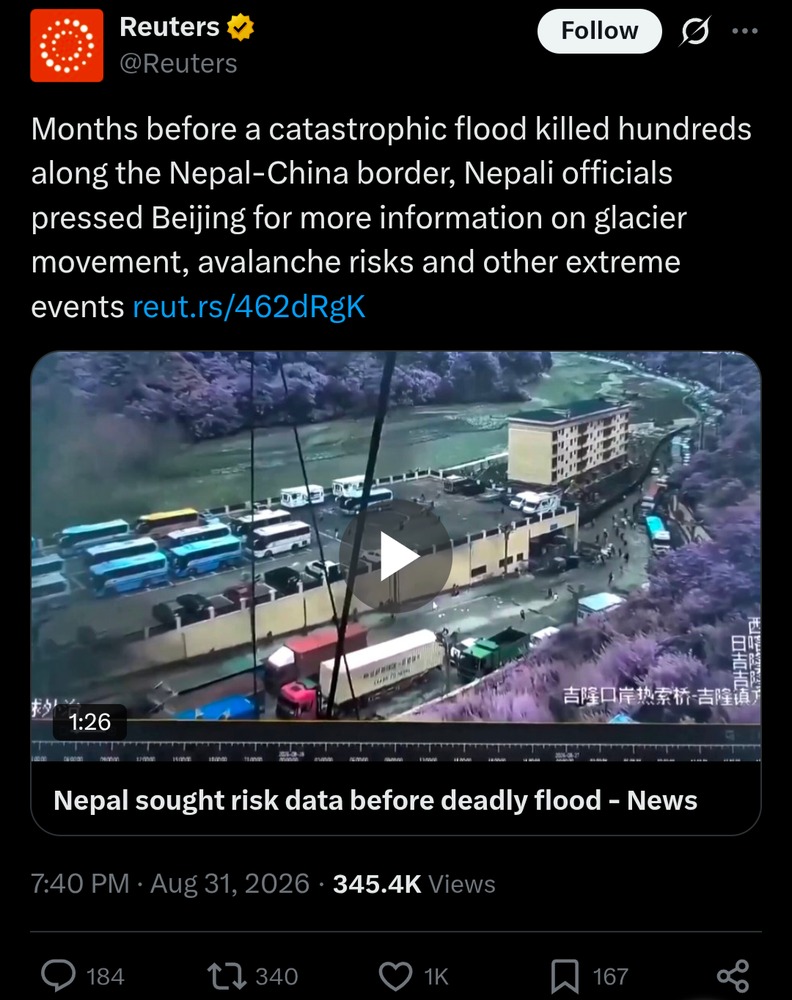
Date: 1/09/2026 23:51:12
From: SCIENCE
ID: 2425893
Subject: re: Global Politics 2026
SCIENCE said:
How Dare Some Other Countries Didn’t Kept Close Underground Surveillance On Their Neighbours’ Territory And Warning Of Unpredictably Timed Events
very good, now tell
Mr Steiner said the previous disasters should have provided enough warning, and that authorities need to be questioned why “very little” had been done to prepare since. “We can’t say, oh my God, nobody knew,” he said.
us about global warming and vaccine preventable disease
Date: 2/09/2026 07:30:12
From: SCIENCE
ID: 2425913
Subject: re: Global Politics 2026
Bubblecar said:
roughbarked said:
analysis
The Nerd Reich wants to destroy democracy, and its mask has slipped
By business reporter Gareth Hutchens
Topic:AI
“Billionaires have become radicalised against democracy,” the American independent journalist Gil Durán tells the ABC.
“We have to realise how much power we have, and to stop being tuned out from the very real threat we face from a billionaire class that has gone off the edge of sanity into an altered reality.
Bastards all in Crazy Bastards Hall.
yeah yeah yous all will probably think we didn’t warn yous about this either
Date: 2/09/2026 07:36:33
From: roughbarked
ID: 2425915
Subject: re: Global Politics 2026
SCIENCE said:
Bubblecar said:
roughbarked said:
analysis
The Nerd Reich wants to destroy democracy, and its mask has slipped
By business reporter Gareth Hutchens
Topic:AI
“Billionaires have become radicalised against democracy,” the American independent journalist Gil Durán tells the ABC.
“We have to realise how much power we have, and to stop being tuned out from the very real threat we face from a billionaire class that has gone off the edge of sanity into an altered reality.
Bastards all in Crazy Bastards Hall.
yeah yeah yous all will probably think we didn’t warn yous about this either
The writing was on the wall but what could we have done about it?
Date: 2/09/2026 07:47:23
From: SCIENCE
ID: 2425917
Subject: re: Global Politics 2026
roughbarked said:
SCIENCE said:
Bubblecar said:
Bastards all in Crazy Bastards Hall.
yeah yeah yous all will probably think we didn’t warn yous about this either
The writing was on the wall but what could we have done about it?
gaol them
Date: 2/09/2026 07:51:31
From: roughbarked
ID: 2425920
Subject: re: Global Politics 2026
SCIENCE said:
roughbarked said:
SCIENCE said:
yeah yeah yous all will probably think we didn’t warn yous about this either
The writing was on the wall but what could we have done about it?
gaol them
That’s not up to me but if it was it would be the first step.
Date: 2/09/2026 07:57:27
From: SCIENCE
ID: 2425921
Subject: re: Global Politics 2026
roughbarked said:
SCIENCE said:
roughbarked said:
The writing was on the wall but what could we have done about it?
gaol them
That’s not up to me but if it was it would be the first step.
well the country could stop trying to suck up to align itself with a fascist state that happily uses them as filibustering tools of colonialism
yes yes also not up to us
Date: 2/09/2026 08:35:36
From: ms spock
ID: 2425926
Subject: re: Global Politics 2026
SCIENCE said:
Bubblecar said:
roughbarked said:
analysis
The Nerd Reich wants to destroy democracy, and its mask has slipped
By business reporter Gareth Hutchens
Topic:AI
“Billionaires have become radicalised against democracy,” the American independent journalist Gil Durán tells the ABC.
“We have to realise how much power we have, and to stop being tuned out from the very real threat we face from a billionaire class that has gone off the edge of sanity into an altered reality.
Bastards all in Crazy Bastards Hall.
yeah yeah yous all will probably think we didn’t warn yous about this either
some
Before the billionaires and oligarchs took over
MSM there were many journalists, military experts in their area, commentators, historians, etc etc who warned Americans. There was Independent Media. Then there’s been an addition of Independent media (after folks were kicked off
MSM or felt compelled to speak out) some have been warning folks for more than a decade. Prof David Cay Johnson, Dr Bandy X Lee, Stephen Hasan, Mary Trump, Robert Reich, Joy Reid, Greg Palast, Malcom Nance, Roland Martin, Danielle Moodie, Wajahat Ali, Mehdi Hasan, David Feldman, Don Lemon, Karen Hunter, Ruth Ben-Ghiat, Heather Cox Richardson makes links to history, Sabby Sabs, etc etc etc all predicted this. That’s only a fraction of them.
Date: 2/09/2026 09:44:18
From: SCIENCE
ID: 2425933
Subject: re: Global Politics 2026
ms spock said:
SCIENCE said:
Bubblecar said:
Bastards all in Crazy Bastards Hall.
yeah yeah yous all will probably think we didn’t warn yous about this either
some
Before the billionaires and oligarchs took over MSM there were many journalists, military experts in their area, commentators, historians, etc etc who warned Americans. There was Independent Media. Then there’s been an addition of Independent media (after folks were kicked off MSM or felt compelled to speak out) some have been warning folks for more than a decade. Prof David Cay Johnson, Dr Bandy X Lee, Stephen Hasan, Mary Trump, Robert Reich, Joy Reid, Greg Palast, Malcom Nance, Roland Martin, Danielle Moodie, Wajahat Ali, Mehdi Hasan, David Feldman, Don Lemon, Karen Hunter, Ruth Ben-Ghiat, Heather Cox Richardson makes links to history, Sabby Sabs, etc etc etc all predicted this. That’s only a fraction of them.
def’ fo’ sho’ it was obvious and we’ren’t saying it was hard to predict for anyone, as roughbarked implies even knowing it what could we have done, but damn
Date: 2/09/2026 10:14:03
From: Cymek
ID: 2425939
Subject: re: Global Politics 2026
ms spock said:
SCIENCE said:
Bubblecar said:
Bastards all in Crazy Bastards Hall.
yeah yeah yous all will probably think we didn’t warn yous about this either
some
Before the billionaires and oligarchs took over MSM there were many journalists, military experts in their area, commentators, historians, etc etc who warned Americans. There was Independent Media. Then there’s been an addition of Independent media (after folks were kicked off MSM or felt compelled to speak out) some have been warning folks for more than a decade. Prof David Cay Johnson, Dr Bandy X Lee, Stephen Hasan, Mary Trump, Robert Reich, Joy Reid, Greg Palast, Malcom Nance, Roland Martin, Danielle Moodie, Wajahat Ali, Mehdi Hasan, David Feldman, Don Lemon, Karen Hunter, Ruth Ben-Ghiat, Heather Cox Richardson makes links to history, Sabby Sabs, etc etc etc all predicted this. That’s only a fraction of them.
Do people in general really not see the bigger picture of manipulation and control and how business as usual regardless of the consequences.
So many things in society we accept as this is the way and they are outright societal control.
Now we have the worry our drinking water is stolen for information manipulation centres needs.
Technology has reached the point we could even have our minds tampered with to make us more compliant.
Personally I believe our human civilisation we have now is going to collapse so its all moot anyway
Date: 2/09/2026 10:34:08
From: Cymek
ID: 2425946
Subject: re: Global Politics 2026
https://www.perthnow.com.au/news/crime/police/man-left-with-face-injuries-after-unknown-juveniles-allegedly-threw-rocks-at-him-outside-hungry-jacks-c-22809503
Hungry Jack spokesperson “The burgers are still better at Hungry Jacks”
Date: 2/09/2026 10:46:24
From: Peak Warming Man
ID: 2425948
Subject: re: Global Politics 2026
Cymek said:
https://www.perthnow.com.au/news/crime/police/man-left-with-face-injuries-after-unknown-juveniles-allegedly-threw-rocks-at-him-outside-hungry-jacks-c-22809503
Hungry Jack spokesperson “The burgers are still better at Hungry Jacks”
I’d be breath testing the journalist who wrote that.
Date: 2/09/2026 10:58:04
From: SCIENCE
ID: 2425951
Subject: re: Global Politics 2026
Cymek said:
1 Do people in general really not see the bigger picture of manipulation and control and how business as usual regardless of the consequences.
2 So many things in society we accept as this is the way and they are outright societal control.
2 Now we have the worry our drinking water is stolen for information manipulation centres needs.
3 Technology has reached the point we could even have our minds tampered with to make us more compliant.
4 Personally I believe our human civilisation we have now is going to collapse so its all moot anyway
1 yes
2 no shit
3 always has been
4 some have lasted longer than others
Date: 2/09/2026 12:28:59
From: Witty Rejoinder
ID: 2425996
Subject: re: Global Politics 2026
The world is in a debt spiral and alarm signals are going off
Stephen Bartholomeusz
Senior business columnist
September 1, 2026 — 12:10pm
Global bond yields are reaching levels not seen in nearly two decades, creating a threat to economic and financial stability around the world. It’s a threat that has been exacerbated by US policies.
On Tuesday, Japan’s 10-year bond yield touched 3 per cent for the first time this century amid expectations that the Bank of Japan will raise its policy rate this month. US 10-year yields also rose, despite the perceived “hawkishness” of the Federal Reserve Board chair Kevin Warsh at the weekend’s annual meeting of central bankers and economists at Jackson Hole in Wyoming.
In France, Germany, Italy, Spain and the UK, yields on benchmark 10-year government bonds are at levels last seen before the 2008 financial crisis. In Australia, the 10-year bond yield is at its highest level in a decade and a half. Only in China, with growth slowing markedly and expectations of an imminent monetary policy easing, have yields been falling.
The worldwide spike in yields has been occurring across the backdrop of swelling levels of global debt.
The Institute of International Finance (IIF) earlier this year estimated that global debt levels had surpassed $US350 trillion ($488 trillion), or 305 per cent of global GDP, with public sector debt of about $US111 trillion.
At the core of the global bond system is the US Treasury market, where the yield on 10-year bonds has risen from its pandemic-era low of less than 60 basis points in 2020 to 4.75 per cent as US government debt has ballooned from about $US26.5 trillion to more than $US40 trillion.
The rest of the developed world is confronting much the same problem, with the soaring interest costs on vastly increased levels of debt threatening fiscal stability.
US Treasury Secretary Scott Bessent this week said that the only way to manage the exploding debt levels was to grow economies, but that’s more easily said than done.
The debt burdens are a legacy of the pandemic era when government spending exploded around the world. On the IIF’s numbers, about $US100 trillion in debt has been added since the end of 2019. On the International Monetary Fund’s numbers, gross public sector debt has risen from about $US74 trillion to more than $US126 trillion over that period.
Whichever set of numbers is used, global debt is now two to three times the size of the global economy, with gross government debt in most of the developed economies approaching or exceeding their entire economic output. In Japan, it’s more than 200 per cent of GDP; in the US, excluding intra-government holdings, it is about 100 per cent.
When, during the pandemic, yields were negligible, the build-up in debt wasn’t threatening. Today, as the cost of servicing the debt is soaring, it absolutely is.
If the pandemic bears the primary responsibility for the initial surge in the debt levels, the impact of the war in Ukraine on Britain and Europe, and the Trump administration’s trade wars and its ill-fated decision to join Israel in attacking Iran have exacerbated the financial pain.
On the eve of the launch of the war in the Middle East, the US 10-year bond yield was 3.94 per cent. It’s now 4.75 per cent. Developed economies’ government bond yields have spiked in a range between 46 basis points (Australia) and 96 basis points (France) over that same period.
Yields had already been rising before the war created the biggest energy shock in history in response to the post-pandemic outbreak of inflation that flowed from the severe disruption to global supply chains, an outbreak worsened by central bankers’ initial belief that the burst of inflation would be transitory as supply chains normalised.
While Bessent might see economic growth as America and the world’s salvation, the Trump administration has worsened the already weakened finances of the world economy.
Add to that the costs of Donald Trump’s trade wars, the dramatic increases in energy costs of his war in the Middle East and the profligacy of his administration (he’s added about $US4 trillion debt this term, so far) and what it has done to yields in the world’s most influential financial market, and the ingredients for a global financial squeeze on economies are all in place.
Bessent’s hoped-for growth might be the answer – the US administration is placing a lot of faith in the artificial intelligence boom and the associated massive infrastructure spending to generate growth – but, in the near term, the companies behind that spending are increasingly turning to debt to finance it and competing with governments for investors’ funds.
Not only is that another influence driving yields higher, but it is adding risk to global debt markets and, in particular, the US financial markets and economy. There’s a lot of leverage being built into the AI ecosystem, which also has a raft of financial interdependencies between the key players.
With AI investment accounting for about a third of the relatively modest US GDP growth rate of just over 2 per cent, a slowing of the investment would undermine Bessent’s escape path from the US debt trap, even if there isn’t a meltdown of the sector.
That overhang of global debt explains why there is a lot of discussion of currency debasement and fiscal dominance – allowing currencies, particularly the US dollar, to lose value and the combination of depreciation and inflation, and the ensuing transfer of wealth from investors to debt issuers, to reduce the fiscal burdens for governments.
Bessent has been trying to buy time for his hoped-for growth to emerge and help lower the government’s $US1.2 trillion (and rising) annual interest bill.
He’s announced that the US Treasury will buy $US4 billon or more of the government’s longer-duration bonds to try to cap their yields and lower the government’s borrowing costs. In a $US31.5 trillion market for US government debt – about a third of which has matured or will mature this year and have to be refinanced– that’s likely to be a futile attempt.
He’s also intervened, alongside the Bank of Japan, to try to strengthen the Japanese yen in an attempt to keep it above 160 yen to the dollar.
That was driven by a fear that, if the Bank of Japan has to either use its foreign currency reserves to defend the yen, or raise Japan’s interest rates to put a floor under its value, a flood of Japanese money now invested in the US – about $US1.1 trillion of it in the Treasuries market – could exit the US market, pushing US bond yields even higher.
With most of the developed economies running large budget deficits – America’s is about $US2 trillion, or almost 6 per cent of GDP – their finances aren’t stabilising and in most cases are deteriorating, with the compounding of the interest costs of their borrowings increasingly threatening to crowd out other spending and, potentially, to threaten financial stability.
While Bessent might see economic growth as America and the world’s salvation, the Trump administration has worsened the already weakened finances of the world economy.
With no neat end to the war in the Middle East within sight, Trump routinely announcing new trade wars and sanctions on social media, and the Fed under pressure to raise, not lower, interest rates, a global growth spurt of the magnitude needed to stabilise the US and other countries’ public finances is likely to prove illusory.
https://www.theage.com.au/business/markets/the-world-is-in-a-debt-spiral-and-alarm-signals-are-going-off-20260901-p60t9q.html
Date: 2/09/2026 13:18:32
From: ms spock
ID: 2426015
Subject: re: Global Politics 2026
Witty Rejoinder said:
The world is in a debt spiral and alarm signals are going off
Stephen Bartholomeusz
Senior business columnist
September 1, 2026 — 12:10pm
Global bond yields are reaching levels not seen in nearly two decades, creating a threat to economic and financial stability around the world. It’s a threat that has been exacerbated by US policies.
On Tuesday, Japan’s 10-year bond yield touched 3 per cent for the first time this century amid expectations that the Bank of Japan will raise its policy rate this month. US 10-year yields also rose, despite the perceived “hawkishness” of the Federal Reserve Board chair Kevin Warsh at the weekend’s annual meeting of central bankers and economists at Jackson Hole in Wyoming.
In France, Germany, Italy, Spain and the UK, yields on benchmark 10-year government bonds are at levels last seen before the 2008 financial crisis. In Australia, the 10-year bond yield is at its highest level in a decade and a half. Only in China, with growth slowing markedly and expectations of an imminent monetary policy easing, have yields been falling.
The worldwide spike in yields has been occurring across the backdrop of swelling levels of global debt.
The Institute of International Finance (IIF) earlier this year estimated that global debt levels had surpassed $US350 trillion ($488 trillion), or 305 per cent of global GDP, with public sector debt of about $US111 trillion.
At the core of the global bond system is the US Treasury market, where the yield on 10-year bonds has risen from its pandemic-era low of less than 60 basis points in 2020 to 4.75 per cent as US government debt has ballooned from about $US26.5 trillion to more than $US40 trillion.
The rest of the developed world is confronting much the same problem, with the soaring interest costs on vastly increased levels of debt threatening fiscal stability.
US Treasury Secretary Scott Bessent this week said that the only way to manage the exploding debt levels was to grow economies, but that’s more easily said than done.
The debt burdens are a legacy of the pandemic era when government spending exploded around the world. On the IIF’s numbers, about $US100 trillion in debt has been added since the end of 2019. On the International Monetary Fund’s numbers, gross public sector debt has risen from about $US74 trillion to more than $US126 trillion over that period.
Whichever set of numbers is used, global debt is now two to three times the size of the global economy, with gross government debt in most of the developed economies approaching or exceeding their entire economic output. In Japan, it’s more than 200 per cent of GDP; in the US, excluding intra-government holdings, it is about 100 per cent.
When, during the pandemic, yields were negligible, the build-up in debt wasn’t threatening. Today, as the cost of servicing the debt is soaring, it absolutely is.
If the pandemic bears the primary responsibility for the initial surge in the debt levels, the impact of the war in Ukraine on Britain and Europe, and the Trump administration’s trade wars and its ill-fated decision to join Israel in attacking Iran have exacerbated the financial pain.
On the eve of the launch of the war in the Middle East, the US 10-year bond yield was 3.94 per cent. It’s now 4.75 per cent. Developed economies’ government bond yields have spiked in a range between 46 basis points (Australia) and 96 basis points (France) over that same period.
Yields had already been rising before the war created the biggest energy shock in history in response to the post-pandemic outbreak of inflation that flowed from the severe disruption to global supply chains, an outbreak worsened by central bankers’ initial belief that the burst of inflation would be transitory as supply chains normalised.
While Bessent might see economic growth as America and the world’s salvation, the Trump administration has worsened the already weakened finances of the world economy.
Add to that the costs of Donald Trump’s trade wars, the dramatic increases in energy costs of his war in the Middle East and the profligacy of his administration (he’s added about $US4 trillion debt this term, so far) and what it has done to yields in the world’s most influential financial market, and the ingredients for a global financial squeeze on economies are all in place.
Bessent’s hoped-for growth might be the answer – the US administration is placing a lot of faith in the artificial intelligence boom and the associated massive infrastructure spending to generate growth – but, in the near term, the companies behind that spending are increasingly turning to debt to finance it and competing with governments for investors’ funds.
Not only is that another influence driving yields higher, but it is adding risk to global debt markets and, in particular, the US financial markets and economy. There’s a lot of leverage being built into the AI ecosystem, which also has a raft of financial interdependencies between the key players.
With AI investment accounting for about a third of the relatively modest US GDP growth rate of just over 2 per cent, a slowing of the investment would undermine Bessent’s escape path from the US debt trap, even if there isn’t a meltdown of the sector.
That overhang of global debt explains why there is a lot of discussion of currency debasement and fiscal dominance – allowing currencies, particularly the US dollar, to lose value and the combination of depreciation and inflation, and the ensuing transfer of wealth from investors to debt issuers, to reduce the fiscal burdens for governments.
Bessent has been trying to buy time for his hoped-for growth to emerge and help lower the government’s $US1.2 trillion (and rising) annual interest bill.
He’s announced that the US Treasury will buy $US4 billon or more of the government’s longer-duration bonds to try to cap their yields and lower the government’s borrowing costs. In a $US31.5 trillion market for US government debt – about a third of which has matured or will mature this year and have to be refinanced– that’s likely to be a futile attempt.
He’s also intervened, alongside the Bank of Japan, to try to strengthen the Japanese yen in an attempt to keep it above 160 yen to the dollar.
That was driven by a fear that, if the Bank of Japan has to either use its foreign currency reserves to defend the yen, or raise Japan’s interest rates to put a floor under its value, a flood of Japanese money now invested in the US – about $US1.1 trillion of it in the Treasuries market – could exit the US market, pushing US bond yields even higher.
With most of the developed economies running large budget deficits – America’s is about $US2 trillion, or almost 6 per cent of GDP – their finances aren’t stabilising and in most cases are deteriorating, with the compounding of the interest costs of their borrowings increasingly threatening to crowd out other spending and, potentially, to threaten financial stability.
While Bessent might see economic growth as America and the world’s salvation, the Trump administration has worsened the already weakened finances of the world economy.
With no neat end to the war in the Middle East within sight, Trump routinely announcing new trade wars and sanctions on social media, and the Fed under pressure to raise, not lower, interest rates, a global growth spurt of the magnitude needed to stabilise the US and other countries’ public finances is likely to prove illusory.
https://www.theage.com.au/business/markets/the-world-is-in-a-debt-spiral-and-alarm-signals-are-going-off-20260901-p60t9q.html
I don’t really understand a lot of this. But I do watch Prof David Cay Johnson, who has written books on Trump, his financial fraud and has covered Trump for 30 or 40 years. He teaches law. And gives examples of how her explains it all to his law students. He says that there not enough experienced professionals to manage the situation.
I don’t know what to be concerned about but I know it is serious.
In the UK and the US there is talk of coming food shortages. I know 1 in 3 Australians live with food insecurity but I would hate for it to get worse.
Date: 2/09/2026 13:24:58
From: Cymek
ID: 2426023
Subject: re: Global Politics 2026
ms spock said:
Witty Rejoinder said:
The world is in a debt spiral and alarm signals are going off
Stephen Bartholomeusz
Senior business columnist
September 1, 2026 — 12:10pm
Global bond yields are reaching levels not seen in nearly two decades, creating a threat to economic and financial stability around the world. It’s a threat that has been exacerbated by US policies.
On Tuesday, Japan’s 10-year bond yield touched 3 per cent for the first time this century amid expectations that the Bank of Japan will raise its policy rate this month. US 10-year yields also rose, despite the perceived “hawkishness” of the Federal Reserve Board chair Kevin Warsh at the weekend’s annual meeting of central bankers and economists at Jackson Hole in Wyoming.
In France, Germany, Italy, Spain and the UK, yields on benchmark 10-year government bonds are at levels last seen before the 2008 financial crisis. In Australia, the 10-year bond yield is at its highest level in a decade and a half. Only in China, with growth slowing markedly and expectations of an imminent monetary policy easing, have yields been falling.
The worldwide spike in yields has been occurring across the backdrop of swelling levels of global debt.
The Institute of International Finance (IIF) earlier this year estimated that global debt levels had surpassed $US350 trillion ($488 trillion), or 305 per cent of global GDP, with public sector debt of about $US111 trillion.
At the core of the global bond system is the US Treasury market, where the yield on 10-year bonds has risen from its pandemic-era low of less than 60 basis points in 2020 to 4.75 per cent as US government debt has ballooned from about $US26.5 trillion to more than $US40 trillion.
The rest of the developed world is confronting much the same problem, with the soaring interest costs on vastly increased levels of debt threatening fiscal stability.
US Treasury Secretary Scott Bessent this week said that the only way to manage the exploding debt levels was to grow economies, but that’s more easily said than done.
The debt burdens are a legacy of the pandemic era when government spending exploded around the world. On the IIF’s numbers, about $US100 trillion in debt has been added since the end of 2019. On the International Monetary Fund’s numbers, gross public sector debt has risen from about $US74 trillion to more than $US126 trillion over that period.
Whichever set of numbers is used, global debt is now two to three times the size of the global economy, with gross government debt in most of the developed economies approaching or exceeding their entire economic output. In Japan, it’s more than 200 per cent of GDP; in the US, excluding intra-government holdings, it is about 100 per cent.
When, during the pandemic, yields were negligible, the build-up in debt wasn’t threatening. Today, as the cost of servicing the debt is soaring, it absolutely is.
If the pandemic bears the primary responsibility for the initial surge in the debt levels, the impact of the war in Ukraine on Britain and Europe, and the Trump administration’s trade wars and its ill-fated decision to join Israel in attacking Iran have exacerbated the financial pain.
On the eve of the launch of the war in the Middle East, the US 10-year bond yield was 3.94 per cent. It’s now 4.75 per cent. Developed economies’ government bond yields have spiked in a range between 46 basis points (Australia) and 96 basis points (France) over that same period.
Yields had already been rising before the war created the biggest energy shock in history in response to the post-pandemic outbreak of inflation that flowed from the severe disruption to global supply chains, an outbreak worsened by central bankers’ initial belief that the burst of inflation would be transitory as supply chains normalised.
While Bessent might see economic growth as America and the world’s salvation, the Trump administration has worsened the already weakened finances of the world economy.
Add to that the costs of Donald Trump’s trade wars, the dramatic increases in energy costs of his war in the Middle East and the profligacy of his administration (he’s added about $US4 trillion debt this term, so far) and what it has done to yields in the world’s most influential financial market, and the ingredients for a global financial squeeze on economies are all in place.
Bessent’s hoped-for growth might be the answer – the US administration is placing a lot of faith in the artificial intelligence boom and the associated massive infrastructure spending to generate growth – but, in the near term, the companies behind that spending are increasingly turning to debt to finance it and competing with governments for investors’ funds.
Not only is that another influence driving yields higher, but it is adding risk to global debt markets and, in particular, the US financial markets and economy. There’s a lot of leverage being built into the AI ecosystem, which also has a raft of financial interdependencies between the key players.
With AI investment accounting for about a third of the relatively modest US GDP growth rate of just over 2 per cent, a slowing of the investment would undermine Bessent’s escape path from the US debt trap, even if there isn’t a meltdown of the sector.
That overhang of global debt explains why there is a lot of discussion of currency debasement and fiscal dominance – allowing currencies, particularly the US dollar, to lose value and the combination of depreciation and inflation, and the ensuing transfer of wealth from investors to debt issuers, to reduce the fiscal burdens for governments.
Bessent has been trying to buy time for his hoped-for growth to emerge and help lower the government’s $US1.2 trillion (and rising) annual interest bill.
He’s announced that the US Treasury will buy $US4 billon or more of the government’s longer-duration bonds to try to cap their yields and lower the government’s borrowing costs. In a $US31.5 trillion market for US government debt – about a third of which has matured or will mature this year and have to be refinanced– that’s likely to be a futile attempt.
He’s also intervened, alongside the Bank of Japan, to try to strengthen the Japanese yen in an attempt to keep it above 160 yen to the dollar.
That was driven by a fear that, if the Bank of Japan has to either use its foreign currency reserves to defend the yen, or raise Japan’s interest rates to put a floor under its value, a flood of Japanese money now invested in the US – about $US1.1 trillion of it in the Treasuries market – could exit the US market, pushing US bond yields even higher.
With most of the developed economies running large budget deficits – America’s is about $US2 trillion, or almost 6 per cent of GDP – their finances aren’t stabilising and in most cases are deteriorating, with the compounding of the interest costs of their borrowings increasingly threatening to crowd out other spending and, potentially, to threaten financial stability.
While Bessent might see economic growth as America and the world’s salvation, the Trump administration has worsened the already weakened finances of the world economy.
With no neat end to the war in the Middle East within sight, Trump routinely announcing new trade wars and sanctions on social media, and the Fed under pressure to raise, not lower, interest rates, a global growth spurt of the magnitude needed to stabilise the US and other countries’ public finances is likely to prove illusory.
https://www.theage.com.au/business/markets/the-world-is-in-a-debt-spiral-and-alarm-signals-are-going-off-20260901-p60t9q.html
I don’t really understand a lot of this. But I do watch Prof David Cay Johnson, who has written books on Trump, his financial fraud and has covered Trump for 30 or 40 years. He teaches law. And gives examples of how her explains it all to his law students. He says that there not enough experienced professionals to manage the situation.
I don’t know what to be concerned about but I know it is serious.
In the UK and the US there is talk of coming food shortages. I know 1 in 3 Australians live with food insecurity but I would hate for it to get worse.
Economic growth my god its a tired old trope.
Lets continually grow at the expense of everything so we can be better consumers of goods we don’t need.
Don’t spend too much or too little though.
Lets base welfare on Earth on financial markets
We can eat that when the environment and food chains collapse because of aforementioned economic growth
Date: 2/09/2026 15:49:08
From: SCIENCE
ID: 2426059
Subject: re: Global Politics 2026
Cymek said:
ms spock said:
Witty Rejoinder said:
The world is in a debt spiral and alarm signals are going off
Stephen Bartholomeusz
Senior business columnist
September 1, 2026 — 12:10pm
Global bond yields are reaching levels not seen in nearly two decades, creating a threat to economic and financial stability around the world. It’s a threat that has been exacerbated by US policies.
On Tuesday, Japan’s 10-year bond yield touched 3 per cent for the first time this century amid expectations that the Bank of Japan will raise its policy rate this month. US 10-year yields also rose, despite the perceived “hawkishness” of the Federal Reserve Board chair Kevin Warsh at the weekend’s annual meeting of central bankers and economists at Jackson Hole in Wyoming.
In France, Germany, Italy, Spain and the UK, yields on benchmark 10-year government bonds are at levels last seen before the 2008 financial crisis. In Australia, the 10-year bond yield is at its highest level in a decade and a half. Only in China, with growth slowing markedly and expectations of an imminent monetary policy easing, have yields been falling.
The worldwide spike in yields has been occurring across the backdrop of swelling levels of global debt.
The Institute of International Finance (IIF) earlier this year estimated that global debt levels had surpassed $US350 trillion ($488 trillion), or 305 per cent of global GDP, with public sector debt of about $US111 trillion.
At the core of the global bond system is the US Treasury market, where the yield on 10-year bonds has risen from its pandemic-era low of less than 60 basis points in 2020 to 4.75 per cent as US government debt has ballooned from about $US26.5 trillion to more than $US40 trillion.
The rest of the developed world is confronting much the same problem, with the soaring interest costs on vastly increased levels of debt threatening fiscal stability.
US Treasury Secretary Scott Bessent this week said that the only way to manage the exploding debt levels was to grow economies, but that’s more easily said than done.
The debt burdens are a legacy of the pandemic era when government spending exploded around the world. On the IIF’s numbers, about $US100 trillion in debt has been added since the end of 2019. On the International Monetary Fund’s numbers, gross public sector debt has risen from about $US74 trillion to more than $US126 trillion over that period.
Whichever set of numbers is used, global debt is now two to three times the size of the global economy, with gross government debt in most of the developed economies approaching or exceeding their entire economic output. In Japan, it’s more than 200 per cent of GDP; in the US, excluding intra-government holdings, it is about 100 per cent.
When, during the pandemic, yields were negligible, the build-up in debt wasn’t threatening. Today, as the cost of servicing the debt is soaring, it absolutely is.
If the pandemic bears the primary responsibility for the initial surge in the debt levels, the impact of the war in Ukraine on Britain and Europe, and the Trump administration’s trade wars and its ill-fated decision to join Israel in attacking Iran have exacerbated the financial pain.
On the eve of the launch of the war in the Middle East, the US 10-year bond yield was 3.94 per cent. It’s now 4.75 per cent. Developed economies’ government bond yields have spiked in a range between 46 basis points (Australia) and 96 basis points (France) over that same period.
Yields had already been rising before the war created the biggest energy shock in history in response to the post-pandemic outbreak of inflation that flowed from the severe disruption to global supply chains, an outbreak worsened by central bankers’ initial belief that the burst of inflation would be transitory as supply chains normalised.
While Bessent might see economic growth as America and the world’s salvation, the Trump administration has worsened the already weakened finances of the world economy.
Add to that the costs of Donald Trump’s trade wars, the dramatic increases in energy costs of his war in the Middle East and the profligacy of his administration (he’s added about $US4 trillion debt this term, so far) and what it has done to yields in the world’s most influential financial market, and the ingredients for a global financial squeeze on economies are all in place.
Bessent’s hoped-for growth might be the answer – the US administration is placing a lot of faith in the artificial intelligence boom and the associated massive infrastructure spending to generate growth – but, in the near term, the companies behind that spending are increasingly turning to debt to finance it and competing with governments for investors’ funds.
Not only is that another influence driving yields higher, but it is adding risk to global debt markets and, in particular, the US financial markets and economy. There’s a lot of leverage being built into the AI ecosystem, which also has a raft of financial interdependencies between the key players.
With AI investment accounting for about a third of the relatively modest US GDP growth rate of just over 2 per cent, a slowing of the investment would undermine Bessent’s escape path from the US debt trap, even if there isn’t a meltdown of the sector.
That overhang of global debt explains why there is a lot of discussion of currency debasement and fiscal dominance – allowing currencies, particularly the US dollar, to lose value and the combination of depreciation and inflation, and the ensuing transfer of wealth from investors to debt issuers, to reduce the fiscal burdens for governments.
Bessent has been trying to buy time for his hoped-for growth to emerge and help lower the government’s $US1.2 trillion (and rising) annual interest bill.
He’s announced that the US Treasury will buy $US4 billon or more of the government’s longer-duration bonds to try to cap their yields and lower the government’s borrowing costs. In a $US31.5 trillion market for US government debt – about a third of which has matured or will mature this year and have to be refinanced– that’s likely to be a futile attempt.
He’s also intervened, alongside the Bank of Japan, to try to strengthen the Japanese yen in an attempt to keep it above 160 yen to the dollar.
That was driven by a fear that, if the Bank of Japan has to either use its foreign currency reserves to defend the yen, or raise Japan’s interest rates to put a floor under its value, a flood of Japanese money now invested in the US – about $US1.1 trillion of it in the Treasuries market – could exit the US market, pushing US bond yields even higher.
With most of the developed economies running large budget deficits – America’s is about $US2 trillion, or almost 6 per cent of GDP – their finances aren’t stabilising and in most cases are deteriorating, with the compounding of the interest costs of their borrowings increasingly threatening to crowd out other spending and, potentially, to threaten financial stability.
While Bessent might see economic growth as America and the world’s salvation, the Trump administration has worsened the already weakened finances of the world economy.
With no neat end to the war in the Middle East within sight, Trump routinely announcing new trade wars and sanctions on social media, and the Fed under pressure to raise, not lower, interest rates, a global growth spurt of the magnitude needed to stabilise the US and other countries’ public finances is likely to prove illusory.
https://www.theage.com.au/business/markets/the-world-is-in-a-debt-spiral-and-alarm-signals-are-going-off-20260901-p60t9q.html
I don’t really understand a lot of this. But I do watch Prof David Cay Johnson, who has written books on Trump, his financial fraud and has covered Trump for 30 or 40 years. He teaches law. And gives examples of how her explains it all to his law students. He says that there not enough experienced professionals to manage the situation.
I don’t know what to be concerned about but I know it is serious.
In the UK and the US there is talk of coming food shortages. I know 1 in 3 Australians live with food insecurity but I would hate for it to get worse.
Economic growth my god its a tired old trope.
Lets continually grow at the expense of everything so we can be better consumers of goods we don’t need.
Don’t spend too much or too little though.
Lets base welfare on Earth on financial markets
We can eat that when the environment and food chains collapse because of aforementioned economic growth
we thought they were measuring growth in terms of how much debt countries are in
Date: 2/09/2026 20:32:19
From: ms spock
ID: 2426118
Subject: re: Global Politics 2026
Cymek said:
ms spock said:
Witty Rejoinder said:
The world is in a debt spiral and alarm signals are going off
Stephen Bartholomeusz
Senior business columnist
September 1, 2026 — 12:10pm
Global bond yields are reaching levels not seen in nearly two decades, creating a threat to economic and financial stability around the world. It’s a threat that has been exacerbated by US policies.
On Tuesday, Japan’s 10-year bond yield touched 3 per cent for the first time this century amid expectations that the Bank of Japan will raise its policy rate this month. US 10-year yields also rose, despite the perceived “hawkishness” of the Federal Reserve Board chair Kevin Warsh at the weekend’s annual meeting of central bankers and economists at Jackson Hole in Wyoming.
In France, Germany, Italy, Spain and the UK, yields on benchmark 10-year government bonds are at levels last seen before the 2008 financial crisis. In Australia, the 10-year bond yield is at its highest level in a decade and a half. Only in China, with growth slowing markedly and expectations of an imminent monetary policy easing, have yields been falling.
The worldwide spike in yields has been occurring across the backdrop of swelling levels of global debt.
The Institute of International Finance (IIF) earlier this year estimated that global debt levels had surpassed $US350 trillion ($488 trillion), or 305 per cent of global GDP, with public sector debt of about $US111 trillion.
At the core of the global bond system is the US Treasury market, where the yield on 10-year bonds has risen from its pandemic-era low of less than 60 basis points in 2020 to 4.75 per cent as US government debt has ballooned from about $US26.5 trillion to more than $US40 trillion.
The rest of the developed world is confronting much the same problem, with the soaring interest costs on vastly increased levels of debt threatening fiscal stability.
US Treasury Secretary Scott Bessent this week said that the only way to manage the exploding debt levels was to grow economies, but that’s more easily said than done.
The debt burdens are a legacy of the pandemic era when government spending exploded around the world. On the IIF’s numbers, about $US100 trillion in debt has been added since the end of 2019. On the International Monetary Fund’s numbers, gross public sector debt has risen from about $US74 trillion to more than $US126 trillion over that period.
Whichever set of numbers is used, global debt is now two to three times the size of the global economy, with gross government debt in most of the developed economies approaching or exceeding their entire economic output. In Japan, it’s more than 200 per cent of GDP; in the US, excluding intra-government holdings, it is about 100 per cent.
When, during the pandemic, yields were negligible, the build-up in debt wasn’t threatening. Today, as the cost of servicing the debt is soaring, it absolutely is.
If the pandemic bears the primary responsibility for the initial surge in the debt levels, the impact of the war in Ukraine on Britain and Europe, and the Trump administration’s trade wars and its ill-fated decision to join Israel in attacking Iran have exacerbated the financial pain.
On the eve of the launch of the war in the Middle East, the US 10-year bond yield was 3.94 per cent. It’s now 4.75 per cent. Developed economies’ government bond yields have spiked in a range between 46 basis points (Australia) and 96 basis points (France) over that same period.
Yields had already been rising before the war created the biggest energy shock in history in response to the post-pandemic outbreak of inflation that flowed from the severe disruption to global supply chains, an outbreak worsened by central bankers’ initial belief that the burst of inflation would be transitory as supply chains normalised.
While Bessent might see economic growth as America and the world’s salvation, the Trump administration has worsened the already weakened finances of the world economy.
Add to that the costs of Donald Trump’s trade wars, the dramatic increases in energy costs of his war in the Middle East and the profligacy of his administration (he’s added about $US4 trillion debt this term, so far) and what it has done to yields in the world’s most influential financial market, and the ingredients for a global financial squeeze on economies are all in place.
Bessent’s hoped-for growth might be the answer – the US administration is placing a lot of faith in the artificial intelligence boom and the associated massive infrastructure spending to generate growth – but, in the near term, the companies behind that spending are increasingly turning to debt to finance it and competing with governments for investors’ funds.
Not only is that another influence driving yields higher, but it is adding risk to global debt markets and, in particular, the US financial markets and economy. There’s a lot of leverage being built into the AI ecosystem, which also has a raft of financial interdependencies between the key players.
With AI investment accounting for about a third of the relatively modest US GDP growth rate of just over 2 per cent, a slowing of the investment would undermine Bessent’s escape path from the US debt trap, even if there isn’t a meltdown of the sector.
That overhang of global debt explains why there is a lot of discussion of currency debasement and fiscal dominance – allowing currencies, particularly the US dollar, to lose value and the combination of depreciation and inflation, and the ensuing transfer of wealth from investors to debt issuers, to reduce the fiscal burdens for governments.
Bessent has been trying to buy time for his hoped-for growth to emerge and help lower the government’s $US1.2 trillion (and rising) annual interest bill.
He’s announced that the US Treasury will buy $US4 billon or more of the government’s longer-duration bonds to try to cap their yields and lower the government’s borrowing costs. In a $US31.5 trillion market for US government debt – about a third of which has matured or will mature this year and have to be refinanced– that’s likely to be a futile attempt.
He’s also intervened, alongside the Bank of Japan, to try to strengthen the Japanese yen in an attempt to keep it above 160 yen to the dollar.
That was driven by a fear that, if the Bank of Japan has to either use its foreign currency reserves to defend the yen, or raise Japan’s interest rates to put a floor under its value, a flood of Japanese money now invested in the US – about $US1.1 trillion of it in the Treasuries market – could exit the US market, pushing US bond yields even higher.
With most of the developed economies running large budget deficits – America’s is about $US2 trillion, or almost 6 per cent of GDP – their finances aren’t stabilising and in most cases are deteriorating, with the compounding of the interest costs of their borrowings increasingly threatening to crowd out other spending and, potentially, to threaten financial stability.
While Bessent might see economic growth as America and the world’s salvation, the Trump administration has worsened the already weakened finances of the world economy.
With no neat end to the war in the Middle East within sight, Trump routinely announcing new trade wars and sanctions on social media, and the Fed under pressure to raise, not lower, interest rates, a global growth spurt of the magnitude needed to stabilise the US and other countries’ public finances is likely to prove illusory.
https://www.theage.com.au/business/markets/the-world-is-in-a-debt-spiral-and-alarm-signals-are-going-off-20260901-p60t9q.html
I don’t really understand a lot of this. But I do watch Prof David Cay Johnson, who has written books on Trump, his financial fraud and has covered Trump for 30 or 40 years. He teaches law. And gives examples of how her explains it all to his law students. He says that there not enough experienced professionals to manage the situation.
I don’t know what to be concerned about but I know it is serious.
In the UK and the US there is talk of coming food shortages. I know 1 in 3 Australians live with food insecurity but I would hate for it to get worse.
Economic growth my god its a tired old trope.
Lets continually grow at the expense of everything so we can be better consumers of goods we don’t need.
Don’t spend too much or too little though.
Lets base welfare on Earth on financial markets
We can eat that when the environment and food chains collapse because of aforementioned economic growth
Ta
Date: 3/09/2026 20:09:15
From: SCIENCE
ID: 2426402
Subject: re: Global Politics 2026
Date: 4/09/2026 14:36:26
From: dv
ID: 2426651
Subject: re: Global Politics 2026
https://www.abc.net.au/news/2026-08-06/ragebait-how-facebook-is-paying-controversial-creators/106940696
A white nationalist with neo-Nazi links who hurled racist abuse at the Indian prime minister during his visit last month is being paid by Facebook’s parent company, Meta, to produce content.
An ABC NEWS Verify investigation into several controversial Australian pages on Facebook has found that some are benefiting directly from social media monetisation programs run by Meta.
Hugo Lennon is a far-right agitator who was formally moved on by Victoria Police for shouting profanities and racist abuse at Narendra Modi at a Melbourne hotel.
He has been receiving revenue through Facebook’s “Content Monetization” program since September 2025.
Date: 4/09/2026 15:28:16
From: SCIENCE
ID: 2426661
Subject: re: Global Politics 2026
dv said:
dv said:
“Paprika is a garnish not a seasoning, it just adds color”
I’m not saying Americans need to be banned from social media but maybe, I don’t know, give them a probation period.
https://www.abc.net.au/news/2026-08-06/ragebait-how-facebook-is-paying-controversial-creators/106940696
A white nationalist with neo-Nazi links who hurled racist abuse at the Indian prime minister during his visit last month is being paid by Facebook’s parent company, Meta, to produce content.
An ABC NEWS Verify investigation into several controversial Australian pages on Facebook has found that some are benefiting directly from social media monetisation programs run by Meta.
Hugo Lennon is a far-right agitator who was formally moved on by Victoria Police for shouting profanities and racist abuse at Narendra Modi at a Melbourne hotel.
He has been receiving revenue through Facebook’s “Content Monetization” program since September 2025.
well there you go it’s all rage bait so yes ban is in order
Date: 4/09/2026 15:31:36
From: Cymek
ID: 2426663
Subject: re: Global Politics 2026
SCIENCE said:
dv said:
dv said:
“Paprika is a garnish not a seasoning, it just adds color”
I’m not saying Americans need to be banned from social media but maybe, I don’t know, give them a probation period.
https://www.abc.net.au/news/2026-08-06/ragebait-how-facebook-is-paying-controversial-creators/106940696
A white nationalist with neo-Nazi links who hurled racist abuse at the Indian prime minister during his visit last month is being paid by Facebook’s parent company, Meta, to produce content.
An ABC NEWS Verify investigation into several controversial Australian pages on Facebook has found that some are benefiting directly from social media monetisation programs run by Meta.
Hugo Lennon is a far-right agitator who was formally moved on by Victoria Police for shouting profanities and racist abuse at Narendra Modi at a Melbourne hotel.
He has been receiving revenue through Facebook’s “Content Monetization” program since September 2025.
well there you go it’s all rage bait so yes ban is in order
I noticed nasty content just on casual looking at articles.
Racism regarding African Americans and was called liberal when calling someone out for using the N word.
Lots of AI videos of certain ethnic group being portrayed as grossly obese and acting terrible regarding food.
Date: 4/09/2026 15:36:48
From: SCIENCE
ID: 2426664
Subject: re: Global Politics 2026
Cymek said:
SCIENCE said:
dv said:
https://www.abc.net.au/news/2026-08-06/ragebait-how-facebook-is-paying-controversial-creators/106940696
A white nationalist with neo-Nazi links who hurled racist abuse at the Indian prime minister during his visit last month is being paid by Facebook’s parent company, Meta, to produce content.
An ABC NEWS Verify investigation into several controversial Australian pages on Facebook has found that some are benefiting directly from social media monetisation programs run by Meta.
Hugo Lennon is a far-right agitator who was formally moved on by Victoria Police for shouting profanities and racist abuse at Narendra Modi at a Melbourne hotel.
He has been receiving revenue through Facebook’s “Content Monetization” program since September 2025.
well there you go it’s all rage bait so yes ban is in order
I noticed nasty content just on casual looking at articles.
Racism regarding African Americans and was called liberal when calling someone out for using the N word.
Lots of AI videos of certain ethnic group being portrayed as grossly obese and acting terrible regarding food.
“being arseholes is not illegal ¡ It’s our protected cultural practice”
Date: 4/09/2026 19:10:26
From: SCIENCE
ID: 2426743
Subject: re: Global Politics 2026
fuck that other country


Date: 4/09/2026 21:40:03
From: SCIENCE
ID: 2426788
Subject: re: Global Politics 2026
aha ¡ proof
there you see it wasn’t a glacial leak after all
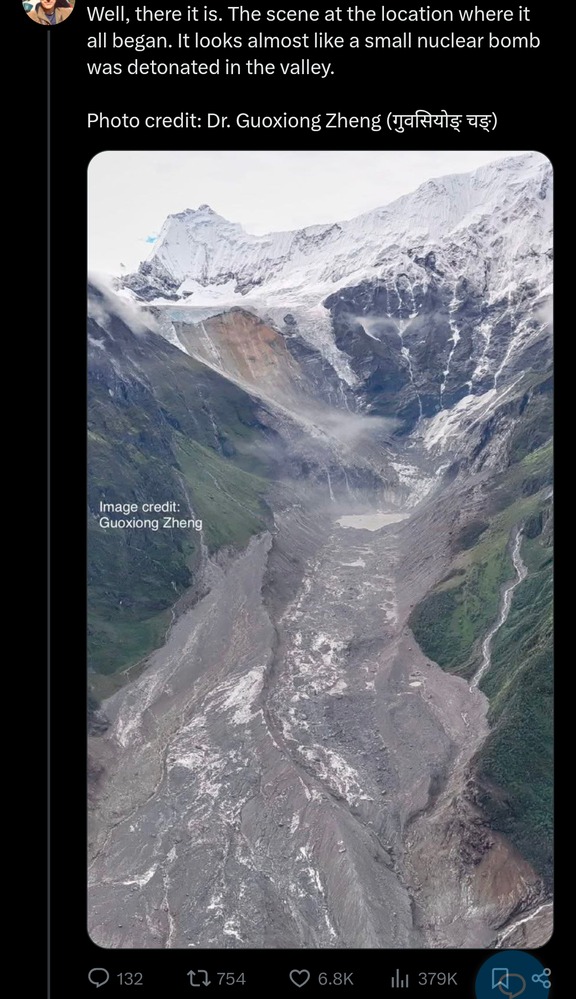
it was a foreign nuclear weapon
Date: 5/09/2026 07:33:00
From: SCIENCE
ID: 2426828
Subject: re: Global Politics 2026
fk why are these 跟爱 journalists so painful
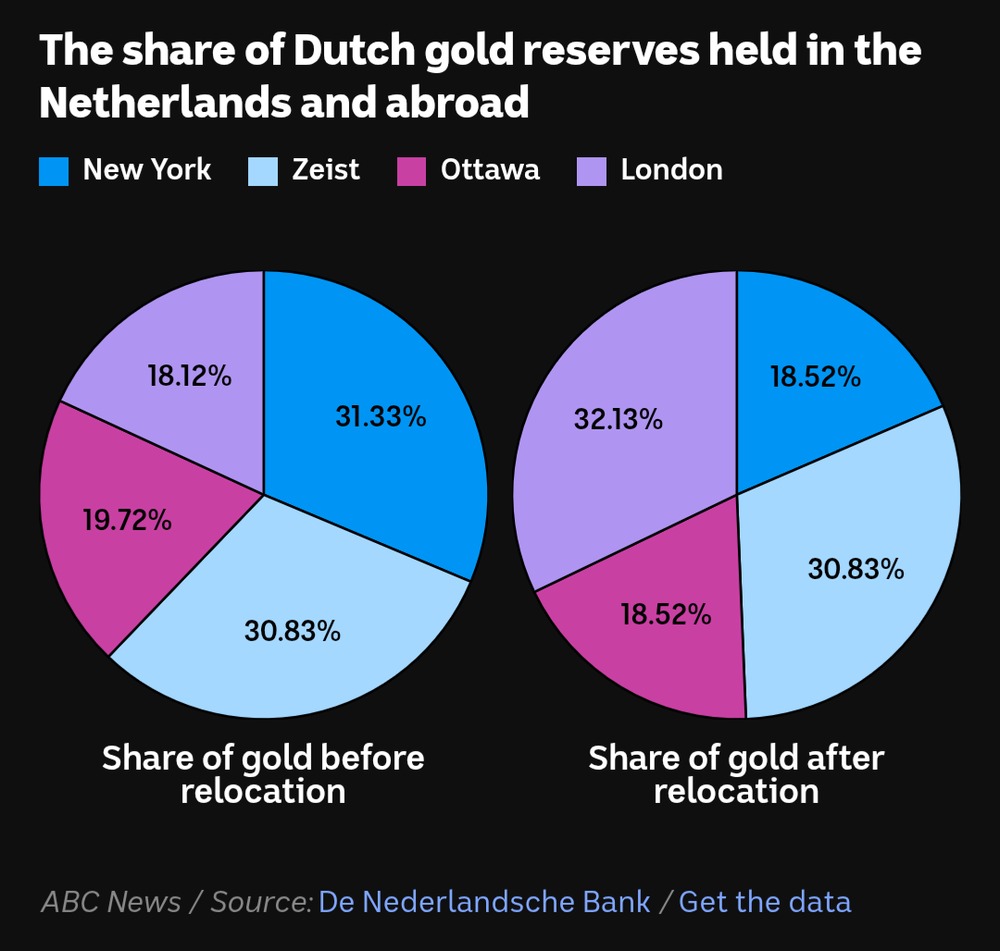
if the main change is between a 32/18 compartmental split, and the 19/31 are starting almost the same
then why the fk would you rotate it so the exactly unchanged 31 has shifted and the 32/18 pivot inconveniently
what are they trying to hide
(yes yes we know they just blindly start 0 at the top but what an idiot choice of ordering)
Date: 5/09/2026 07:40:01
From: SCIENCE
ID: 2426831
Subject: re: Global Politics 2026
SCIENCE said:
fk why are these 跟爱 journalists so painful
if the main change is between a 32/18 compartmental split, and the 19/31 are starting almost the same
then why the fk would you rotate it so the exactly unchanged 31 has shifted and the 32/18 pivot inconveniently
what are they trying to hide
(yes yes we know they just blindly start 0 at the top but what an idiot choice of ordering)
speaking of representation
The United Nations General Assembly has voted to back a resolution spearheaded by several African countries to adopt a map that makes their continent bigger while shrinking North America and Europe. Aimed at “a more accurate representation” of continental landmasses, the resolution was supported by 164 countries while the US voted against it and six other states abstained.
LOL
https://www.abc.net.au/news/2026-09-05/africa-bigger-us-smaller-united-nations-adopts-new-world-map/107119646
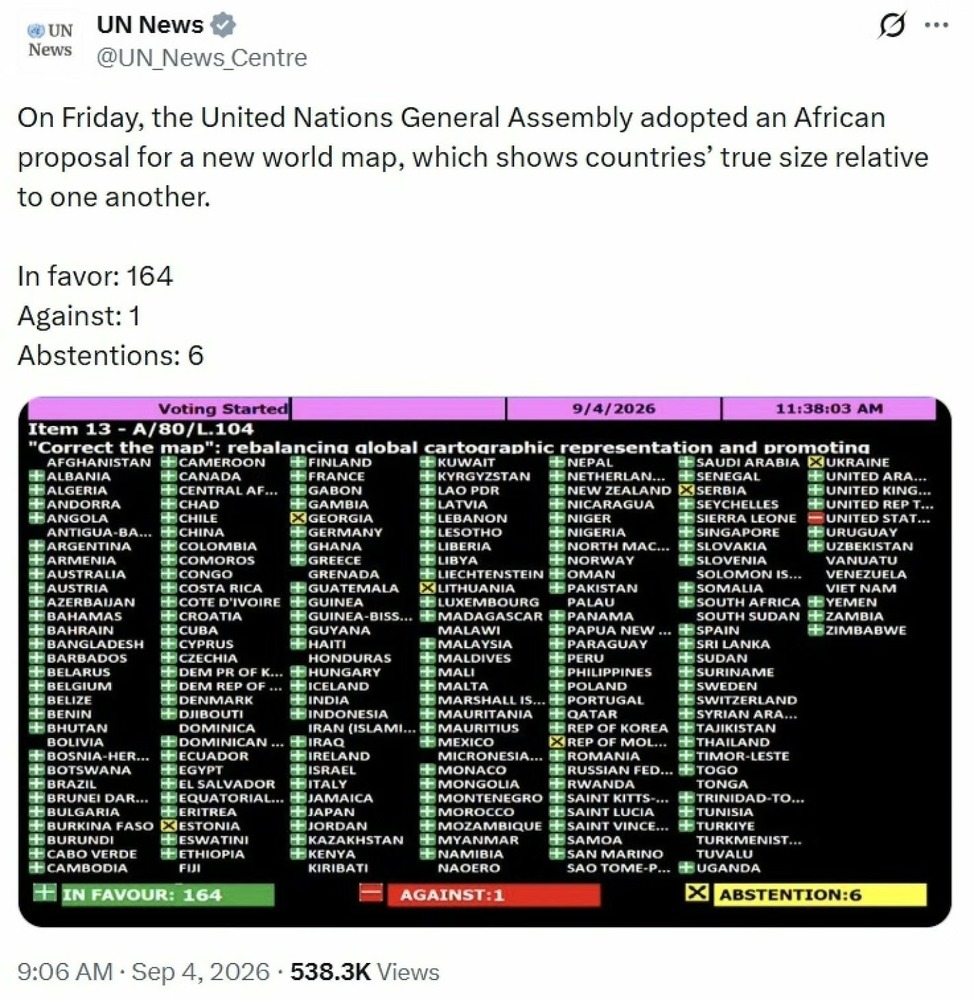
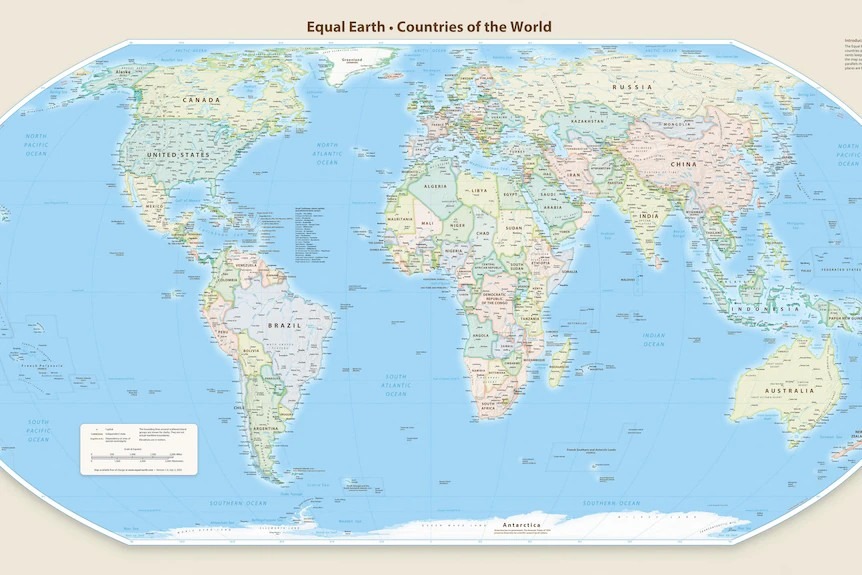
Date: 5/09/2026 07:42:38
From: roughbarked
ID: 2426834
Subject: re: Global Politics 2026
SCIENCE said:
SCIENCE said:
fk why are these 跟爱 journalists so painful
if the main change is between a 32/18 compartmental split, and the 19/31 are starting almost the same
then why the fk would you rotate it so the exactly unchanged 31 has shifted and the 32/18 pivot inconveniently
what are they trying to hide
(yes yes we know they just blindly start 0 at the top but what an idiot choice of ordering)
speaking of representation
The United Nations General Assembly has voted to back a resolution spearheaded by several African countries to adopt a map that makes their continent bigger while shrinking North America and Europe. Aimed at “a more accurate representation” of continental landmasses, the resolution was supported by 164 countries while the US voted against it and six other states abstained.
LOL
https://www.abc.net.au/news/2026-09-05/africa-bigger-us-smaller-united-nations-adopts-new-world-map/107119646
Greenland won’t appear so important to Trump after this?
Date: 5/09/2026 09:12:57
From: Ian
ID: 2426855
Subject: re: Global Politics 2026
SCIENCE said:
SCIENCE said:
fk why are these 跟爱 journalists so painful
if the main change is between a 32/18 compartmental split, and the 19/31 are starting almost the same
then why the fk would you rotate it so the exactly unchanged 31 has shifted and the 32/18 pivot inconveniently
what are they trying to hide
(yes yes we know they just blindly start 0 at the top but what an idiot choice of ordering)
speaking of representation
The United Nations General Assembly has voted to back a resolution spearheaded by several African countries to adopt a map that makes their continent bigger while shrinking North America and Europe. Aimed at “a more accurate representation” of continental landmasses, the resolution was supported by 164 countries while the US voted against it and six other states abstained.
LOL
https://www.abc.net.au/news/2026-09-05/africa-bigger-us-smaller-united-nations-adopts-new-world-map/107119646
The new is better but it looks very anaemic.
Date: 5/09/2026 09:15:58
From: Bubblecar
ID: 2426857
Subject: re: Global Politics 2026
Ian said:
SCIENCE said:
SCIENCE said:
fk why are these 跟爱 journalists so painful
if the main change is between a 32/18 compartmental split, and the 19/31 are starting almost the same
then why the fk would you rotate it so the exactly unchanged 31 has shifted and the 32/18 pivot inconveniently
what are they trying to hide
(yes yes we know they just blindly start 0 at the top but what an idiot choice of ordering)
speaking of representation
The United Nations General Assembly has voted to back a resolution spearheaded by several African countries to adopt a map that makes their continent bigger while shrinking North America and Europe. Aimed at “a more accurate representation” of continental landmasses, the resolution was supported by 164 countries while the US voted against it and six other states abstained.
LOL
https://www.abc.net.au/news/2026-09-05/africa-bigger-us-smaller-united-nations-adopts-new-world-map/107119646
The new is better but it looks very anaemic.
Makes you want to ask Africa, “Why the long face?”
Date: 5/09/2026 09:35:47
From: SCIENCE
ID: 2426866
Subject: re: Global Politics 2026
Bubblecar said:
Ian said:
SCIENCE said:
speaking of representation
The United Nations General Assembly has voted to back a resolution spearheaded by several African countries to adopt a map that makes their continent bigger while shrinking North America and Europe. Aimed at “a more accurate representation” of continental landmasses, the resolution was supported by 164 countries while the US voted against it and six other states abstained.
LOL
https://www.abc.net.au/news/2026-09-05/africa-bigger-us-smaller-united-nations-adopts-new-world-map/107119646
The new is better but it looks very anaemic.
Makes you want to ask Africa, “Why the long face?”
fixed
but if it’s more blood one needs
Date: 6/09/2026 08:30:50
From: SCIENCE
ID: 2427162
Subject: re: Global Politics 2026
LOL
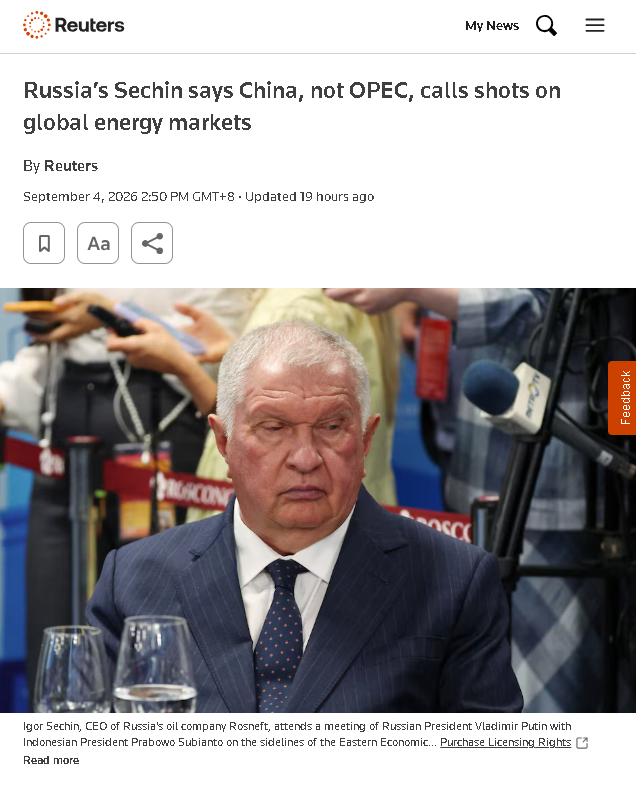
Date: 6/09/2026 23:05:47
From: Witty Rejoinder
ID: 2427314
Subject: re: Global Politics 2026
‘Closer to the red line’: The perfect storm keeping economists awake at night
Shane Wright
September 6, 2026 — 7:30pm
Enormous government budget deficits and technology companies’ insatiable demand for cash are threatening to create a credit crunch that could precipitate a wave of global economic turmoil.
This warning from leading economists follows concerns from big businesses, central banks and treasury departments around the world – including in Australia – about a surge in interest rates on the debt held by governments and increasing bouts of geopolitical uncertainty due to the actions and rhetoric of the Trump administration.
Leaders from across the business, banking and government sectors have told this masthead they are troubled by what some called a “perfect storm” of economic conditions, but requested anonymity to discuss the issue.
While central banks set a nation’s official cash rate and govern the cost of money in a particular country, interest on government and corporate bonds are set by investors. If the rates are higher, the government needs to devote more of its income to repaying debt and less to services.
Interest rates on government bonds have soared in recent weeks as investors have demanded higher returns for holding public debt. Japanese interest rates hit a 30-year-high last week, up 40 per cent since March. A 20-year-high was reached in the US and rates on 10-year Australian government debt reached their highest since 2011.
Governments are competing with tech companies for investor attention amid predictions the boom in AI infrastructure could cost $US1 trillion this year.
Investors have also been spooked by signs that global inflationary pressures are climbing, which will force central banks to keep their interest rates higher for longer. This will prompt investors to further lift rates on government bonds. The war against Iran continues without a resolution and Brent crude on Saturday reached a five-month high of $US92 a barrel.
Former Commonwealth Bank chief economist Michael Blythe, co-founder of PinPoint Macro Analytics, said investors were finally waking up to the huge level of debt held by governments around the world.
He said Australian debt hitting $1 trillion last month had been a wake-up call. It was worse overseas, where the US debt reached $US40 trillion ($55 trillion) and its budget deficits were about 6 per cent of GDP.
“That’s a lot of debt that has to be absorbed. We’re getting closer to the red line than we were,” he told this masthead.
“If there isn’t a slowdown in investment or in debt, then you end up in financial turmoil, in a credit crunch, and that leads you into recession.”
Government interest rates had fallen ahead of the US-led war against Iran but they have since jumped. British and German government interest rates have lifted by more than 20 per cent over the past six months while Australian rates have climbed by 12 per cent.
Confusion over US economic policy remains elevated. After stronger than expected job figures increased expectations that the Federal Reserve would lift interest rates at its meeting later this month, US President Donald Trump at the weekend threatened to stop international trade with some countries if rates were not cut.
“We should have the LOWEST RATE of any country in the World … LOWER THE RATE OR I’LL STOP TRADING WITH COUNTRIES WITH WHICH WE HAVE A DEFICIT,” he posted to Truth Social.
Strong jobs growth, especially during a period of high inflation and low unemployment, usually leads to higher interest rates. America ending trade with countries such as China would plunge the world into a recession.
AMP chief economist Shane Oliver said the situation was being made worse by the US, labelling Trump’s call for America’s central bank to cut interest rates as “illogical”.
He said the lift in bond interest rates was bad news for all governments in Australia, particularly states as they were likely to experience a drop in their stamp duty revenues.
“The more bond yields rise, the faster the public debt interest bill will rise and the more tax revenue it will take up, leaving less left over for welfare payments and other government spending,” he said.
“It means higher corporate borrowing costs, which can act as a dampener on company profit growth. And it means that banks are likely to raise their fixed mortgage rates, which will reduce the attractiveness of fixed-rate mortgages as an alternative to variable-rate mortgages.”
Predictions of major global turmoil are not unanimous. Prominent American-based Australian economist Justin Wolfers played down those concerns, saying the increase in global interest rates had been “orderly”.
“There’s nothing that looks disorderly about this. There’s nothing that puts us on the edge of a crisis,” he said.
“But this still affects your life, because even if it’s an orderly movement, what you’re going to see is higher interest rates and it’s going to be higher interest rates on everything.”
Low interest rates on government debt leading up to and through the pandemic hid some of the problems now being faced around the world.
In his final budget as treasurer in early 2022, Josh Frydenberg forecast government debt interest would average 2.2 per cent. That meant the interest bill on a forecast gross debt of $1.17 trillion in the 2025-26 financial year would reach $26 billion.
In this year’s budget, Treasurer Jim Chalmers forecast an average interest rate of 4.8 per cent. That higher rate has meant that in 2025-26, despite gross debt being around $970 billion, the interest bill on it was closer to $27.6 billion.
If the current run-up in interest rates continues, Chalmers will have to forecast an even larger interest bill in his mid-year budget update.
It’s not an issue just for taxpayers. Major business leaders are increasingly worried that the combination of high rates on government debt, the competition with tech companies for private investment dollars and the turmoil out of the US are fuelling economic instability.
Stephen Koukoulas, a former economic adviser to Julia Gillard who is now a private sector economist, said the US government bond market was the most important and supposedly secure in the world.
So balanced was the economy at present that a small unexpected event, such as a low number of bidders on a US bond auction, could be enough to trigger a global crisis, he said.
“You end up in a situation not all that different to the global financial crisis. The capital markets stop working. Businesses stop investing because it doesn’t make sense for them to do so. You end up with fewer jobs. You end up with a recession,” he said.
https://www.theage.com.au/politics/federal/closer-to-the-red-line-the-perfect-storm-keeping-economists-awake-at-night-20260904-p60ujr.html
Date: 7/09/2026 07:20:52
From: SCIENCE
ID: 2427337
Subject: re: Global Politics 2026
Date: 7/09/2026 07:54:58
From: dv
ID: 2427341
Subject: re: Global Politics 2026
Date: 9/09/2026 10:44:01
From: SCIENCE
ID: 2427877
Subject: re: Global Politics 2026
alleged

well that’ll learn you for not playing by the international rules based law and order
wait
Date: 9/09/2026 10:53:29
From: The Rev Dodgson
ID: 2427885
Subject: re: Global Politics 2026
SCIENCE said:
alleged
well that’ll learn you for not playing by the international rules based law and order
wait
TATE on Francesca Albanese
Date: 9/09/2026 10:59:55
From: Michael V
ID: 2427889
Subject: re: Global Politics 2026
The Rev Dodgson said:
SCIENCE said:
alleged
well that’ll learn you for not playing by the international rules based law and order
wait
TATE on Francesca Albanese
The bar-stewards!
Date: 9/09/2026 15:13:37
From: dv
ID: 2428022
Subject: re: Global Politics 2026
Date: 9/09/2026 15:36:49
From: Michael V
ID: 2428027
Subject: re: Global Politics 2026
dv said:

WTF?
Date: 9/09/2026 15:43:46
From: Michael V
ID: 2428031
Subject: re: Global Politics 2026
Michael V said:
dv said:
WTF?
So Hitler wasn’t a bad person in WWII, but anybody who reminds us that war is bad is the REAL baddie.
Date: 10/09/2026 09:51:20
From: SCIENCE
ID: 2428201
Subject: re: Global Politics 2026
LOL
The Australian share market is set to fall at the open as Wall Street closes in the red. The price of oil passes $US101 a barrel as tensions between the US and Iran continue.
Date: 11/09/2026 16:25:48
From: Witty Rejoinder
ID: 2428679
Subject: re: Global Politics 2026
Japan to develop drone-based quantum sensors to detect submarines
Tokyo wants domestic mass production of device as China enhances fleet
RYOTA OGATA
September 10, 2026 02:07 JST
TOKYO — Japan plans to devise a cutting-edge sensor that employs quantum magnetic technology for aerial drones that can detect submarines, the Defense Ministry’s fiscal 2027 budget request shows, as China increasingly operates in nearby waters.
The Defense Ministry looks to develop prototypes and test them on drones beginning in fiscal 2027, likely working with Japanese companies. It aims to complete the project by fiscal 2031. The budget request did not specify the cost.
Japan positions drones as a new pillar of the country’s defense capabilities. Tokyo wants to establish infrastructure for domestic mass production to mitigate the risk of supply disruptions linked to imports. The government targets production of 80,000 drones in fiscal 2030.
The planned sensor will use quantum magnetism technology to detect submarines traveling underwater. Submarines carry technology that neutralizes the magnetic field they generate, avoiding detection by the enemy. But high-sensitivity sensors can allow a drone to detect even the slightest changes in the magnetic field.
These drones are envisioned as small vehicles that can be mass-produced cheaply and quickly. Because the drones can fly closer to the water’s surface than manned patrol aircraft, they will be better able to detect submarines.
Japan will deploy the drones in large numbers to enhance surveillance. Maritime Self-Defense Force (MSDF) vessels will be used as launch platforms to cover wider areas.
The surveillance drones are intended for detection only, not to provide an armed response to a hostile submarine.
The Japan Self-Defense Forces are developing a plan to use transport ships and other vessels to deliver the troops and supplies necessary for defending the Nansei Islands, the southwestern chain stretching toward Taiwan. Attacks by submarines would hinder those operations.
Beijing is enhancing its ability to strike with submarines, while the numerical gap between China and Japan is widening as well. As of this year, China possesses 58 modern submarines, Japan’s Defense White Paper reports, nearly triple Japan’s fleet of just over 20 units.
The MSDF operates patrol helicopters, along with the P-1 and P-3C patrol aircraft, to detect submarines from China and other countries at an early stage. The force also gathers intelligence by deploying buoys that can detect underwater sound waves.
“Since submarines are slower than aircraft, we can respond to them as long as they’re spotted,” a senior MSDF official said.
A rollout of submarine-detection drones could enhance search capabilities even as staffing shortages persist within Japan’s defense forces due to a lack of recruits.
In Japan’s three major security documents, the government has advocated streamlining Self-Defense Forces missions through the use of drones. The unmanned vehicles also will be crucial in discussing the revision of the three strategic documents planned for later this year.
https://asia.nikkei.com/politics/defense/japan-to-develop-drone-based-quantum-sensors-to-detect-submarines
Date: 11/09/2026 16:29:00
From: party_pants
ID: 2428681
Subject: re: Global Politics 2026
I think drones are the new black in military matters.
Date: 11/09/2026 16:35:27
From: Peak Warming Man
ID: 2428684
Subject: re: Global Politics 2026
party_pants said:
I think drones are the new black in military matters.
The world will be divided between BD (before drones) and AD (after drones) and to think that we are living in both, we know what life was like in BD and AD.
Date: 11/09/2026 16:38:01
From: Peak Warming Man
ID: 2428686
Subject: re: Global Politics 2026
Peak Warming Man said:
party_pants said:
I think drones are the new black in military matters.
The world will be divided between BD (before drones) and AD (after drones) and to think that we are living in both, we know what life was like in BD and AD.
And we know what life was like BC (before computers)
Date: 11/09/2026 16:39:15
From: party_pants
ID: 2428687
Subject: re: Global Politics 2026
Peak Warming Man said:
party_pants said:
I think drones are the new black in military matters.
The world will be divided between BD (before drones) and AD (after drones) and to think that we are living in both, we know what life was like in BD and AD.
Well yeah, sort of. Until such time as armies decide to allow their soldiers to carry shotguns for drone protection.
Date: 11/09/2026 16:44:33
From: Peak Warming Man
ID: 2428688
Subject: re: Global Politics 2026
Peak Warming Man said:
Peak Warming Man said:
party_pants said:
I think drones are the new black in military matters.
The world will be divided between BD (before drones) and AD (after drones) and to think that we are living in both, we know what life was like in BD and AD.
And we know what life was like BC (before computers)
I remember BC well, we used to go to the pub and talk to people face to face and play 8 ball or 500
Date: 11/09/2026 16:47:31
From: Bubblecar
ID: 2428689
Subject: re: Global Politics 2026
party_pants said:
Peak Warming Man said:
party_pants said:
I think drones are the new black in military matters.
The world will be divided between BD (before drones) and AD (after drones) and to think that we are living in both, we know what life was like in BD and AD.
Well yeah, sort of. Until such time as armies decide to allow their soldiers to carry shotguns for drone protection.
Unlikely to be more than a slight improvement, given the limited effective range of the shotgun and the speed and explosive power of anti-personnel drones.
Date: 11/09/2026 16:48:36
From: Bubblecar
ID: 2428690
Subject: re: Global Politics 2026
Peak Warming Man said:
Peak Warming Man said:
Peak Warming Man said:
The world will be divided between BD (before drones) and AD (after drones) and to think that we are living in both, we know what life was like in BD and AD.
And we know what life was like BC (before computers)
I remember BC well, we used to go to the pub and talk to people face to face and play 8 ball or 500
Did you drink kava together?
Date: 11/09/2026 16:49:33
From: Peak Warming Man
ID: 2428691
Subject: re: Global Politics 2026
Bubblecar said:
party_pants said:
Peak Warming Man said:
The world will be divided between BD (before drones) and AD (after drones) and to think that we are living in both, we know what life was like in BD and AD.
Well yeah, sort of. Until such time as armies decide to allow their soldiers to carry shotguns for drone protection.
Unlikely to be more than a slight improvement, given the limited effective range of the shotgun and the speed and explosive power of anti-personnel drones.
The terrible sound of anti-personel drones swarming.
Date: 12/09/2026 03:46:21
From: dv
ID: 2428826
Subject: re: Global Politics 2026
“Norway’s Princess Astrid, an older sister of the late king Harald, has died at the age of 94, the royal palace said in a statement, two days after the King’s funeral.”
She was the last surviving of Olav V’s three children.
Date: 12/09/2026 13:25:05
From: dv
ID: 2428928
Subject: re: Global Politics 2026
https://www.straitstimes.com/tech/forget-silicon-chip-servers-singapores-newest-data-centre-needs-to-be-fed
Forget silicon chip servers, Singapore’s newest data centre needs to be fed
SINGAPORE – Tucked inside the National University of Singapore’s Centre for Life Sciences is a data centre with a pulse.
Unlike traditional server farms running on silicon chips, this facility processes data using living human brain cells.
Every three days, laboratory technicians feed the brain cells a cocktail of sugar, micronutrients and pH buffers. A gas mixer pumps in carbon dioxide, oxygen and nitrogen, providing a dedicated life support system.
The brainchild of Australian biotech start-up Cortical Labs, the set-up went live on July 16.
Cortical Labs has joined forces with NUS and data centre operator DayOne to bring the concept to Singapore for joint internal research and development. Their tie-up was first announced in March.
It has commercialised a similar biological data centre in Melbourne, its first in the world.
Chong Hon Weng, Cortical Labs founder and chief executive, said that biological data centres are better suited for applications where datasets may be limited and where conditions are highly unpredictable.
Date: 12/09/2026 13:52:22
From: The Rev Dodgson
ID: 2428938
Subject: re: Global Politics 2026
dv said:
https://www.straitstimes.com/tech/forget-silicon-chip-servers-singapores-newest-data-centre-needs-to-be-fed
Forget silicon chip servers, Singapore’s newest data centre needs to be fed
SINGAPORE – Tucked inside the National University of Singapore’s Centre for Life Sciences is a data centre with a pulse.
Unlike traditional server farms running on silicon chips, this facility processes data using living human brain cells.
Every three days, laboratory technicians feed the brain cells a cocktail of sugar, micronutrients and pH buffers. A gas mixer pumps in carbon dioxide, oxygen and nitrogen, providing a dedicated life support system.
The brainchild of Australian biotech start-up Cortical Labs, the set-up went live on July 16.
Cortical Labs has joined forces with NUS and data centre operator DayOne to bring the concept to Singapore for joint internal research and development. Their tie-up was first announced in March.
It has commercialised a similar biological data centre in Melbourne, its first in the world.
Chong Hon Weng, Cortical Labs founder and chief executive, said that biological data centres are better suited for applications where datasets may be limited and where conditions are highly unpredictable.
Almost everything then.
Date: 12/09/2026 13:56:33
From: Michael V
ID: 2428941
Subject: re: Global Politics 2026
dv said:
https://www.straitstimes.com/tech/forget-silicon-chip-servers-singapores-newest-data-centre-needs-to-be-fed
Forget silicon chip servers, Singapore’s newest data centre needs to be fed
SINGAPORE – Tucked inside the National University of Singapore’s Centre for Life Sciences is a data centre with a pulse.
Unlike traditional server farms running on silicon chips, this facility processes data using living human brain cells.
Every three days, laboratory technicians feed the brain cells a cocktail of sugar, micronutrients and pH buffers. A gas mixer pumps in carbon dioxide, oxygen and nitrogen, providing a dedicated life support system.
The brainchild of Australian biotech start-up Cortical Labs, the set-up went live on July 16.
Cortical Labs has joined forces with NUS and data centre operator DayOne to bring the concept to Singapore for joint internal research and development. Their tie-up was first announced in March.
It has commercialised a similar biological data centre in Melbourne, its first in the world.
Chong Hon Weng, Cortical Labs founder and chief executive, said that biological data centres are better suited for applications where datasets may be limited and where conditions are highly unpredictable.
What will they get up to next?
Date: 12/09/2026 14:00:30
From: Peak Warming Man
ID: 2428943
Subject: re: Global Politics 2026
Michael V said:
dv said:
https://www.straitstimes.com/tech/forget-silicon-chip-servers-singapores-newest-data-centre-needs-to-be-fed
Forget silicon chip servers, Singapore’s newest data centre needs to be fed
SINGAPORE – Tucked inside the National University of Singapore’s Centre for Life Sciences is a data centre with a pulse.
Unlike traditional server farms running on silicon chips, this facility processes data using living human brain cells.
Every three days, laboratory technicians feed the brain cells a cocktail of sugar, micronutrients and pH buffers. A gas mixer pumps in carbon dioxide, oxygen and nitrogen, providing a dedicated life support system.
The brainchild of Australian biotech start-up Cortical Labs, the set-up went live on July 16.
Cortical Labs has joined forces with NUS and data centre operator DayOne to bring the concept to Singapore for joint internal research and development. Their tie-up was first announced in March.
It has commercialised a similar biological data centre in Melbourne, its first in the world.
Chong Hon Weng, Cortical Labs founder and chief executive, said that biological data centres are better suited for applications where datasets may be limited and where conditions are highly unpredictable.
What will they get up to next?
Would you trust your data to such a set up, you could lose it all if the brain dies.
Date: 12/09/2026 14:05:32
From: Michael V
ID: 2428947
Subject: re: Global Politics 2026
Peak Warming Man said:
Michael V said:
dv said:
https://www.straitstimes.com/tech/forget-silicon-chip-servers-singapores-newest-data-centre-needs-to-be-fed
Forget silicon chip servers, Singapore’s newest data centre needs to be fed
SINGAPORE – Tucked inside the National University of Singapore’s Centre for Life Sciences is a data centre with a pulse.
Unlike traditional server farms running on silicon chips, this facility processes data using living human brain cells.
Every three days, laboratory technicians feed the brain cells a cocktail of sugar, micronutrients and pH buffers. A gas mixer pumps in carbon dioxide, oxygen and nitrogen, providing a dedicated life support system.
The brainchild of Australian biotech start-up Cortical Labs, the set-up went live on July 16.
Cortical Labs has joined forces with NUS and data centre operator DayOne to bring the concept to Singapore for joint internal research and development. Their tie-up was first announced in March.
It has commercialised a similar biological data centre in Melbourne, its first in the world.
Chong Hon Weng, Cortical Labs founder and chief executive, said that biological data centres are better suited for applications where datasets may be limited and where conditions are highly unpredictable.
What will they get up to next?
Would you trust your data to such a set up, you could lose it all if the brain dies.
In a normal data centre one could lose all one’s data in any one of all sorts of scenarios.
Date: 12/09/2026 14:31:38
From: SCIENCE
ID: 2428951
Subject: re: Global Politics 2026
Michael V said:
Peak Warming Man said:
Michael V said:
What will they get up to next?
Would you trust your data to such a set up, you could lose it all if the brain dies.
In a normal data centre one could lose all one’s data in any one of all sorts of scenarios.
yes but it’s new and shiny so it must be better
Date: 12/09/2026 14:38:38
From: JudgeMental
ID: 2428953
Subject: re: Global Politics 2026
dv said:
https://www.straitstimes.com/tech/forget-silicon-chip-servers-singapores-newest-data-centre-needs-to-be-fed
Forget silicon chip servers, Singapore’s newest data centre needs to be fed
SINGAPORE – Tucked inside the National University of Singapore’s Centre for Life Sciences is a data centre with a pulse.
Unlike traditional server farms running on silicon chips, this facility processes data using living human brain cells.
Every three days, laboratory technicians feed the brain cells a cocktail of sugar, micronutrients and pH buffers. A gas mixer pumps in carbon dioxide, oxygen and nitrogen, providing a dedicated life support system.
The brainchild of Australian biotech start-up Cortical Labs, the set-up went live on July 16.
Cortical Labs has joined forces with NUS and data centre operator DayOne to bring the concept to Singapore for joint internal research and development. Their tie-up was first announced in March.
It has commercialised a similar biological data centre in Melbourne, its first in the world.
Chong Hon Weng, Cortical Labs founder and chief executive, said that biological data centres are better suited for applications where datasets may be limited and where conditions are highly unpredictable.
Brain the size of a planet!
Date: 12/09/2026 14:41:18
From: SCIENCE
ID: 2428956
Subject: re: Global Politics 2026
JudgeMental said:
dv said:
https://www.straitstimes.com/tech/forget-silicon-chip-servers-singapores-newest-data-centre-needs-to-be-fed
Forget silicon chip servers, Singapore’s newest data centre needs to be fed
SINGAPORE – Tucked inside the National University of Singapore’s Centre for Life Sciences is a data centre with a pulse.
Unlike traditional server farms running on silicon chips, this facility processes data using living human brain cells.
Every three days, laboratory technicians feed the brain cells a cocktail of sugar, micronutrients and pH buffers. A gas mixer pumps in carbon dioxide, oxygen and nitrogen, providing a dedicated life support system.
The brainchild of Australian biotech start-up Cortical Labs, the set-up went live on July 16.
Cortical Labs has joined forces with NUS and data centre operator DayOne to bring the concept to Singapore for joint internal research and development. Their tie-up was first announced in March.
It has commercialised a similar biological data centre in Melbourne, its first in the world.
Chong Hon Weng, Cortical Labs founder and chief executive, said that biological data centres are better suited for applications where datasets may be limited and where conditions are highly unpredictable.
Brain the size of a planet!
Planet is what the living organism that dominates the planet is called. In earlier scripts it was called Chiron. Its fungus acts as a giant brain. It can control all forms of native life, using them to attack any who upset it. It begins to speak to the colonist after a certain time period, and gains understanding of them over time. Its voice is provided by Alena Kanka.
Date: 13/09/2026 10:16:38
From: The Rev Dodgson
ID: 2429159
Subject: re: Global Politics 2026
Posted on my blog 10 years ago today:
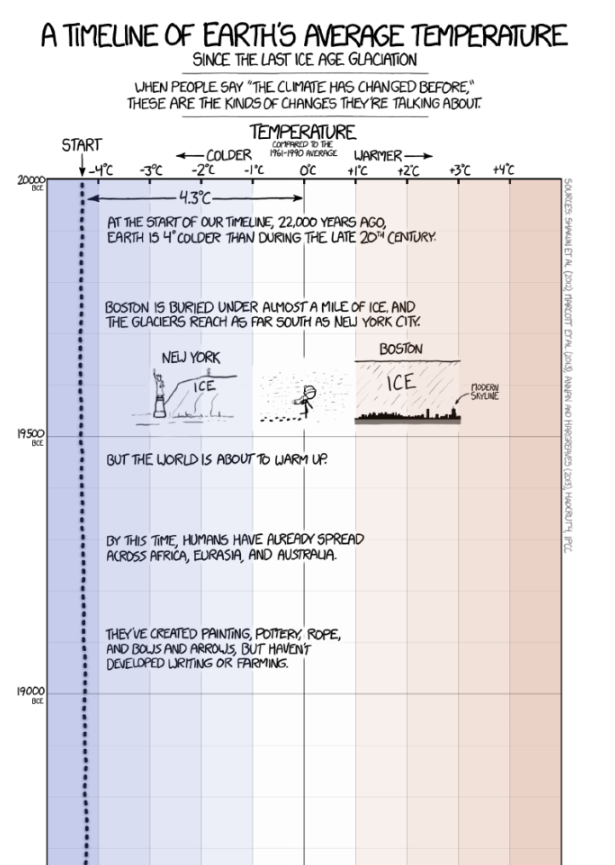
The rest