Totally related to this topic, I am writing to bring to your attention a critical and alarming trend that has emerged on social media, particularly on TikTok, where individuals are engaging in the dangerous practice called “bone smashing.” Bone smashing refers to a dangerous trend where individuals engage in activities that involve deliberately causing harm to their bones, with different tools such as hammers, rocks, bottles or any blunt object. The intention is to “improve facial structure” due to a muscle increase, achieving a more male or square jaw line. A quick search through available internet tools can reveal the extent of harm caused by this trend and some of the resulting maxillofacial traumas. The trend has raised serious concerns within the medical and scientific communities due to the potential for long-term health consequences. The misinformation disseminated by TikTok and other social media platforms in the field of health is not a novelty.
These actions, often performed for shock value or entertainment, pose significant risks, extending beyond immediate fractures. They encompass a range of severe maxillofacial injuries that can have lasting effects on an individual’s health and well-being, including bone and tooth fractures besides various severe maxillofacial injuries, such as cosmetic disfigurement, functional impairment and other potential long-term consequences. It is imperative that the scientific community actively intervenes and takes measures to counteract this trend.
Reference
Grillo, R. (2024) Urgent concern regarding “bone smashing”, a dangerous trend on TikTok. Journal of Stomatology, Oral and Maxillofacial Surgery 125 (2). https://doi.org/10.1016/j.jormas.2024.101783
A tall, blonde, jock-type guy walked into one of the restaurants, and at his side was one of the sexiest girls I had ever seen . . . They made me feel so inferior and worthless, and small. I glared at them with intense hatred as I sat by myself in my lonely misery. (Rodger, 2014)
Elliot Rodger, known as the perpetrator of the Isla Vista shooting in California, killed six people and injured 14 others before committing suicide. Before the attack, Rodger published an online manifesto titled My Twisted World, in which he expressed his frustration and anger towards women, identifying himself with the incel (involuntary celibate1) community and expressing feelings of deep resentment. In this quote, Rodger belittles himself, particularly criticising his own body in comparison to a more charismatic, athletic, virile figure. He views this figure as validated by being accompanied by a very attractive girl – someone Rodger believes would never desire him, since he lacks the ‘corporeal privilege’ he assumes the other man naturally possesses.
An AI summary (if you can get access to this article, I recommend it):
Overview of the article’s argument
The article examines how online PSL (Puahate–Sluthate–Lookism) communities construct a shared worldview in which male bodies are evaluated, ranked, and disciplined. These spaces treat attractiveness as a form of erotic capital and position “ascension” as the only route out of sexual marginalisation.
Two lines from the document illustrate this dynamic:
“These platforms serve as interactive spaces where young men… discuss perspectives on how they can improve their bodies and selves via ‘body projects’ they call looksmaxxing.”
“Plastic surgery… is regarded as ‘the last hope’ for succeeding in the erotic market.”
🔍 Key themes
1. Looksmaxxing as a body project
Looksmaxxing is framed as a structured, goal‑oriented transformation of the body—fitness, grooming, skincare, supplements, and especially surgery‑maxxing. These practices are understood as necessary for survival in what users call a misandric, appearance‑driven society.
2. PSL ratings and the Chad ideal
Members evaluate each other using PSL scales, categorising men as:
Subhuman (incels)
Human (normies)
Supra‑human (Chads)
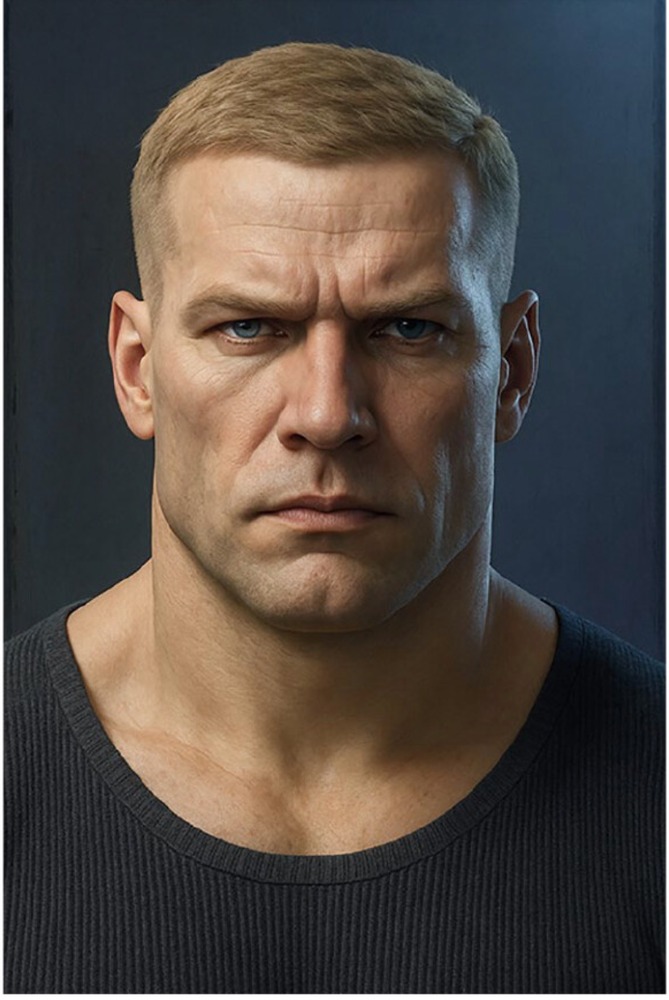
The Chad archetype—tall, muscular, ideal facial bone structure, light eyes, strong jaw—functions as a hegemonic masculine fantasy and a template for ascension.
3. Bro‑pedagogy: brutal male peer instruction
Advice is delivered through aggressive, shaming, hyper‑masculine communication. This “bro‑pedagogy” includes:
- Insults framed as honesty
- Harsh ratings
- Detailed but inconsistent medical advice
- Peer‑constructed surgery plans
It is simultaneously supportive and demeaning, reinforcing group norms.
4. Rejection of mainstream science
Despite using medical terminology, users distrust conventional medicine. They rely on anecdotal evidence, pseudo‑science, and ideological claims, forming a peer‑driven alternative knowledge system.
5. Defensive virility and politicisation of the male body
Drawing on Molinier’s concept of defensive virility, the article argues that these men respond to perceived threats to masculinity by intensifying bodily discipline.
The male body becomes a site of:
Protest against feminism
Claims of misandry
Racialised and nationalist aesthetics
Attempts to reclaim status in “sexo‑society”
6. Surgery-maxxing as the ultimate ascension strategy
Plastic surgery is seen as the only way to overcome “genetic ugliness.” Facial bone structure is treated as destiny; surgery is framed as liberation. Yet users also fear medical risks, malpractice, and financial barriers.
Reference
Sousbois, O.F. (2025) Incels, Looksmaxxing, and the Surgical Design of the ‘Chad’-vertised Body. Body and Society 31 (4) https://doi.org/10.1177/1357034×251363787
Though traditionally, aesthetic pressure has been linked to women, it seems that it’s impacting more and more guys. The Spanish Society of Aesthetic Medicine says that up to 31% of patients who undergo such treatments are men. From jaws to penises to height, the cosmetic surgery industry ceaselessly exploits male insecurities, as it long has done with those of women. And within these attempts, there are two trends that might characterize the future of how men relate to their own physical form.
So-called “softmaxxing” promotes diets, skincare and exercise routines, a classic and non-invasive approach to changing one’s physique. In contrast is “hardmaxxing”, which includes surgeries (like corrective jaw procedures) and practices like the dangerous — and viral — “bonesmashing”, which literally consists of bashing facial bones to break them, in the erroneous conviction that it will harden one’s features.
The idea that it’s possible to strengthen one’s jawline and shape more prominent cheekbones by fracturing one’s bones stems from a certain interpretation of Wolff’s Law, a biological concept theorizing that healthy bones become stronger through exposing them to mechanical stress. But the problem is that the internet is full of forums in which young men are asking for advice on alleviating their aesthetic insecurities from would-be bone consultants who are open to taking this law literally, and with no supervision from doctors or specialists. This growing community has a name: looksmaxxers, and since the 2010s it has been sharing controversial advice to look as attractive as possible, on message boards that are rotten with macho, if not explicitly incel, energy.
Livestreamer Clavicular, whose real name is Braden Peters and whose virtual handle is a reference to the unusual importance that looksmaxxers assign to the width of their collarbone, tells his followers that to get a chiseled jawline, you can beat your face with your fist or a hammer to improve definition. He is among those who promote the consumption of methanphetamines to stay thin. When he spoke to political commentator Michael Knowles, Clavicular called Sydney Sweeney “malformed.” “Her upper maxilla is extremely recessed. She’s got the eyes of doom with no infraorbital support,” he said. This attitude seems directly out of a book, another one of those men who use social media to attack the physique of attractive women, having felt rejected at some point by them. Clavicular is a friend of Andrew Tate and of the far right commentator Nick Fuentes. The three appeared in a video together singing the Ye song Heil Hitler on the way to a party. “I am not sorry. I do not apologize for what I did. I would do it again today,” Clavicular later commented. “I would rather have free speech and the ability to make jokes and do content a thousand times over rather than being a little bitch who, you know, has to censor himself.”
As far back as American Psycho, looksmaxxing has been associated with misogyny. While its protagonist Patrick Bateman’s nine-step beauty routine doesn’t seem nearly as extreme today — more and more men are applying Vitamin C in the morning, sunscreen all day, and Retinol at night — the character has become a reference for many guys today. Jaap Kooijman, an associate professor of media studies and American studies at the University of Amsterdam, commented during an interview with CNN that it’s important to keep in mind that the film, which debuted long before the rise of social media, is “based on the same principle of the outside appearance consumer goods masking being empty inside.”
By converting political life into a show, these protagonists take on roles not of bureaucrats or officials, but rather, of stars of a spectacle. “The MAGA aesthetic, which can be seen in everything from Mar-a-Lago faces to pronounced musculature and vaguely Nazi tattoos, has become a dominant characteristic in political debate. From Secretary of War Pete Hegseth, with his high school quarterback physique, to White House deputy chief of staff for policy and homeland security advisor Stephen Miller, with his studiously produced Joseph Goebbels look, to that little ICE Führer Gregory Bovino with his Gestapo trenchcoat, the stars of the reality TV show that is Trumpian power play their roles in its grotesque choreography of raids, corruption, intimidation and dismantling of civil rights we see today,” Yehya says.
Reference
“Hammers to the face and amphetamines: hypermasculine looksmaxxing invades the internet.” El Pais, 22 Jan. 2026. Gale OneFile: News, link.gale.com/apps/doc/A872071923/STND