YouTube Video 9:34 minutes
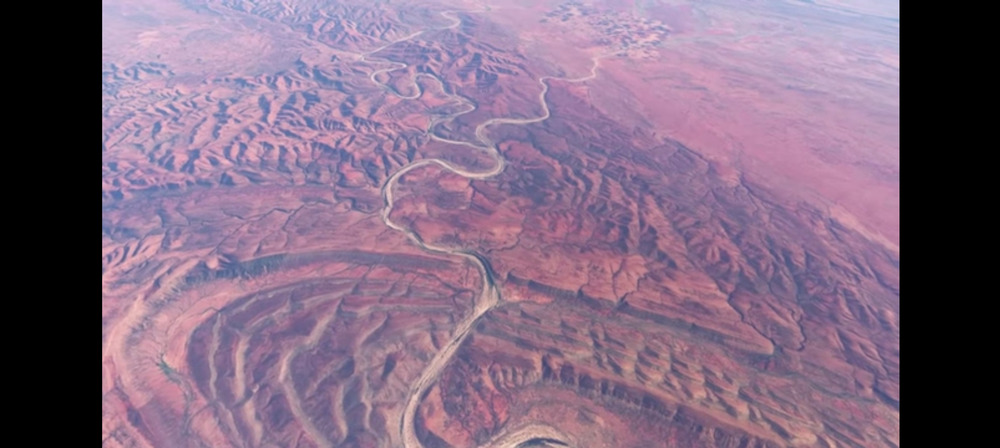
In this video we explore the Finke River, also known as the Larapinta, widely regarded as the oldest river in the world. Flowing through the heart of central Australia and cutting directly across the MacDonnell Ranges, the Finke River preserves a drainage pathway that may extend back to the late Paleozoic, making it older than the dinosaurs. This deep-time river system has survived mountain building during the Alice Springs Orogeny, Cretaceous planation, tropical weathering, tectonic tilting, and the long drying of the Australian continent. The result is one of the most extraordinary examples of ancient landscape evolution preserved anywhere on Earth.
The Finke River in the Northern Territory is famous for its cross-axial drainage pattern, slicing through folded quartzite and sandstone ridges as if the mountains never existed. In this video we examine the geology behind that mystery, including antecedent drainage, river impression, etchplanation, deep weathering profiles, and the formation of the Summit Surface and Shoulder Surface. We travel through Glen Helen Gorge, Missionary Plain, the Krichauff Ranges and the James Ranges to understand how this ancient Australian river maintained its course for hundreds of millions of years.
One of the most spectacular features of the Finke River is the Glen of Palms palimpsest, where an ancient fossil meander train is preserved alongside the modern river channel. These intertwined bedrock gorges reveal how climate change from humid Miocene conditions to arid Quaternary desert environments transformed the river’s erosive power. We look at paleomeanders, ferricrete-cemented gravels, inverted topography, and the extreme paleoflood evidence that shows how rare but powerful desert floods continue to carve the landscape today.
This video also explores the broader geological setting of central Australia, including the Amadeus Basin, the Arunta Block, gravity anomalies beneath the continent, mantle-driven tilting, and the impact of long-term erosion rates measured in metres per million years. By combining geomorphology, tectonics, climate history, and satellite imagery, we build a clear picture of how the Finke River became one of the oldest continuously persisting drainage systems on Earth.
If you are interested in Australian geology, ancient rivers, landscape evolution, deep time, desert geomorphology, the Lake Eyre Basin, or the geological history of the Northern Territory, this documentary-style breakdown of the Finke River will give you a detailed and accessible explanation of why this river is considered a geological legend.