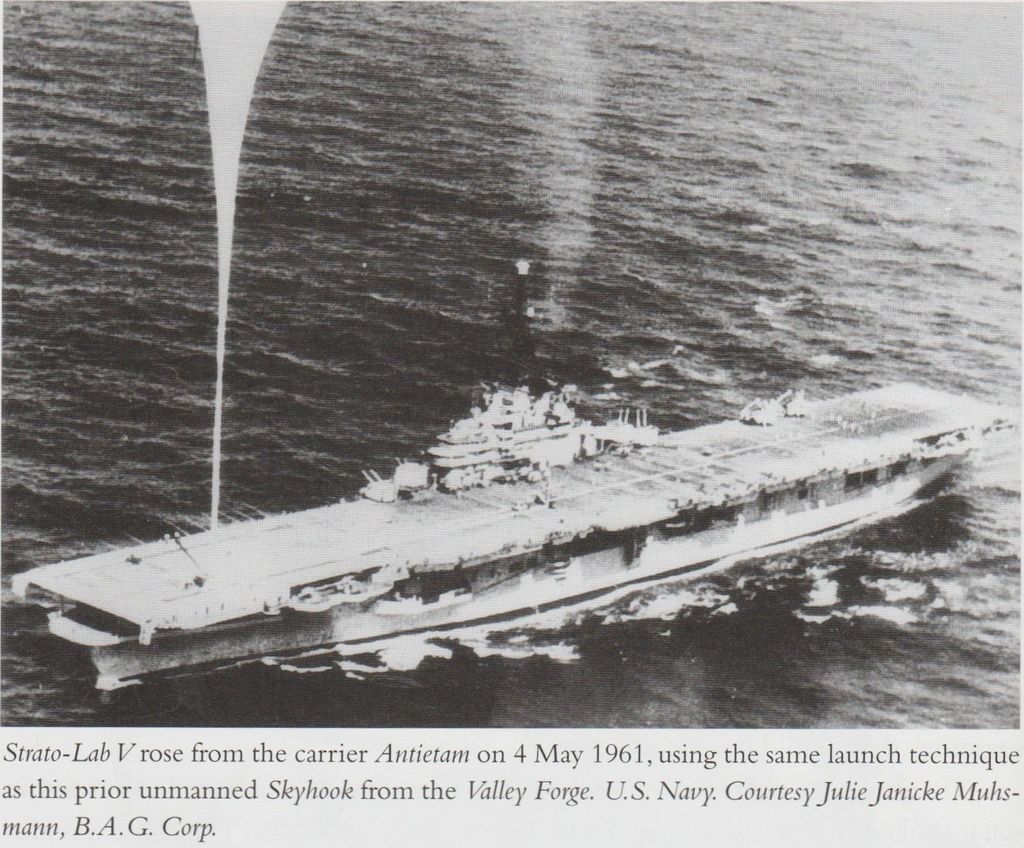
Three photos to help you rethink the notion of “aircraft carrier”, all from the US Navy.
Photo 1. 1924.
In August 1924 an oiler, the USS Patoka, had been converted into a tender for rigid airships by adding a mast. On the only occasion where a rigid US airship was landed on flat-topped aircraft carrier, the rolling and pitching motion of the ship smashed the aluminium ribs and lower fin. The airship is the US Navy’s Shenandoah.
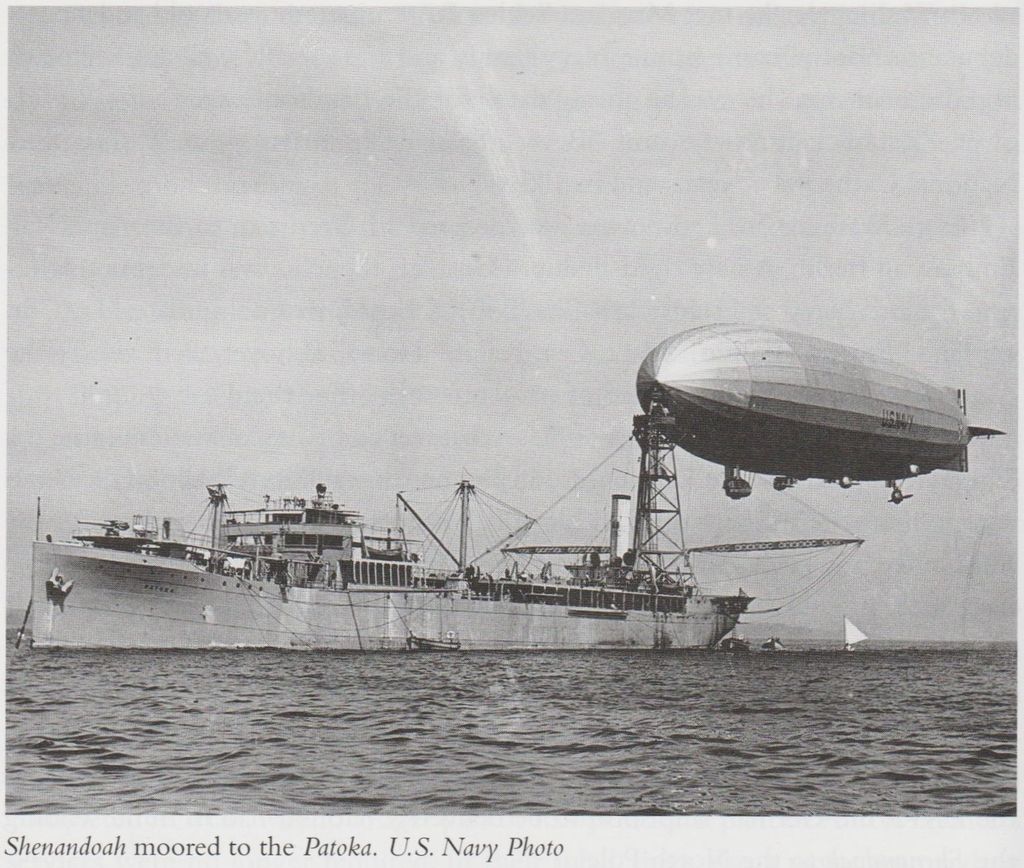
Photo 2. 1934.
This photo shows a US F9C-2 Sparrowhawk aircraft, but what’s carrying it? The US rigid airship Macon carried a complement of five small fighter planes. I find it amazing that not just did the small fighter planes launch from the airship, they also landed there. The landing arrangement was called a “trapeze”, a hook on the top of the aircraft engaged with the trapeze hung underneath the airship.
In a humorous incident, Franklin Roosevelt was en route from Panama to Hawaii on the cruiser Houston. Sixteen hundred miles from shore they were buzzed by two Sparrowhawk aircraft. There was some anxiety because the president had received no notice that they were coming and had no idea what the intentions of the planes were or where they came from. The mystery was solved when the Macon came into view.
“The little planes, sans wheels, put on quite a show. They dropped San Francisco newspapers for the president, also specially franked envelopes for his philatelic collection”.
Follow up question. How many fighter planes could be launched from (and landed on) the largest planes now in existence?
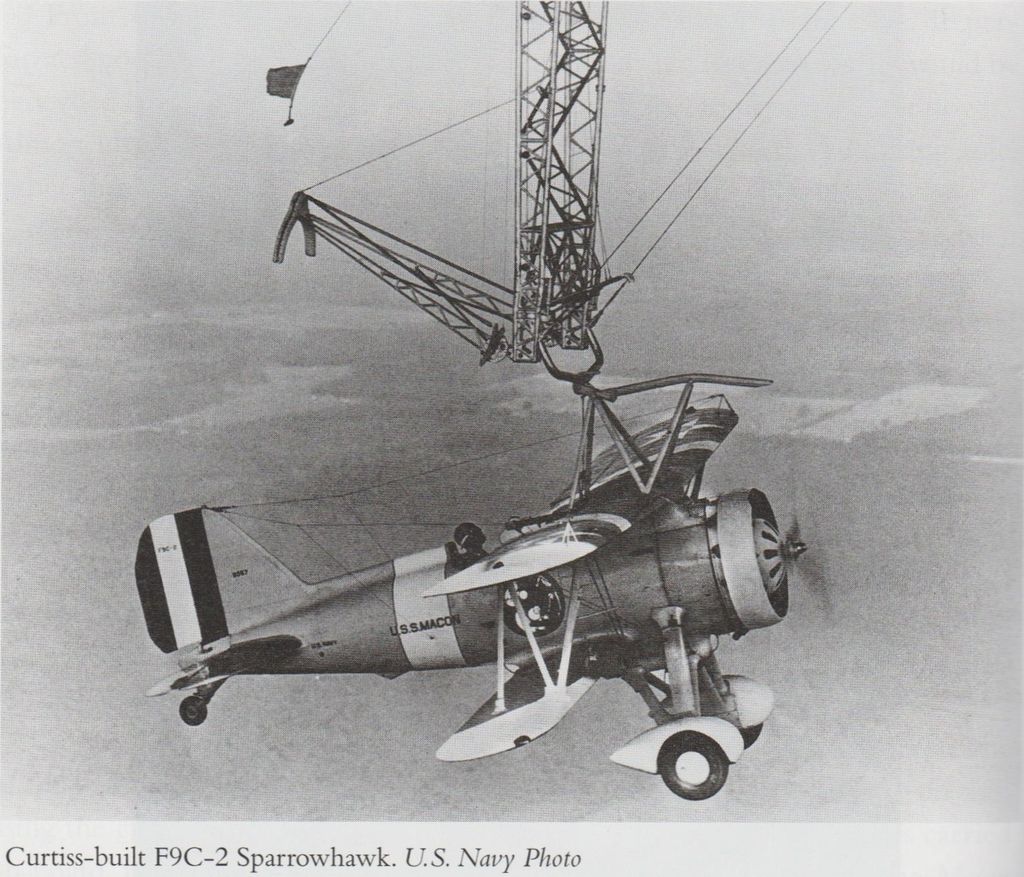
Photo 3. 1961.
This photo shows the aircraft carrier Antietam, but what is that white vee shape rising from its foredeck? No it’s not a flaw in the picture, it’s the huge research balloon Strato-Lab V. Peak altitude for the Strato-Lab V was 34,668 metres, making it the highest manned balloon flight to that time. It did not have a pressurised capsule, just a metal cage with venetian blinds for controlling the amount of sunlight, and hence the temperature. It’s primary purpose was to test spacesuits for astronauts.