Date: 2/04/2018 23:45:48
From: Tau.Neutrino
ID: 1207809
Subject: Power Point Checkers

Any recommendations? Wanting to get one to check power points for good earths and missing neutral.

The one at the top has seven checks, some others have different names for checking, the second last and last one both have an AU plug

MESTEK RCD Socket Earth Wire Tester Circuit Polarity Detector Breaker Finder

Home Automatic Electric 220V – 250V UK Plug Socket Tester Fault Wire Finder

UNI-T Socket Tester Live/Neutral/Earth Line Electrical Polarity Detector Safety

Power Point RCD Tester GPO Socket Polarity & Earth Leakage 3 pin 240V IP65 LED

Socket Polarity Earth Leakage Safety Switch Tester RCD RCBO Electrician Tool NEW

Reply Quote

Date: 3/04/2018 00:50:59
From: boppa
ID: 1207815
Subject: re: Power Point Checkers

The last one doesnt check for missing/transposed wires, its purely a earth leakage breaker tester

Second last one has both functions (missing/swapped connections and an earth leakage current tester

The one I have in my toolbox is probably 10/15 years old at least, it still uses neons instead of leds its that old, but doesnt do earth leakage testing, just has a red, yellow and green neon in a 3 pin mains plug, made by arlec, but they dont seem to make it anymore at a quick search
Probably the most used tester for mains I use, good for a quick check without fiddling around with a meter

All it is is three neons with dropping resisters inbuilt (they look suspiciously like the ones dse used to stock for power indicators) in a grey plastic ‘plug’, I have seen similar made up by fitting them into a clear plastic 10a plug- one goes A to N- should light up, another goes A to E, should light up, third goes N to E, shouldnt light up, would be an easy build as a do it youselfer if you wanted to

Reply Quote

Date: 3/04/2018 04:43:03
From: mollwollfumble
ID: 1207826
Subject: re: Power Point Checkers

LOL, I read that title as creating a computer game using PowerPoint.

Like this.
https://www.free-power-point-templates.com/chess-game-powerpoint-template/

I can’t comment on the power point testers you’ve linked. The last visit by an electrician first checked using a non-contact volt tester, then partial dismantling to visually and manually check for cracks, loose elements and sticking switches.

The time before that, the electrician also checked for missing or damaged insulation, and found that the insulation was flammable, (made of cotton?).

But I take it that that’s not what you’re looking for.

Reply Quote

Date: 3/04/2018 08:11:21
From: The Rev Dodgson
ID: 1207842
Subject: re: Power Point Checkers

I don’t think Powerpoint is a particularly good interface for setting up a checkers game.

It would be much easier in Excel.

Reply Quote

Date: 14/04/2018 00:05:07
From: wookiemeister
ID: 1212757
Subject: re: Power Point Checkers

powerpoint checkers are nice but you should be aware of their limitations , in my opinion…..

if the earth has some unexpected resistance on it the checker won’t see this because it draws very little current – all it sees is the earth drawing enough to power an LED

a transposed neutral earth won’t be picked up because the customer neutral and earth bar are at the same voltage (0V)

Reply Quote

Date: 14/04/2018 00:13:00
From: wookiemeister
ID: 1212761
Subject: re: Power Point Checkers

buy yourself a multimeter say cat 3/4 and test voltages between active / neutral / earth

go to the switchboard and shut everything down including the main switch

test at the powerpoint the socket is denergised

unscrew the socket and make sure earth/ active/neutral are correctly connected at the back (some socket outlets will show colours/ letters to signify whats meant to be stuck into the hole). if the socket has been proven to be de denergised get an insulated screwdriver and retighten all three connections and screw back on to the wall.

its not unknown for socket outlets to have transposed active/neutral/earth , though you find this mainly on extension leads and appliances repaired by people that don’t know what they are doing and do not work methodically, slowly and use their brains.

most electrical work is shoddy and many short cuts have been made.

Reply Quote

Date: 14/04/2018 00:24:43
From: wookiemeister
ID: 1212767
Subject: re: Power Point Checkers

as a point of interest the only reason most class 1 (earthed appliances) don’t give you a shock is because the earth cable works in your house. if the earth cable fails and the appliance say a washing machine has a leakage current of 1 ma you’ll get a belt from it and the RCD will not trip (assuming you have an RCD protecting that circuit). when the test and tag fellow turns up to test your appliances all earthed appliances (usually metallic framed appliances) have an “acceptable leakage current of up to 5ma which means you’ll get a whack if the earth cable in your walls gets disconnected. when i work on appliances of any kind simple/ complicated /big / small i take note if the frame is live in any way. i made a mouthy apprentice angry recently (passive aggressive) when i discovered that the appliance he was working on had a live frame (it was meant to be double insulated) , i discovered the double insulated transformer/ power supply was leaking to the frame. the leakage current was tiny but i noticed it immediately as i touched the frame (he had been working on it for an hour or more without noticing). as it turned out the power supply was the whole reason it wasn’t working.

Reply Quote

Date: 14/04/2018 00:29:40
From: transition
ID: 1212770
Subject: re: Power Point Checkers

wookiemeister said:


powerpoint checkers are nice but you should be aware of their limitations , in my opinion…..

if the earth has some unexpected resistance on it the checker won’t see this because it draws very little current – all it sees is the earth drawing enough to power an LED

a transposed neutral earth won’t be picked up because the customer neutral and earth bar are at the same voltage (0V)

fairly much true i’d reckon.

Reply Quote

Date: 14/04/2018 01:09:15
From: boppa
ID: 1212784
Subject: re: Power Point Checkers

True, but as they are functionally equivalent, as long as both are getting a good connection, safety remains high
Without actually disconnecting and belling each wire or physically inspecting the entire length of the wire, there is no way of determining easily whether a N/E transposition has happened (even relying on the green wire at each end doesnt exclude hanky panky in the middle)

Its not ideal, but then what in this world is?

Reply Quote

Date: 14/04/2018 01:48:56
From: transition
ID: 1212789
Subject: re: Power Point Checkers

transition said:


wookiemeister said:

powerpoint checkers are nice but you should be aware of their limitations , in my opinion…..

if the earth has some unexpected resistance on it the checker won’t see this because it draws very little current – all it sees is the earth drawing enough to power an LED

a transposed neutral earth won’t be picked up because the customer neutral and earth bar are at the same voltage (0V)

fairly much true i’d reckon.

now, which transposed liven up the body of earthed things, or give you a short, or leakage(RCD), that’ll throw the breaker, that sort of thing. What’s dangerous?

with RCD any difference between A and N over the 30mA typical trip threshold or whatever will do it. So I guess this means N and E reversed will trip it (when >30mA load applied).

A and E reversed will trip it (that’d typically liven a chassis earth) in the case there is some path to ground resulting in >30mA, like a human touching the metal body of something (that’d ordinarily be earthed), plumbing, or a power tool laying on damp ground.

A and N reversed typically doesn’t make much difference (of single phase), other than the circuits become a dog’s breakfast to think about. Like switches that are usually in the active line are in the neutral, and appliances are powered up via the neutral right through them (the load) back to the switch.

the nastiest possibility I guess is reversing A and E when there’s no RCD, just a standard circuit breaker. The next nastiest is an absence of an earth when it’s needed in the case of leakage or short to what usually would be earthed parts of equipment.

i’m sure there’s other possibilities, like getting all three wires wrong, but think that’s covered in those above.

of course if you lose the neutral on your service line (out on the pole/in the street, which is also an earth), and the dogs chewed your earth wire off the earth stake outside your house, then nothing in your house is safe.

need an aspirin after that
Reply Quote

Date: 14/04/2018 02:04:22
From: boppa
ID: 1212790
Subject: re: Power Point Checkers

transition said:

A and N reversed typically doesn’t make much difference (of single phase), other than the circuits become a dog’s breakfast to think about. Like switches that are usually in the active line are in the neutral, and appliances are powered up via the neutral right through them (the load) back to the switch.

You can get strange things happening with some devices with a n/a transposition, plus it can be dangerous too
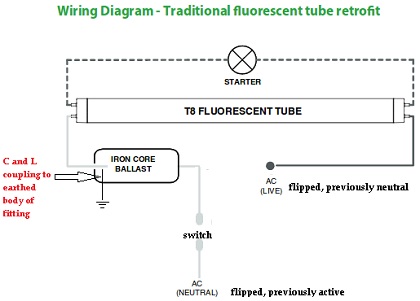
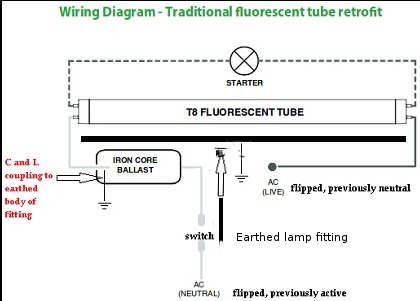
things like ES lamps can have exposed actives on the bulb with some fittings, and when switching the N rather than the A, some fluros can have interesting effects like partial lighting up when switched off (A supply with inductive coupling to an earthed fitting will light the lamp up dimly, often noticable at night

Reply Quote

Date: 14/04/2018 02:22:09
From: transition
ID: 1212792
Subject: re: Power Point Checkers

boppa said:


transition said:

A and N reversed typically doesn’t make much difference (of single phase), other than the circuits become a dog’s breakfast to think about. Like switches that are usually in the active line are in the neutral, and appliances are powered up via the neutral right through them (the load) back to the switch.

You can get strange things happening with some devices with a n/a transposition, plus it can be dangerous too
things like ES lamps can have exposed actives on the bulb with some fittings, and when switching the N rather than the A, some fluros can have interesting effects like partial lighting up when switched off (A supply with inductive coupling to an earthed fitting will light the lamp up dimly, often noticable at night

like fuseholders too, yeah bit of that, what’s exposed of fittings, and yeah some L and C coupling into those pesty fluros I guess, the length of cables involves to near things earthed, or earth-proper, sitting at their lower illumination threshold.

had threads before about those fluros, compact ones, I was of opinion they sat right on the lower threshold of the little down converter still operating. Not much to them.

dunno, never did figure it out.

Reply Quote

Date: 14/04/2018 02:32:11
From: transition
ID: 1212793
Subject: re: Power Point Checkers

transition said:


boppa said:

transition said:

A and N reversed typically doesn’t make much difference (of single phase), other than the circuits become a dog’s breakfast to think about. Like switches that are usually in the active line are in the neutral, and appliances are powered up via the neutral right through them (the load) back to the switch.

You can get strange things happening with some devices with a n/a transposition, plus it can be dangerous too
things like ES lamps can have exposed actives on the bulb with some fittings, and when switching the N rather than the A, some fluros can have interesting effects like partial lighting up when switched off (A supply with inductive coupling to an earthed fitting will light the lamp up dimly, often noticable at night

like fuseholders too, yeah bit of that, what’s exposed of fittings, and yeah some L and C coupling into those pesty fluros I guess, the length of cables involves to near things earthed, or earth-proper, sitting at their lower illumination threshold.

had threads before about those fluros, compact ones, I was of opinion they sat right on the lower threshold of the little down converter still operating. Not much to them.

dunno, never did figure it out.

I guess of the compact fluros, if the oscillator used any mos(fets), for their low Ron(reduces heating, and losses), then high R of drive circuits might lend to the switched power line being a tail, like an antenna.

Reply Quote

Date: 14/04/2018 12:24:29
From: boppa
ID: 1212883
Subject: re: Power Point Checkers

Havent seen in it compact fluros, but definitely in full length fluros (both20 and 40w versions) where they glow dimly at night when the N is switched, I suspect that its the earthed metal base that provides the coupling to the tubes, I know they also light up under powerlines with no connection to any actual powersupply
We had a small shed under HT lines in the blue mountains that I put a fluro in, the pins on one end went to a length of wire along the roof, the other through a switch and to a ground stake and bingo, light in the shed
Gave near enough to full power lighting, and meant we didnt have to start the genny to have lighting in that shed (which was quite a distance from the house itself and had petrol for the water pump at the dam)

Reply Quote

Date: 14/04/2018 12:26:27
From: sibeen
ID: 1212884
Subject: re: Power Point Checkers

boppa said:


Havent seen in it compact fluros, but definitely in full length fluros (both20 and 40w versions) where they glow dimly at night when the N is switched, I suspect that its the earthed metal base that provides the coupling to the tubes, I know they also light up under powerlines with no connection to any actual powersupply
We had a small shed under HT lines in the blue mountains that I put a fluro in, the pins on one end went to a length of wire along the roof, the other through a switch and to a ground stake and bingo, light in the shed
Gave near enough to full power lighting, and meant we didnt have to start the genny to have lighting in that shed (which was quite a distance from the house itself and had petrol for the water pump at the dam)

THAT’S STEALING!

Reply Quote

Date: 14/04/2018 12:37:55
From: boppa
ID: 1212888
Subject: re: Power Point Checkers

I never laid a finger on a single wire, if their lines radiate, thats their problem :-P

(actually it was annoying as the hash from their lines caused a heap of RF on the shortwave bands)

Reply Quote

Date: 14/04/2018 13:07:10
From: transition
ID: 1212903
Subject: re: Power Point Checkers

boppa said:


…cut/… but definitely in full length fluros (both20 and 40w versions) where they glow dimly at night when the N is switched, I suspect that its the earthed metal base that provides the coupling to the tubes….

…cut/…

tubes parallel to a long earthed metal body I guess, the fitting, but too the ballast etc have L and C to earthed body

dunno

Reply Quote

Date: 14/04/2018 13:39:18
From: boppa
ID: 1212913
Subject: re: Power Point Checkers

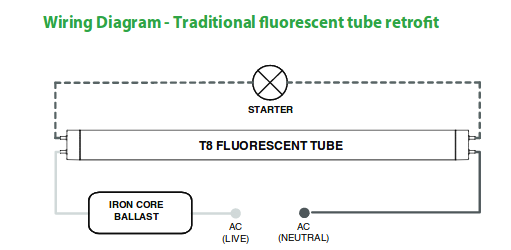
yes but the ballast is in the A lead only, reverse the A/N and you have the A permanently connected to the tube (spdt switch in N lead now, along with ballast) and earth running the full length of the tube (metal earthed fluro housing)

Switch on, full brightness, switch off, dimly lit all the time

Reply Quote

Date: 14/04/2018 14:52:42
From: transition
ID: 1212932
Subject: re: Power Point Checkers

the thought I had, which could be wrong

Reply Quote

Date: 14/04/2018 16:08:23
From: boppa
ID: 1212945
Subject: re: Power Point Checkers

I’m thinking its some sort of coupling to the earthed fitting, could be a bit of both even

Reply Quote

Date: 14/04/2018 16:14:52
From: boppa
ID: 1212946
Subject: re: Power Point Checkers

The reasoning behind it is the way some 12v fluro fittings work, they are in plastic cases, and have a metallic film/shield running the length of the tube connected to the inverter pcb electronics as well as wires running to the fluro pins, so it seems it is one way of driving fluros

Reply Quote