dv said:
SCIENCE said:
dv said:
The Rev Dodgson said:
dv said:
buffy said:
SCIENCE said:
The Rev Dodgson said:
SCIENCE said:
Michael V said:
SCIENCE said:
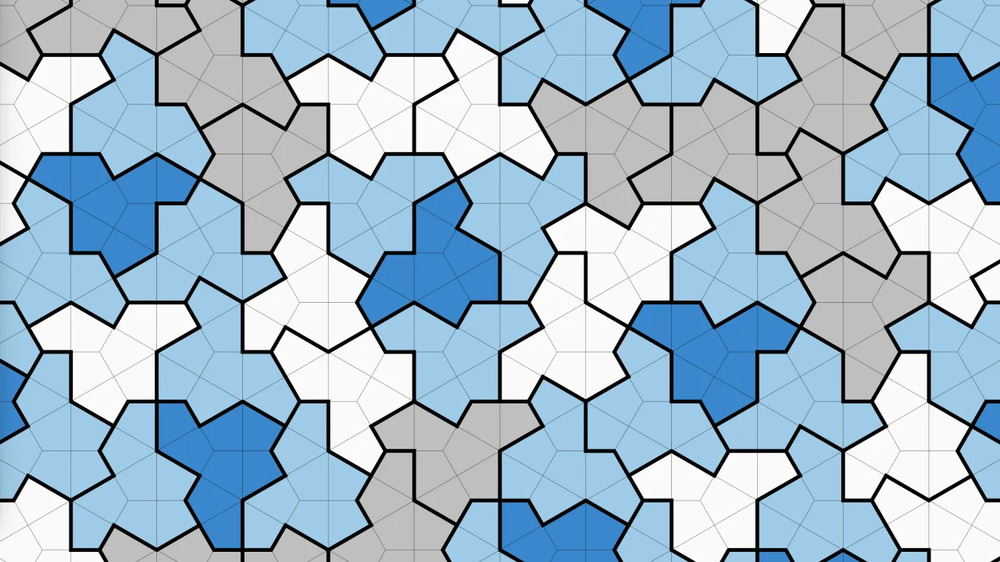
Nice tessellation.
https://cs.uwaterloo.ca/~csk/hat/
David Smith, Joseph Samuel Myers, Craig S. Kaplan, and Chaim Goodman-Strauss, 2023
An aperiodic monotile, sometimes called an “einstein”, is a shape that tiles the plane, but never periodically. In this paper we present the first true aperiodic monotile, a shape that forces aperiodicity through geometry alone, with no additional constraints applied via matching conditions. We prove that this shape, a polykite that we call “the hat”, must assemble into tilings based on a substitution system. The drawing above shows a patch of hats produced using a few rounds of substitution.
https://arxiv.org/abs/2303.10798
Penrose got aperiodic tessellation down to 2 tiles like 50 years ago and this kind of stuff looks like child’s play so it’s quite something that it’s taken that long to get confirmation of 1 tile.
Was reading about that in my New Scientist this morning.
I don’t really get this whole aperiodic thing I must confess.
Well all right, we might have to rmit, neither do we.
“If you used einstein-shaped tiles to cover your bathroom floor—or any flat surface, even if infinitely large—they would fit together perfectly but never form a repeating pattern.”
It’s interesting that there is an underlying set of hexagons and triangles.
I immediately see a repeated pattern in the example they give. What a weird thing to say.
Didn’t we have this a few weeks (months?) ago?
I must admit, I didn’t see how a pattern with a small number of shapes, orientations and colours could have an infinite number of different arrangements, but I’m afraid I just assumed these maths geniuses understood these things better than I do.
I’m sure they do but the people who write these articles might not.
what
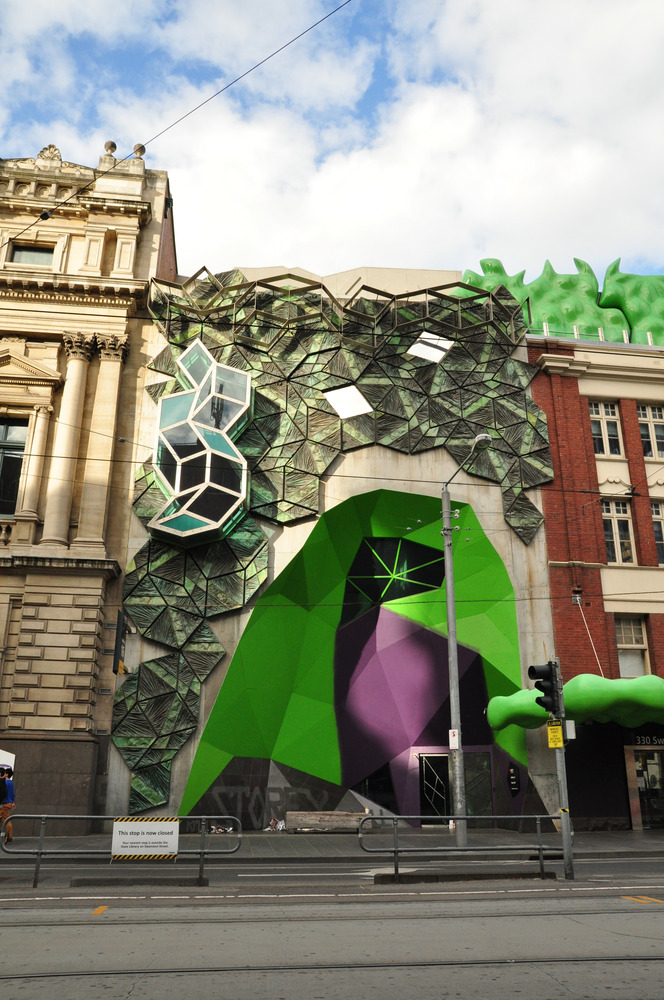
that